
PE rattan is a synthetic wicker made from polyethylene, commonly used for outdoor furniture because it resists moisture, UV exposure, and temperature changes better than natural rattan.
But not all PE rattan performs the same. Low-quality versions can fade, crack, or become brittle much sooner than expected, especially under strong sunlight or seasonal weather.
This guide explains what PE rattan is, how it compares with natural rattan and PVC, and when it is actually the right choice for outdoor use.
I. What Is PE Rattan Material?
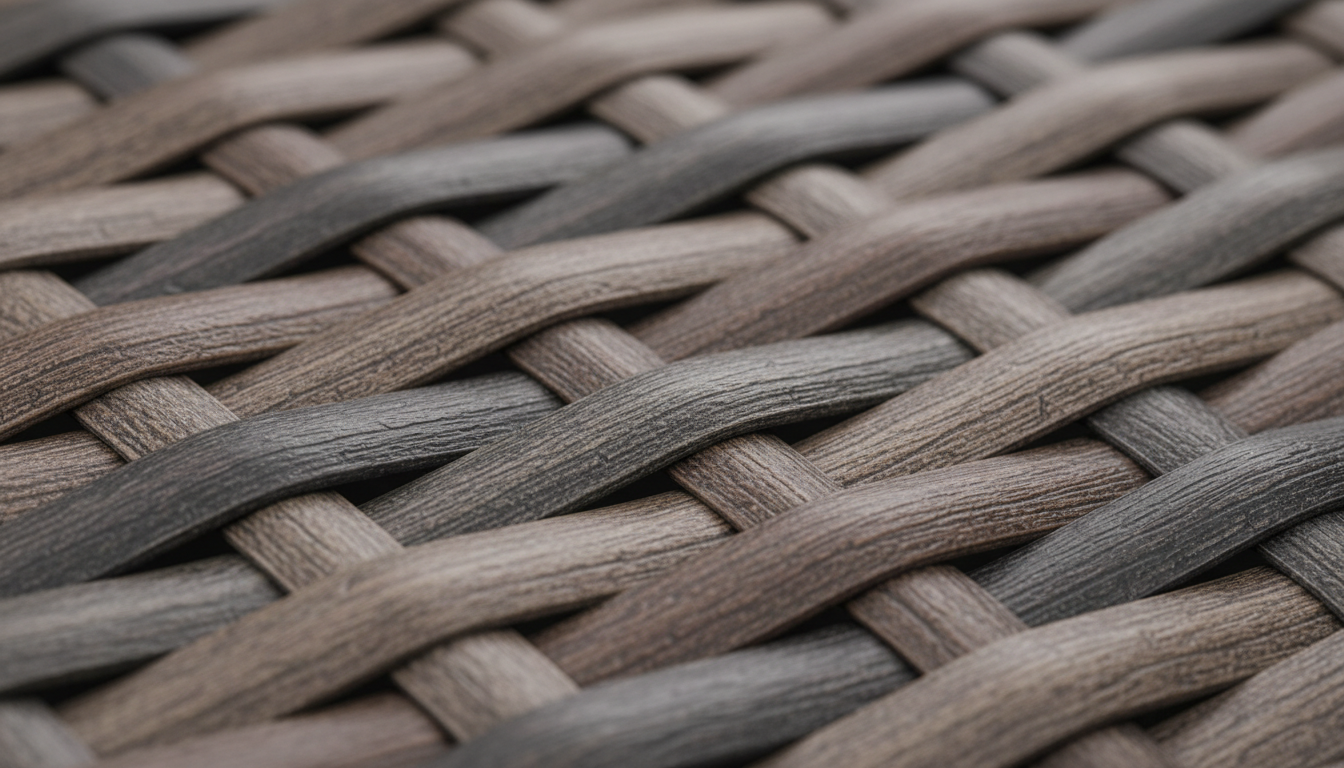
PE rattan is a synthetic wicker made from polyethylene, designed to replicate the look of natural rattan while offering better resistance to outdoor conditions.
It is essentially a plastic material, but its real-world performance depends heavily on formulation and production quality. High-grade PE rattan can handle sun, moisture, and temperature changes, while low-grade versions may fade or crack quickly.
1. PE rattan is a synthetic alternative to natural rattan
PE rattan refers to polyethylene material extruded into strands that imitate the look of natural rattan. It is not a plant-based material, but a manufactured substitute designed for better environmental stability.
This material allows producers to control thickness, flexibility, and surface texture during production. As a result, it can achieve a consistent appearance while reducing common issues found in natural fibers. The key point is that PE rattan is defined by its function and structure, not just by its visual similarity to traditional rattan.
2. Its core purpose is to improve outdoor performance
The main reason PE rattan exists is to solve the limitations of natural rattan in outdoor environments.
Natural rattan absorbs moisture and reacts to temperature changes, which can lead to mold, deformation, or loss of strength over time. PE rattan avoids these issues because it does not absorb water and maintains structural stability under sun exposure.
In practice, this means PE rattan is widely used in:
- Outdoor sofas and dining sets are exposed to sunlight
- Patio furniture in humid or rainy climates
- Balcony furniture with frequent temperature fluctuations
- Commercial outdoor seating with high usage frequency
These applications highlight that PE rattan is not just a visual substitute but a functional upgrade for specific environments.
3. Material name alone does not guarantee performance
Although products may all be labeled as PE rattan, their actual performance can differ significantly.
Higher-quality PE rattan is made with stabilized polyethylene that resists UV degradation and maintains flexibility over time. Lower-grade versions may use less stable materials, which can lead to faster fading, cracking, or brittleness.
This difference is often not visible at the time of purchase. It becomes clear only after prolonged outdoor use, which is why understanding material quality is more important than relying on naming alone.
| Component | Function | Industry Standard |
|---|---|---|
| Virgin HDPE Resin | Base structural polymer | >95% purity |
| UV-8/UV-12 Stabilizers | Solar radiation protection | 3000-5000 hours rating |
| Color Masterbatch | Aesthetic pigment consistency | Grade 4-5 color fastness |
| Antioxidant Agents | Thermal processing protection | 0.2% – 0.5% concentration |
Key Takeaway: PE rattan is a sophisticated polymer blend, not just “plastic,” engineered specifically for thermal stability and long-term UV resistance.
II. Which Is Better for Outdoor Furniture: PE Rattan or Natural Rattan?
PE rattan is designed to handle environmental stress that natural rattan cannot withstand for long periods.
Natural rattan is a plant-based material that absorbs moisture and reacts to humidity. Over time, this can lead to mold, softening, or structural weakening. Under strong sunlight, it may also dry out and become brittle.
PE rattan, by contrast, does not absorb water and is more stable under UV exposure. This makes it more suitable for outdoor furniture, where exposure to rain and sun is unavoidable.

1. PE rattan performs better in outdoor conditions
PE rattan is designed to handle environmental stress that natural rattan cannot withstand for long periods.
Natural rattan is a plant-based material that absorbs moisture and reacts to humidity. Over time, this can lead to mold, softening, or structural weakening. Under strong sunlight, it may also dry out and become brittle.
PE rattan, by contrast, does not absorb water and is more stable under UV exposure. This makes it more suitable for outdoor furniture, where exposure to rain and sun is unavoidable.
2. Natural rattan offers texture, but requires controlled environments
Natural rattan has a more organic texture and visual variation, which is often preferred in indoor or decorative settings.
However, this advantage comes with limitations. It performs best in stable indoor environments where humidity and temperature are controlled. When used outdoors, it typically requires protection, such as covered areas or additional treatments.
In practical use, natural rattan is more suitable for:
- Indoor furniture with minimal environmental exposure
- Decorative pieces where natural texture is prioritized
- Covered spaces such as sunrooms or sheltered patios
This means choosing natural rattan is less about durability and more about visual preference.
3. Choosing between them depends on the use scenario, not preference alone
The decision between PE rattan and natural rattan should be based on where and how the furniture will be used.
If the furniture is exposed to outdoor conditions, PE rattan is generally the more reliable choice due to its resistance to moisture and sunlight. If the application is indoor or decorative, natural rattan may offer better aesthetic value.
Many buyers make the mistake of choosing based on appearance alone. In practice, the environment determines which material performs better over time.
To clearly compare how these two materials behave in real use, the table below highlights their key differences in practical conditions.
| Aspect | PE Rattan | Natural Rattan |
|---|---|---|
| Material type | Synthetic polyethylene | Natural plant fiber |
| Water behavior | Does not absorb moisture | Absorbs moisture |
| UV resistance | High (if quality is good) | Low |
| Outdoor durability | Strong | Weak |
| Maintenance need | Low | High |
| Best use scenario | Outdoor furniture | Indoor / covered spaces |
Key takeaway: PE rattan is generally the better choice for outdoor use due to its resistance to moisture and sunlight, while natural rattan is more suitable for indoor environments where appearance matters more than durability.
III. PE Rattan vs PVC: Why Many Buyers Get It Wrong
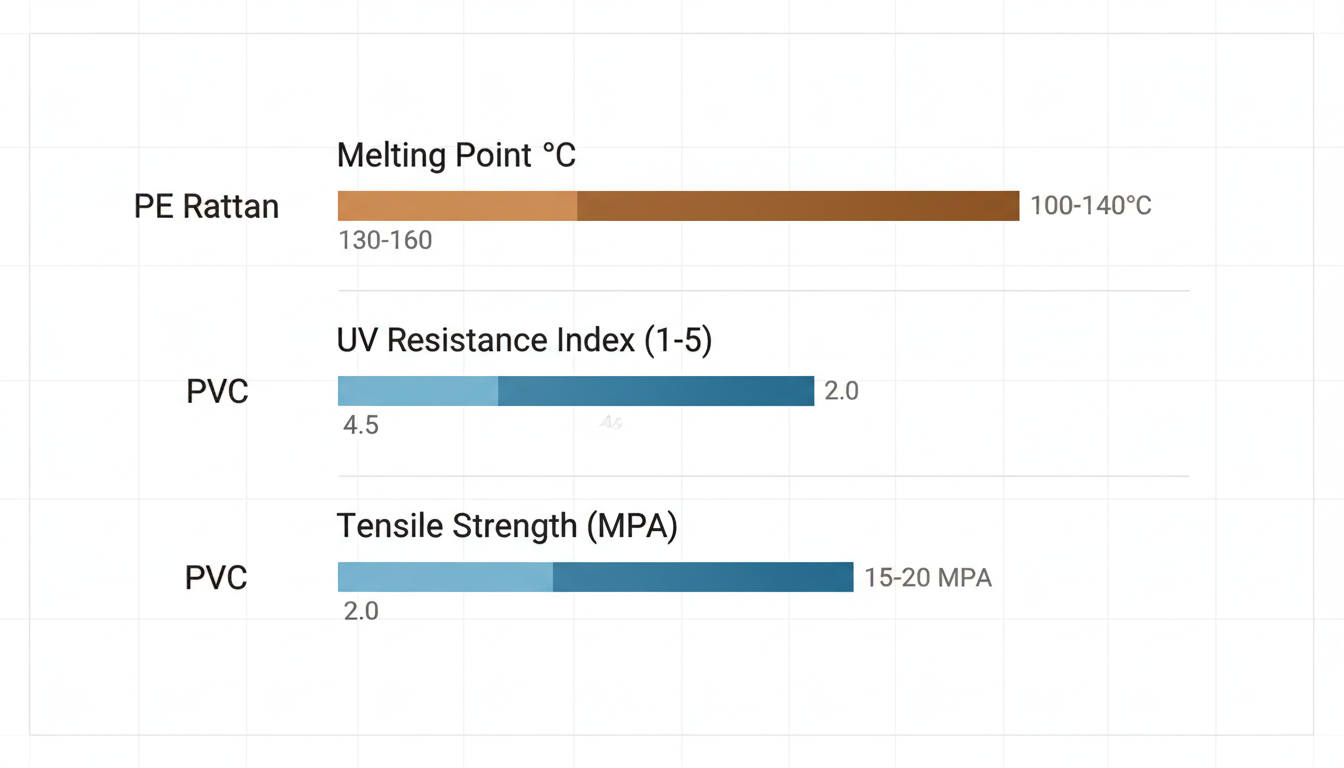
Many products labeled as “rattan” are not made from PE at all, but from PVC or other lower-cost plastics. This is where confusion — and mistakes — often happen.
The difference is not always visible at first glance, but it becomes clear after exposure to outdoor conditions.
1. PVC rattan is often used as a lower-cost substitute
PVC is commonly used to imitate PE rattan because it is cheaper and easier to process.
At the time of purchase, PVC-based rattan may look similar in color and texture. However, its performance under sunlight and temperature changes is typically weaker. It tends to harden, lose flexibility, or become brittle over time.
This is why some outdoor furniture fails within one season, even though it appeared similar to higher-quality products when new.
2. The problem is not labeling, but a lack of clarity
Many products are simply labeled as “rattan furniture” without specifying the actual material used.
In practice, this creates three common situations:
- PE rattan products are not clearly identified as PE
- PVC products presented without material disclosure
- Mixed-material products with inconsistent performance
This lack of clarity makes it difficult for buyers to evaluate durability based on product descriptions alone.
3. Performance difference only shows after real use
The key difference between PE and PVC rattan is long-term performance, not initial appearance.
PE rattan, when properly formulated, maintains flexibility and color stability under UV exposure. PVC, on the other hand, is more sensitive to temperature changes and tends to degrade faster in outdoor environments.
This difference is rarely noticeable during sampling. It usually becomes evident only after months of outdoor use, which is why many buyers underestimate the risk at the beginning.
To better understand why these materials behave differently, the table below highlights their practical differences in outdoor use.
| Aspect | PE Rattan | PVC Rattan |
|---|---|---|
| Material type | Polyethylene (flexible) | Polyvinyl chloride (rigid tendency) |
| UV resistance | Good (if stabilized) | Lower |
| Flexibility over time | Maintains flexibility | Becomes brittle |
| Outdoor durability | Strong | Moderate to low |
| Cost level | Medium | Low |
| Common issue | Quality variation | Cracking, hardening |
Key takeaway: Not all “rattan” is PE rattan. PVC-based alternatives may look similar at first, but their outdoor performance is typically weaker and less stable over time.
IV. Why Is PE Rattan Used for Outdoor Furniture?
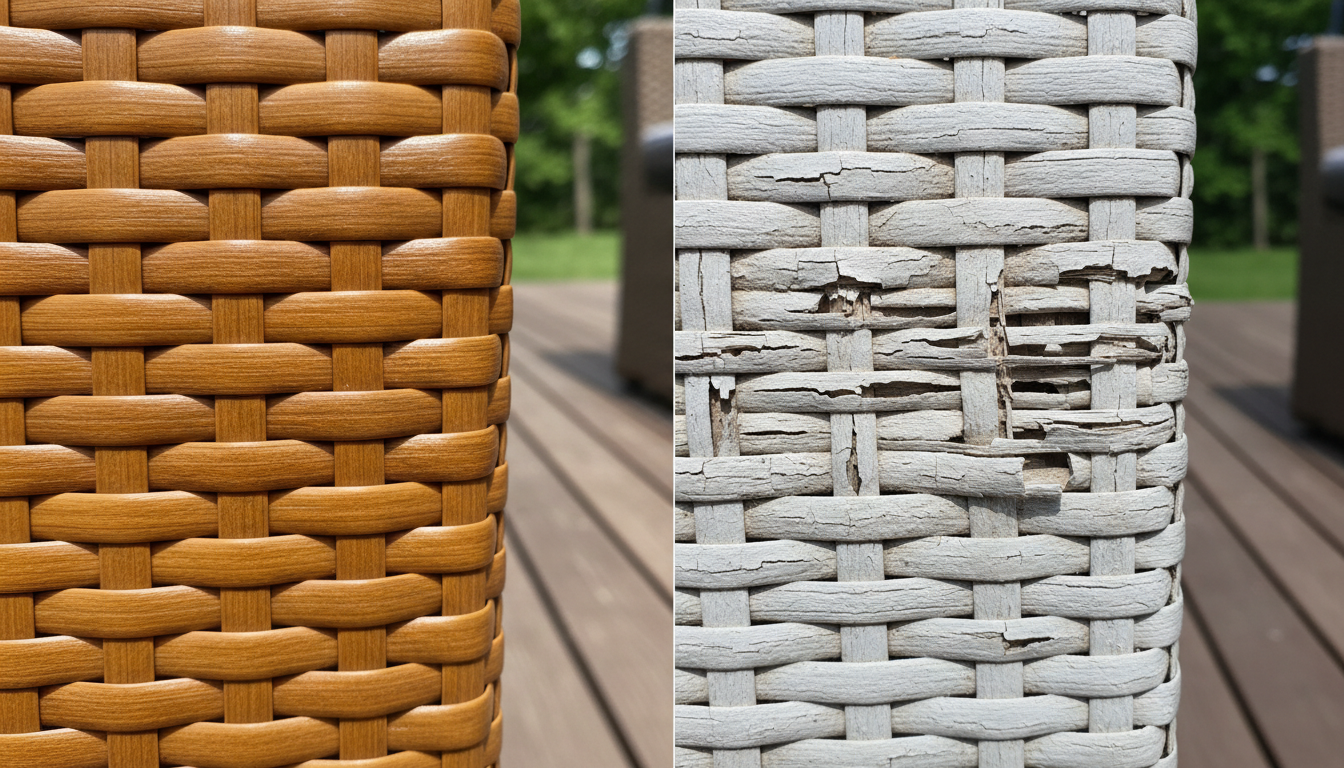
PE rattan is widely used in outdoor furniture because it performs more reliably under environmental stress than natural materials.
It is not chosen for appearance alone, but for how it behaves after months of exposure to moisture, sunlight, and temperature changes.
1. Non-absorbent moisture behavior
PE rattan is used outdoors because it does not absorb moisture, which directly affects long-term structural stability.
In humid or rainy environments, natural materials tend to take in water. Over time, this can lead to swelling, mold, or gradual weakening of the structure. These changes are not always immediate, but they accumulate and reduce durability.
PE rattan avoids this process entirely. Its non-absorbent surface allows it to remain stable even when exposed to repeated moisture. In practical terms, this means fewer structural changes and a lower risk of long-term damage in outdoor conditions.
2. Stability under sunlight and temperature changes
PE rattan is chosen because it maintains flexibility under sunlight and varying temperatures.
Outdoor furniture is exposed to continuous UV radiation and temperature shifts between day and night. Natural materials tend to dry out under these conditions, which can lead to brittleness and surface damage over time.
Properly formulated PE rattan remains flexible instead of becoming rigid. This helps prevent cracking and preserves the structural integrity of the woven material. However, this advantage depends on material quality, as lower-grade PE rattan may still degrade faster.
3. Lower maintenance and replacement risk
PE rattan is used because it reduces the need for ongoing maintenance and lowers the risk of early replacement.
In outdoor use, maintenance is often driven by how materials respond to environmental stress. Natural materials may require more frequent care or replacement due to moisture damage or structural changes.
In practical scenarios, this means:
- Less need to manage moisture-related issues
- Lower likelihood of structural damage over time
- Reduced frequency of repairs or replacements
- More predictable long-term performance
This makes PE rattan a more stable option when durability and consistency are priorities.
To better understand why PE rattan is widely used in outdoor furniture, the table below summarizes how it performs under real environmental conditions.
| Factor | What It Means in Practice |
|---|---|
| Moisture exposure | No water absorption, stable structure |
| Sunlight exposure | Maintains flexibility (if quality is controlled) |
| Temperature changes | Adapts without becoming brittle |
| Maintenance demand | Lower compared to natural materials |
| Replacement risk | More predictable lifespan |
Key takeaway: PE rattan is used for outdoor furniture because it avoids moisture-related damage, maintains flexibility under sunlight, and reduces long-term maintenance and replacement risks when material quality is properly controlled.
V. What Are the Common Problems With PE Rattan?
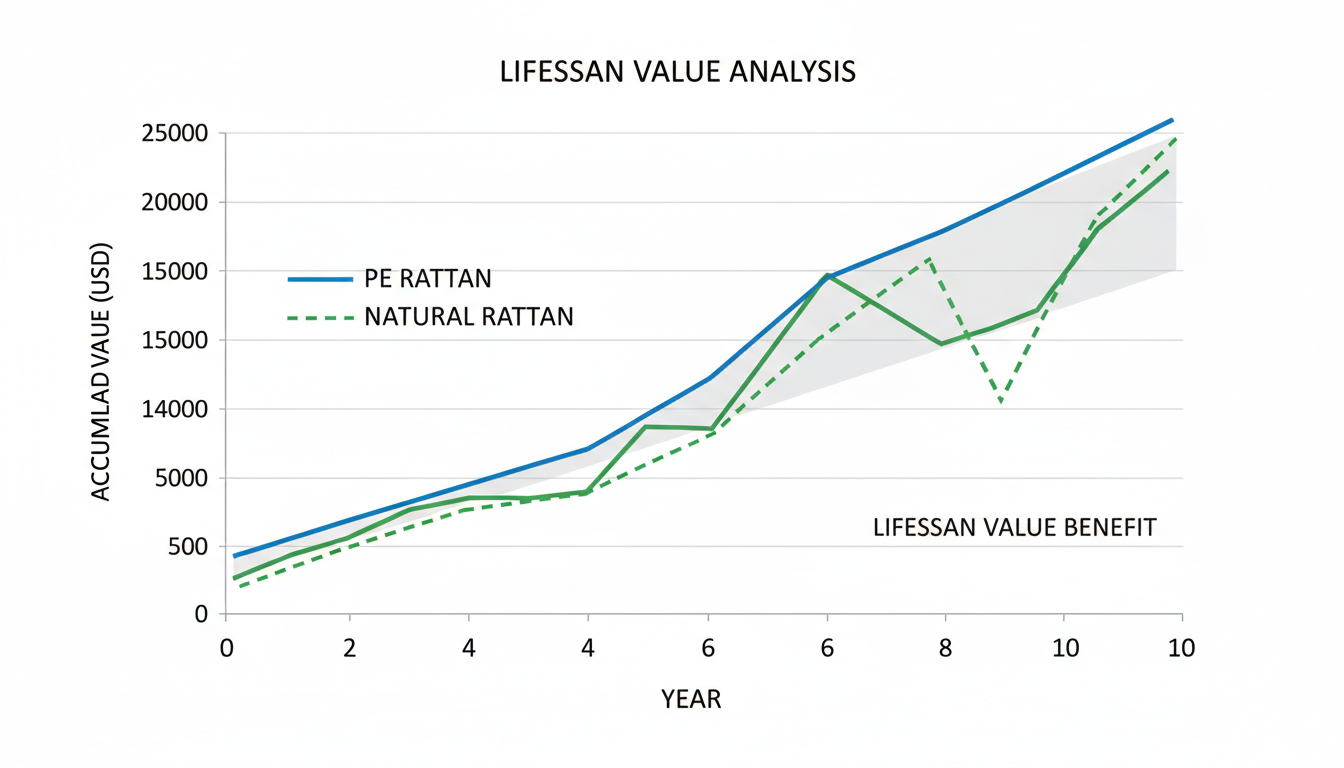
PE rattan is widely used for outdoor furniture, but its performance is not consistent across all products. The material itself is stable, but quality variation can lead to very different outcomes in real use.
Most problems are not caused by the concept of PE rattan, but by how the material is formulated and processed during production.
1. Fading and color inconsistency over time
PE rattan can fade under prolonged sunlight exposure, especially when UV stabilization is insufficient or uneven.
In higher-quality products, color fading is gradual and relatively uniform. However, in lower-grade materials, fading can occur at different speeds across different parts of the furniture. This leads to visible color inconsistency, which becomes more noticeable over time.
In practical outdoor use, this often appears as certain areas turning lighter while others retain original color, particularly on surfaces directly exposed to sunlight.
2. Cracking or brittleness in low-quality material
Material brittleness is one of the most critical failure risks in PE rattan furniture.
When the material lacks proper flexibility, it becomes more sensitive to temperature changes and mechanical stress. Over time, this can lead to surface cracks or breakage during normal use.
This issue is more likely to occur in products made with lower-grade raw materials or inconsistent production control. The problem usually does not appear immediately, but develops after repeated exposure to sunlight and temperature variation.
3. Performance differences that are not visible at purchase
One of the main challenges in evaluating PE rattan is that quality differences are not obvious at the time of purchase.
Many products look similar in color, texture, and weaving pattern when new. However, their long-term performance can vary significantly depending on material stability.
In real scenarios, this means:
- Products that look identical may age at very different speeds
- Structural issues may appear only after several months
- Surface condition may degrade unevenly across the same item
- Early-stage sampling does not reflect long-term durability
This makes it difficult to rely on visual inspection alone when assessing product quality.
To better understand where failures typically occur, the table below summarizes common issues and their underlying causes.
| Problem | Underlying Cause |
|---|---|
| Fading | Weak or uneven UV stabilization |
| Cracking | Low flexibility in material formulation |
| Brittleness | Poor-quality or unstable raw materials |
| Uneven aging | Inconsistent production control |
| Surface degradation | Lack of long-term material stability |
Key takeaway: PE rattan performs reliably when material quality is controlled, but low-grade versions often fail through fading, cracking, and uneven aging that only becomes visible after extended outdoor use.
VI. What Shapes and Textures Does PE Rattan Come In?
PE rattan is produced in different shapes and surface finishes to meet various design and application needs.
These variations mainly affect how the furniture looks, feels, and wears over time, rather than changing the core material performance.
1. PE rattan comes in flat, round, and half-round forms
PE rattan is commonly available in flat, round, and half-round shapes, each influencing both appearance and weaving behavior.
Flat rattan creates a clean and modern look, often used in contemporary outdoor furniture with straight lines and minimal styling. Round rattan is closer to the look of natural rattan, making it more suitable for traditional or classic designs. Half-round rattan sits between the two, offering more depth than flat while maintaining a smoother surface than fully round strands.
From a practical perspective, shape also affects how tightly the material can be woven and how the surface reflects light. This means the same furniture design can appear very different depending on the rattan shape used, even when the structure is identical.
2. Surface textures are used to control visual style and aging effect
PE rattan is available in different surface finishes, which are mainly used to adjust visual style and how the material ages over time.
Smooth surfaces create a more uniform and controlled appearance, often used in modern designs. Textured or embossed finishes are designed to imitate natural rattan irregularities, making the product look more organic.
In real use, this also affects how wear is perceived:
- Smooth surfaces show scratches or fading more clearly
- Textured surfaces can visually hide minor wear and aging
- Matte finishes reduce light reflection and make color changes less obvious
- Slightly irregular textures create a more natural, less “plastic-like” impression
These differences do not change durability, but they influence how the product looks after months of use.
3. Shape and texture affect appearance, not material quality
Although PE rattan can vary significantly in appearance, these differences are not reliable indicators of quality.
Two products with different shapes or textures may have similar durability if they are made from the same material grade. At the same time, products that look nearly identical can perform very differently if their material formulation differs.
This creates a common misunderstanding: buyers often associate “more natural-looking” textures with higher quality. In reality, performance depends on material stability, not visual design.
Understanding this helps avoid making decisions based on appearance alone, especially for outdoor applications where long-term performance matters more than initial look.
The variations below help explain how design choices influence appearance and user perception, without changing core performance.
| Variation | What It Affects in Real Use |
|---|---|
| Flat shape | Cleaner, sharper, more modern appearance |
| Round shape | Softer, more traditional visual effect |
| Half-round | Balanced depth and smoother surface feel |
| Smooth surface | Uniform look but shows wear more clearly |
| Textured surface | More natural feel, better at hiding aging |
Key takeaway: Shapes and textures in PE rattan mainly influence visual style and how wear appears over time, but they do not determine material quality or outdoor durability.
VII. How Can You Tell If PE Rattan Is Good Quality?
PE rattan products may look similar at first glance, but their long-term performance depends heavily on material quality and production control.
The key is to evaluate how the material behaves, not just how it appears when new.
1. Good PE rattan should remain flexible, not rigid
High-quality PE rattan stays flexible under bending and environmental stress, which directly affects durability.
When the material can bend and return to its original shape, it is less likely to crack over time. In contrast, lower-grade rattan often feels stiff or becomes rigid after exposure to sunlight and temperature changes.
This difference is critical in outdoor use, where repeated stress and environmental exposure are unavoidable.
2. Good PE rattan should show consistent surface quality
Consistent color, thickness, and texture indicate stable production and material control.
If the surface varies across different sections, it often suggests inconsistent material formulation. This can lead to uneven aging, where some parts fade or degrade faster than others.
Uniformity is not only a visual standard, but also a signal of how the material will perform over time.
3. Good PE rattan should age slowly and evenly
The most reliable indicator of quality is how the material changes after prolonged outdoor use.
In practice, you should expect:
- Gradual and even color fading rather than patchy discoloration
- Maintained flexibility instead of sudden brittleness
- Stable surface condition without early cracking
- Consistent performance across all sections
If aging appears uneven or rapid, it usually indicates lower material quality or weak UV stabilization.
To make the evaluation clearer, the table below compares how high-quality and low-quality PE rattan behave in real use.
| Indicator | High Quality PE Rattan | Low Quality PE Rattan |
|---|---|---|
| Flexibility | Remains flexible over time | Becomes stiff or brittle |
| Surface consistency | Uniform across all parts | Slight variations visible |
| UV performance | Gradual fading | Fast or uneven fading |
| Aging pattern | Even and predictable | Patchy and inconsistent |
| Durability | Stable under outdoor use | Degrades quickly |
Key takeaway: Good PE rattan is defined by flexibility, consistency, and stable long-term aging, while poor-quality material tends to become rigid, uneven, and unreliable under outdoor conditions.
VIII. How Is PE Rattan Made and Tested?
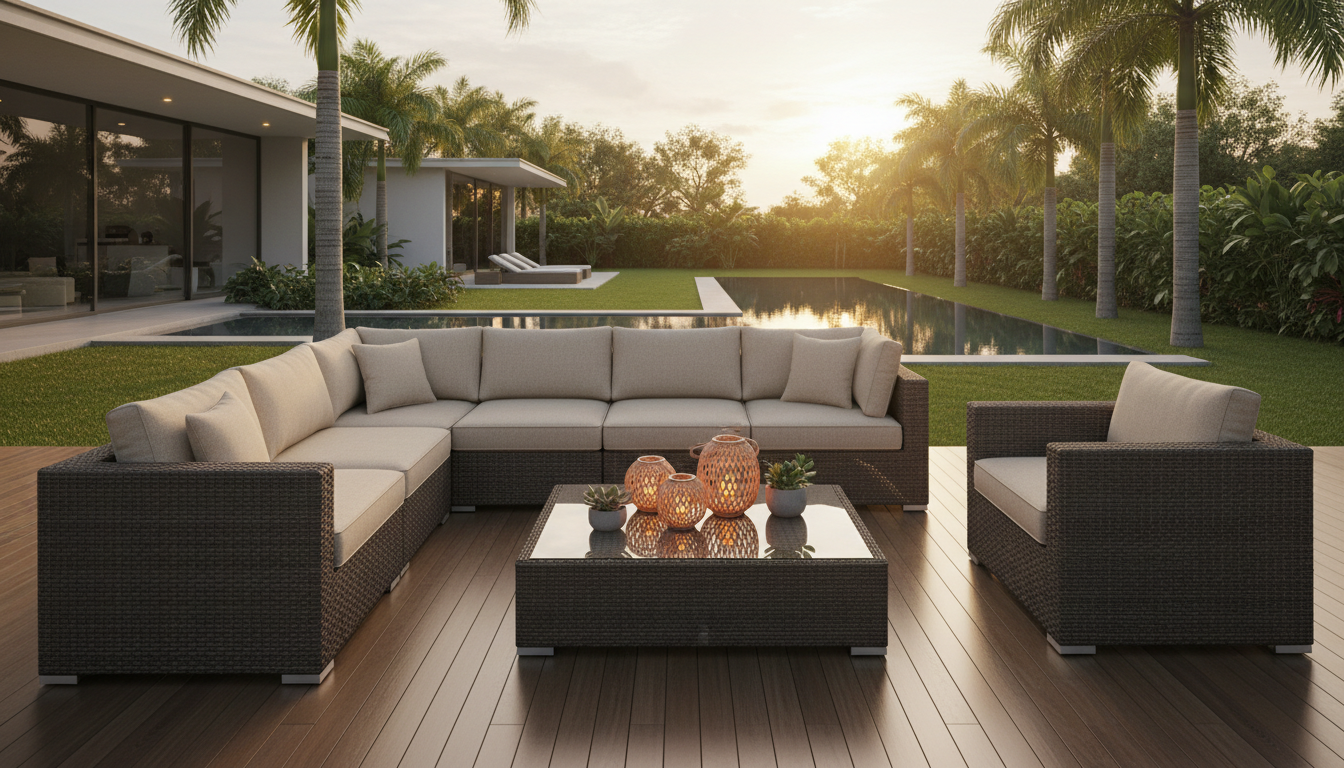
PE rattan may look similar across products, but differences in production and testing are the main reasons why performance varies so much in real use.
The process itself is standard, but the level of material control determines whether the product lasts or fails over time.
1. Production determines whether the material stays stable over time
PE rattan is produced by melting polyethylene and forming it into strands through extrusion. While this process is widely used, the level of control during production creates significant differences in final performance.
In higher-quality production, material formulation and extrusion conditions are carefully controlled to ensure flexibility and stability. In lower-grade production, cost reduction often leads to less stable material output.
This means two products can look nearly identical, but behave very differently after exposure to sunlight and environmental stress.
2. Material formulation is the hidden factor behind performance differences
The formulation of polyethylene directly affects how PE rattan performs under outdoor conditions.
High-quality PE rattan includes stabilizing components that help maintain flexibility and resist UV degradation. Lower-grade material may lack these stabilizers or use inconsistent formulations, which leads to faster aging.
This difference is not visible during production or sampling, but becomes clear after months of use. That is why material formulation is one of the most critical but least visible factors in quality evaluation.
3. Testing shows whether the material can actually perform as expected
Testing is used to evaluate whether PE rattan can maintain performance under simulated outdoor conditions.
However, the key is not whether testing exists, but how it is used in practice:
- UV exposure testing shows how quickly the material fades under sunlight
- Flexibility testing reveals whether the material becomes brittle over time
- Temperature cycling tests simulate real environmental stress
- Post-test inspection shows how evenly the material ages
Without proper testing, performance claims remain theoretical and do not reflect real-world durability.
The table below explains how differences in production and testing translate into real-world performance.
| Factor | Controlled Production | Uncontrolled Production |
|---|---|---|
| Material formulation | Stable and consistent | Variable or low-grade |
| Extrusion process | Uniform structure | Inconsistent thickness |
| UV stabilization | Present and effective | Weak or absent |
| Testing process | Applied and verified | Limited or skipped |
| Real-world performance | Stable over time | Early degradation |
Key takeaway: The difference in PE rattan quality comes from material formulation, production control, and testing standards, not from appearance, which explains why similar-looking products can perform very differently over time.
IX. When Should You Choose PE Rattan (and When Not)?
PE rattan is a practical material for many outdoor applications, but it is not always the right choice. The decision depends on how and where the furniture will be used, not just how it looks.
Choosing correctly means matching material performance with real usage conditions.
1. Choose PE rattan when durability in outdoor conditions matters
PE rattan is the better choice when furniture will be exposed to sunlight, moisture, and temperature changes over time.
In these environments, materials that absorb moisture or lose flexibility tend to degrade faster. PE rattan provides more stable performance, especially when material quality is controlled.
Typical situations where PE rattan is suitable include:
- Outdoor patios and garden furniture are exposed to the weather
- Balcony furniture with frequent sunlight exposure
- Poolside or humid environments
- Commercial outdoor seating with repeated use
In these cases, durability and consistency are more important than natural appearance.
2. Avoid choosing PE rattan when appearance is the only priority
PE rattan may not be the best option when the primary goal is to achieve a fully natural look or texture.
Although it can replicate the appearance of natural rattan, it does not fully reproduce its tactile feel. In indoor or decorative applications, this difference may be noticeable.
Choosing PE rattan purely based on appearance can lead to dissatisfaction if expectations are not aligned with the material’s characteristics.
3. Do not rely on appearance alone when making the decision
One of the most common mistakes is choosing based on visual similarity rather than performance requirements.
In practice, this leads to:
- Selecting materials that do not match the usage environment
- Underestimating long-term durability risks
- Confusing design features with material quality
- Overlooking differences in material formulation
A correct decision requires evaluating both environment and material behavior, not just visual design.
The table below summarizes when PE rattan should be selected based on usage conditions.
| Scenario | Recommendation |
|---|---|
| Outdoor exposure (sun, rain) | Choose PE rattan |
| High humidity environments | Choose PE rattan |
| Indoor decorative use | Consider alternatives |
| Appearance-focused selection | Evaluate carefully |
| Long-term durability required | Choose PE rattan |
Key takeaway: Choose PE rattan when outdoor durability and stability are required, but avoid relying on appearance alone, as correct material selection depends on matching performance with actual usage conditions.
FAQ
1. Can PE rattan be left outside in winter?
Yes, PE rattan is generally suitable for outdoor use year-round, but its performance depends on material quality. High-quality PE rattan can handle temperature changes without cracking, while lower-grade material may become brittle over time, especially in cold conditions.
2. Is PE rattan eco-friendly?
PE rattan is made from polyethylene, which is generally considered a safer and more stable plastic compared to PVC. It does not release strong odors under normal outdoor conditions, but recyclability and environmental impact depend on how the material is produced and used.
3. How can I tell if PE rattan is low quality or made from recycled material?
Lower-quality or recycled PE rattan often shows early signs of instability. In practical checks, you may notice:
- A noticeable chemical or plastic smell
- A dull or uneven surface compared to smoother finishes
- White stress marks appear when bent or stretched
- Reduced flexibility or a tendency to stay deformed
These signs indicate weaker material stability, which may lead to faster aging outdoors.
Closing Note
Choosing PE rattan depends on how the furniture will be used, not just appearance. For outdoor use, stability and durability matter more.
If you need to evaluate material options or compare samples, discussing specifications with a supplier can help confirm whether the material fits your requirements.