
Selecting the wrong timber for your home leads to sagging bed frames, stuck drawers, and wasted investments. Most buyers overlook structural integrity for surface aesthetics, resulting in furniture that fails far sooner than expected. By understanding wood species and manufacturing standards, you can secure high-quality pieces that offer both timeless beauty and multi-generational durability.
To choose the best wood for bedroom furniture, prioritize hardwoods like Oak or Walnut for structural pieces and avoid engineered materials like particle board. Ensure the timber is kiln-dried to prevent warping and look for traditional joinery like dovetails to guarantee long-term stability.
I. Hardwood vs. Softwood in Wooden Bedroom Furniture
Hardwood is generally the superior choice for high-stress items like bed frames because it comes from slower-growing deciduous trees with higher density. While softwoods are often more affordable, they lack the impact resistance required for furniture that undergoes daily mechanical use. Selecting the right category is the first step in ensuring your wooden bedroom furniture remains functional for decades.
Industry Standards for Timber Density
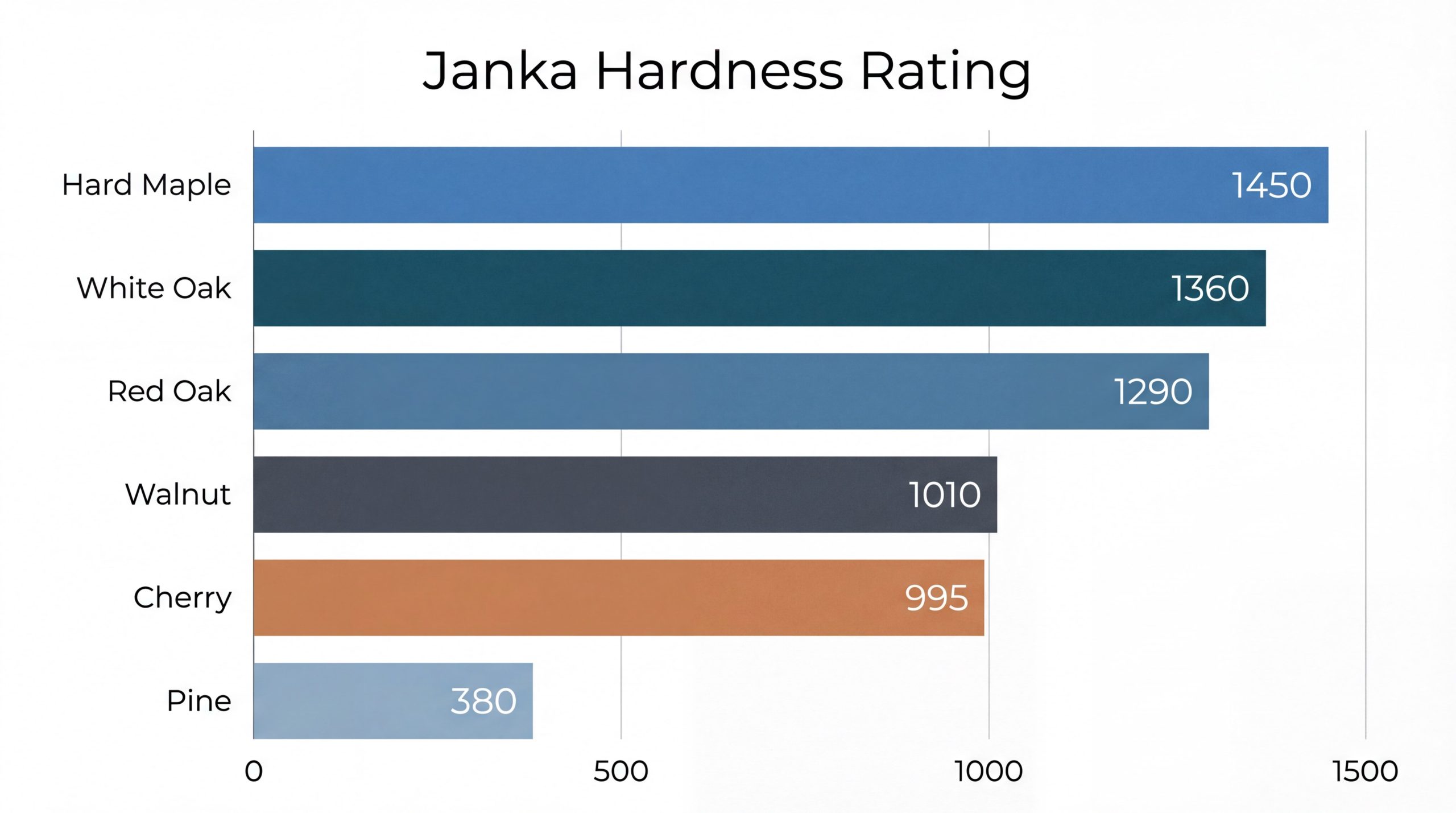
Wooden bedroom furniture durability is often measured by the Janka hardness scale to determine its surface resistance.
- Hardwoods typically range from 900 to 1500 on the Janka scale.
- Softwoods usually fall below 600, making them prone to indentation.
- Density directly correlates to the wood’s ability to hold heavy fasteners securely.
But here is the kicker: Just because a wood is technically a “hardwood” doesn’t mean it’s indestructible, but it significantly reduces the risk of structural failure over time.
Summary: Wood Category Comparison
| Feature | Hardwood | Softwood |
|---|---|---|
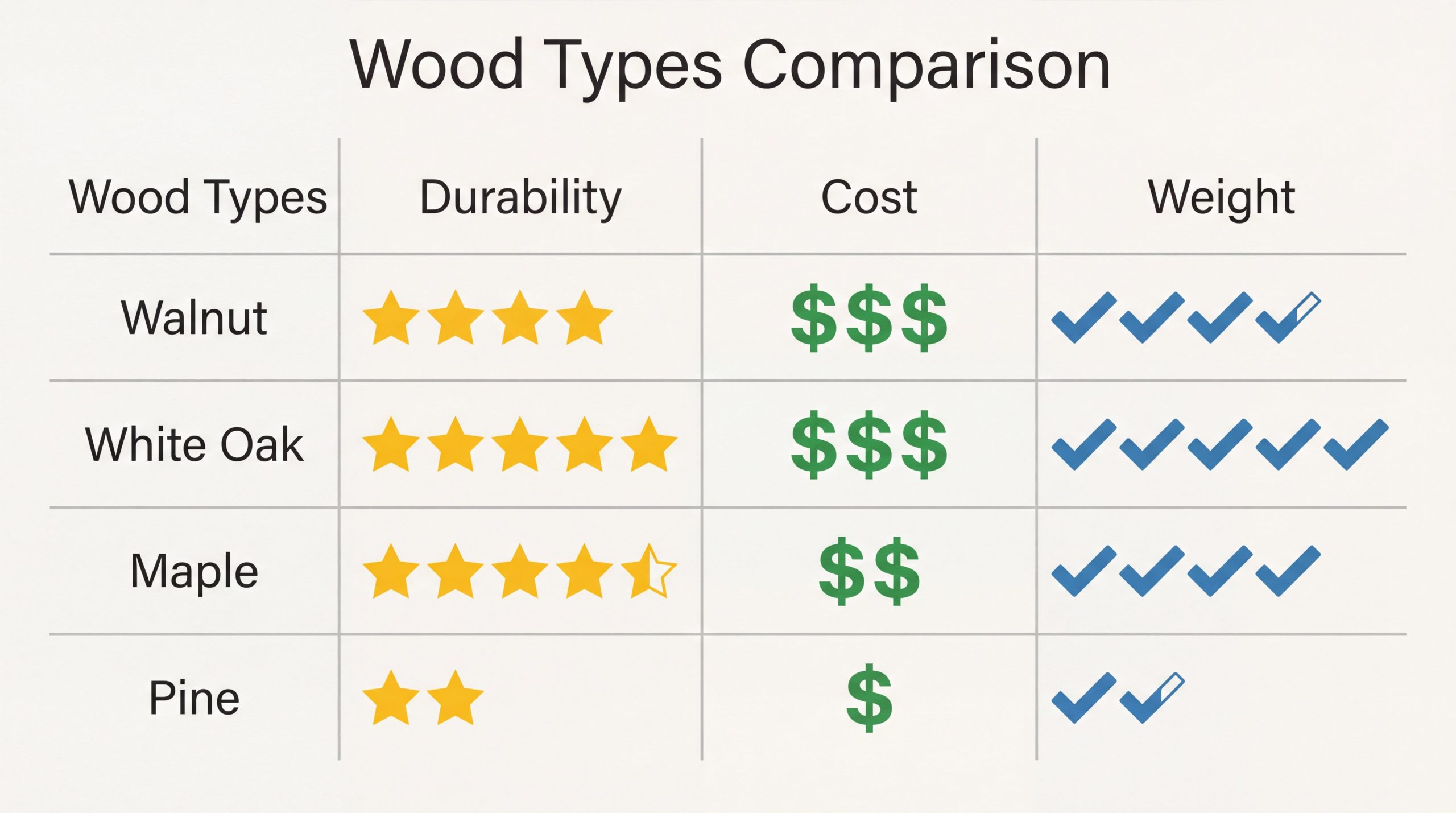
| Common Examples | Oak, Walnut, Maple | Pine, Cedar, Fir |
| Structural Strength | Very High | Low to Medium |
| Scratch Resistance | Excellent | Poor |
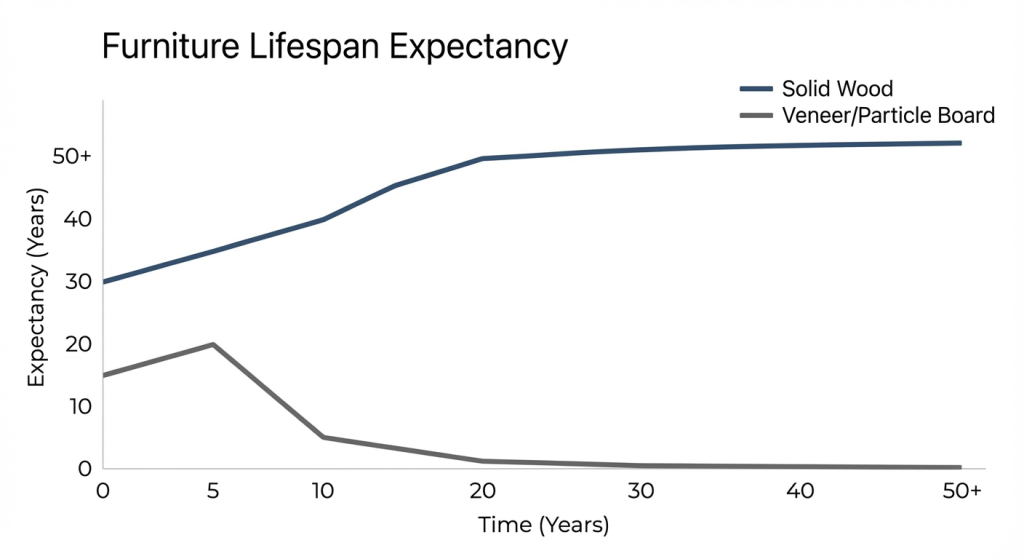
| Typical Lifespan | 50+ Years | 10–20 Years |
The table demonstrates that hardwoods provide the essential life-cycle value required for primary residential investments.
II. Choosing Walnut for Premium Wooden Bedroom Furniture
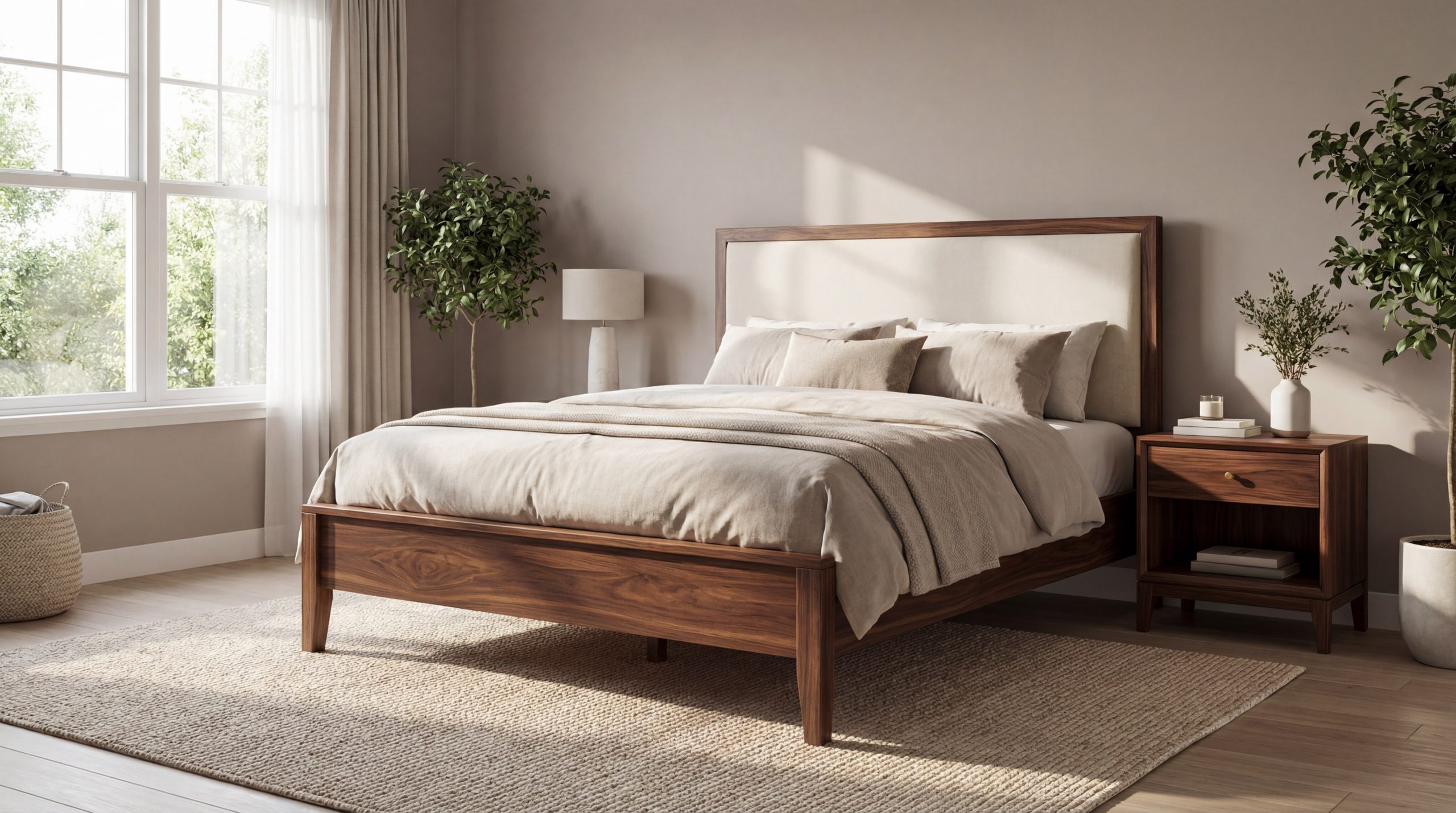
Walnut is the most prestigious choice for wooden bedroom furniture due to its rich, natural chocolate-brown tones and exceptional dimensional stability. It is a premium hardwood that rarely warps or shrinks, making it ideal for precision-crafted dressers and platform beds. Suppliers often recommend Walnut for high-end retail lines that demand a “no-stain” organic aesthetic.
Aesthetic and Structural Benefits of Walnut
Walnut offers a unique grain pattern that elevates the visual appeal of any modern or mid-century Residential Furniture collection.
- Natural dark hues eliminate the need for heavy chemical stains.
- The tight grain structure resists moisture absorption effectively.
- It is lighter than Oak but maintains comparable structural rigidity.
Think about this: Why spend money on a cheap wood stained to look like Walnut when the natural grain offers a depth that synthetic finishes simply cannot match?
Comparison: Premium Hardwood Evaluation
| Selection Criteria | Walnut | Mahogany | Rosewood |
|---|---|---|---|
| Cost Rating | Premium | High | Very High |
| Grain Type | Tight/Wave | Straight | Interlocking |
| Market Trend | High Demand | Traditional | Niche Luxury |
| Final Verdict | Best Overall Luxury | Best for Antiques | Best for Inlays |
This matrix highlights Walnut as the most balanced option for modern high-end bedroom environments.
III. The Longevity of Oak Wooden Bedroom Furniture
Oak remains the most reliable workhorse for wooden bedroom furniture because of its open grain and incredible resistance to wear. It is available in two main varieties—Red and White—both of which offer the heavy-duty support needed for expansive bed frames. From a factory perspective, Oak is prized for its ability to take various stains while maintaining its rugged character.
Functional Differences Between Oak Varieties
When sourcing wooden bedroom furniture, understanding the distinction between White and Red Oak prevents mismatched aesthetics in your room.
- White Oak is more water-resistant due to its closed cellular structure.
- Red Oak features more prominent grain patterns and pinkish undertones.
- Both species are highly resistant to fungal attack and rot.
Is it any wonder why: Oak has been the standard for heirloom-quality furniture for centuries given its ability to withstand constant moving and reassembly?
Summary: Oak Species Performance
| Metric | White Oak | Red Oak |
|---|---|---|
| Janka Rating | 1360 | 1290 |
| Color Base | Tan / Gray | Pink / Amber |
| Workability | High | Excellent |
| Best Finish | Natural / Light | Deep Stains |
The data confirms that both Oak types provide superior hardness for high-traffic furniture applications.
IV. Maple: A Smooth Choice for Wooden Bedroom Furniture
Maple is the preferred option for wooden bedroom furniture when a sleek, contemporary look with a hidden grain is the primary goal. Hard Maple is actually tougher than Oak, providing a surface that is virtually immune to the dents often caused by dropped household objects. It is the perfect substrate for light, airy finishes or high-quality painted nursery sets.
Distinct Advantages of Hard Maple
Hard Maple is a top-tier choice for Kids & Nursery Furniture because its smooth surface is easy to clean and sanitize.
- The ultra-fine grain results in a porcelain-like finish after sanding.
- It is highly resistant to abrasion from sliding drawers.
- Maple maintains its pale color better than most light woods over time.
But here is the secret: Maple is so dense that it requires professional finishing, as amateur staining can often lead to a “blotchy” appearance on the surface.
Summary: Maple Usage Summary
| Property | Hard Maple | Soft Maple |
|---|---|---|
| Durability | 1450 (Janka) | 950 (Janka) |
| Common Use | Bed Frames | Side Panels |
| Weight | Very Heavy | Medium |
| Finish Type | Clear Coat | Paint / Stain |
Hard Maple stands out as the durability winner for pieces that must survive the rigors of a busy household.
V. Cherry and Mahogany Styles for Wooden Bedroom Furniture
Cherry and Mahogany represent the traditional peak of wooden bedroom furniture, characterized by their ability to develop a deep patina as they age. Cherry is famous for its “photo-reactive” nature, darkening beautifully when exposed to sunlight in a master suite. Mahogany, though harder to source sustainably, offers a level of prestige and stability that few other woods can rival.
Patina and Aging Characteristics
Investing in these species for your wooden bedroom furniture means your pieces will actually improve in appearance over the next decade.
- Cherry starts as a light pink and matures into a rich reddish-brown.
- Mahogany provides a shimmering “chatoyancy” effect in its grain.
- Both woods are highly stable and less prone to seasonal expansion.
Believe it or not: A Cherry headboard will look more expensive and luxurious five years after purchase than on the day it left the showroom.
Summary: Aging Styles Overview
| Wood Type | Start Color | Aged Color | Timeframe |
|---|---|---|---|
| Black Cherry | Light Pink | Deep Russet | 12 Months |
| African Mahogany | Light Brown | Dark Red-Brown | 2–5 Years |
| Rosewood | Purple-Red | Black-Brown | 10+ Years |
This table shows that choosing these woods is a long-term commitment to a changing, organic aesthetic.
VI. Evaluating Budget-Friendly Poplar and Pine Options
Poplar and Pine are the most accessible entry points for wooden bedroom furniture, offering a solid wood experience at a fraction of the cost of Walnut. Poplar is technically a hardwood but behaves like a softwood, making it the ideal choice for furniture that will be painted. Pine is the cornerstone of the “farmhouse” style, though it requires careful selection to avoid excessive knots.
Choosing Between Poplar and Pine
While both are budget-friendly, they serve very different roles in the construction of wooden bedroom furniture.
- Poplar has a smooth grain, making it the best choice for painted finishes.
- Pine offers a rustic look but is very prone to scratching and denting.
- Both woods are significantly lighter, making them easier for renters to move.
Keep this in mind: Budget woods are excellent for guest rooms, but they may show signs of wear much faster in a primary bedroom environment.
Summary: Budget Wood Comparison
| Metric | Poplar | Pine |
|---|---|---|
| Price Point | Low | Very Low |
| Paintability | Excellent | Poor (Sap Bleed) |
| Style | Modern/Transitional | Rustic/Cottage |
| Durability Grade | C+ | D |
Poplar is the clear winner for painted contemporary designs, while Pine remains the king of rustic value.
VII. Aromatic Cedar and Redwood Specialty Applications
Specialty woods like Cedar are often integrated into wooden bedroom furniture for their functional properties rather than just their visual appearance. Cedar is famed for its pest-repellent oils, making it the standard material for lining blanket chests and dresser drawers. Redwood, while rare in the bedroom, offers incredible rot resistance for homes in high-humidity coastal environments.
The Protective Benefits of Cedar
Incorporating Cedar into your wooden bedroom furniture provides a natural defense against moths and mildew for your stored textiles.
- The scent of Red Cedar acts as a natural deterrent for damaging insects.
- It helps regulate moisture levels inside closed storage cabinets.
- Cedar is best used as an interior lining rather than a structural frame.
The real value here is: Using Cedar-lined drawers is like having a chemical-free insurance policy for your most expensive woolens and linens.
Summary: Functional Specialty Woods
| Wood | Primary Benefit | Best Use Case |
|---|---|---|
| Aromatic Cedar | Pest Repellency | Drawer Linings / Chests |
| Redwood | Moisture Resistance | Coastal Accent Pieces |
| Teak | Extreme Durability | High-End Platform Beds |
Cedar and Redwood add a layer of functional luxury that standard furniture woods cannot provide.
VIII. Avoiding Engineered Mistakes in Wooden Bedroom Furniture
Confusing engineered products with genuine wooden bedroom furniture is a costly error that leads to rapid breakage and poor indoor air quality. Materials like MDF and particle board use glues that can off-gas formaldehyde and lack the fibrous strength to hold screws over time. Genuine Residential Furniture should always be prioritized for pieces that support body weight.
The Problem with Particle Board and MDF
Engineered materials are the primary cause of “disposable” furniture syndrome in the bedroom.
- Particle board swells and disintegrates permanently if it gets wet.
- MDF is far too heavy for its structural strength, causing shelves to sag.
- These materials cannot be sanded or refinished once the surface is damaged.
Let’s be honest: Is a “bargain” dresser truly a deal if it ends up in a landfill in less than three years because the drawer tracks pulled out?
Judgment Table: Solid Wood vs. Engineered Wood
| Feature | Solid Hardwood | MDF / Particle Board |
|---|---|---|
| Longevity | 50+ Years | 2–5 Years |
| Repair Factor | High (Sanding/Wax) | Impossible |
| Health Impact | Natural / Low VOC | High Glue/Formaldehyde |
| Winner | Solid Wood | None |
This comparison proves that solid wood is the only logical choice for a healthy and sustainable bedroom.
IX. Manufacturing Standards for Wooden Bedroom Furniture
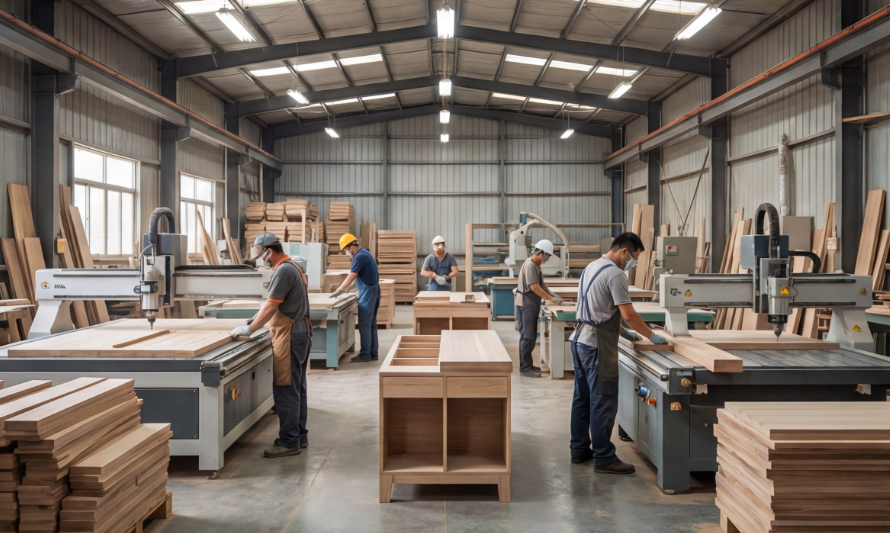
The quality of a piece of wooden bedroom furniture is determined by the joinery and the kiln-drying process used by the factory. Even the best Oak will fail if the moisture content isn’t stabilized before production, leading to cracks and warping. Professional manufacturers emphasize traditional joinery because it relies on wood-to-wood contact rather than fragile metal brackets.
The Importance of Kiln Drying and Joinery
Superior wooden bedroom furniture utilizes precision techniques to ensure the piece remains silent and stable during use.
- Kiln drying to 6-8% moisture prevents the wood from shrinking in your home.
- Dovetail joints are the gold standard for drawer construction strength.
- Mortise and tenon joints provide the rigid support needed for bed posts.
Think of it this way: Mechanical screws eventually work themselves loose, but a well-crafted dovetail joint gets tighter as the weight of the drawer’s contents increases.
Summary: Manufacturing Quality Checklist
| Component | Professional Standard | Budget “Red Flag” |
|---|---|---|
| Drawers | English/French Dovetail | Staples or Glue only |
| Frame | Mortise and Tenon | Cam-locks and Screws |
| Drying | Certified Kiln-Dried | Air-Dried / Unknown |
| Backing | Solid Wood / Plywood | Cardboard / Fiberboard |
This checklist ensures you are buying a product built for stability rather than just initial shelf appeal.
X. Sustainability and Selection Strategies for Your Home
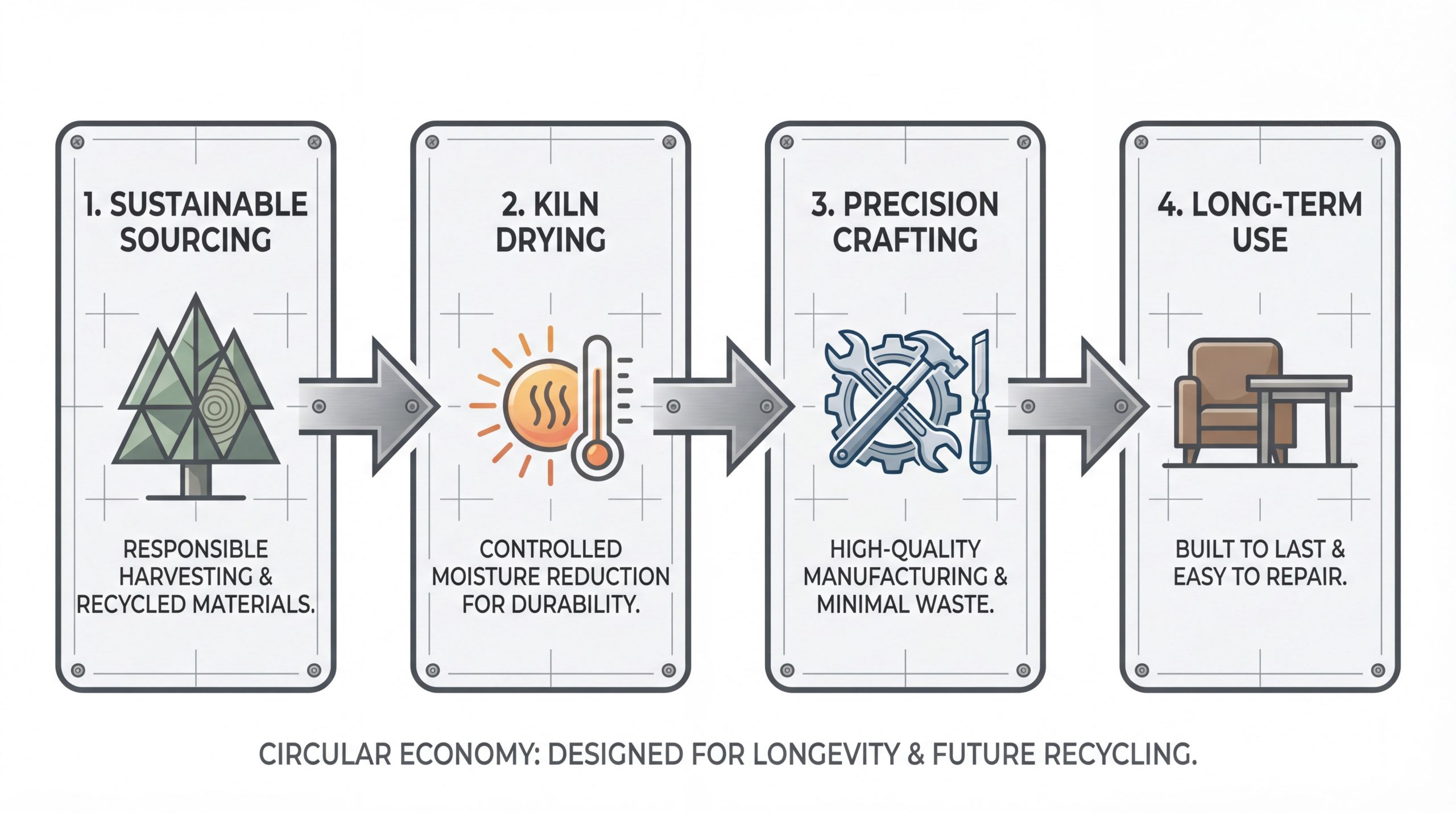
Purchasing sustainable wooden bedroom furniture supports responsible forestry and ensures that your home environment is free from toxic chemicals. Look for FSC-certified timber, which guarantees the wood was harvested in a way that protects biodiversity. As a factory partner, we recommend focusing on species that are abundant and locally sourced to minimize your environmental footprint.
Final Selection Strategy for Buyers
The best wooden bedroom furniture blends ecological responsibility with high-performance manufacturing standards.
- Prioritize North American hardwoods like Maple or Oak for lower shipping emissions.
- Choose water-based finishes to ensure better air quality in the sleeping area.
- Review Custom Furniture Manufacturing options for tailored dimensions.
The bottom line: Buying quality once is always more sustainable and cheaper than buying low-quality items repeatedly throughout your life.
Summary: Final Purchase Strategy
| Step | Action Item | Purpose |
|---|---|---|
| 1 | Check Wood Species | Confirm it is a Hardwood |
| 2 | Inspect Joinery | Look for Dovetails |
| 3 | Verify Finish | Confirm Low-VOC coating |
| 4 | Select Supplier | Partner with a certified factory |
Frequently Asked Questions
Q1: Can I mix different wood types in one bedroom?
A1: Yes, you can mix species as long as you maintain a unifying element like a consistent finish or complementary grain patterns. Mixing a dark Walnut dresser with a lighter Oak bed can create a modern “mixed-media” look that adds visual interest to the space.
Q2: What’s the best wood for a child’s bed?
A2: Maple and Poplar are the best choices for kids’ furniture. Hard Maple is durable enough to withstand rough play, while Poplar is an excellent, cost-effective base for colorful, non-toxic painted finishes that appeal to children.
Q3: How do I identify real solid wood versus veneer?
A3: Check the grain on the edges; real solid wood will show the end-grain pattern where the board was cut, whereas a veneer will show a thin line where the decorative layer was glued to a core. You can also feel the weight, as solid wood is much heavier than veneered particle board.
Closing note
Selecting high-quality timber is the foundation of a healthy and beautiful home. By avoiding engineered shortcuts and prioritizing kiln-dried hardwoods, you ensure your investment stands the test of time. For professional retailers and importers seeking stable quality and flexible MOQs, our factory collaboration offers the expertise needed to bring premium designs to market at EverWoody .