
Many rattan chairs look similar at first glance, but their material, frame, weave, and intended use can be very different. That affects comfort, weight, durability, styling, and where the chair actually works best.
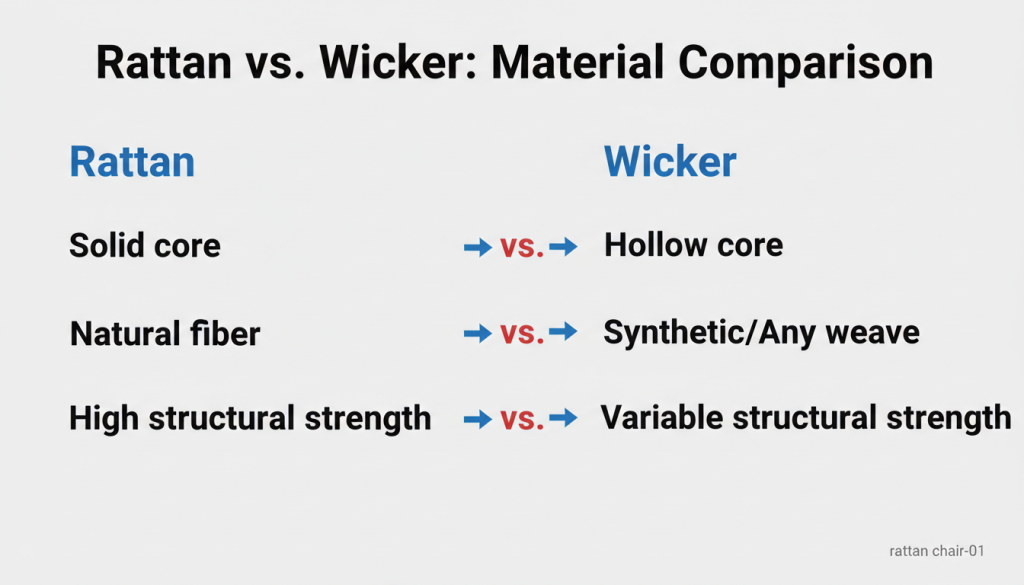
A rattan chair is a chair made with natural rattan or rattan-style synthetic material, often shaped with a woven seat, back, or frame. Rattan is the material, while wicker is the weaving method, so a wicker chair is not always a real rattan chair.
This guide explains what a rattan chair is, how much weight it may hold, how it compares with similar woven materials, how it is made, and which styles fit different spaces.
I. What Is a Rattan Chair?
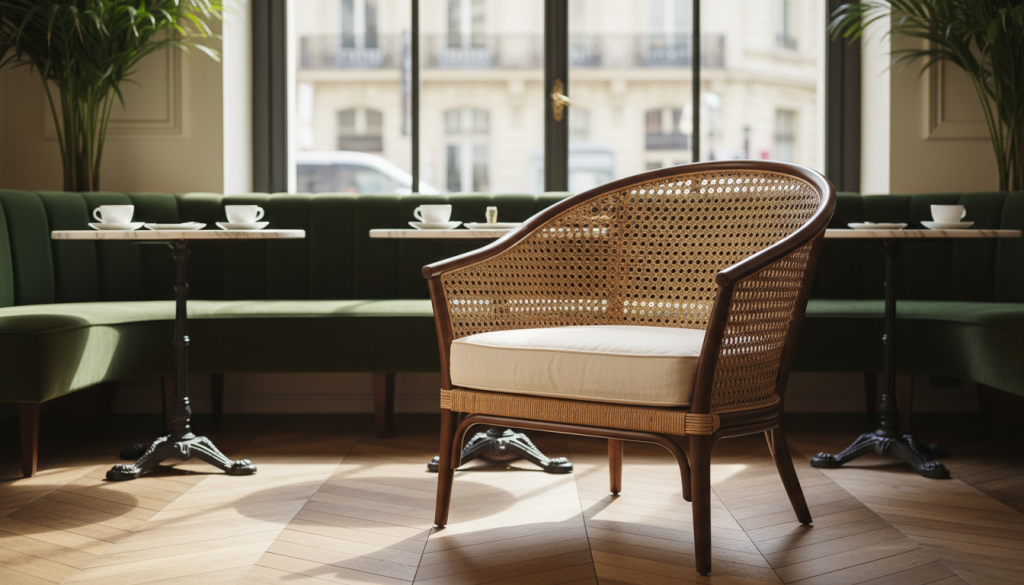
A rattan chair is a chair made with rattan, cane, or rattan-style woven material, often used on the seat, back, arms, or visible frame. The term can describe natural indoor chairs, cane-backed dining chairs, or synthetic outdoor chairs, so the real meaning depends on material, weave, structure, and where the chair is used.
1. Rattan Is the Chair Material
Rattan is a natural climbing palm with flexible stems that can be bent, shaped, and woven into chair parts. It is often used for curved frames, woven seats, chair backs, armrests, and decorative panels because it gives a light structure and a warm, natural texture.
2. Wicker Describes the Weaving Method
Wicker is not a material; it is a weaving method used to make chairs, baskets, panels, and other woven products. A wicker chair may be made from rattan, willow, bamboo, seagrass, synthetic resin, or other flexible strips, so a wicker chair is not always a rattan chair.
These terms are often mixed together, but they do not mean the same thing:
- Rattan means the natural material used in the chair.
- Wicker means the woven construction method.
- Cane usually means the peeled outer layer of rattan used for thin woven panels.
- Synthetic rattan is a plastic-based material designed to look like natural rattan.
This is why “rattan chair” should not be judged by the product name alone.
3. A Rattan Chair Can Mean Several Product Types
A rattan chair can be a fully woven lounge chair, a dining chair with cane panels, a natural rattan accent chair, or an outdoor chair made with synthetic rattan. These chairs may look similar in photos, but their comfort, weight, cleaning needs, and long-term use can be very different.
Here is a quick way to read the product type before judging the chair:
| Chair Type | What It Usually Means | Best Use | Main Detail to Check |
|---|---|---|---|
| Natural rattan chair | Chair made with real rattan cane or frame parts | Indoor living, dining, accent seating | Frame support and surface finish |
| Cane back chair | Wood or metal frame with woven cane panel | Dining rooms, bedrooms, cafés | Panel tension and edge fixing |
| Synthetic rattan chair | Plastic-based woven material shaped like rattan | Patio, balcony, outdoor seating | UV resistance and frame material |
| Rattan-style chair | Looks like rattan but may use mixed materials | Decorative or light daily use | Actual material description |
Key Takeaway:
A rattan chair is not defined by appearance alone. The real difference comes from the material, weaving method, frame support, and whether the chair is designed for indoor or outdoor use.
II. How Much Weight Can a Rattan Chair Hold?
A rattan chair can often hold normal adult body weight, but the exact limit depends on the frame, joints, seat support, and whether the chair uses natural or synthetic rattan. The material alone does not decide strength. A light-looking rattan chair can be stable if its structure is well supported.
1. The Frame Decides Most of the Weight Capacity
The frame decides more about weight capacity than the woven surface itself. A rattan chair with a reinforced wooden, metal, or thick rattan frame will usually feel more stable than a chair that relies mainly on thin woven parts for support.
The most reliable chairs usually have clear support under the seat, firm side connections, and legs that do not twist when pressure is applied.
2. The Seat Structure Matters More Than the Chair Shape
The seat structure affects how well a rattan chair handles daily sitting pressure. A chair with tight weaving, strong edge fixing, and extra support beneath the seat will usually perform better than one with loose cane or a shallow decorative weave.
Here are the main areas to check when judging weight support:
- Seat base: It should not sag too much when someone sits down.
- Leg connection: The legs should stay firm without wobbling.
- Back support: The back should not bend sharply under pressure.
- Joint areas: The corners and side joints should not show gaps or cracks.
- Weave tension: The woven surface should feel tight, not loose or uneven.
These checks matter because most chair failures start from weak connections, not from the rattan look itself.
3. Natural and Synthetic Rattan Handle Pressure Differently
Natural rattan is flexible and lightweight, but it can weaken if it stays damp, dry, or sun-exposed for too long. Synthetic rattan may handle outdoor conditions better, but its strength still depends on the inner frame and the quality of the woven strips.
A strong synthetic rattan chair with a weak frame is still a weak chair. A natural rattan chair with good frame support can feel much more stable than its light appearance suggests.
4. Weight Capacity Should Be Read as a Use Condition
Weight capacity is not only a number. It also depends on how the chair is used, how often it is moved, whether people lean back heavily, and whether the chair is placed on flat ground.
Here is a simple way to judge the real support behind the number:
| What to Check | Why It Matters | Better Sign | Risk Sign |
|---|---|---|---|
| Frame material | Carries the main body weight | Thick rattan, wood, or metal frame | Thin decorative frame |
| Seat support | Prevents sagging and breakage | Tight weave with under-seat support | Loose weave without reinforcement |
| Joint strength | Keeps the chair stable over time | Firm corners and fixed legs | Wobble, gaps, or glue marks |
| Use environment | Affects material aging | Dry indoor or covered use | Rain, dampness, strong sun |
| Sitting behavior | Changes pressure on the chair | Normal upright sitting | Heavy leaning or rocking |
Key Takeaway:
A rattan chair’s weight capacity should be judged by structure, not appearance. The safest signs are a firm frame, tight seat support, stable joints, and a use environment that matches the material.
III. Which Is More Durable: Rattan or Seagrass?
Rattan is usually more durable than seagrass for a rattan chair because it has stronger stems, better bending strength, and wider use in chair frames, backs, arms, and seats. Seagrass can work well as a woven surface, but it is usually less suitable for parts that need repeated load support.

1. Rattan Handles Chair Structure Better
Rattan is better suited for chair structure because it can be bent, shaped, and fixed into stronger curved parts. It is often used for chair frames, backrests, arms, and woven seats where the material needs to handle body movement and daily pressure. Seagrass is usually flatter and softer, so it works better as a surface material than as the main support.
2. Seagrass Works Better as a Woven Surface
Seagrass is often used for chair seats, stools, baskets, and decorative panels because it gives a natural texture and a relaxed, handmade look. It can feel warm and organic, but it is more sensitive to moisture, friction, and long-term compression than rattan.
Use this quick comparison when judging whether rattan or seagrass fits the chair’s real use:
- Choose rattan when the chair needs a stronger frame support, a curved structure, or daily sitting strength.
- Choose seagrass when the woven part is mainly a seat surface, panel, or decorative texture.
- Avoid both materials in wet, uncovered, or highly humid spaces unless the chair is clearly made for that environment.
- Check the support underneath if the seat is woven, because surface texture alone does not prove strength.
This comparison matters because the two materials may look similar in photos, but they do not carry weight in the same way.
3. Rattan vs Seagrass: Quick Durability Guide
The table below separates material strength from appearance, so the chair is judged by how it will actually be used.
| Comparison Point | Rattan | Seagrass | Better Choice |
|---|---|---|---|
| Frame support | Stronger and more flexible | Usually not used for full frames | Rattan |
| Seat surface | Good if tightly woven | Good for light to medium use | Depends on use |
| Moisture resistance | Sensitive to long damp exposure | Also sensitive to dampness | Neither for wet areas |
| Shape retention | Better under repeated sitting | May flatten or loosen faster | Rattan |
| Decorative texture | Natural and structured | Softer and more rustic | Depends on style |
| Daily chair use | More suitable | Better for lighter use | Rattan |
Key Takeaway:
Rattan is usually the stronger choice for a chair body, while seagrass is better for woven texture and lighter-use surfaces. If the chair will be used every day, structure matters more than the natural woven look.
IV. How Are Rattan Chairs Made?
Rattan chairs are made by shaping the frame, preparing the woven material, fixing the seat or back panels, and finishing the surface for daily use. A good rattan chair is not only about the woven look; it also depends on how the frame, joints, edges, and surface are built together.
1. The Frame Gives the Chair Its Shape
The frame is usually the first part that decides the chair’s shape, strength, and sitting posture. Natural rattan can be bent into curved lines, while wood or metal may also be used as an inner support for some rattan-style chairs. If the frame is weak, even beautiful weaving cannot make the chair feel stable.
2. The Weaving Must Stay Tight and Even
The woven part of a rattan chair should look even, but it also needs enough tension to support daily use. Loose weaving may feel soft at first, but it can sag, shift, or open up after repeated sitting.
When checking how a rattan chair is made, these details matter more than the decorative pattern alone:
- Frame shape: The chair should sit evenly on the floor without twisting.
- Seat support: The woven seat should feel firm, not hollow or loose.
- Edge fixing: The woven ends should be tucked, fixed, or covered cleanly.
- Joint areas: The arms, legs, and back should connect without visible gaps.
- Surface finish: The touch points should feel smooth, not sharp or rough.
These small details explain why two similar rattan chairs can feel very different after real use.

3. The Finish Affects Touch, Cleaning, and Long-Term Look
The final finish helps protect the rattan surface and changes how the chair feels in daily use. A smooth finish makes the chair easier to touch, clean, and move around without catching on clothing or cushions. For a broader look at how material, structure, and finishing work together in furniture, see this guide on the furniture manufacturing process.
| Making Step | What It Affects | Better Sign | Risk Sign |
|---|---|---|---|
| Frame shaping | Chair balance and posture | Even legs, stable outline | Twisted or uneven shape |
| Seat weaving | Sitting comfort and support | Tight, even woven surface | Loose or sagging weave |
| Edge fixing | Safety and durability | Clean covered edges | Exposed ends or sharp points |
| Joint connection | Long-term stability | Firm arms, legs, and back | Gaps, wobble, weak corners |
| Surface finishing | Touch and cleaning | Smooth, sealed surface | Rough, dry, or flaky areas |
Key Takeaway:
A rattan chair is made well when the frame, weaving, joints, edges, and finish work together. The chair should not only look woven; it should feel balanced, firm, smooth, and suitable for the space where it will be used.
V. How Should You Style a Rattan Chair?
A rattan chair works best when its natural texture supports the room’s style instead of fighting with it. It can fit coastal, farmhouse, boho, mid-century, Scandinavian, and relaxed modern spaces, but the final effect depends on chair shape, cushion color, surrounding materials, and where the chair is placed.
1. Match the Chair Shape With the Room Mood
A rounded rattan lounge chair usually feels softer and more relaxed, so it fits reading corners, bedrooms, sunrooms, and casual living spaces. A straighter cane-back dining chair feels cleaner and more structured, which works better around dining tables, desks, cafés, or compact rooms.
The easiest styling mistake is choosing only by material. A rattan chair with a high back, wide arms, or deep seat will feel very different from a slim armless cane chair.
2. Use Cushions to Control Comfort and Color
Cushions can make a rattan chair more comfortable and help it match the room without changing the chair itself. Light cushions create a softer, airy look, while darker cushions add contrast and make the chair feel more grounded.
Use this quick styling check before choosing cushions for a rattan chair:
- For a coastal look: choose light beige, cream, white, or pale blue cushions.
- For a warm, natural look: choose linen, cotton, or textured neutral fabric.
- For a mid-century look: choose slim cushions and cleaner seat shapes.
- For a bolder room: use darker cushions, patterned pillows, or contrast throws.
- For daily sitting: choose cushions with enough thickness, not only decorative fabric.
This is where style and comfort meet. A good-looking rattan chair still needs the right seat feel if it will be used often.
3. Rattan Chair Styling Guide by Space
The table below shows how different rattan chair styles usually work in real rooms.
| Space | Better Rattan Chair Style | Why It Works | Detail to Avoid |
|---|---|---|---|
| Living room | Lounge chair or accent chair | Adds texture without feeling too heavy | Oversized chair in a small room |
| Dining room | Cane-back dining chair | Looks light around the table | Loose seat support |
| Bedroom | Small accent chair | Softens the room visually | Chair too deep for the space |
| Sunroom | Natural rattan lounge chair | Matches bright, relaxed settings | Direct harsh sunlight all day |
| Patio or balcony | Synthetic rattan chair | Handles outdoor use better | Natural rattan in rain |
| Café or hotel space | Cane or rattan-style chair | Gives a warm casual look | Decorative chair with weak joints |
Key Takeaway:
A rattan chair is easiest to style when the chair shape, cushion, room size, and use scenario match. The safest approach is not to chase the “rattan look” alone, but to check whether the chair fits the space and how people will actually sit in it.
VI. What Is a French Rattan Dining Chair?
A French rattan dining chair is usually a dining chair with a slim frame, woven cane or rattan back, and a light café-style look. It works well in dining rooms, breakfast corners, cafés, and relaxed hospitality spaces because it feels airy, classic, and less visually heavy than many fully upholstered chairs.
1. The Look Usually Comes From Cane or Rattan Details
French rattan dining chairs often use woven cane panels on the backrest or seat instead of a fully woven rattan body. The frame may be wood, bentwood, metal, or a painted structure, while the woven part adds texture and lightness.
This is why many French-style chairs look similar even when their actual materials differ. The “French rattan” look is usually about the slim outline, curved frame, and woven panel, not only the use of natural rattan.
2. Comfort Depends on Seat Shape and Back Support
A French rattan dining chair should not be judged by appearance alone because dining comfort depends on seat depth, back angle, frame height, and woven panel tension. A beautiful cane back may still feel uncomfortable if the seat is too flat, too narrow, or poorly supported.
Use this quick check before choosing a French rattan dining chair for regular meals:
- Seat height: It should match the dining table height comfortably.
- Seat depth: It should allow normal sitting without forcing the knees forward.
- Back angle: It should support the back without leaning too far.
- Cane tension: The woven panel should feel firm, not loose or sagging.
- Frame balance: The chair should not wobble when pulled in and out.
These checks matter because dining chairs are moved, sat on, and leaned against more often than decorative accent chairs.
3. French Rattan Dining Chair Style Guide
The table below separates common French rattan dining chair styles by room fit and daily-use risk.
| Style Type | Best Fit | Why It Works | Detail to Check |
|---|---|---|---|
| Cane-back dining chair | Dining rooms, cafés | Light look with better structure | Back panel tension |
| Bistro-style rattan chair | Breakfast corners, casual dining | Classic café feeling | Frame balance and seat height |
| Painted frame rattan chair | Bright or coastal rooms | Softens the woven texture | Paint finish around joints |
| Natural wood frame chair | Warm dining spaces | Blends with wood tables | Seat support and edge fixing |
| Armless rattan dining chair | Smaller rooms | Saves visual and physical space | Seat width and back comfort |
Key Takeaway:
A French rattan dining chair is mainly about a slim dining shape with woven cane or rattan details. It is a good choice when the chair needs to look light, but comfort still depends on seat height, back support, panel tension, and frame balance.
VII. What Are the Benefits of a Mid-Century Rattan Chair?
A mid-century rattan chair is useful when you want a chair that feels light, warm, and structured without making the room look heavy. Its main benefit is the balance between clean lines and natural woven texture, so it can soften modern interiors while still keeping a simple shape.
1. The Shape Feels Clean but Not Cold
Mid-century rattan chairs often use slim legs, angled frames, curved backs, and simple woven surfaces. This makes them easier to place beside wooden tables, low cabinets, reading corners, or neutral living rooms without creating a bulky look.
The style works because rattan adds warmth to a clean frame. The chair should still be judged by seat depth, back angle, leg stability, and whether the woven part feels supportive enough for real sitting.
2. The Chair Works Well in Mixed Interiors
A mid-century rattan chair can sit between modern, natural, vintage, and relaxed room styles. It does not look as formal as a fully upholstered chair, but it also feels more structured than a loose boho lounge chair.
Use this quick check to decide whether a mid-century rattan chair fits the room:
- Choose it for clean rooms that need more warmth and texture.
- Use it near wood furniture when the tones do not fight each other.
- Avoid oversized shapes if the room already has many low, wide pieces.
- Check seat comfort if the chair will be used for long sitting.
- Keep the weave simple if the room already has strong patterns.
This style works best when the rattan detail supports the room instead of becoming the loudest element.
3. Mid-Century Rattan Chair Style Guide
A mid-century rattan chair should be judged by how its shape works in the room, not only by whether the woven detail looks attractive. Slim legs, curved backs, low seats, and armless designs all change how the chair feels in daily use. The best choice is the one that matches the room size, seating purpose, and surrounding furniture.
| Chair Detail | Better Fit | Why It Works | Detail to Check |
|---|---|---|---|
| Slim angled legs | Small living rooms, bedrooms | Keeps the chair visually light | Leg stability |
| Curved cane back | Reading corners, dining spaces | Adds comfort and texture | Back support |
| Wooden frame with rattan panel | Warm modern interiors | Blends structure with natural detail | Frame finish |
| Low lounge shape | Relaxed seating areas | Feels casual and comfortable | Seat depth |
| Armless design | Compact rooms | Saves space around the chair | Seat width |
Key Takeaway:
A mid-century rattan chair works best when the room needs warmth, texture, and a lighter visual profile. The style is attractive, but the better judgment is still shape, seat comfort, frame stability, and whether the woven detail fits the surrounding furniture.
The naming gets confusing here, so this section needs a clean separation between chair shape and woven construction.
VIII. What Is the Difference Between an Armless Rattan Chair and a Wicker Armchair?
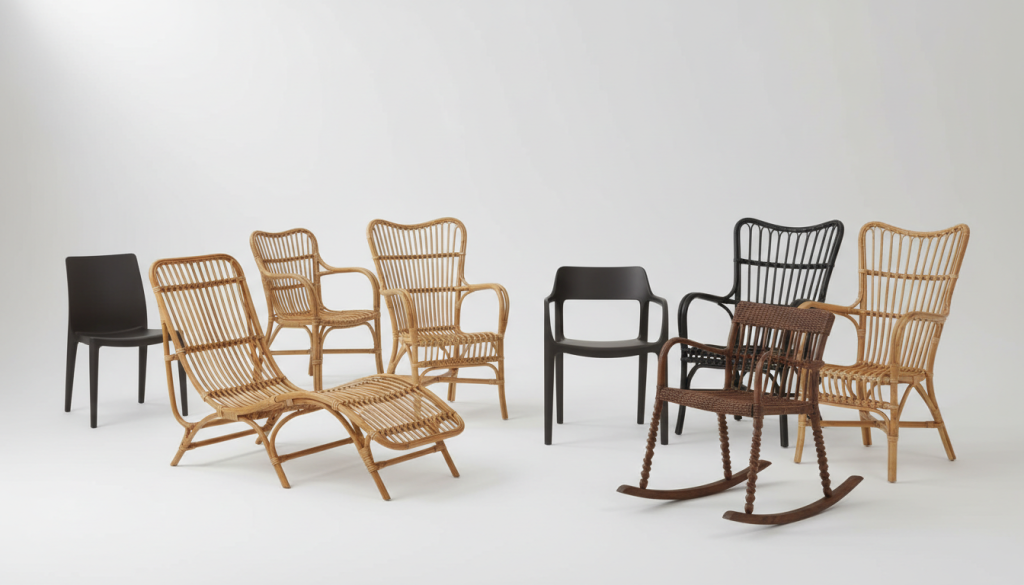
An armless rattan chair describes a chair shape and material, while a wicker armchair describes a chair shape and weaving method. The first usually focuses on a rattan or rattan-style chair without arms, and the second focuses on a woven armchair that may be made from rattan, resin, willow, or other flexible materials.
1. Armless Rattan Chairs Save Space
An armless rattan chair is usually easier to place around dining tables, desks, small cafés, bedrooms, and compact living areas. Without arms, the chair takes less side space and can slide under a table more easily.
This shape also makes movement easier. The trade-off is that it may feel less relaxed for long sitting than a wider armchair.
2. Wicker Armchairs Feel More Relaxed
A wicker armchair usually feels more casual and lounge-like because the arms give extra support and visual width. It may be made from natural rattan, synthetic resin, willow, bamboo, or other woven materials, so the word “wicker” does not confirm the actual material. If the material name is still unclear, this guide on what rattan material is gives a cleaner base before comparing chair types.
Use this quick check when comparing an armless rattan chair with a wicker armchair:
- Choose an armless rattan chair when the space is narrow, the chair needs to fit under a table, or the room needs a lighter look.
- Choose a wicker armchair when comfort, relaxed sitting, and visual presence matter more than compact placement.
- Check the actual material because wicker can be natural or synthetic.
- Check the seat width because armless chairs can feel less forgiving during long sitting.
- Check the arm height if the chair must fit near a table or under a counter edge.
This comparison is not only about style. It also affects space planning, sitting posture, and how often the chair will be moved.
3. Armless Rattan Chair vs Wicker Armchair Guide
The better choice depends on the room size, sitting purpose, and whether the chair needs to feel compact or relaxed. An armless rattan chair usually fits tighter spaces better, while a wicker armchair gives more comfort and visual weight. The safest judgment is to compare shape, material, and daily use together.
| Comparison Point | Armless Rattan Chair | Wicker Armchair | Better Fit |
|---|---|---|---|
| Chair shape | No arms, slimmer outline | Has arms, wider profile | Depends on space |
| Main meaning | Material plus chair shape | Weaving method plus armchair shape | Depends on label accuracy |
| Space use | Easier for compact rooms | Needs more side space | Armless rattan chair |
| Sitting comfort | Good for dining or short sitting | Better for relaxed sitting | Wicker armchair |
| Table fit | Easier to slide in | Arm height may interfere | Armless rattan chair |
| Material certainty | Usually points to rattan or rattan-style material | May use many woven materials | Armless rattan chair |
Key Takeaway:
An armless rattan chair is usually better for compact spaces, dining areas, and lighter room layouts. A wicker armchair is usually better when the chair needs more comfort, arm support, and a relaxed lounge feeling.
A chair made for outdoor use may look casual enough for indoor rooms, but the material and frame still need a closer look.
IX. Can You Use Outdoor Rattan Furniture Inside?
You can use outdoor rattan furniture inside if the size, frame, cushion, and surface texture fit the room. Many outdoor rattan chairs are made from synthetic rattan or PE rattan, so they may handle moisture better than natural rattan, but they can also look heavier or less refined indoors.
1. Outdoor Rattan Chairs Can Work Indoors
Outdoor rattan chairs can work well in sunrooms, casual dining areas, covered patios, rental homes, and relaxed living spaces. They are usually easier to clean than natural rattan chairs, especially when the woven surface is synthetic and the frame is metal or treated wood.
The main issue is visual weight. Some outdoor chairs have thicker frames, wider arms, and bulkier cushions, which may make a small indoor room feel crowded.
2. Material and Texture Decide the Indoor Fit
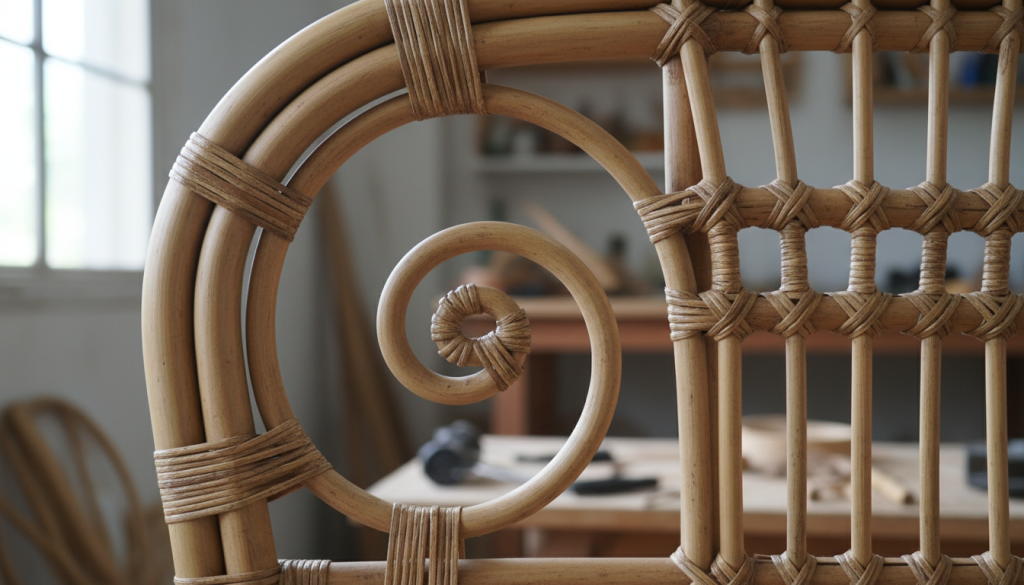
Outdoor rattan furniture often uses synthetic woven material rather than natural rattan, especially when it is designed for rain, sunlight, or regular cleaning. If you are comparing outdoor-style chairs with natural indoor rattan, this guide on what PE rattan is helps explain why many “rattan” outdoor chairs are not made from natural rattan.
Use this quick check before bringing outdoor rattan furniture inside:
- Check the frame size because outdoor chairs can be wider and deeper than indoor chairs.
- Check the woven texture because thick synthetic strips may look less delicate indoors.
- Check the cushion fabric because outdoor fabric may feel stiffer than indoor upholstery.
- Check the leg feet because outdoor chair feet may scratch the indoor flooring.
- Check the room style because patio-style chairs do not always match formal dining or compact rooms.
These details decide whether the chair feels intentional indoors or simply looks like patio furniture moved inside.
3. Outdoor Rattan Furniture Used Indoors: Quick Guide
3. Outdoor Rattan Furniture Used Indoors: Quick Guide
Outdoor rattan furniture works best indoors when the room already has a relaxed, natural, or casual style. It is less suitable when the space needs a slim dining profile, a formal look, or a softer upholstered feeling. For weather-exposed spaces, outdoor furniture options should be judged by frame, woven material, cushion fabric, and room fit.
| Indoor Space | Outdoor Rattan Fit | Why It May Work | Detail to Check |
|---|---|---|---|
| Sunroom | Strong fit | Matches bright, casual spaces | Direct sunlight and cushion fading |
| Casual dining area | Possible fit | Easy to clean and move | Seat height and chair width |
| Living room | Depends on style | Adds texture and relaxed feeling | Frame bulk and cushion softness |
| Bedroom corner | Limited fit | Can work as a casual accent | Chair depth and visual weight |
| Formal dining room | Usually weaker fit | May look too patio-like | Finish, frame, and proportion |
| Rental or vacation home | Strong fit | Durable and easy to maintain | Floor protection and cushion fabric |
Key Takeaway:
Outdoor rattan furniture can be used inside, but it should not be judged only by durability. The better question is whether the chair scale, cushion feel, woven texture, and overall style match the indoor room.
X. Rattan vs Wicker: Which One Should You Choose?
You should choose rattan when the chair material matters, and choose wicker when you are mainly describing the woven look or construction method. For a rattan chair, the safer decision is to check both the material behind the weave and the way the chair is built for indoor, outdoor, or daily use.
1. Choose Rattan When Material Matters More
Rattan is the better word to focus on when you need to know what the chair is actually made from, because natural rattan, cane, PE rattan, and resin-based woven strips can look similar but perform differently. Indoor rooms usually fit natural rattan or cane better, while patios and balconies usually need synthetic rattan that can handle cleaning and weather exposure.
Use this quick material check before choosing a rattan chair or rattan-style chair:
- Choose natural rattan for indoor rooms, relaxed dining spaces, bedrooms, and covered areas.
- Choose cane panels when the chair needs a lighter dining or accent chair look.
- Choose synthetic rattan for patios, balconies, and easier cleaning.
- Avoid natural rattan outdoors if the chair will face rain, dampness, or strong sun.
- Check the frame because material alone does not prove comfort or stability.
2. Choose Wicker When You Mean the Woven Look
Wicker is the better word when you are talking about the woven pattern, because wicker describes the construction method rather than the actual material. A wicker chair may be made from natural rattan, PE rattan, resin, willow, bamboo, or other flexible strips, so the label needs a second look before you judge durability or outdoor use.
For outdoor spaces where material, structure, and weather exposure need to work together, our outdoor furniture options can give you a more practical reference point.
3. Rattan vs Wicker Choice Guide
Rattan and wicker should not be treated as direct opposites, because one answers the material question and the other answers the weaving question. The better choice depends on whether you are judging indoor style, outdoor use, comfort, frame support, or long-term shape retention.
| Decision Point | Choose Rattan | Choose Wicker | Better Question to Ask |
|---|---|---|---|
| Material clarity | When you need to know what the chair is made from | Not enough by itself | What material is under the woven look? |
| Indoor use | Natural rattan or cane usually fits better | Works if the material matches the room | Is it natural, cane, or synthetic? |
| Outdoor use | Synthetic rattan is safer than natural rattan | Wicker may work if it is resin or PE | Is it made for weather exposure? |
| Style judgment | Useful for natural texture | Useful for woven appearance | Does the look match the space? |
| Comfort judgment | Depends on frame and seat support | Depends on shape and weave tension | Is the seat stable and comfortable? |
| Long-term use | Depends on material and environment | Depends on material behind the weave | Will it keep shape after daily use? |
Key Takeaway:
Rattan tells you more about the material, while wicker tells you more about the woven construction. For a rattan chair, the safest decision is to check the material, frame, weave tension, comfort, and where the chair will actually be used.
Frequently Asked Questions
Can a rattan chair be used outside?
A natural rattan chair is usually not the best choice for uncovered outdoor use. Natural rattan can weaken, fade, or loosen when it faces rain, dampness, and strong sunlight for a long time. For patios, balconies, or garden areas, synthetic rattan or PE rattan is usually safer.
Is rattan stronger than wicker?
Rattan and wicker are not the same type of word, so they cannot be compared directly. Rattan is a material, while wicker is a weaving method. A wicker chair can be made from rattan, synthetic resin, willow, bamboo, or other materials, so the real strength depends on the material and frame.
How do I know if a rattan chair is good quality?
A good rattan chair should feel stable, smooth, and well supported. Check whether the frame wobbles, whether the woven seat feels tight, whether the joints have gaps, and whether the surface feels rough or sharp. The chair should match its use environment, not just look attractive in photos.
Final Check
A rattan chair is easy to like, but it should not be judged by the woven look alone. Material, frame support, weave tension, seat comfort, room fit, and outdoor exposure all change how the chair performs.
If you are comparing rattan-style chairs for a product line or custom furniture project, contact us to review material options, structure details, and suitable use scenarios before moving forward.