
Many people use cupboard and cabinet as if they mean the same thing. That is fine in daily conversation, but it becomes confusing when you are choosing storage for a kitchen, dining room, bathroom, pantry, or living space.
A cupboard is usually a freestanding storage piece used for food, dishes, linens, or display items. A cabinet is more often fixed, fitted, or built into a room layout, especially in kitchens, bathrooms, offices, and wall storage systems.
I. Is It a Cupboard or a Cabinet?
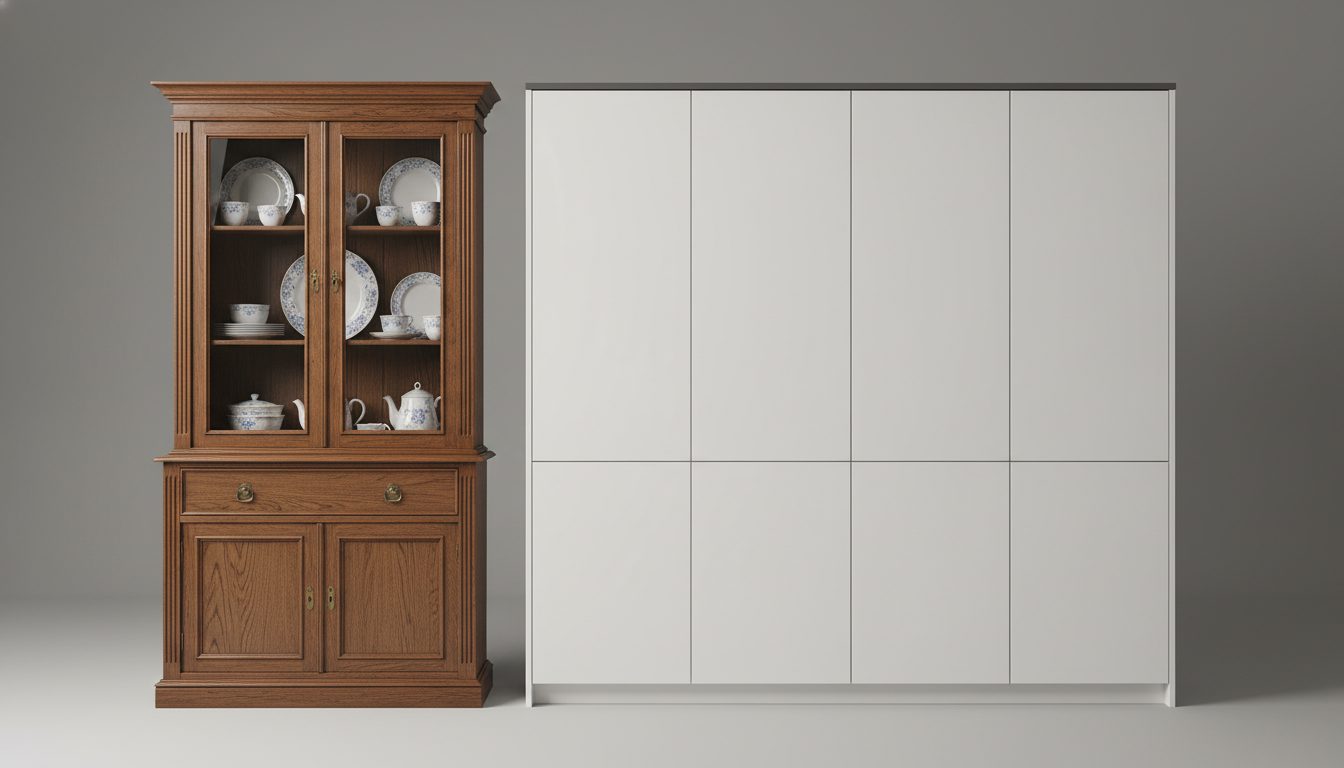
A cupboard and a cabinet are both storage furniture, but they are not always used in the same way. A cupboard usually works more like a standalone furniture piece, while a cabinet is often fixed to a wall, fitted under a counter, or built into a room system.
1. Cupboards Usually Stand on Their Own
A cupboard traditionally means a freestanding storage unit with doors and shelves, often used for dishes, food, linens, or household items. It usually has finished side panels, a visible base, and a furniture-like appearance because it may be seen from several angles in the room.
A cupboard usually makes sense when the storage piece needs to:
- stand independently in the room
- show finished sides, top, or legs
- store dishes, linens, pantry goods, or display items
- remain easier to move than fitted storage
2. Cabinets Usually Fit Into a Room Layout
A cabinet usually means a storage unit designed to be installed, mounted, or fitted into a specific place. Kitchen base cabinets, bathroom cabinets, office filing cabinets, and built-in wall cabinets all work this way because they often connect with counters, appliances, plumbing, walls, or other storage units.
3. The Simplest Way to Tell Them Apart
The easiest way to separate the two is to look at placement and purpose rather than only the word itself. If the unit looks like movable furniture, a cupboard is usually the better word; if it is fixed, fitted, or part of a built-in system, a cabinet is usually clearer.
| Feature | Cupboard | Cabinet | What It Means |
|---|---|---|---|
| Placement | Often freestanding | Often fixed or fitted | Cupboards feel more movable |
| Main use | Dishes, food, linens, display | Kitchen, bathroom, office, fitted storage | Cabinets usually serve more specific room functions |
| Exterior finish | Often finished on visible sides | Often focused on front faces | Cabinets may depend on walls or nearby units |
| Visual role | More furniture-like | More built-in or functional | Cupboards stand out more |
Key Takeaway: If the storage piece stands alone and looks like furniture, “cupboard” usually fits better. If it is fixed, fitted, or part of a room system, “cabinet” is usually the clearer word.
II. Where Do Cupboards and Cabinets Perform Best?
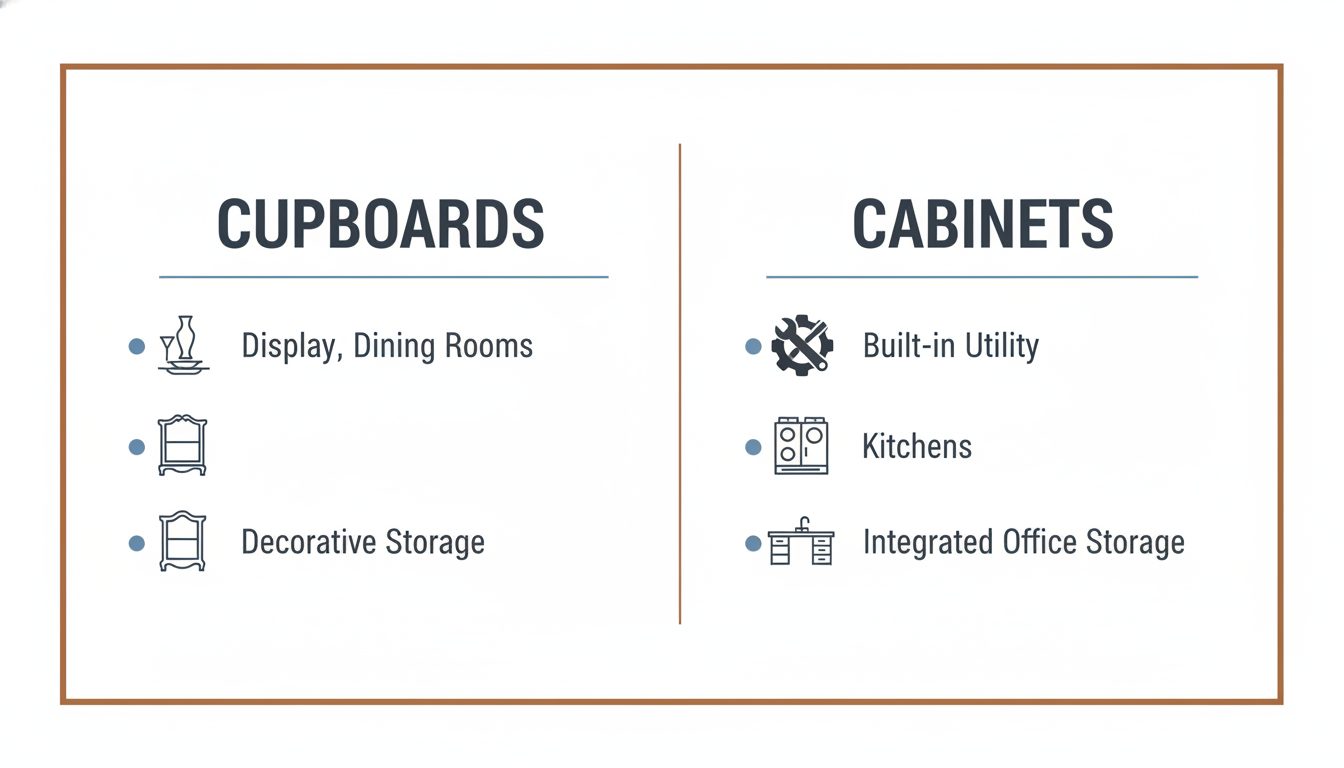
Cupboards usually work best where flexible storage and visible furniture style matter. Cabinets work better in rooms that need fitted storage, plumbing access, countertops, wall mounting, or organized daily use.
1. Kitchens Usually Need Cabinets
In kitchens, fixed wall and base units usually fall closer to kitchen cabinets because they must align with countertops, sinks, appliances, and cooking zones. These units need practical storage, easy cleaning, stable installation, and clear access to items used every day.
2. Dining Rooms Often Suit Cupboards
A dining room often suits a cupboard because the storage may also act as part of the room’s style. A glass-front cupboard, china cupboard, or tall wooden cupboard can store plates, glasses, and table linens while keeping the room warmer and less built-in.
A quick room check helps avoid choosing the wrong storage style:
- use cabinets for counters, appliances, plumbing, or wall-fitted layouts
- use cupboards for movable storage with a stronger furniture look
- use glass-front cupboards when display matters
- use closed cabinets when hiding clutter matters more
3. Bathrooms, Offices, and Living Rooms Change the Meaning
Bathrooms and offices usually lean toward cabinets because the storage is more functional and often fixed in place. Living rooms are more flexible, so the same piece may be called a cupboard, cabinet, sideboard, or console depending on whether it is decorative, fitted, or used for media storage.
| Room or Area | Better Word in Most Cases | Why It Fits |
|---|---|---|
| Kitchen | Cabinet | Usually fixed, fitted, and connected to counters or appliances |
| Dining room | Cupboard | Often freestanding and used for dishes, linens, or display |
| Bathroom | Cabinet | Often fitted around sinks, mirrors, plumbing, or walls |
| Pantry | Cupboard or cabinet | Depends on whether it is freestanding or built in |
| Living room | Cupboard or cabinet | Depends on whether it is decorative, fitted, or media-focused |
| Office | Cabinet | Often used for filing, equipment, or work storage |
Key Takeaway: Kitchens and bathrooms usually lean toward cabinets. Dining rooms, pantries, and living spaces leave more room for cupboards, especially when the storage also needs to look like furniture.
III. Which Rooms Typically House These Units?
Cupboards are more common in dining rooms, pantries, hallways, and living spaces. Cabinets are more common in kitchens, bathrooms, offices, and built-in storage areas because those rooms need more fixed or task-based storage.
1. Pantries and Hallways Often Use Cupboards
A pantry cupboard can hold dry food, jars, small appliances, or household supplies without needing a full fitted kitchen layout. In hallways, a cupboard can store shoes, coats, cleaning tools, or seasonal items while still looking like part of the furniture.
2. Kitchens and Bathrooms Usually Need Cabinets
Kitchens usually need cabinets because storage must fit under counters, mount on walls, and align with appliances. Bathrooms also rely on cabinets because the units often need to fit around sinks, mirrors, and plumbing while handling daily moisture.
Before choosing the term, look at what the room is asking the storage to do:
- Does it need to fit around plumbing or counters?
- Does it need to stand alone as furniture?
- Will the sides and top stay visible?
- Does the room need display, hidden storage, or both?
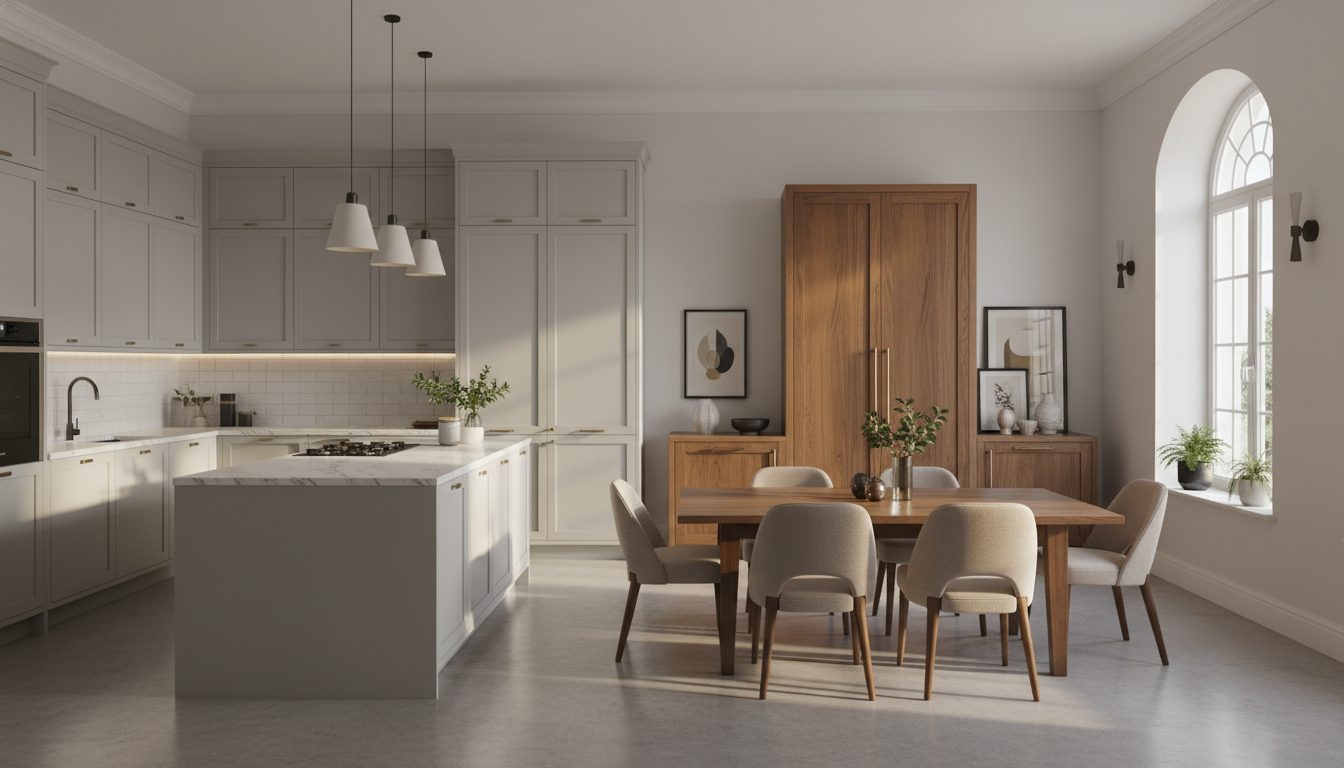
3. The Room Usually Explains the Name
The room’s practical demand often explains the naming difference better than a dictionary definition. A dining room cupboard, kitchen cabinet, bathroom cabinet, and hallway cupboard all make sense because each name reflects how the storage sits, works, and looks in that room.
| Room Type | Typical Storage Word | Main Reason |
|---|---|---|
| Dining room | Cupboard | Stores dishes, linens, and display items |
| Pantry | Cupboard or cabinet | Depends on freestanding or built-in layout |
| Kitchen | Cabinet | Works with counters, appliances, and wall layouts |
| Bathroom | Cabinet | Handles sinks, mirrors, plumbing, and moisture |
| Hallway | Cupboard | Flexible storage for everyday household items |
| Office | Cabinet | Practical storage for files, tools, or equipment |
Key Takeaway: Cupboards usually belong where storage can stand as furniture. Cabinets usually belong where storage must fit the room’s structure or support a specific daily function.
IV. What Storage Needs Does Each Style Solve?
Cupboards usually solve flexible household storage and display needs, while cabinets solve more fixed, task-based storage needs. The better choice depends on whether you want to show items, hide clutter, support heavy daily use, or fit storage into a specific room layout.
1. Cabinets Are Better for Heavy or Daily-Use Storage
Cabinets usually work better when the storage needs to handle cookware, cleaning supplies, bathroom items, office files, or other things used every day. A closed cabinet keeps these items hidden, easier to organize, and closer to the work area where they are needed.
For daily storage, cabinets are usually the safer choice when the unit needs to handle:
- heavy cookware or appliances
- cleaning products or bathroom supplies
- office files, tools, or equipment
- frequent opening and closing
- wall-mounted or under-counter placement
2. Cupboards Are Better for Display and Flexible Storage
Cupboards work well when storage also needs to look warm, decorative, or furniture-like. A glass-front cupboard, dining cupboard, or pantry cupboard can hold dishes, table linens, dry goods, or display objects without making the room feel too built-in.
3. Some Pieces Sit Between the Two
Some storage furniture can reasonably be called either a cupboard or a cabinet, especially when it has doors, shelves, and a finished exterior. A sideboard and buffet may act like a dining room cupboard, but buyers may still describe it as a cabinet if it has closed storage and a more modern shape.
| Storage Need | Better Choice | Why It Works |
|---|---|---|
| Heavy cookware | Cabinet | Better for fixed, daily-use storage |
| Fine dishes | Cupboard | Better for display and dining room storage |
| Bathroom items | Cabinet | Better for moisture-prone, fitted spaces |
| Table linens | Cupboard | Easy to store near dining areas |
| Office files | Cabinet | Better for organized work storage |
| Decorative objects | Cupboard | Looks more furniture-like |
Key Takeaway: Choose a cabinet when function, load, and daily access matter most. Choose a cupboard when flexible placement, display, and room style matter more.
V. How Do They Affect Your Room’s Visual Style?
A cupboard usually adds a stronger furniture feeling, while a cabinet usually creates a cleaner built-in look. This visual difference matters because the wrong choice can make a room feel too heavy, too plain, or too disconnected from the rest of the layout.
1. Cupboards Add a Warmer Furniture Look
Cupboards often look softer and more decorative because they stand independently and show more finished surfaces. Raised panels, glass doors, visible legs, wood grain, and detailed handles can make a cupboard feel like part of the room’s furniture instead of part of the wall.
A cupboard usually works better when the room needs:
- a warmer traditional look
- visible wood texture or decorative details
- a display area for dishes or objects
- storage that does not feel permanently built in
2. Cabinets Create a Cleaner Built-In Look
Cabinets usually create a more structured and fitted appearance because they align with counters, walls, appliances, mirrors, or other storage units. Flat fronts, hidden hinges, simple pulls, and repeated modules can make a kitchen, bathroom, office, or wardrobe wall look cleaner and more continuous.
3. Style Also Depends on Door Design and Finish
The same storage piece can feel traditional or modern depending on its door profile, finish, and hardware. A painted shaker cabinet may feel warm and classic, while a flat matte cupboard can feel modern, so the name alone does not decide the final look.
| Visual Goal | Better Direction | Design Details That Help |
|---|---|---|
| Warm and traditional | Cupboard | Wood grain, raised panels, glass doors |
| Clean and modern | Cabinet | Flat fronts, hidden hinges, simple lines |
| Dining room display | Cupboard | Glass doors, open shelves, warmer finish |
| Kitchen continuity | Cabinet | Repeated modules, matched fronts, fitted layout |
| Flexible living room storage | Cupboard or cabinet | Depends on size, finish, and door style |
Key Takeaway: Cupboards usually stand out as furniture, while cabinets usually blend into the room structure. Door style, finish, and hardware decide how strong that difference feels.
VI. What Are the Standard Depth Differences?
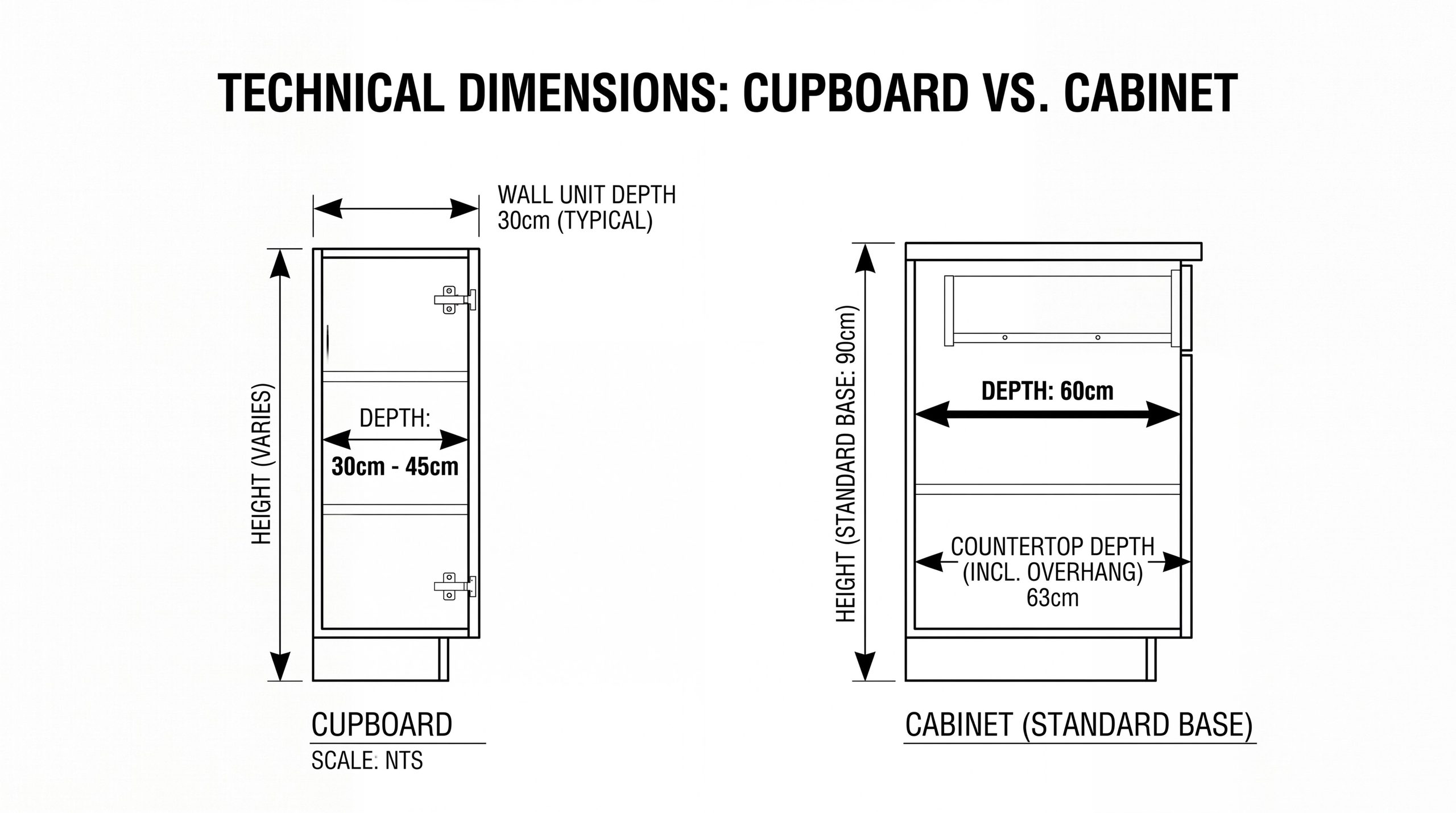
Cabinets are usually deeper when they serve kitchens, bathrooms, or fitted storage, while cupboards are often shallower when they are used for display or flexible room storage. Depth matters because it affects walking space, reach, storage volume, and how heavy the unit feels in the room.
1. Base Cabinets Usually Need More Depth
Kitchen base cabinets are commonly deeper because they need to support counters, store cookware, and align with appliances. If the cabinet is too shallow, it may lose useful storage space; if it is too deep for the room, it can make the walkway feel tight.
2. Cupboards Are Often Easier to Place in Narrow Rooms
Cupboards are often shallower than base cabinets, especially when they are used in dining rooms, hallways, pantries, or living rooms. This helps them store dishes, linens, dry goods, or display items without blocking movement through the space.
Before choosing the depth, check the room in a practical way:
- leave enough walking space in front of doors and drawers
- make sure shelves are not too deep to reach comfortably
- avoid tall shallow units that may feel unstable
- match depth to the actual items being stored
3. Depth Changes the User Experience
A deep cabinet can store more, but it may also make items harder to see and reach, especially when the room layout already has limited walking space. A shallow cupboard gives easier access and a lighter room feel, but it may not work well for large cookware, appliances, or bulky household items. If room clearance is also a problem, these small bedroom layout ideas show how storage depth affects daily movement.
| Unit Type | Common Depth Direction | Best Use | Main Risk |
|---|---|---|---|
| Kitchen base cabinet | Deeper | Cookware, counters, appliances | Can feel bulky in small rooms |
| Wall cabinet | Shallower than base units | Eye-level kitchen or bathroom storage | Limited space for large items |
| Dining cupboard | Shallow to medium | Dishes, glassware, linens | May not suit bulky storage |
| Hallway cupboard | Usually shallow | Shoes, coats, daily items | Can block walkways if too deep |
| Pantry cupboard | Medium to deep | Dry food and small appliances | Deep shelves may hide items |
Key Takeaway: Depth should follow the room and stored items. Cabinets usually need more working depth, while cupboards often work better when they stay easier to reach and less intrusive.
VII. Which Construction Offers Better Stability?
A cabinet is usually more stable when it is fixed to walls, floors, counters, or other units, while a cupboard depends more on its own frame, base, weight balance, and back panel. The safer choice depends on height, depth, stored weight, and whether the unit will stand alone or become part of the room.
1. Freestanding Cupboards Need Good Balance
A freestanding cupboard must stay stable without help from surrounding walls or nearby units. Tall cupboards, narrow cupboards, and glass-front cupboards need a strong base, firm back panel, and sensible weight distribution because heavy items placed too high can increase tipping risk.
For freestanding storage, check these details before choosing the style:
- a wide enough base for the unit height
- a solid back panel that keeps the frame square
- shelves that do not bow under stored items
- anti-tip hardware for tall or narrow pieces
- heavier items placed on lower shelves
2. Built-In Cabinets Gain Support From the Room
Built-in cabinets usually gain stability after they are fixed to walls, floors, adjacent units, or countertops. This is why kitchen cabinets, bathroom cabinets, wall cabinets, and fitted wardrobes can feel very secure once installed correctly.

3. Stability Depends on How the Unit Is Used
A cupboard may be stable enough for dishes, linens, and display items, but it may not suit heavy cookware or aggressive daily pulling. A cabinet may carry heavier use better, but only when the installation, wall fixing, and hardware are suitable for the load.
| Stability Factor | Cupboard | Cabinet | What to Watch |
|---|---|---|---|
| Support source | Own base and frame | Wall, floor, counter, or nearby units | Tall freestanding units may tip |
| Best use | Display, linens, dishes, pantry goods | Heavy daily storage and fitted rooms | Installation quality matters |
| Moving flexibility | Easier to move | Usually fixed after installation | Cabinets are less flexible |
| Main risk | Tipping or frame racking | Poor wall fixing or misalignment | Both need the right setup |
Key Takeaway: Cupboards rely on self-balance, while cabinets rely more on fixing and fitting. Tall or heavy storage should always be judged by stability, not just appearance.
VIII. How Do Doors, Drawers, and Hardware Differ?
Cupboards often use simpler doors, visible handles, glass panels, and furniture-style hardware, while cabinets often use more fitted hinges, drawer runners, soft-close systems, and integrated pulls. Hardware changes both the look and the daily feel of the storage.
1. Cupboard Hardware Often Supports the Furniture Look
Cupboards often use hardware that contributes to the visual style of the piece. Exposed hinges, knobs, glass doors, wooden shelves, and framed panels can make the storage feel warmer, more traditional, or more decorative.
2. Cabinet Hardware Usually Supports Daily Function
Cabinets usually depend more on smooth movement, alignment, and repeated daily use. Soft-close hinges, adjustable drawer runners, concealed hinges, and integrated pulls make more sense when the unit is opened many times a day.
The best hardware choice depends on the way the storage will be used:
- choose exposed handles when the unit should look more decorative
- choose soft-close hinges for frequent daily opening
- choose stronger drawer runners for heavy items
- choose glass doors only when display and cleaning are both acceptable
- choose concealed hinges for a cleaner built-in look
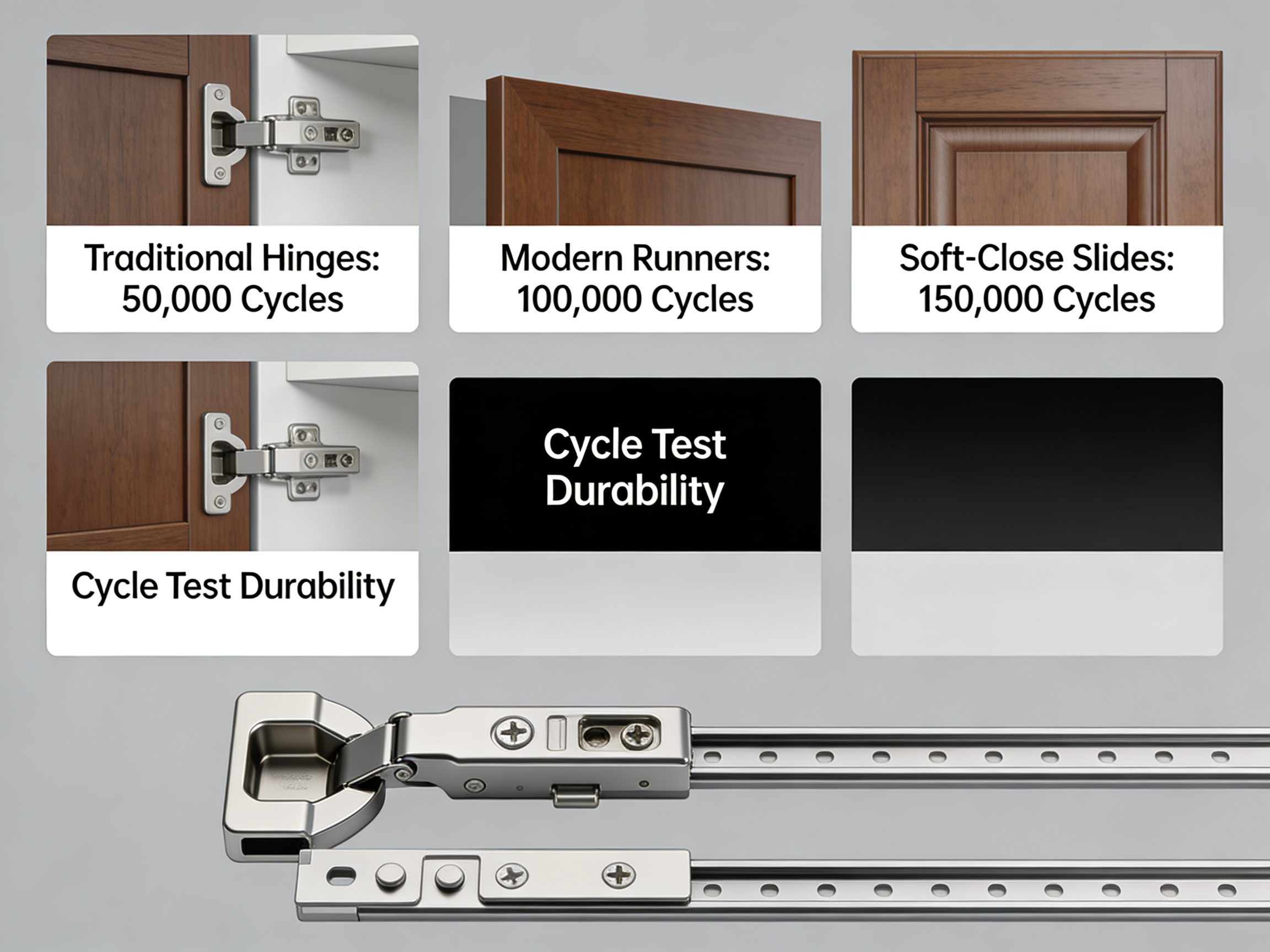
| Hardware Detail | Cupboard Direction | Cabinet Direction | Best Use |
|---|---|---|---|
| Hinges | Often visible or traditional | Often concealed or adjustable | Style vs alignment |
| Drawer runners | Simple or light-duty | Stronger, smoother, often soft-close | Daily-use drawers |
| Door style | Glass, framed, decorative | Flat, shaker, slab, fitted | Display vs clean storage |
| Handles | Decorative knobs or pulls | Integrated or minimal pulls | Room style and access |
Key Takeaway: Cupboard hardware often supports the room’s style, while cabinet hardware usually supports repeated function. Choose based on how often the doors and drawers will be used.
IX. How Do Durability and Custom Sizing Compare?
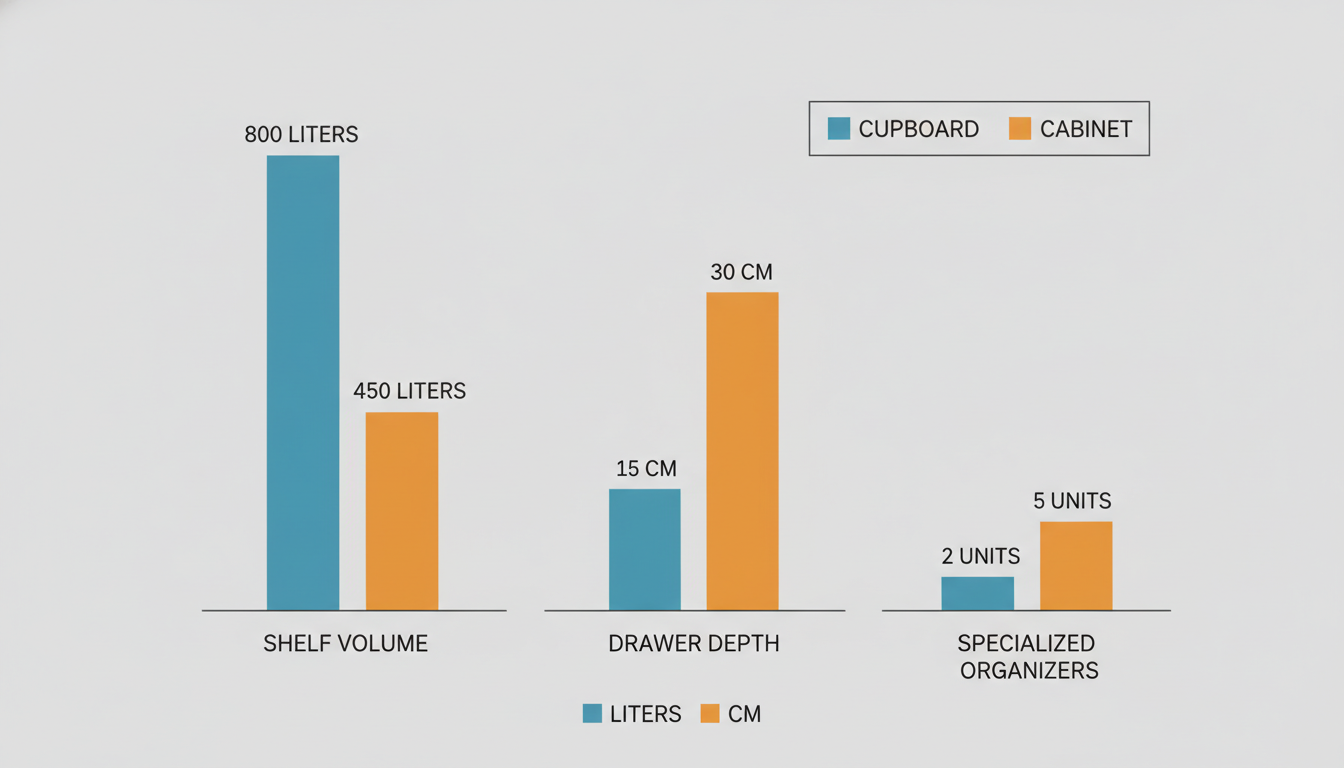
Cabinets usually handle demanding rooms better when they are made for moisture, cleaning, and daily use, while cupboards offer more flexibility when the goal is furniture-style storage in a dry room. Durability depends on material, finish, edge sealing, hardware, and whether the size matches the space correctly.
1. Cabinets Often Need Stronger Moisture and Wear Resistance
Kitchen and bathroom cabinets face more moisture, heat, cleaning, and repeated touch than most cupboards. That is why cabinet materials, finishes, edges, and hardware need to be judged more carefully in kitchens, bathrooms, laundry areas, and other high-use spaces.
2. Cupboards Offer More Flexibility in Odd Spaces
Cupboards can be easier to use in older homes, narrow dining rooms, pantries, and living spaces where a fully fitted system is unnecessary. A custom cupboard can solve awkward width, ceiling, or style problems without making the room feel permanently built in.
For custom sizing, the useful checks are simple:
- measure the wall width, ceiling height, and walking path
- confirm door and drawer clearance before choosing depth
- check whether the sides and top will be visible
- match shelf spacing to the actual items stored
- avoid oversized pieces that dominate a small room
3. Material Choice Changes the Lifespan
Solid wood, plywood, MDF, particle board, veneer, laminate, and painted finishes can all work, but they do not behave the same way; this is why material choice should be judged by moisture, weight, screws, and daily use, not only by surface appearance. A cabinet in a wet room needs better sealing and easier cleaning, while a cupboard in a dry dining room may focus more on surface feel, wood grain, and visual warmth.
For board-based storage furniture, this particle board vs plywood comparison gives a clearer view of strength, moisture risk, screw holding, and lifespan.
| Durability Factor | Cupboard | Cabinet | Better Judgment |
|---|---|---|---|
| Moisture exposure | Usually lower | Often higher | Cabinets need stronger sealing in wet rooms |
| Daily use | Medium | Often high | Hardware matters more on cabinets |
| Custom size | Often flexible | Possible but more layout-dependent | Cupboards suit odd spaces more easily |
| Surface focus | Appearance and touch | Cleaning and wear resistance | Match finish to room use |
| Long-term risk | Tipping, scratches, shelf bowing | Swelling, hinge wear, poor alignment | Risk depends on room and use |
Key Takeaway: Cabinets usually need stronger performance in demanding rooms. Cupboards give more sizing and style flexibility when the space is dry, visible, and furniture-focused.
X. How Should You Choose Between a Cupboard and a Cabinet?
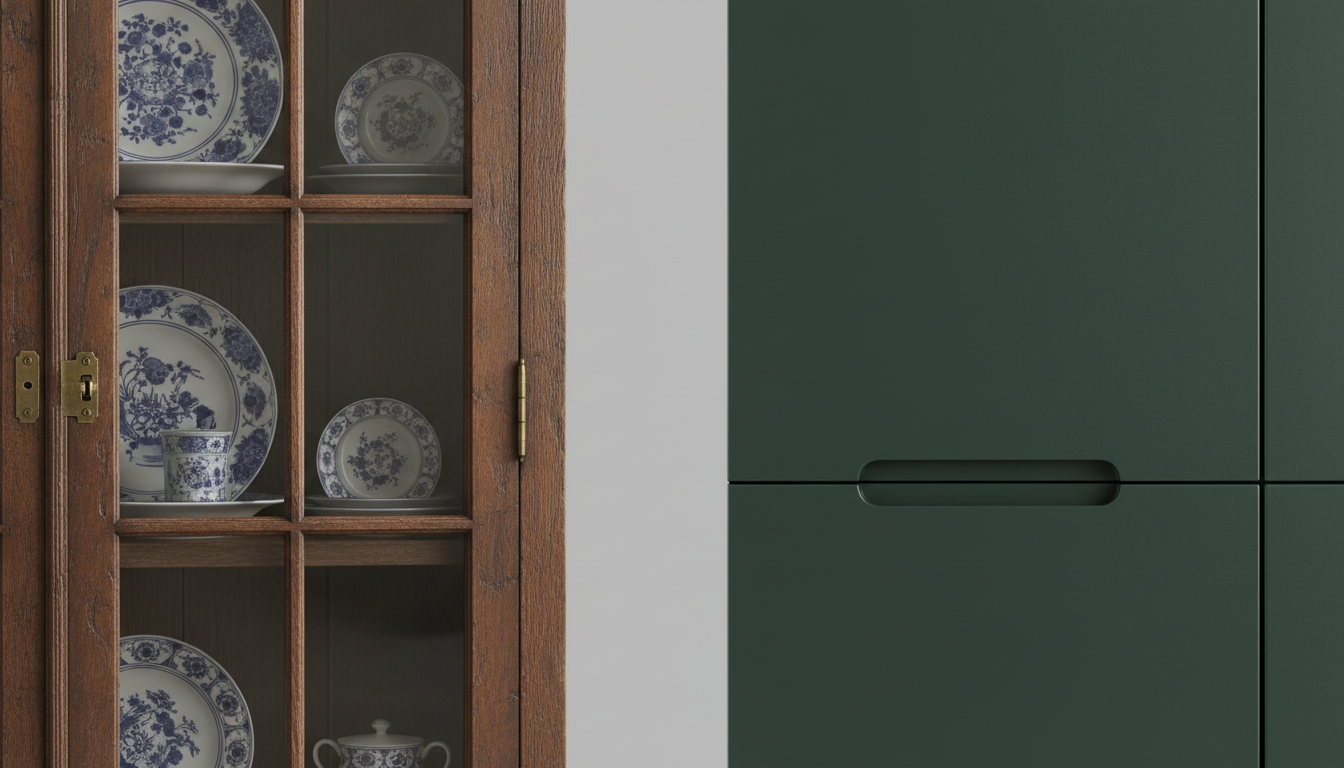
Choose a cupboard when you want freestanding, furniture-like storage for dishes, linens, pantry goods, or display items. Choose a cabinet when you need fixed, fitted, or task-based storage for kitchens, bathrooms, offices, wardrobes, or high-use rooms.
1. Start With the Room and the Stored Items
The easiest decision is to start with where the unit will sit and what it must hold. A dining room with visible tableware often points toward a cupboard, while a kitchen work zone, bathroom sink area, or office file area usually points toward a cabinet.
A practical choice usually comes from these checks:
- room: kitchen, bathroom, dining room, pantry, hallway, office, or living room
- placement: freestanding, wall-mounted, under-counter, or built-in
- items: dishes, cookware, linens, files, toiletries, or display objects
- use frequency: occasional storage or daily access
- style goal: decorative furniture look or clean, fitted look
2. Use the Name That Helps Others Understand the Design
The final word should make the design easier to understand, not more complicated. This distinction also matters when comparing broader residential wooden furniture options, because storage pieces often sit between movable furniture and built-in systems.
| If You Need… | Choose… | Why |
|---|---|---|
| Freestanding dining storage | Cupboard | It looks and works more like furniture |
| Built-in kitchen storage | Cabinet | It fits counters, appliances, and walls |
| Display for dishes or glassware | Cupboard | Glass doors and visible shelves suit display |
| Hidden daily-use storage | Cabinet | Closed fronts and stronger hardware suit frequent use |
| Bathroom sink storage | Cabinet | It must work around plumbing and moisture |
| Flexible hallway or pantry storage | Cupboard | It can stand alone and move more easily |
Key Takeaway: The best choice is not about which word sounds nicer. It is about whether the storage should behave like movable furniture or fitted room storage.
Frequently Asked Questions
Can I use a cupboard in a kitchen?
Yes, you can use a cupboard in a kitchen if it is mainly for dry food, dishes, or flexible storage. For under-counter storage, wall-mounted units, sinks, or appliance areas, cabinets are usually a better fit because they are designed to work with fixed kitchen layouts.
What is the main difference between a cupboard and a cabinet?
The main difference is usually placement and function. A cupboard is often freestanding and furniture-like, while a cabinet is more often fixed, fitted, or built into a room system.
Is a cabinet stronger than a cupboard?
A cabinet is not automatically stronger than a cupboard. Cabinets often feel more stable because they are fixed to walls, floors, counters, or nearby units, while cupboards depend more on their own frame, base, back panel, and weight balance.
Final check
Cupboards and cabinets can look similar, but they solve different storage problems. If you need freestanding, furniture-style storage, a cupboard usually makes more sense; if you need fixed, fitted, or task-based storage, a cabinet is usually clearer. For custom wooden storage, the room layout and daily use should guide the final choice before you discuss your project.