
Arranging bedroom furniture is harder than it looks when the bed, dresser, wardrobe, doors, windows, and walking space all compete for the same area. A layout that looks fine in your head can still feel tight in daily use.
To arrange bedroom furniture well, place the bed first, keep clear walking paths, leave enough room for drawers and doors, and then choose storage pieces that fit the room size. Small bedrooms usually work better with vertical storage, lighter visual weight, and fewer oversized pieces.
I. Where should you place the bed in a bedroom?
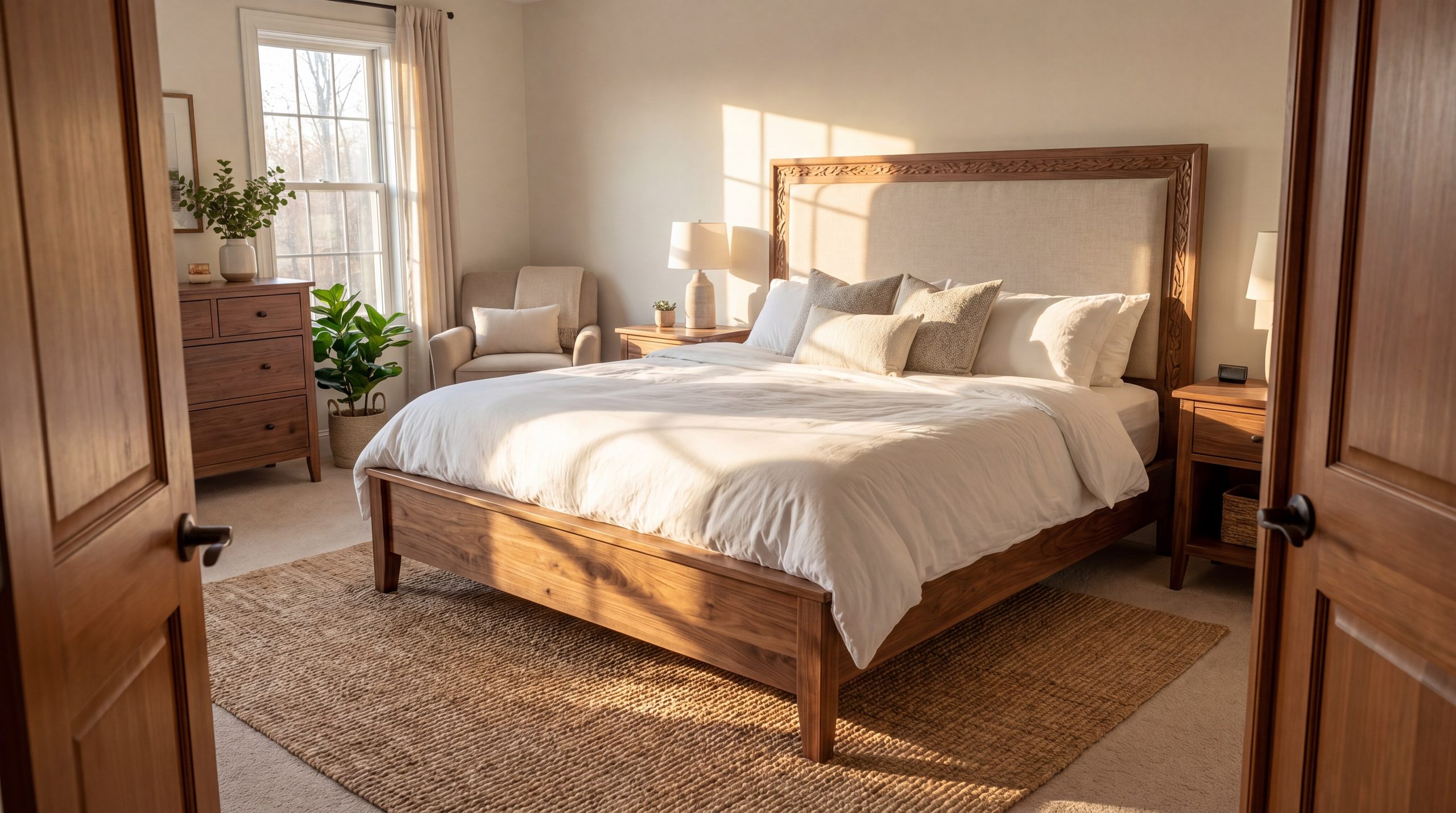
The bed should usually sit against the main solid wall, with a clear view of the door but not directly in line with it, because this first choice controls the bedroom furniture layout, walking paths, nightstand placement, dresser access, and the visual balance of the whole room.
1. The Power of the Command Position
In environmental psychology and spatial planning, the command position is the foundation of a restful bedroom layout because it gives the bed a stable visual anchor and keeps the entrance within view. Placing the bed against the primary solid wall opposite the entryway—but not directly aligned with the door swing—creates a stronger sense of safety and control.
Before fixing the bed position, check these points:
- The headboard has a full wall behind it.
- The door is visible from the bed.
- The bed is not directly in line with the door opening.
- There is enough space to walk around at least one side of the bed.
- The bed does not block windows, closet doors, or main walking paths.
2. Avoiding Window and Door Alignments
Placing a bed directly under a window or in line with the main door can create problems with drafts, exterior noise, early morning light, curtain movement, and daily access. A headboard blocking a window may also limit natural ventilation and weaken the room’s architectural balance. If the room gives you no better option, use a lower headboard and keep the surrounding walkways as open as possible.
3. Decision metrics for master placement
When finalizing the bed location, interior architects balance structural realities with visual balance. You need to check electrical outlets, radiator units, built-in closet zones, and the wall width available for nightstands. Centering the bed on the dominant wall creates a classic symmetrical design, while a slightly off-center bed can free up floor space in compact rooms.
| Bed Placement Scenario | Primary Advantage | Main Drawback | Recommended Room Type |
|---|---|---|---|
| Command Position (Centered) | Maximum security, symmetry, easy access | Requires large wall space | Master suites, square rooms |
| Offset Against Side Wall | Frees up valuable floor area | Unequal access, asymmetric look | Narrow or long bedrooms |
| Directly Under Window | Highlights scenic outdoor views | Draft exposure, blocked light | Spaces with high sill heights |
Key Takeaway: Place the bed before adjusting any other furniture. Once the bed has a stable wall, clear access, and a workable relationship with doors and windows, the rest of the bedroom becomes easier to arrange.
II. How do you choose space-saving beds?
II. How do you choose space-saving beds?
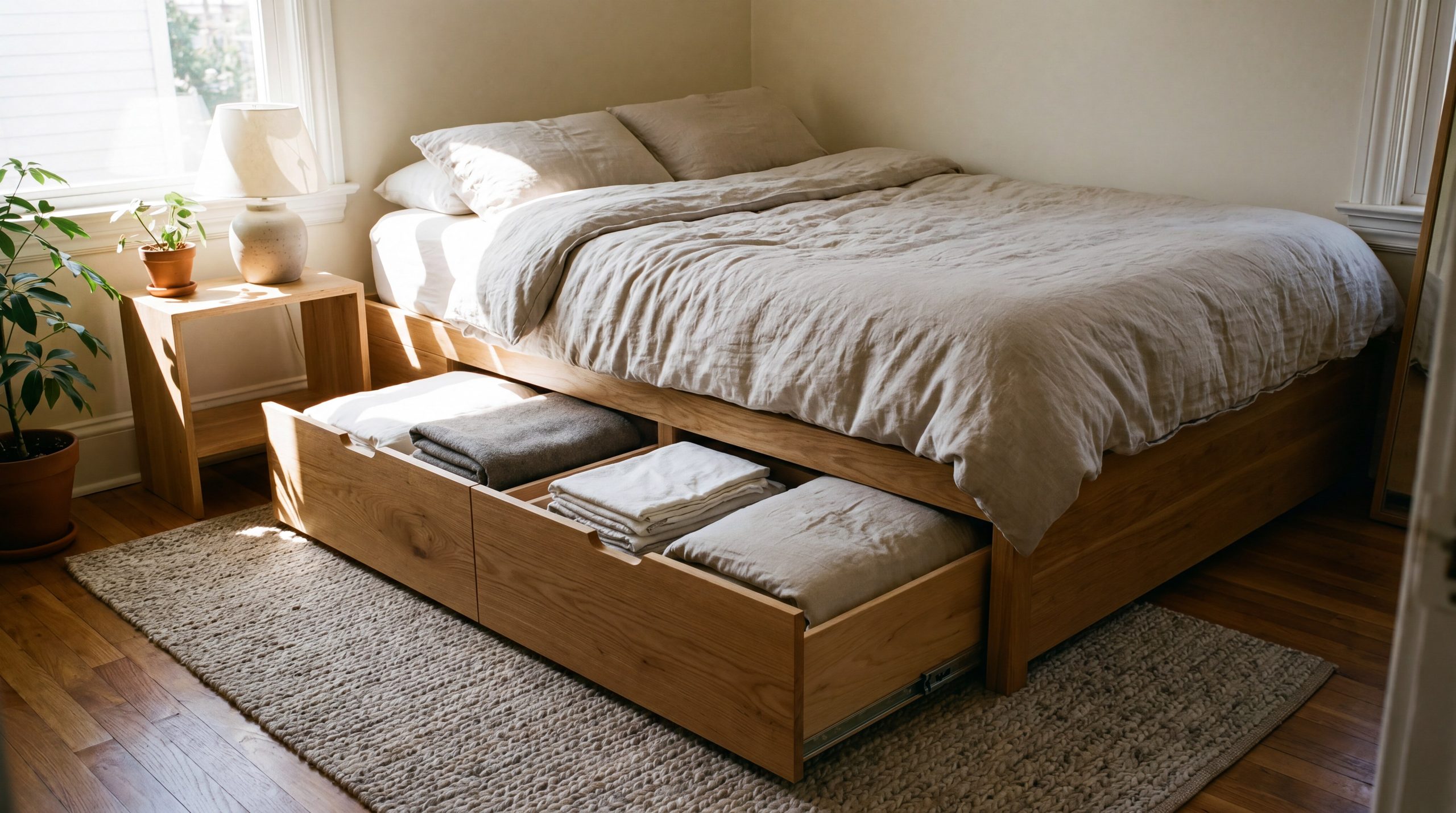
A space-saving bed should reduce the need for extra furniture without making the bedroom harder to move through. In a small bedroom furniture layout, the right bed can add hidden storage, protect walkway space, and keep the room from feeling crowded before you add dressers, shelves, or nightstands.
1. Storage Beds with Built-in Drawers
For modern, urban dwellings where square footage is at a premium, furniture must serve dual purposes. Specifying solid wood platform beds with integrated base drawers provides hidden storage without expanding the bed’s physical footprint. These drawers are excellent for storing extra linens, seasonal clothing, or bulky items.
Before choosing a drawer bed, check how the drawers will open in the real room:
- Side drawers need enough clearance beside the bed.
- End drawers need open space at the foot of the bed.
- Nightstands should not block drawer movement.
- Rugs should not catch under drawer fronts.
- Wall-side drawers may become hard to use in narrow rooms.
2. Hydraulic Lift Mechanisms Explained
When side clearance is too tight for traditional pull-out drawers, hydraulic lift beds offer an elegant alternative. By utilizing heavy-duty gas struts, the entire mattress platform lifts effortlessly to reveal a spacious storage compartment underneath the slatted base. This configuration keeps stored items dust-free and fully enclosed, making it an ideal option for minimalist bedrooms.
3. Solid Wood Quality for Daily Use
The longevity of a storage bed depends on the quality of its joinery and materials. While engineered wood composites can warp under the weight of heavy mattresses and storage loads, solid hardwoods like European white oak or American walnut offer stronger structural stability. Better wood construction helps drawer runners remain aligned and structural connections stay rigid, reducing squeaks or drawer misalignment over time.
| Storage Bed Mechanism | Storage Capacity | Ease of Daily Access | Required Floor Clearance |
|---|---|---|---|
| Integrated Side Drawers | Medium, with segmented compartments | High, with quick pull-out access | Requires 24–30 inches on sides |
| Hydraulic Lift Base | High, using the full mattress footprint | Medium, because the mattress must be lifted | Zero side clearance needed |
| Open Under-Bed Frame | Low to medium, usually with bins | Low, and more prone to dust | Requires clearance to pull boxes |
Key Takeaway: Choose the bed type according to the space around it, not just the storage capacity inside it. A good space-saving bed should make storage easier without blocking drawers, walkways, or daily movement.
III. What clearance rules make a bedroom easier to use?
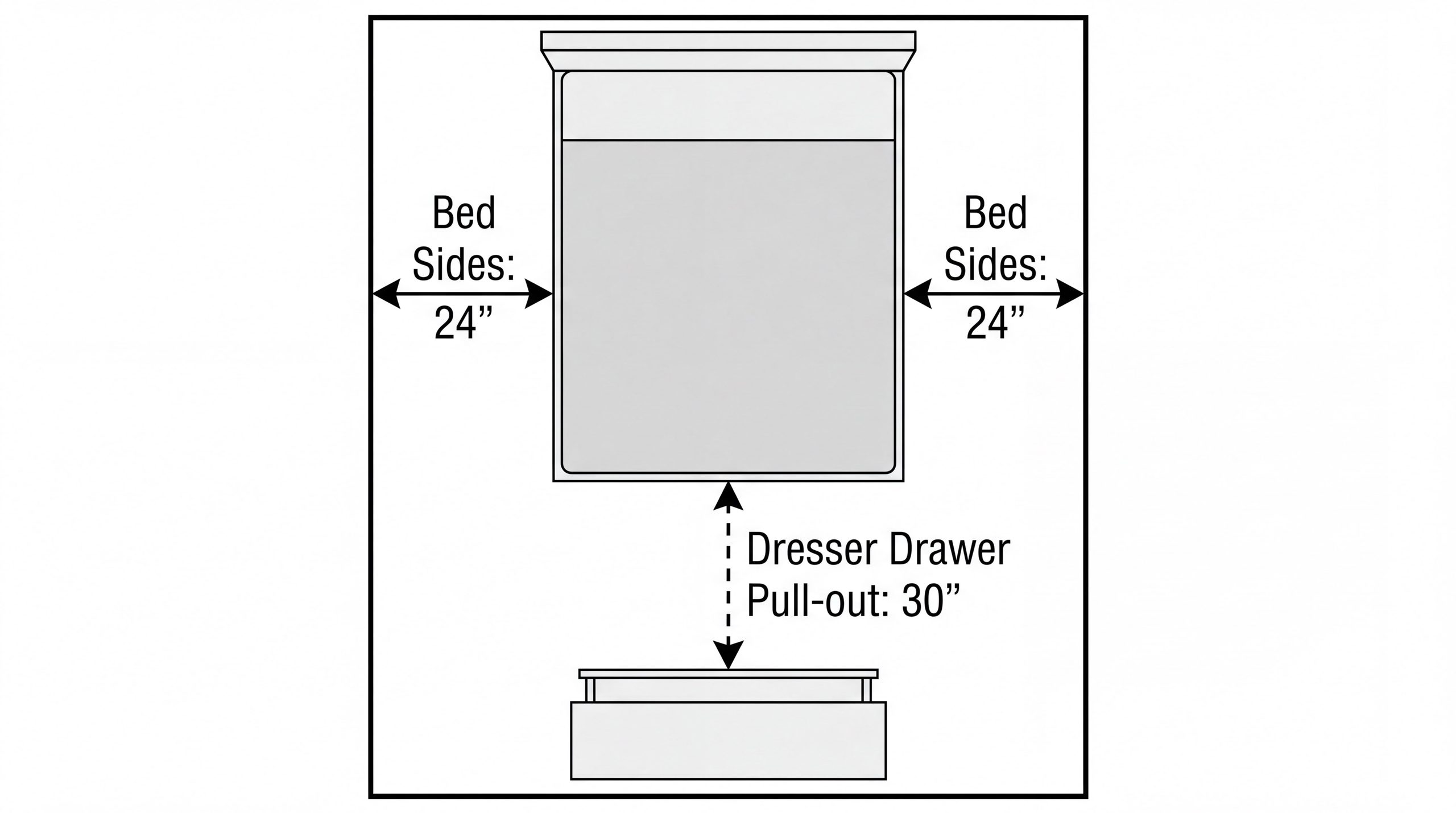
Clearance rules make a bedroom easier to use by protecting the space needed for walking, opening drawers, making the bed, and reaching storage without squeezing around furniture. In a bedroom furniture layout, these gaps matter as much as the furniture itself because a beautiful room can still feel uncomfortable if every daily movement is blocked.
1. The Standard Walkway Requirements
For a bedroom layout to feel comfortable and flow naturally, you need clear walkways around all major furniture. The basic rule is to keep at least 24 inches, or about 60 cm, of clear space for normal walking, while 30 to 36 inches feels better in busy paths such as the route from the entry door to the closet or bathroom.
Use these clearance checks before finalizing the layout:
- Keep at least 24 inches around the bed where daily access is needed.
- Leave 30 inches or more in front of dressers and wardrobes.
- Check the route from the door to the bed, closet, and bathroom.
- Avoid placing nightstands where they pinch the bed walkway.
- Make sure rugs do not block drawer or door movement.
2. Dressing and Drawer Pull-out Space
A common mistake in bedroom design is ignoring the space required to actually use the furniture. Standard dressers and wardrobes need dynamic clearance, which means the space needed when doors or drawers are fully open. A dresser drawer may extend 12 to 18 inches from the cabinet face, so you usually need at least 30 inches in front of it to stand comfortably and open it.
3. Strategic Sizing to Prevent Friction
The right furniture scale prevents a bedroom from feeling crowded even when the room is small. Oversized headboards, deep wardrobes, and wide nightstands can quickly turn useful pathways into tight squeezes, while low-profile headboards and shallow-depth dressers help preserve daily movement.
| Clearance Zone | Minimum Space | Ideal Space | Purpose and Function |
|---|---|---|---|
| Bed Sides & Foot | 24 inches | 30–36 inches | Easy bed-making, comfortable walking |
| Dresser / Wardrobe Front | 30 inches | 36–42 inches | Opening drawers, standing to dress |
| Between Bed and Nightstand | 2–4 inches | 6 inches | Preventing pinched bedding and fingers |
Key Takeaway: Clearance is not empty space; it is the space that lets the bedroom work every day. Check walking paths, drawer movement, and furniture depth before adding more pieces.
IV. How does the door swing affect your layout?
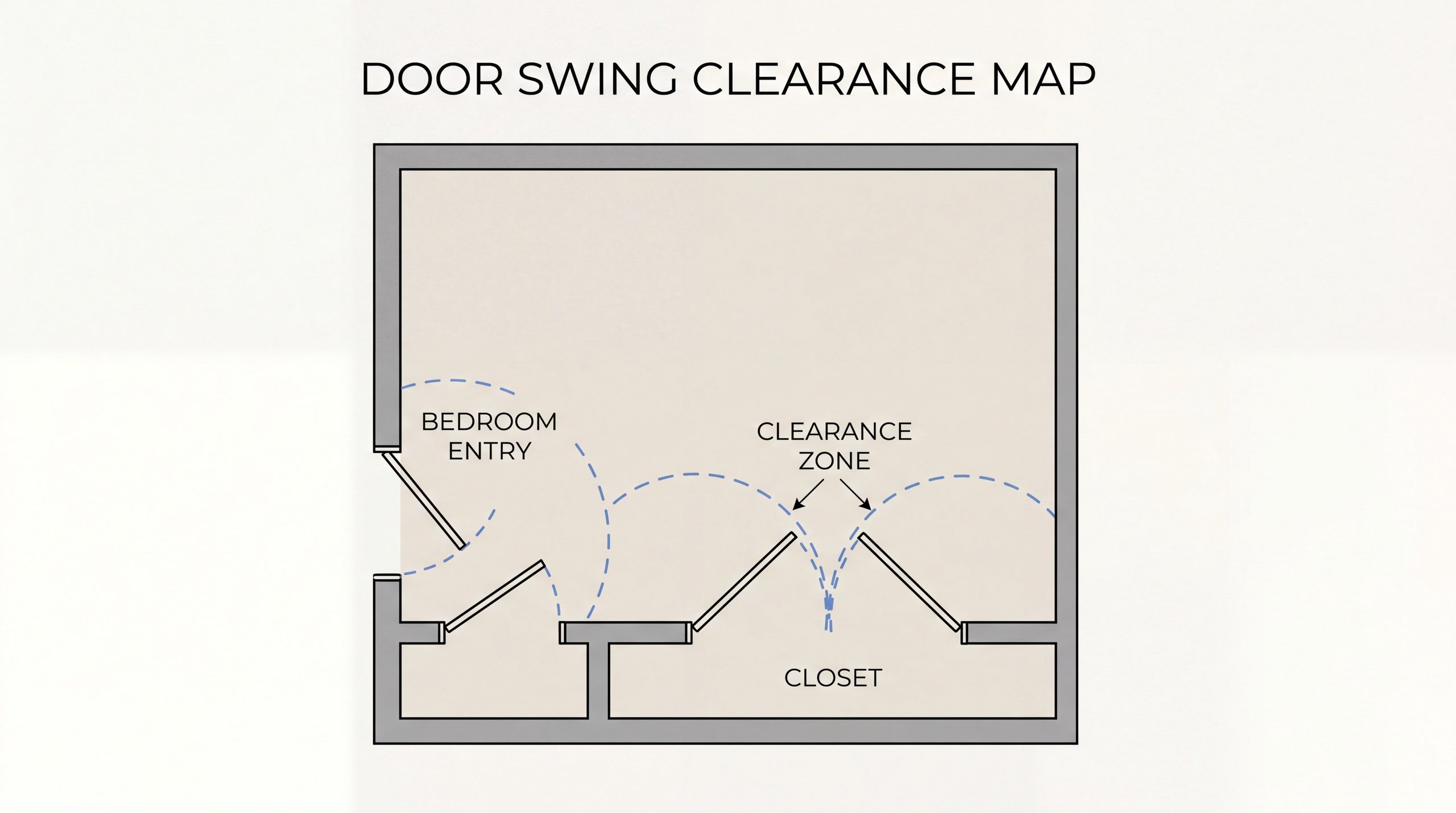
The door swing affects your layout because it controls the first movement path into the room and limits where large furniture can safely sit. In a bedroom furniture layout, a bed, dresser, wardrobe, or nightstand may look fine from above, but the room will feel awkward if the door opens into furniture or forces you to walk around obstacles.
1. Mapping the Door’s Opening Arc
The swing arc is the invisible area a hinged door needs to open fully. If you place a dresser, bench, or nightstand inside that arc, the room immediately feels cramped because the entry point becomes blocked. A good layout keeps the door path clean before arranging secondary furniture.
Use the door swing to divide the room into three placement zones:
- Clear entry zone: Keep this area open so the door can move freely.
- Primary furniture zone: Place the bed or wardrobe outside the door’s opening path.
- Secondary storage zone: Use corners beyond the swing arc for nightstands, shelves, or shallow cabinets.
2. Avoiding Furniture Behind the Door
Furniture behind the door often looks practical on a floor plan, but it can become annoying in daily use. A tall wardrobe or dresser placed too close to the door may stop it from opening fully, while a small shelf behind the door can still catch bags, handles, or loose clothing. If you must use that area, choose shallow storage and leave enough room for the handle and wall clearance.
3. Using Sliding Doors in Tight Bedrooms
Sliding doors can help when the room does not have enough space for hinged wardrobe doors. They reduce the clearance needed in front of the wardrobe and make narrow bedrooms easier to move through. The trade-off is that only one side of the wardrobe opens at a time, so the internal layout should match how you store clothes, bedding, and daily items.
| Door or Storage Type | Best Use | Main Benefit | Main Limitation |
|---|---|---|---|
| Hinged room door | Standard bedrooms | Simple access and full opening | Needs a clear swing arc |
| Hinged wardrobe door | Wider bedrooms | Full view of storage space | Needs front clearance |
| Sliding wardrobe door | Narrow bedrooms | Saves floor clearance | Opens one side at a time |
Key Takeaway: Door movement should be planned before adding storage near the entry. If the door, wardrobe, and walking path all work smoothly, the bedroom feels easier to enter, use, and keep organized.
V. Should you choose a wardrobe or a dresser?
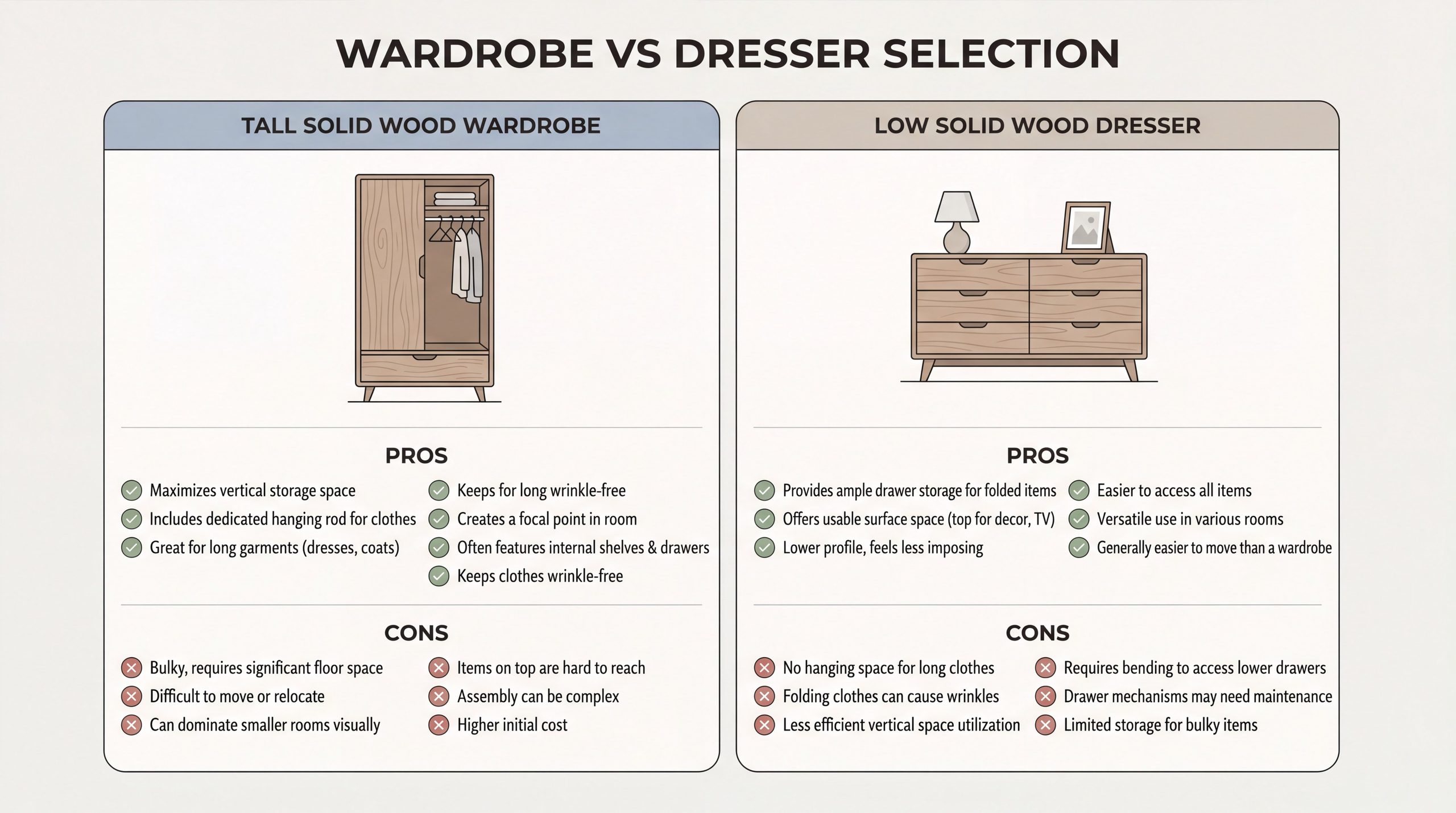
V. Should you choose a wardrobe or a dresser?
You should choose a wardrobe, a dresser, or both based on what you need to store and how much open space the room can give you. In a bedroom furniture layout, wardrobes work better for hanging clothes and vertical storage, while dressers work better for folded items, daily access, and lower visual weight.
1. When a Wardrobe Works Better
A wardrobe works better when the room needs vertical storage and you have enough wall height to use it well. It can hold hanging clothes, bedding, boxes, and seasonal items without spreading storage across the floor. In smaller rooms, a tall wardrobe can also reduce the need for extra cabinets, but its depth and door clearance must be planned carefully.
2. When a Dresser Feels More Practical
A dresser feels more practical when you need easy access to folded clothes, accessories, or daily items. It usually feels lighter than a full wardrobe because it stays below eye level, which can help a small bedroom feel less crowded.
A dresser is usually the better choice when:
- The room already has a built-in closet.
- You need drawer access more than hanging space.
- The bed wall and walking paths are already tight.
- You want a lower surface for lamps, mirrors, or décor.
- A full-height wardrobe would make the room feel too heavy.
3. Choosing Both Without Crowding the Room
Using both a wardrobe and a dresser only works when each piece has a clear job. The wardrobe should handle vertical or hanging storage, while the dresser should support daily folded items and surface use. If both pieces compete for the same storage purpose, the room gains furniture but loses comfort.
| Storage Choice | Best For | Main Benefit | Main Risk |
|---|---|---|---|
| Wardrobe only | Rooms without built-in closets | Strong vertical storage | Can feel heavy or block movement |
| Dresser only | Rooms with existing closets | Easy drawer access and lower height | Limited hanging storage |
| Wardrobe + dresser | Larger rooms or high storage needs | Separate storage by item type | Can crowd walls and walkways |
Key Takeaway: Storage furniture should solve a real use problem, not just fill an empty wall. Choose the piece that matches your clothing habits, room size, and available clearance before adding more furniture.
VI. How do you maximize small bedroom storage?
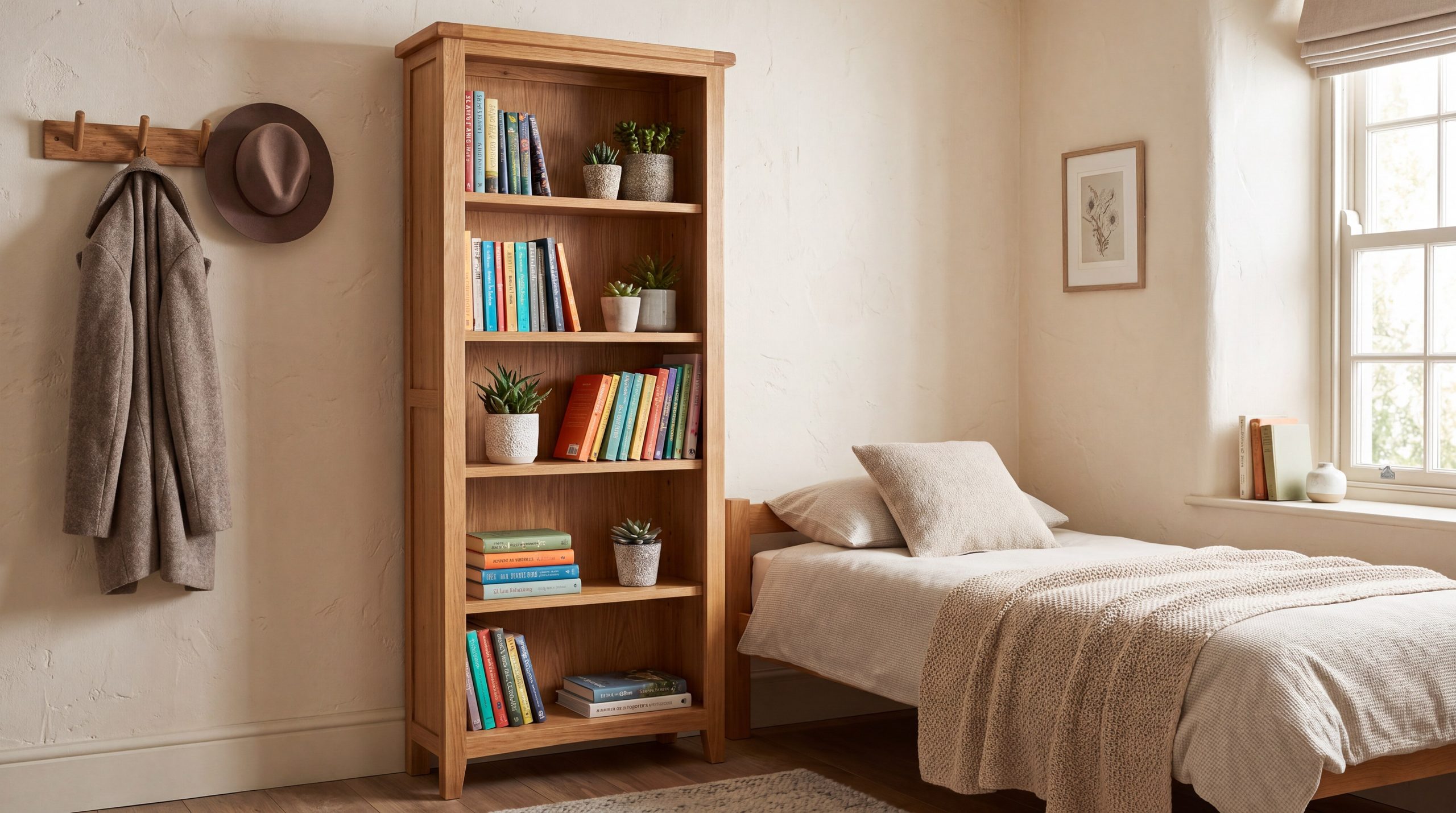
You maximize small bedroom storage by using vertical space first and keeping the floor as open as possible. In a small bedroom furniture layout, tall storage, wall-mounted pieces, and under-bed compartments usually work better than adding more low cabinets that crowd the walking paths.
1. Using Tall and Narrow Storage
Tall and narrow storage works well because it uses wall height instead of floor width. A slim wardrobe, tall bookshelf, or vertical cabinet can hold more items without taking over the room. This is especially useful when the bed already uses most of the available floor area.
2. Choosing Wall-Mounted Pieces
Wall-mounted shelves, floating nightstands, and hanging organizers can keep daily items within reach while leaving the floor easier to clean and move through. They also make the room feel lighter because more floor surface remains visible.
Wall-mounted storage works best for:
- Books, small décor, and bedtime items
- Lamps or charging areas beside the bed
- Lightweight folded accessories
- Narrow walls where a cabinet would feel bulky
- Rooms where floor clearance is already limited
3. Keeping Tall Storage Safe and Stable
Tall storage should not only save space; it also needs to feel stable in daily use. A wardrobe, bookshelf, or tall cabinet should sit flat against the wall, avoid blocking doors or windows, and leave enough space for drawers or doors to open comfortably. If the piece feels too deep or visually heavy, a lighter wood tone or simpler front design can help the room feel less crowded.
| Storage Method | Best Use | Main Benefit | Main Risk |
|---|---|---|---|
| Tall wardrobe | Hanging clothes and larger items | Uses vertical space well | Can feel heavy in a small room |
| Floating shelf | Books and small daily items | Keeps floor open | Limited weight capacity |
| Under-bed storage | Bedding and seasonal items | Uses hidden space | Can be hard to access if clearance is tight |
Key Takeaway: Small bedroom storage works best when it reduces clutter without adding more obstacles. Use height, walls, and hidden spaces before adding another floor-standing cabinet.
VII. How do you lay out a slanted ceiling room?
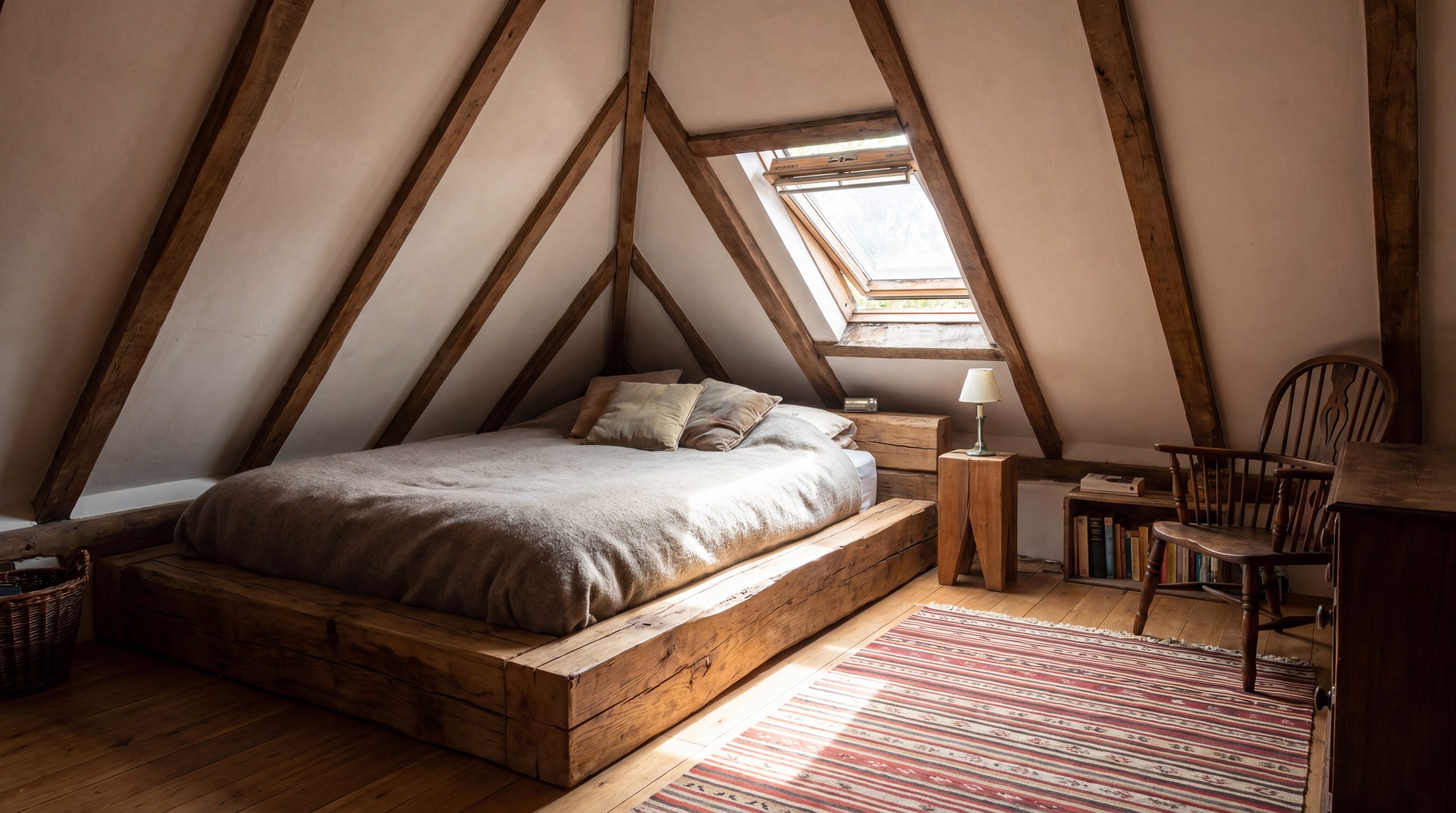
A slanted ceiling room works best when low-headroom areas are used for low furniture, storage, or seating instead of main walking paths. In this type of bedroom furniture layout, the slope should guide the furniture plan, so the bed, dresser, and storage pieces sit where movement still feels natural.
1. Placing the Bed Under the Slope
A bed can work under a slanted ceiling if the headboard area still gives enough space to sit up comfortably. The safer choice is to place the bed along the lower wall only when the slope starts high enough above the pillow area. If the ceiling drops too low, the bed may look cozy but feel irritating in daily use.
2. Using Low Corners for Storage
Low corners are usually better for storage than for standing activities. A bench, low dresser, toy chest, or shallow cabinet can turn difficult floor space into useful storage without forcing people to bend or squeeze through the room.
Low ceiling areas are better used for:
- Low dressers or chests
- Storage benches
- Open shelves
- Baskets for seasonal items
- Children’s storage or reading corners
3. Choosing Furniture That Fits the Room Shape
Slanted rooms usually need furniture with simpler shapes, lower height, and cleaner fronts. Tall wardrobes may only work on the highest wall, while low cabinets or custom-width storage can fit better under angled ceilings. If you are comparing furniture choices by height, board structure, and long-term stability, this guide to MDF vs solid wood furniture gives a more useful material reference before choosing the final pieces.
| Slanted Ceiling Area | Best Furniture Choice | Main Benefit | Main Risk |
|---|---|---|---|
| Lowest wall | Low dresser, bench, baskets | Uses difficult space | Limited standing room |
| Mid-height wall | Bed, desk, shallow cabinet | Balances comfort and function | Needs careful head clearance |
| Highest wall | Wardrobe or tall storage | Uses full wall height | Can make the room feel heavy |
Key Takeaway: A slanted ceiling should shape the furniture layout instead of being treated as a problem to hide. Put low furniture where headroom is limited, and save tall pieces for the walls where they will not block movement.
VIII. Can a home office fit inside your bedroom?
A home office can fit inside your bedroom if the desk stays outside the main sleep zone and does not block the bed, wardrobe, dresser, or walking path. In a bedroom furniture layout, the desk should feel like a controlled work corner, not another large piece competing with the bed.
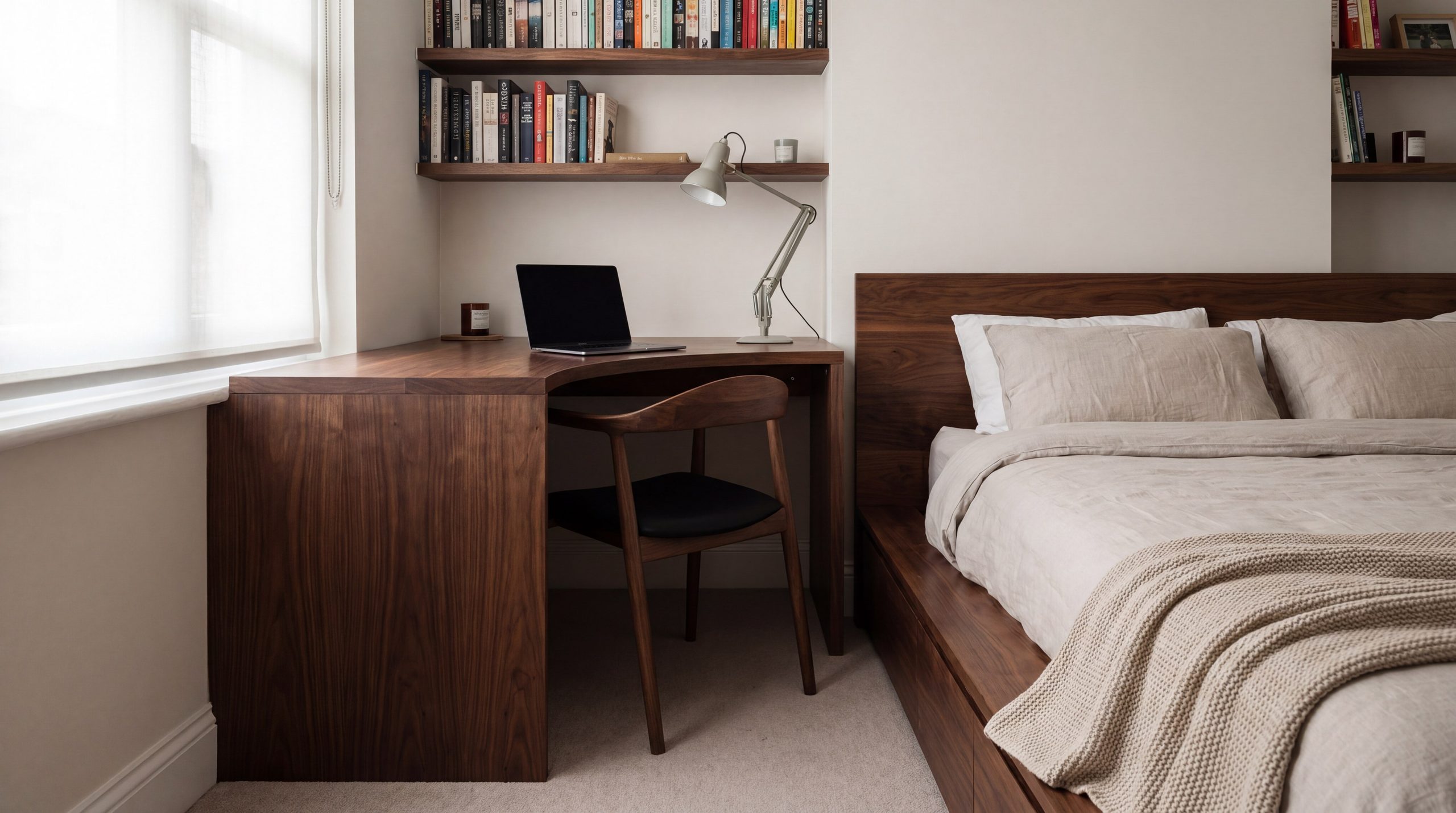
1. Choosing the Right Desk Position
The desk usually works best near natural light, along a side wall, or inside an unused corner. Avoid placing it where the chair backs into the bed walkway or blocks wardrobe access. If the bedroom is small, a narrow desk or wall-mounted surface is usually better than a deep work table.
2. Separating Work and Sleep Zones
A bedroom office feels easier to live with when the work area has a clear boundary. You can use a rug, wall shelf, low cabinet, or change of wood tone to separate the desk visually without adding a bulky divider.
A small bedroom office works better when:
- The chair can pull out without hitting the bed.
- The desk does not face directly into clutter.
- Cables can be hidden along the wall.
- The work surface stays narrower than the dresser.
- Storage above the desk does not make the room feel top-heavy.
3. Choosing Compact Office Pieces
Compact office furniture should support daily work without turning the bedroom into a second office. A slim desk, shallow cabinet, or small mobile drawer can give enough function while protecting movement around the bed. If the room needs a more structured work corner, our office furniture options can help connect desk size, storage depth, and surface finish with the way the room is actually used.
| Office Piece | Best Use | Main Benefit | Main Risk |
|---|---|---|---|
| Narrow desk | Small bedroom work corners | Saves floor depth | Limited desktop space |
| Wall-mounted desk | Very tight rooms | Keeps the floor open | Needs stable wall support |
| Mobile drawer | Flexible storage | Easy to move or hide | Can clutter the walkway |
Key Takeaway: A bedroom office should stay compact, visually separate, and easy to move around. If the desk starts blocking storage, light, or walking space, the room will feel more like a cramped office than a bedroom.
IX. Can mirrors make your bedroom feel larger?
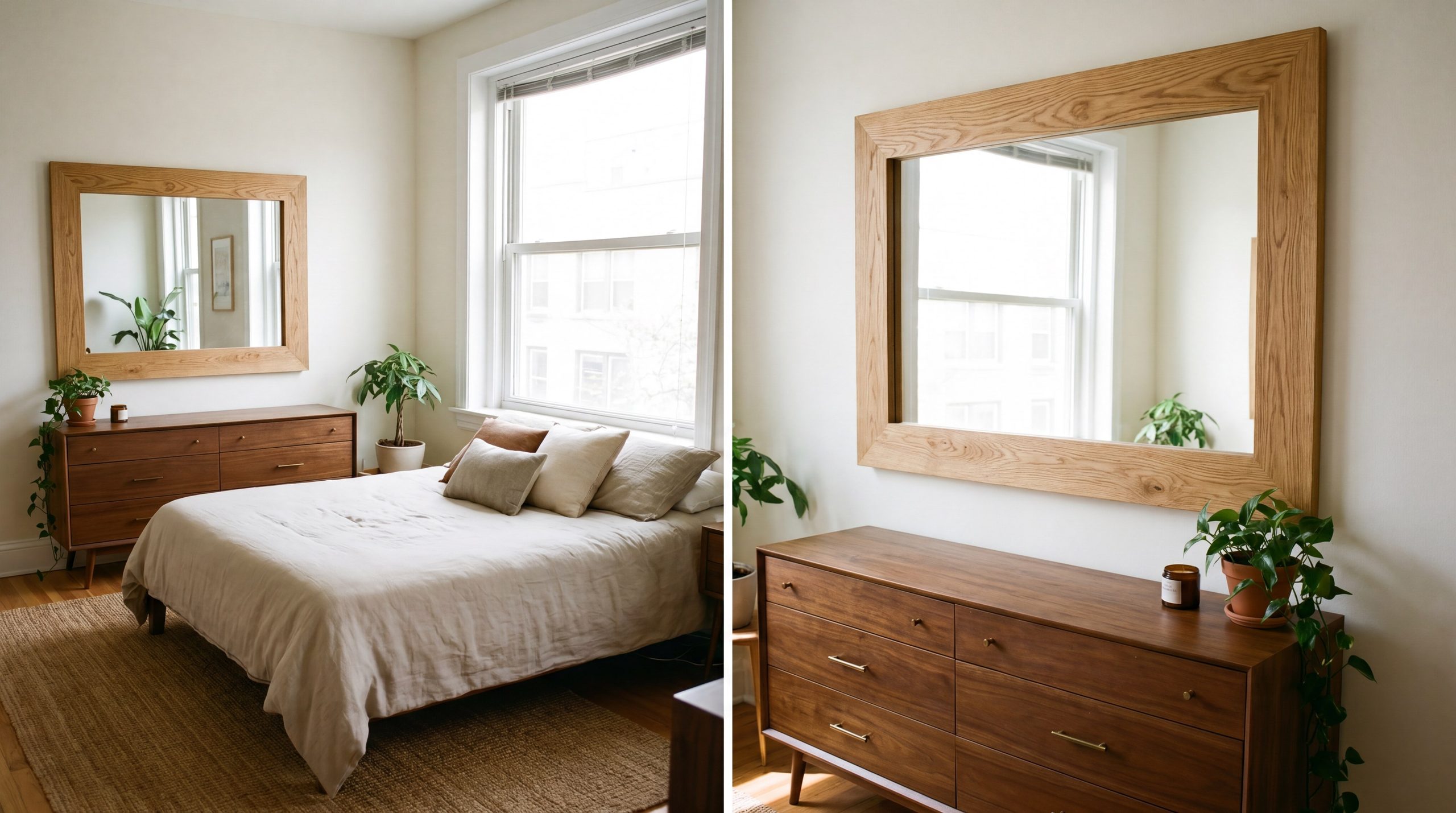
Mirrors can make a bedroom feel larger when they reflect light, open wall space, or a clean view instead of clutter. In a bedroom furniture layout, a mirror works best when it supports the room’s proportions, helps with dressing, and makes the space feel brighter without creating visual noise.
1. Placing Mirrors Across from Light
A mirror placed near or across from a window can bounce natural light deeper into the room. This works especially well in small or narrow bedrooms where one side feels darker. Avoid reflecting messy shelves, laundry corners, or a crowded dresser, because the mirror will double the clutter instead of the sense of space.
2. Choosing the Right Mirror Size
The mirror size should match the wall, furniture height, and how you use the room. A tall mirror works better for dressing, while a wider mirror above a dresser can make one wall feel more open. If the dresser is narrow, choose a mirror that stays visually lighter instead of overpowering the furniture below it.
A mirror usually works best when it serves one clear purpose:
- Reflecting natural light from a window
- Helping with daily dressing
- Making a narrow wall feel wider
- Balancing the height of a dresser or cabinet
- Reducing the heavy look of nearby storage furniture
3. Pairing Mirrors with Wood Tone and Storage
Mirrors work better when the surrounding furniture does not feel too heavy. Light wood, simple drawer fronts, and slimmer frames can make a small room feel calmer, while dark wood and oversized storage need more careful placement. If you are comparing wood choices for bedroom furniture, this guide to the best wood for furniture can help you judge appearance, durability, and indoor use more clearly.
| Mirror Placement | Best Use | Main Benefit | Main Risk |
|---|---|---|---|
| Across from window | Dark or narrow rooms | Reflects natural light | May reflect glare |
| Above dresser | Dressing and wall balance | Makes storage feel lighter | Can look crowded if too large |
| Full-length mirror | Daily dressing | Adds function without bulky furniture | Needs clear standing space |
Key Takeaway: A mirror should make the bedroom brighter, easier to use, or better balanced. If it reflects clutter or competes with heavy furniture, it can make a small room feel busier instead of larger.
X. Which wood tones work best in small bedrooms?
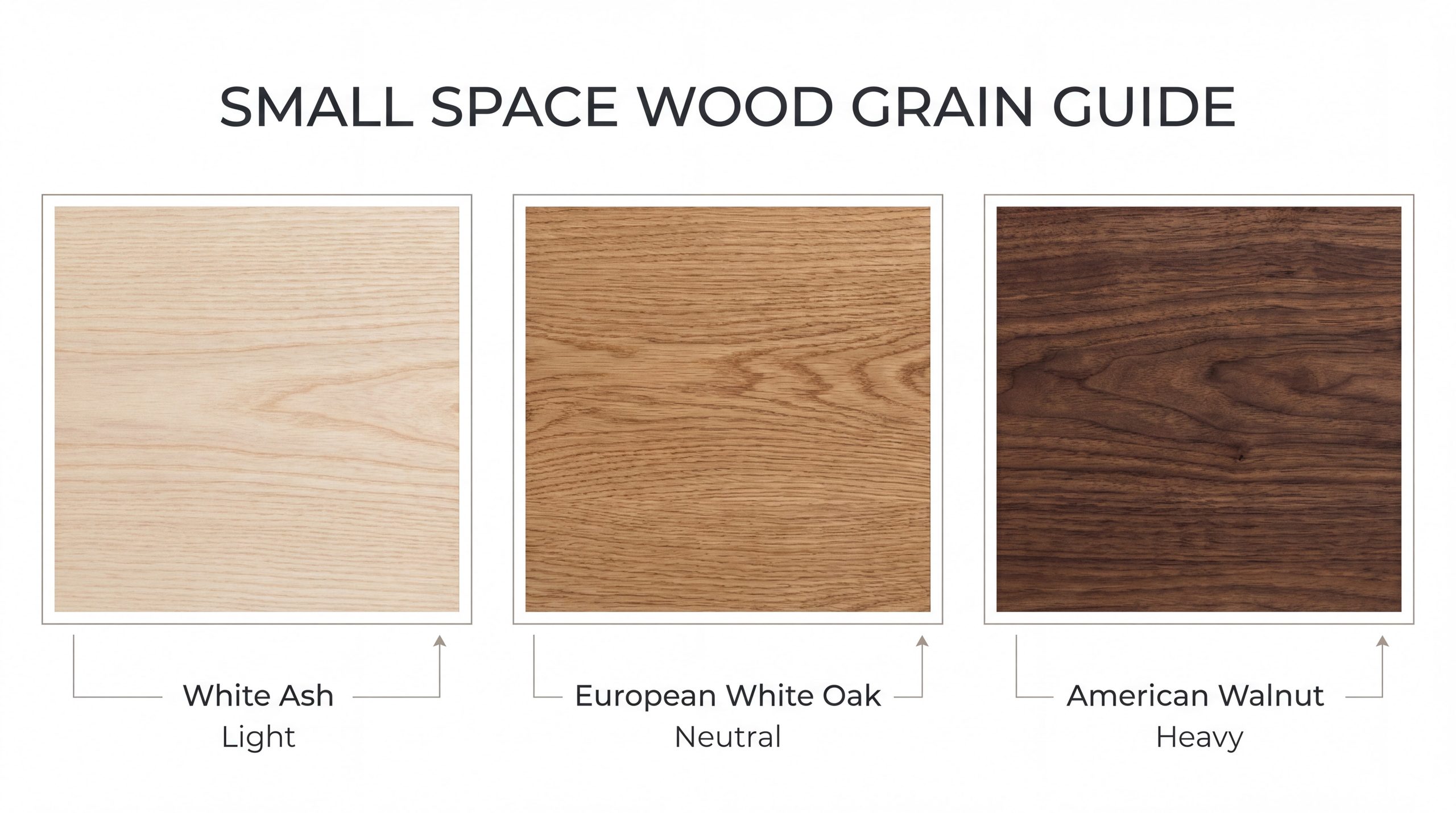
Light to medium wood tones usually work best in small bedrooms because they reduce visual weight and help the room feel more open. In a bedroom furniture layout, wood tone affects more than style; it changes how large the bed, dresser, nightstands, and storage pieces feel once everything is placed together.
1. Using Light Wood to Keep the Room Open
Light wood tones work well in small bedrooms because they reflect more light and make large furniture feel less heavy. Oak, ash, birch, and lighter pine finishes can soften the look of beds, dressers, and wardrobes. This is useful when the room needs several storage pieces but cannot handle a dark, bulky look.
2. Using Dark Wood Without Making the Room Heavy
Dark wood can still work in a small bedroom when it is used with restraint. A dark bed frame or dresser can create a grounded focal point, but too many dark pieces may make the room feel smaller. If you prefer darker furniture, keep the lines simple and balance it with lighter walls, bedding, rugs, or mirrors.
Dark wood works better when it has a clear role:
- Use one dark piece as the visual anchor.
- Keep nearby furniture lighter or slimmer.
- Avoid heavy carved details in tight rooms.
- Balance dark wood with pale bedding or wall color.
- Use mirrors or natural light to reduce visual weight.
3. Matching Wood Tone With Long-Term Use
The best wood tone should match both the room size and how the furniture will age in daily use. Lighter finishes may show stains or color changes faster, while darker finishes may reveal dust, scratches, and edge wear more clearly. If you are considering lighter pine furniture for bedroom pieces, this article on pine wood furniture gives more context on where pine works well and where surface protection matters.
| Wood Tone | Best For | Main Benefit | Main Risk |
|---|---|---|---|
| Light wood | Small or darker bedrooms | Feels open and softer | May show stains or yellowing |
| Medium wood | Most bedroom styles | Balanced warmth and flexibility | Can look plain without texture |
| Dark wood | Larger rooms or focal pieces | Feels grounded and elegant | Can make tight rooms feel heavy |
Key Takeaway: Wood tone should support the room’s size, light, and furniture scale. In small bedrooms, lighter or simpler finishes usually make the layout feel easier, while dark wood needs stronger control over quantity and placement.
FAQ
Can I put my bed under a window?
Yes, you can put your bed under a window if the room has no better solid wall, but it is not usually the first choice. Check drafts, curtain movement, morning light, and whether the headboard blocks ventilation before making it permanent.
What is the best way to arrange furniture in a small bedroom?
The best way is to place the bed first, keep clear walking paths, then use vertical or hidden storage instead of adding more floor-standing furniture. A small room usually feels better with fewer pieces that each have a clear job.
How do I know if my bedroom furniture is too big?
Your bedroom furniture is too big if drawers cannot open fully, the door swing is blocked, or you have to turn sideways to move around the bed. The room should still allow easy access to storage, windows, and daily walking paths.
Final Check
A good bedroom layout starts with the bed, then works outward through walking space, storage access, door swing, light, and visual weight. If you need bedroom furniture with adjusted size, wood tone, drawer depth, or matching storage pieces, you can discuss your project with EverWoody so the furniture fits the room instead of fighting it.