
Particle board and plywood often look similar after finishing, but they behave very differently once furniture faces weight, moisture, screws, and daily use.
Particle board is usually cheaper and works well for flat, dry, low-load furniture parts. Plywood costs more, but it is usually stronger, better at holding screws, and safer for shelves, cabinets, and furniture that need a longer service life.
Quick Answer: Particle Board vs Plywood
Here is the quick answer before looking at each furniture use case.
| Factor | Particle Board | Plywood |
|---|---|---|
| Cost | Usually lower | Usually higher |
| Strength | Better for light-load flat panels | Better for structural furniture parts |
| Moisture risk | Swells faster if water reaches the core | Handles humidity changes better |
| Screw holding | Weaker after repeated assembly | Stronger for hinges, screws, and joints |
| Best use | Decorative cabinets, low-load shelves, flat surfaces | Cabinets, shelves, desks, beds, and high-use furniture |
| Main risk | Edge swelling, chipping, and screw loosening | Higher cost and grade variation |
Particle board can be a practical choice when cost, flat surface quality, and dry indoor use matter most. Plywood is usually the safer choice when furniture needs stronger load support, better screw holding, or longer service life.
I. Which Material Is More Structurally Stable?
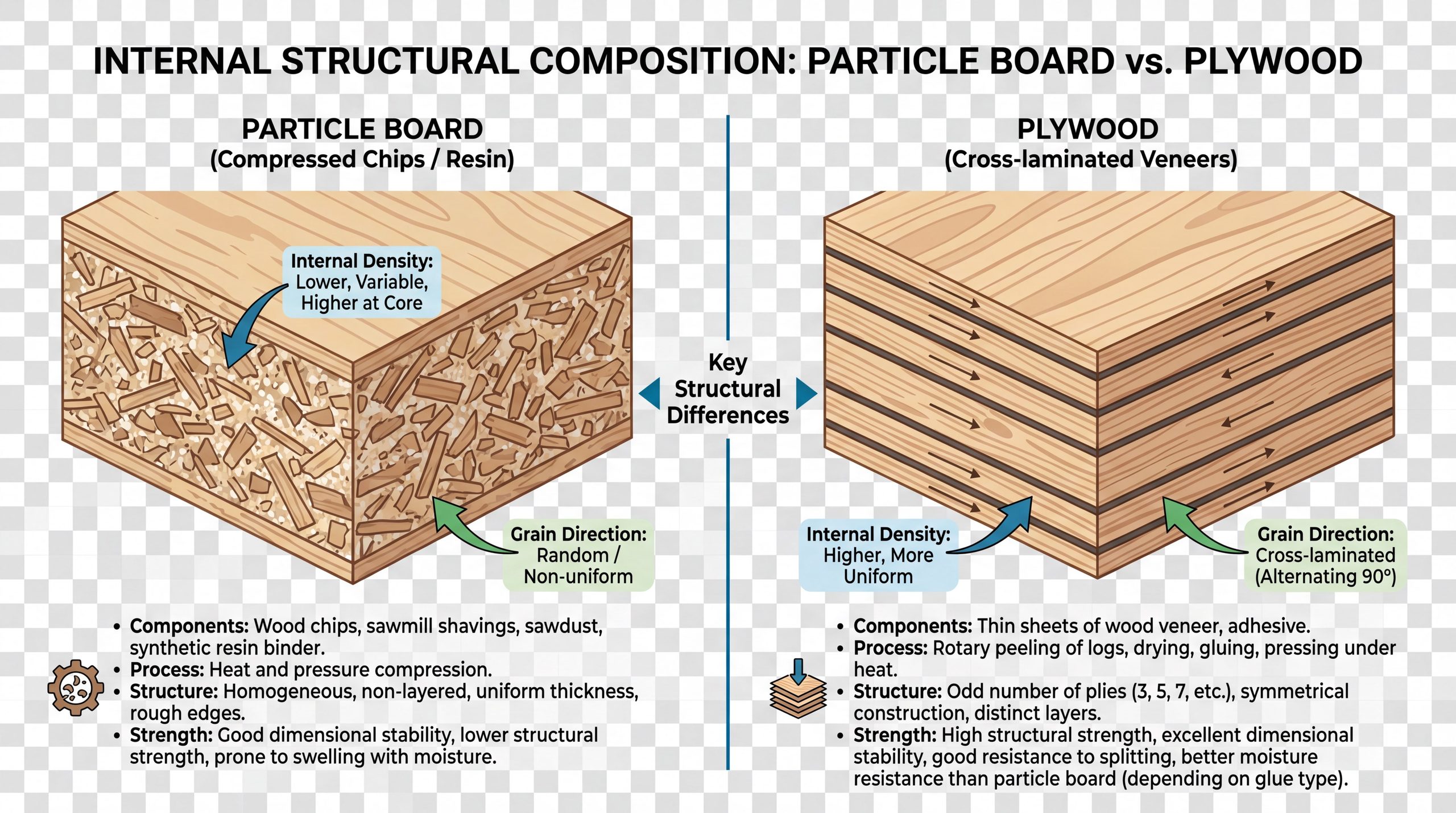
Plywood is usually more structurally stable than particle board when furniture needs to carry weight, resist bending, or stay firm after years of use. Particle board can still stay flat and consistent in low-load furniture, but its performance depends heavily on board density, edge protection, and proper support.
1. Plywood Gets Strength From Cross-Grain Layers
Plywood is made from thin wood veneers bonded in alternating grain directions, so the panel can resist bending and splitting better than a single-direction wood layer. This layered structure makes plywood more suitable for shelves, cabinets, desks, bed parts, and other furniture areas that need stronger load support.
2. Particle Board Works Best as a Flat, Supported Panel
Particle board is made from wood particles and resin pressed into a uniform board, so it can stay flat and smooth in dry indoor furniture. It works better in short cabinet panels, drawer bottoms, decorative doors, and low-load shelves than in long spans or parts that carry heavy weights.
3. Structural Choice Depends on Where the Board Is Used
The same material can perform very differently depending on placement. A cabinet side panel, a long shelf, a desktop, and a bed rail do not carry the same stress, so particle board vs plywood should be judged by furniture structure, not only by material name.
Use this quick structure check before choosing the board:
- Use particle board for flat, supported, low-load panels.
- Use plywood for shelves, frames, cabinets, and furniture parts under repeated stress.
- Avoid particle board for long unsupported spans unless the design adds enough reinforcement.
- Check edge sealing and screw areas carefully when particle board is used.
| Structural Factor | Particle Board | Plywood |
|---|---|---|
| Internal structure | Wood particles bonded with resin | Layered wood veneers |
| Stability in flat panels | Good when dry and supported | Good across wider use conditions |
| Bending resistance | Lower on long spans | Higher due to layered structure |
| Load-bearing use | Limited | Better suited |
| Best structural use | Short panels, decorative parts, low-load furniture | Shelves, cabinets, frames, and stronger furniture parts |
Key Takeaway: Particle board can work well in flat, dry, low-load furniture parts, but plywood is usually the safer material when furniture needs stronger structure, longer spans, or better resistance to bending.
II. Which Material Handles Daily Wear Better?
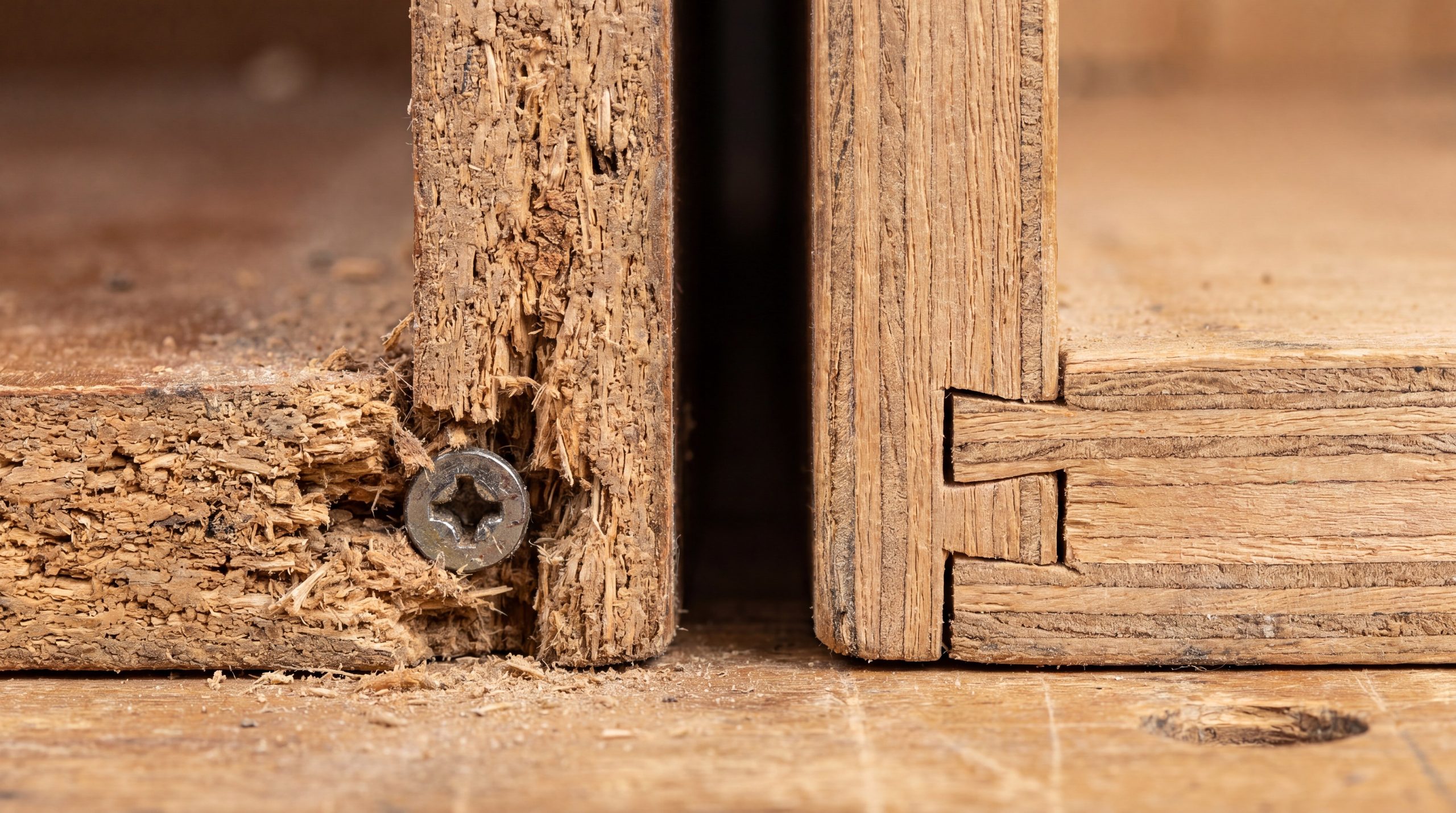
Plywood usually handles daily wear better than particle board because it is less likely to chip, crush, or break apart at weak points. Particle board can perform well in normal indoor use, but its edges and corners need stronger protection because damage spreads faster once the core is exposed.
1. Particle Board Is More Vulnerable at Edges and Corners
Particle board often fails first at the edges, corners, and screw areas because the inner core is made from compressed wood particles. Once a corner is hit hard during moving, assembly, or daily use, the damage can turn into crumbling or visible edge failure. Plywood may dent or splinter, but it usually keeps more of its original shape after impact.
2. Surface Wear Depends on Finish, Not Only the Core Board
Surface scratches do not depend only on whether the board is particle board or plywood. A good melamine, veneer, laminate, or painted finish can protect both materials in normal indoor use, but the difference becomes obvious when impact reaches the edge, screw area, or inner structure.
For furniture that may be moved often or used in busy rooms, judge daily wear by these points:
- Exposed edges need stronger sealing or banding.
- Corners need better protection during packing and handling.
- Hardware areas need enough board density and proper fixing points.
- Long shelves need support, not only a thicker surface finish.
3. Daily Wear Risk Changes by Furniture Use
Daily wear risk is not the same for every furniture type. A decorative side cabinet, a low bookcase, a children’s table, and a frequently moved storage unit all face different impact levels, so the material choice should match the real use condition, not only the surface look.
| Daily Wear Factor | Particle Board | Plywood |
|---|---|---|
| Corner impact | Higher chipping and crushing risk | More likely to dent or splinter |
| Surface scratches | Depends mainly on finish quality | Depends mainly on finish quality |
| Edge damage | More serious if the core is exposed | Usually more forgiving |
| Moving and handling | Needs stronger protection | Handles impact better |
| Repairability | Limited once the core breaks | Better in many cases |
Key Takeaway: Particle board can handle normal indoor use when the finish and edges are well protected, but plywood is more forgiving when furniture faces impact, movement, or repeated handling.
III. Which Material Holds Screws and Hardware Better?
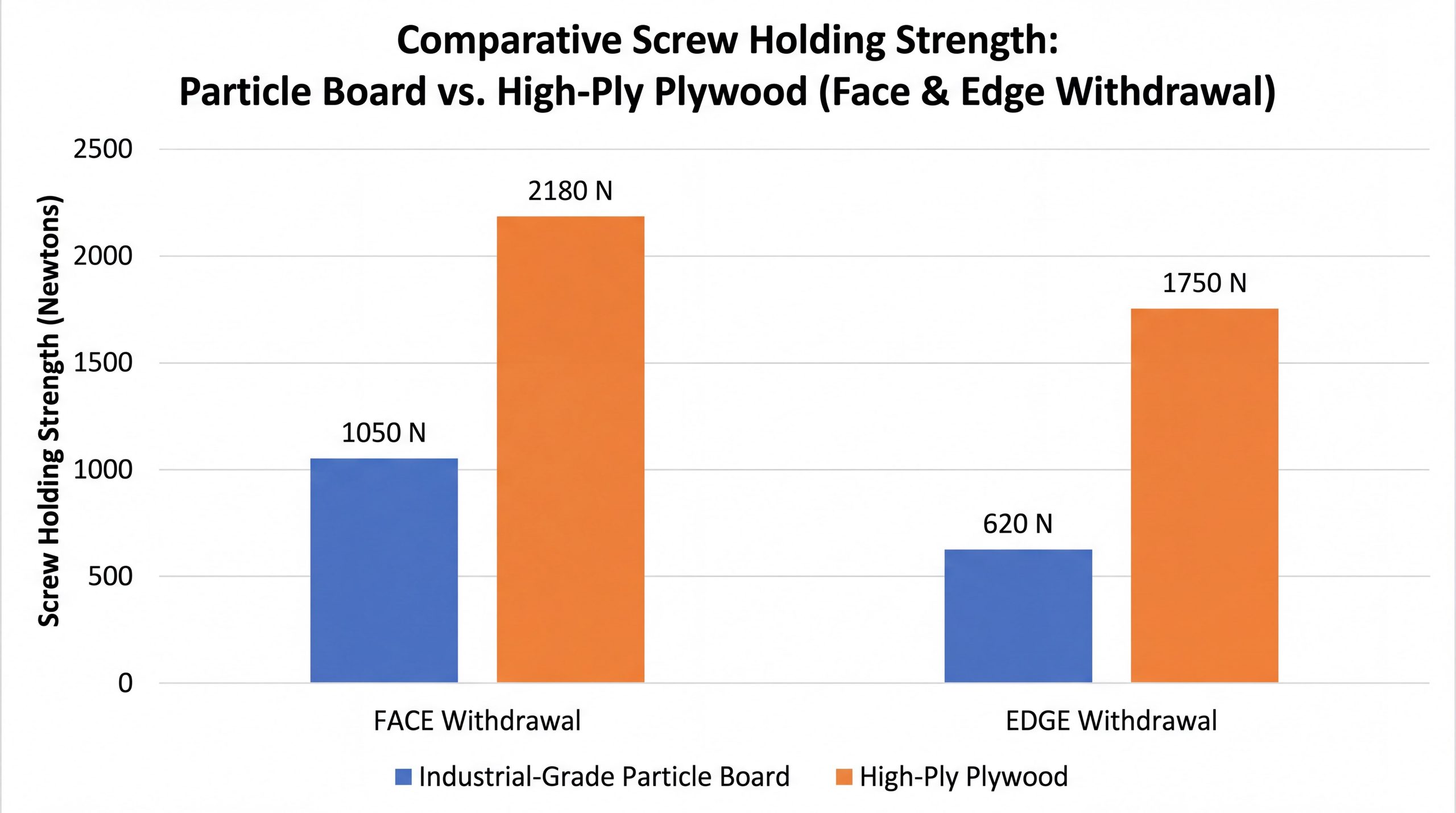
Plywood usually holds screws and hardware better than particle board, especially in furniture with hinges, drawer slides, repeated assembly, or moving parts. Particle board can still work, but it needs the right fasteners, enough board density, and careful hole positioning to avoid loosening.
1. Particle Board Screw Holes Can Loosen Faster
Particle board holds screws through compressed particles and resin, so the grip can weaken if the screw is over-tightened, removed, or installed again. This is why low-density particle board often performs poorly around hinges, drawer slides, and ready-to-assemble joints. Once the hole enlarges, the hardware may feel loose even if the panel still looks acceptable.
2. Plywood Gives Screws More Material to Bite Into
Plywood has layered wood fibers that give screws stronger grip across the panel. This makes it better for cabinet doors, shelves, desks, chairs, and other furniture parts that face repeated pulling, opening, closing, or movement. It is especially useful when hardware stability affects the whole product experience.
Particle board needs extra caution in these hardware areas:
- Hinges on cabinet doors
- Drawer slides under repeated pulling
- Knock-down joints assembled more than once
- Edge screws are placed too close to the board edge
- Thin panels used with heavy hardware
3. Hardware Design Can Reduce Particle Board Risk
Particle board is not automatically unsuitable for hardware, but the design has to match the material. Confirmat screws, cam locks, inserts, thicker panels, and reinforced fixing points can make a major difference. The problem usually appears when a weak board, small screws, and repeated force are combined.
| Hardware Factor | Particle Board | Plywood |
|---|---|---|
| Screw grip | Moderate, depends on density | Stronger and more stable |
| Re-assembly risk | Higher because holes enlarge easily | Lower because layers hold threads better |
| Hinges and drawer slides | Needs reinforcement or better fasteners | More suitable for repeated use |
| Edge screw holding | Weaker | Stronger |
| Best fastening method | Confirmat screws, inserts, cam locks | Standard wood screws and structural fasteners |
Key Takeaway: Plywood is usually the better choice for furniture with hinges, drawers, repeated assembly, or moving joints. Particle board can still work when the hardware design, board density, and fastening method are properly matched.
IV. Which Material Swells Faster Around Moisture?
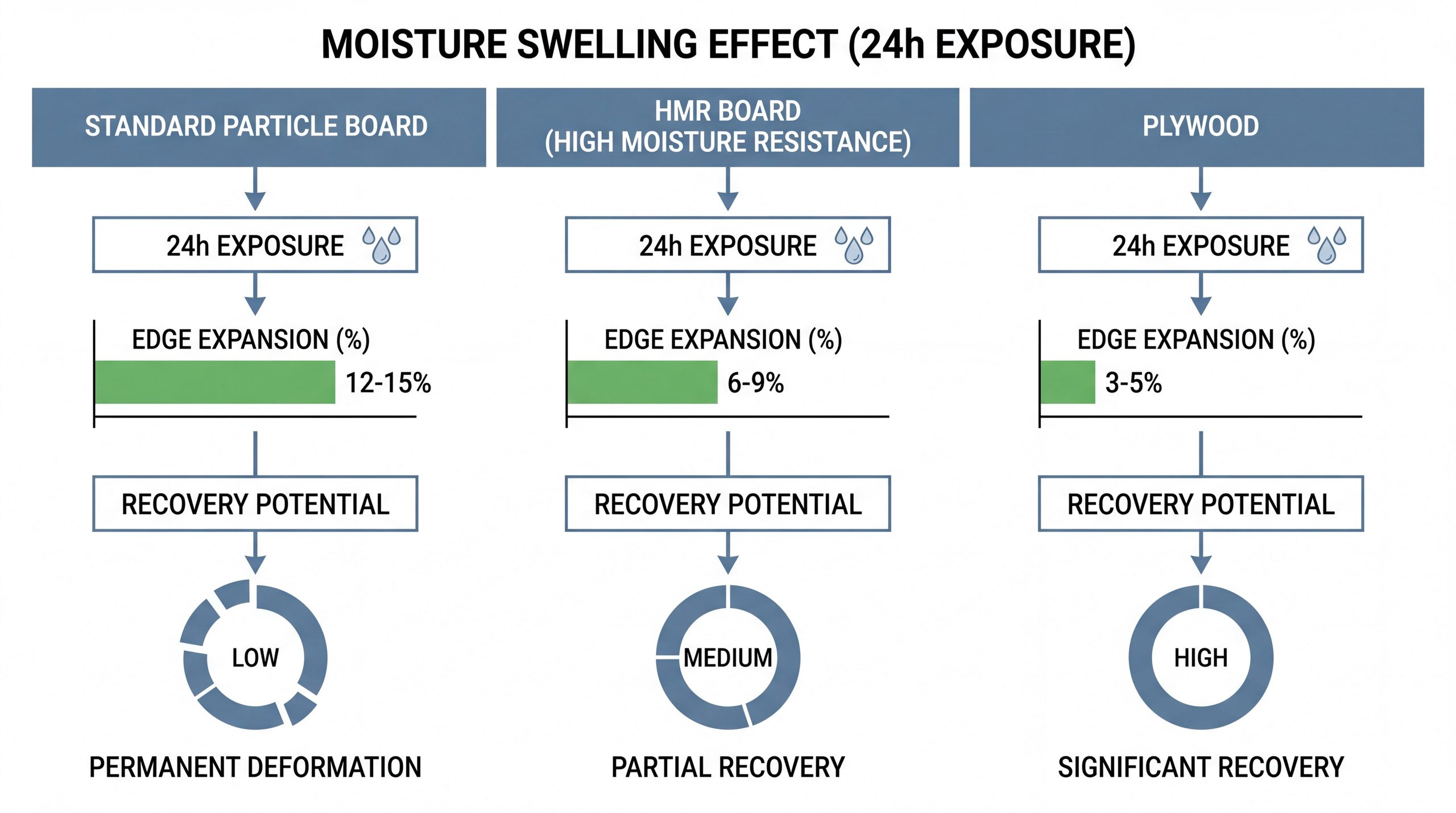
Plywood usually performs better than particle board against moisture because its layered structure is less likely to swell quickly when humidity changes. Particle board can work in dry indoor furniture, but once water reaches the core, swelling, edge lifting, and surface deformation can happen faster.
1. Particle Board Swells Faster When Water Reaches the Core
Particle board is more sensitive to moisture because its compressed wood particles absorb water through exposed edges, screw holes, damaged surfaces, or weak sealing. The most common swelling points are not always the large flat surfaces, but the small areas where water can enter the board structure.
Moisture problems often start from these weak points:
- Unsealed or poorly banded edges
- Screw holes around hinges and handles
- Bottom panels close to the floor
- Sink-side cabinets or humid storage areas
- Damaged corners where the finish has already opened
2. Plywood Handles Humidity Changes More Safely
Plywood is not waterproof unless it is made and finished for wet conditions, but it usually handles humidity changes better than particle board. Its layered veneer structure gives the panel more resistance against quick swelling, which is why plywood is often safer for cabinets, shelves, and furniture used in rooms with changing humidity.
3. Moisture Risk Depends on Room and Edge Protection
Moisture performance is not decided by the board alone. A well-sealed particle board panel in a dry bedroom may perform better than poorly finished plywood in a damp room, so the real judgment should include material, edge sealing, finish quality, and furniture placement together.
| Moisture Factor | Particle Board | Plywood |
|---|---|---|
| Water absorption | Higher if the core is exposed | Lower under normal indoor humidity |
| Edge swelling | More common and harder to reverse | Less severe in many cases |
| Humid room use | Riskier without strong sealing | Safer, but still needs protection |
| Surface lifting | More likely after swelling | Less likely if properly finished |
| Best use condition | Dry indoor spaces | Dry to moderately humid indoor spaces |
Key Takeaway: Particle board can work in dry indoor furniture, but plywood is usually safer when furniture may face humidity changes, edge exposure, or accidental moisture contact.
V. Which Material Is Better for Different Furniture Parts?
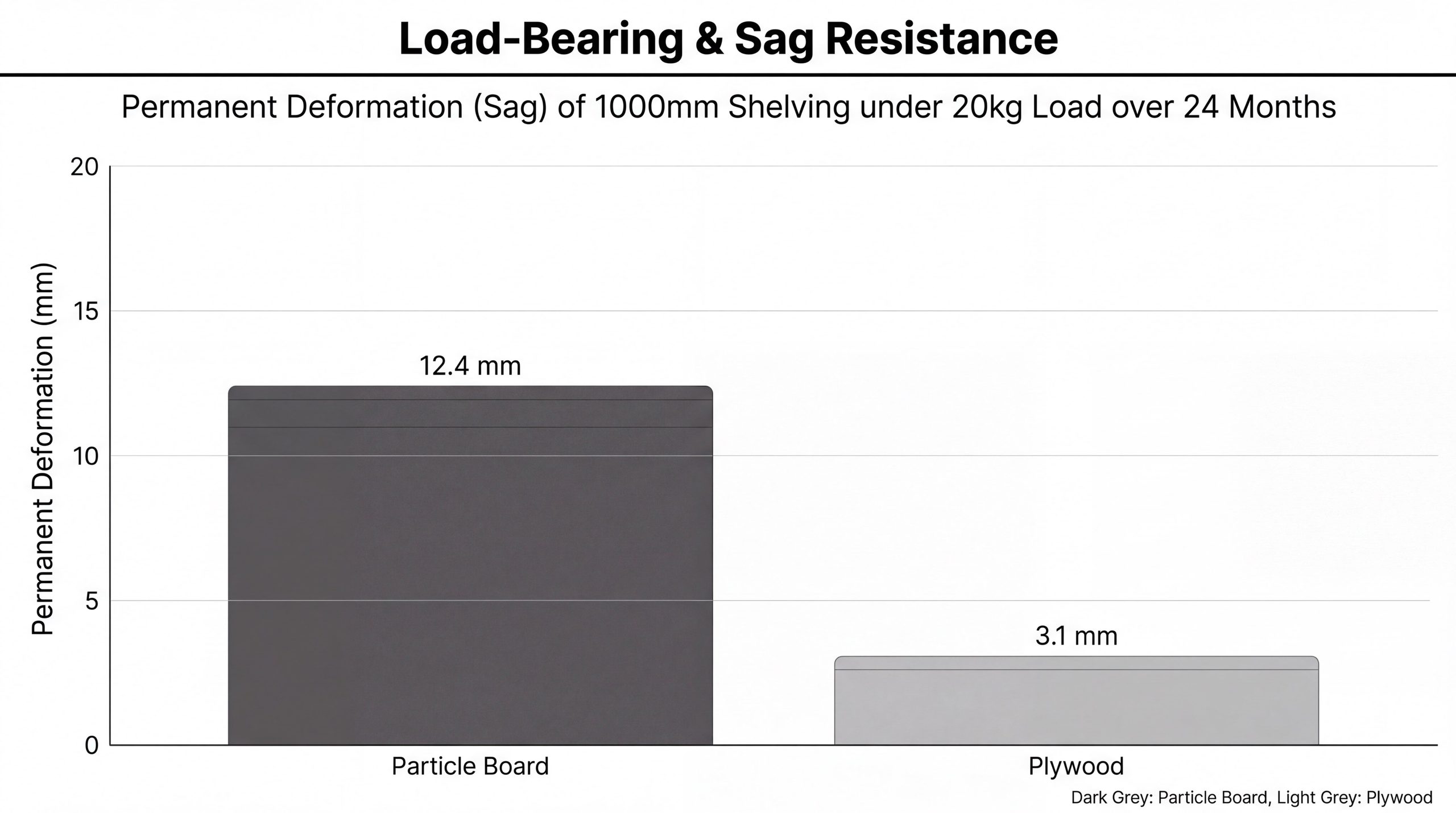
Plywood is usually better for furniture parts that carry weight, hold hardware, or face repeated movement, while particle board is more suitable for flat, dry, low-load panels. The best choice is not one material for the whole product, but the right material for each furniture part.
1. Particle Board Fits Flat and Decorative Furniture Parts
Particle board works well when the furniture part mainly needs a smooth surface, stable flatness, and controlled cost. It is commonly used for cabinet side panels, drawer bottoms, decorative doors, low-load shelves, and furniture parts finished with melamine, veneer, or laminate.
2. Plywood Fits Stronger Structural Furniture Parts
Plywood is a better fit for parts that need stronger screw holding, higher bending resistance, or better long-term stability. Shelves, cabinet frames, bed parts, desktops, drawer boxes, and frequently used furniture areas often benefit from plywood because those parts face more stress than decorative panels.
3. Mixed-Material Construction Can Be More Practical
Many furniture products do not need to use only particle board or only plywood. A practical design may use plywood for load-bearing or hardware-heavy areas and particle board for larger flat panels where cost and surface finish matter more.
A mixed-material approach often works better in these cases:
- Plywood for shelves, frames, and screw-heavy areas
- Particle board for side panels, backs, and decorative flat surfaces
- Thicker particle board when the panel span is short and well supported
- Stronger edge banding where particle board edges may face impact
- Plywood upgrades only where strength changes real product performance
| Furniture Part | Better Choice | Reason |
|---|---|---|
| Long shelves | Plywood | Better bending resistance |
| Cabinet side panels | Particle board or plywood | Depends on load and cost target |
| Drawer bottoms | Particle board for light use, plywood for heavier use | Load level decides the risk |
| Hinged doors | Plywood preferred | Better screw and hinge holding |
| Decorative flat panels | Particle board | Smooth surface and lower cost |
| Bed or frame parts | Plywood | Stronger structure and better fastener grip |
Key Takeaway: Particle board is suitable for flat, dry, low-load furniture parts, while plywood is better for structural, hardware-heavy, or frequently stressed areas.
VI. Which Material Is Better for Shelves, Cabinets, and Load-Bearing Areas?
Plywood is usually better for shelves, cabinets, and load-bearing furniture areas because it resists bending and screw loosening better than particle board. Particle board can still work in cabinet panels and short shelves, but it needs enough support, good edge sealing, and the right hardware design.
1. Long Shelves Need Bending Resistance More Than Surface Smoothness
Long shelves create more stress than many buyers expect because the load sits across the span for months or years. Particle board may sag when the span is too long or the load is too heavy, while plywood usually holds its shape better because of its layered structure.
For shelf and cabinet parts, check the real stress points before choosing the board:
- Shelf length and expected load
- Number of vertical supports
- Screw position near edges
- Back panel strength
- Cabinet width and door weight
- Risk of moving or reassembly
2. Cabinet Strength Depends on Joints, Hardware, and Panel Layout
Cabinet performance is not only about board thickness. Hinges, drawer slides, back panels, corner joints, and shelf supports all affect how the cabinet holds up during daily use. If you are comparing board choices for repeated-use furniture, our furniture quality control process gives a broader view of how structure, hardware, and inspection points connect before shipment.
3. Load-Bearing Risk Changes by Furniture Area
Load-bearing risk should be judged by how each part works inside the furniture. A decorative side panel may not need plywood, but a shelf, frame, hinge area, or bed support may justify the higher cost because failure in those areas affects safety and service life.
| Furniture Area | Particle Board Risk | Plywood Advantage |
|---|---|---|
| Long shelf | Sagging under long-term load | Better bending resistance |
| Cabinet hinge area | Screw loosening near edges | Stronger screw grip |
| Drawer box | Weaker under repeated pulling | Better joint stability |
| Bed support part | Higher deformation risk | Stronger load support |
| Decorative side panel | Usually acceptable if dry and supported | May be unnecessary cost |
| Back panel | Works for light support | Better for stronger cabinet rigidity |
Key Takeaway: Particle board can work in supported cabinet panels and short shelves, but plywood is usually safer for long spans, hinge areas, drawer structures, and load-bearing furniture parts.
VII. Which Material Gives a Better Surface Finish and Appearance?
Particle board can give a very smooth surface for melamine, laminate, veneer, or painted finishes, while plywood often gives a more natural wood-based appearance. The better choice depends on whether the furniture needs a clean flat finish, visible wood texture, or stronger edge and surface durability.
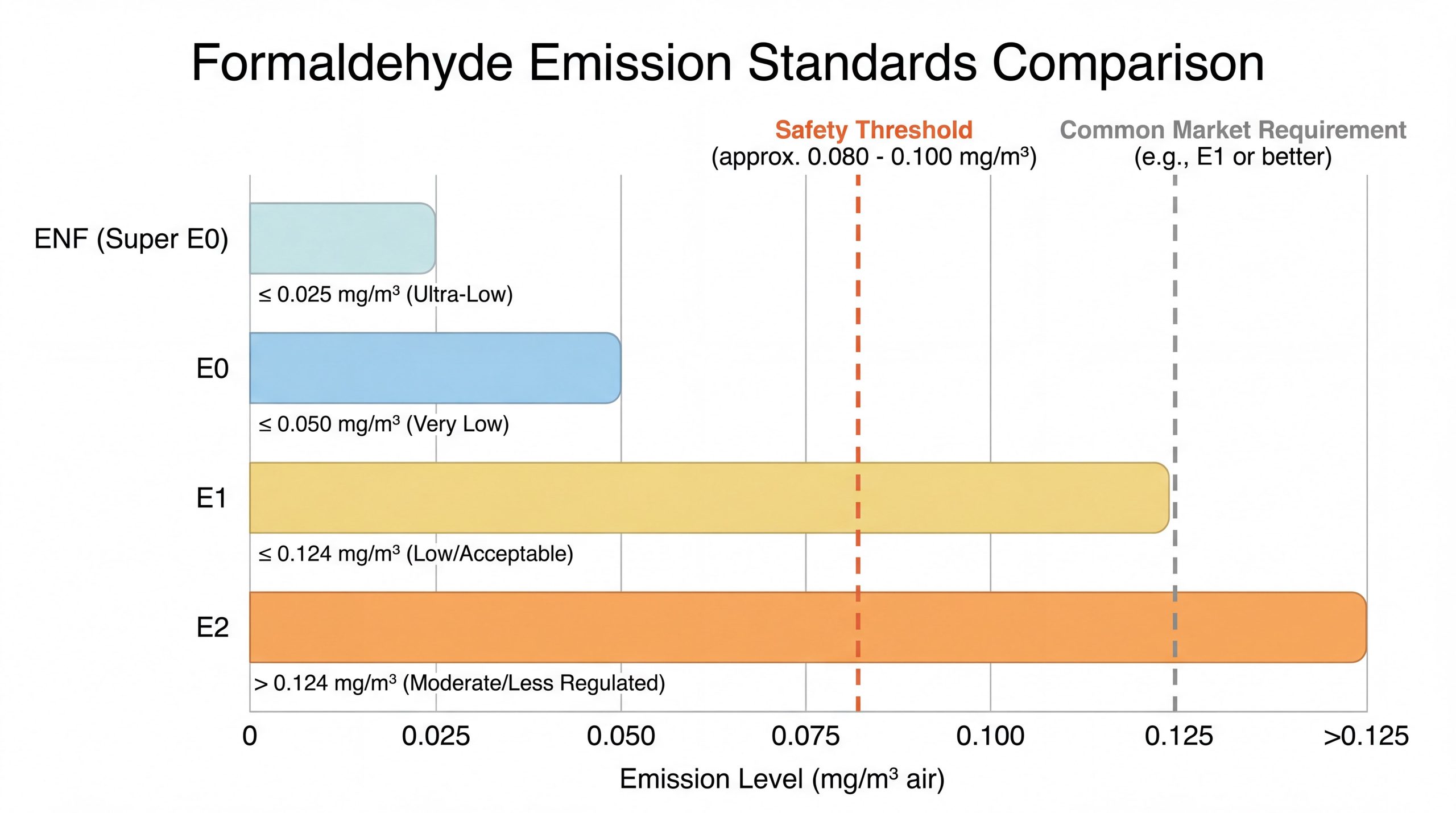
1. Particle Board Works Well for Smooth Decorative Surfaces
Particle board is often chosen for flat furniture surfaces because its uniform core supports smooth decorative finishes. It can look clean and consistent under melamine, laminate, paper veneer, or painted coatings, especially in cabinets, storage units, and low-load indoor furniture.
2. Plywood Gives Better Strength Behind the Finish
Plywood may show more natural grain variation, but it gives stronger support behind the visible surface. This matters when the finished part also needs screw holding, bending resistance, or stronger edge performance, not only a good-looking face.
Surface appearance should be judged together with hidden quality risks:
- A smooth finish cannot fix weak screw holding.
- A clean panel face does not mean the edge is well sealed.
- A thick coating cannot prevent swelling if moisture enters the core.
- A nice veneer can still fail if the baseboard is poorly selected.
- A strong-looking panel may still need proper inspection before packing.
3. Edge Quality Often Decides the Real Finish Result
Edge quality is where particle board and plywood often show the clearest difference after use. Particle board needs stronger edge banding and sealing because exposed particles can chip or swell, while plywood edges can be stronger but may still need sanding, filling, or finishing control to look clean. If edge cracking, coating inconsistency, or surface defects are recurring concerns, this wooden furniture quality issue guide gives more context on where those problems usually start.
| Finish Factor | Particle Board | Plywood |
|---|---|---|
| Smooth flat surface | Very good for decorative finishes | Good, but may show grain variation |
| Painted finish | Good if the surface is well prepared | Good, but prep work may vary |
| Veneer or laminate | Common and cost-efficient | Stronger base for higher-use parts |
| Edge appearance | Needs strong banding and sealing | Stronger but may need more finishing work |
| Hidden risk | Swelling or chipping under damaged finish | Grade variation and surface prep issues |
Key Takeaway: Particle board can look very clean on flat decorative surfaces, but plywood is usually better when the finished part also needs stronger edges, screw holding, or long-term structural support.
VIII. Which Material Has More Edge and Finishing Problems?
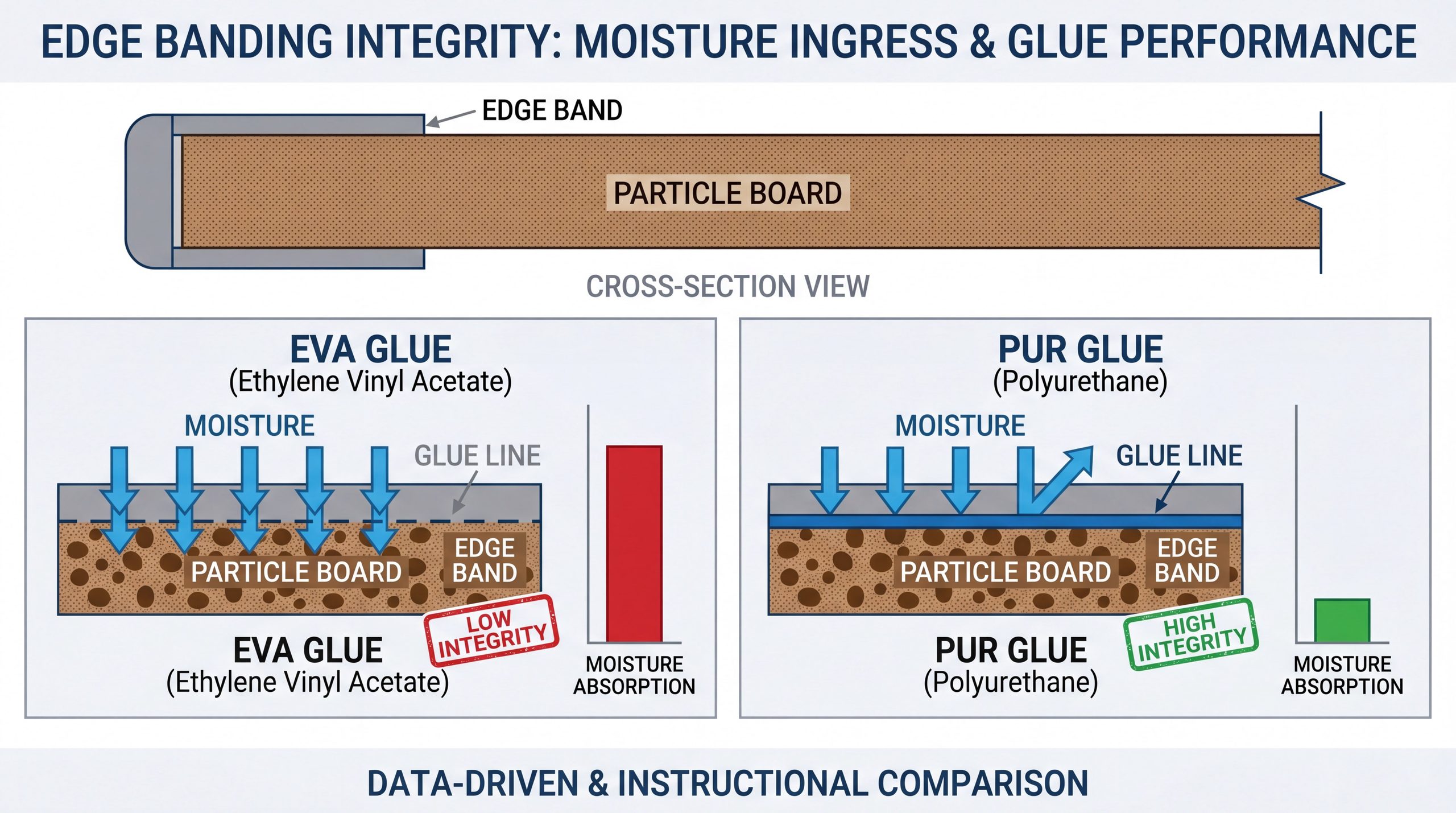
Particle board usually has more edge-related finishing problems than plywood because its core is easier to expose, chip, or swell. Plywood can also have finishing defects, but its edge problems are often easier to control when the grade, sanding, filling, and coating process are handled properly.
1. Particle Board Edges Need Stronger Protection
Particle board edges are more fragile because the inner particles can show through if the banding, sealing, or trimming is poor. Once the edge is chipped or water enters the core, the damage may spread beyond appearance and affect the board structure.
Common edge problems often start from these points:
- Thin or poorly bonded edge banding
- Rough trimming after banding
- Exposed corners after transport impact
- Screw holes too close to the edge
- Weak sealing around cut-outs or drilled areas
2. Plywood Edges Are Stronger but Not Always Cleaner
Plywood edges are usually stronger, but they may show veneer layers, small gaps, rough sanding marks, or uneven filler if the finishing process is rushed. This matters when the edge is visible, painted, or used in furniture where appearance and touch both affect the final quality.
3. Finishing Risk Depends on the Base Board and Process Together
Finishing problems should not be judged only by the material name. A good particle board with proper edge banding can look cleaner than low-grade plywood with gaps or rough sanding, so the real comparison should include base board quality, edge work, coating control, and final inspection. For a broader view of how material defects turn into finished-product risk, this guide on reducing furniture sourcing quality risk gives useful context.
| Edge or Finish Factor | Particle Board | Plywood |
|---|---|---|
| Edge chipping | Higher risk if banding is weak | Lower, but sanding still matters |
| Exposed core | More visible and harder to repair | Layers may show but stay stronger |
| Paint finish | Smooth if well prepared | Needs better sanding and filling |
| Veneer or laminate | Clean on flat panels | Stronger base for higher-use parts |
| Moisture through edges | Higher swelling risk | Lower, but still needs sealing |
| Main control point | Edge banding and sealing | Grade selection and finishing prep |
Key Takeaway: Particle board needs stronger edge protection and sealing, while plywood needs better grade control and finishing preparation to avoid visible layer gaps, rough edges, or uneven surfaces.
IX. When Is Plywood Worth the Higher Cost?
Plywood is worth the higher cost when the furniture part affects strength, hardware stability, safety, or long-term service life. Particle board can be more cost-efficient for flat and low-load parts, but plywood becomes a better value when material failure would cause returns, repairs, or product complaints.
1. Plywood Is Worth It for Stress-Heavy Furniture Parts
Plywood usually makes more sense in shelves, bed parts, drawer boxes, cabinet frames, hinge areas, and furniture that may be moved or assembled more than once. These parts face stress beyond simple surface appearance, so a stronger screw grip and better bending resistance can reduce long-term failure risk.
2. Particle Board Is Still Practical When the Risk Is Low
Particle board can be a better choice when the part is flat, dry, supported, and not under repeated load. Decorative cabinet panels, backs, low-load shelves, and smooth laminated surfaces often do not need plywood if the board density, edge sealing, and design support are suitable.
Use plywood selectively when the extra cost changes real performance:
- Long shelves or wide spans
- Hinged doors with repeated opening
- Drawer boxes under frequent pulling
- Bed or frame parts under body weight
- Furniture planned for moving, reassembly, or heavier use
- Products where failure would create high after-sales cost
3. The Real Cost Difference Is Not Only Board Price
The real cost difference between particle board and plywood includes material price, machining difficulty, hardware stability, defect rate, packing risk, and after-sales exposure. A cheaper board can become more expensive if it leads to loose hinges, swollen edges, sagging shelves, or failed inspection after sample approval. This is why material choice should connect with the inspection workflow after sample approval, not only the first quotation.
| Cost Decision Factor | Particle Board May Be Enough | Plywood Is Worth Considering |
|---|---|---|
| Flat decorative panel | Yes | Usually not necessary |
| Long shelf | Risky | Yes |
| Hinged cabinet door | Depends on hardware design | Safer |
| Drawer box | Light use only | Better for frequent use |
| Bed or load-bearing part | Not ideal | Yes |
| Humid or changing environment | Only with strong sealing | Safer |
| Repeated assembly | Higher risk | Better |
Key Takeaway: Plywood is worth the higher cost when strength, screws, moisture, or long-term use affect the product result. Particle board is still practical when the part is flat, dry, supported, and low-risk.
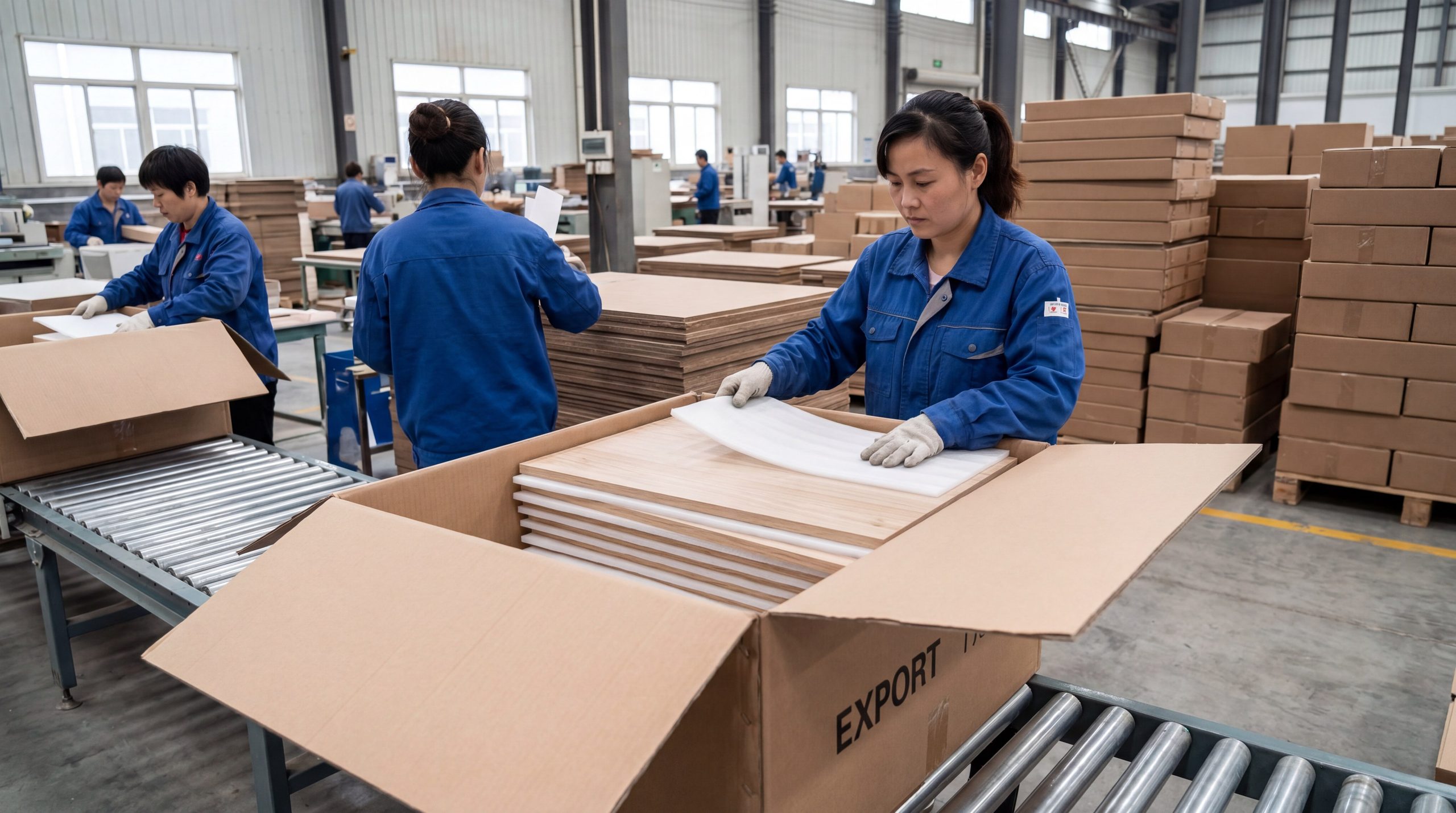
X. How Should You Choose Between Particle Board and Plywood?
Choose particle board when the furniture part is flat, dry, supported, and cost-sensitive. Choose plywood when the part needs better strength, screw holding, moisture tolerance, or long-term stability. The right decision is not about naming one material as “better,” but matching the board to the real use risk.
1. Start With the Furniture Function
The first question is where the board will be used inside the furniture. A decorative side panel, a short shelf, a drawer bottom, and a bed support do not carry the same stress, so the material choice should follow the function before cost is compared.
2. Match the Material to the Main Failure Risk
Particle board usually fails through swelling, edge chipping, screw loosening, or sagging when it is used beyond its safe range. Plywood usually costs more, but it reduces risk in stress-heavy areas. If the product will be inspected before shipment, material choice should also connect with a clear furniture quality inspection checklist, especially for shelves, hinges, drawers, and moisture-sensitive parts.
Use this simple decision path before choosing the board:
- Choose particle board for dry, flat, supported, low-load furniture parts.
- Choose plywood for long shelves, frames, hinge areas, and load-bearing structures.
- Upgrade to plywood when screw strength affects the product’s service life.
- Keep particle board only when edge sealing, support, and finish quality are controlled.
- Avoid judging by material price alone if failure would cause returns or complaints.
3. The Best Choice May Combine Both Materials
Many furniture products can use both materials in the same design. Particle board may control cost on flat panels, while plywood can strengthen shelves, frames, drawer boxes, or hardware-heavy areas. This mixed approach is often more practical than using one board everywhere, especially when the furniture needs to balance appearance, cost, and durability. If you are comparing material options before placing an order, this furniture sourcing from China guide can help connect material decisions with production and shipment risk.
| Decision Question | Better Choice | Why |
|---|---|---|
| Is the part flat, dry, and low-load? | Particle board | Lower cost and smooth surface |
| Does the part hold hinges or screws? | Plywood preferred | Better screw grip |
| Is the part a long shelf or frame? | Plywood | Better bending resistance |
| Is the product mainly decorative? | Particle board may be enough | Lower structural demand |
| Will the furniture be moved often? | Plywood preferred | Better impact and joint stability |
| Is moisture exposure possible? | Plywood preferred | Lower swelling risk |
Key Takeaway: Particle board is a practical choice for flat, dry, low-load panels, while plywood is the safer choice for shelves, cabinets, hardware-heavy areas, and furniture that needs longer service life.
FAQ
Is particle board better than plywood for furniture?
Particle board is not usually better than plywood for strength, but it can be better for cost-controlled flat furniture parts. It works well in dry indoor panels, decorative surfaces, and low-load areas when the edge sealing and finish are properly controlled.
Is plywood always worth the higher price?
Plywood is not always worth the higher price. It makes sense when the part carries weight, holds hardware, faces humidity, or affects long-term stability. For decorative flat panels with low stress, particle board may be enough.
Can particle board furniture last for years?
Particle board furniture can last for years when it stays dry, has enough support, and uses proper edge sealing. Most early failures come from moisture entering the core, weak screw areas, poor corner protection, or using particle board in high-stress parts.
Final Check
Particle board vs plywood should be judged by furniture function, not material name alone. Particle board can control cost in flat and dry panels, while plywood is safer for load, screws, moisture, and long-term use. If you need help matching board choices to furniture structure, specs, and order risk, you can contact us before production starts.