
Choosing between a bookcase and a bookshelf sounds simple until the room feels crowded, the storage looks messy, or the furniture feels too heavy for the space.
A bookcase is usually a freestanding storage unit with side panels and often a back panel, while a bookshelf is a more open shelving structure. A bookcase suits heavier storage and a more formal look. A bookshelf works better for lighter display, flexible layouts, and smaller rooms.
I. What is the difference between a bookcase and a bookshelf?
The main difference between a bookcase and a bookshelf is structure: a bookcase is usually more enclosed, while a bookshelf is more open. This changes how each piece looks, how much visual weight it adds to a room, what it can hold, and where it feels most natural in daily use.
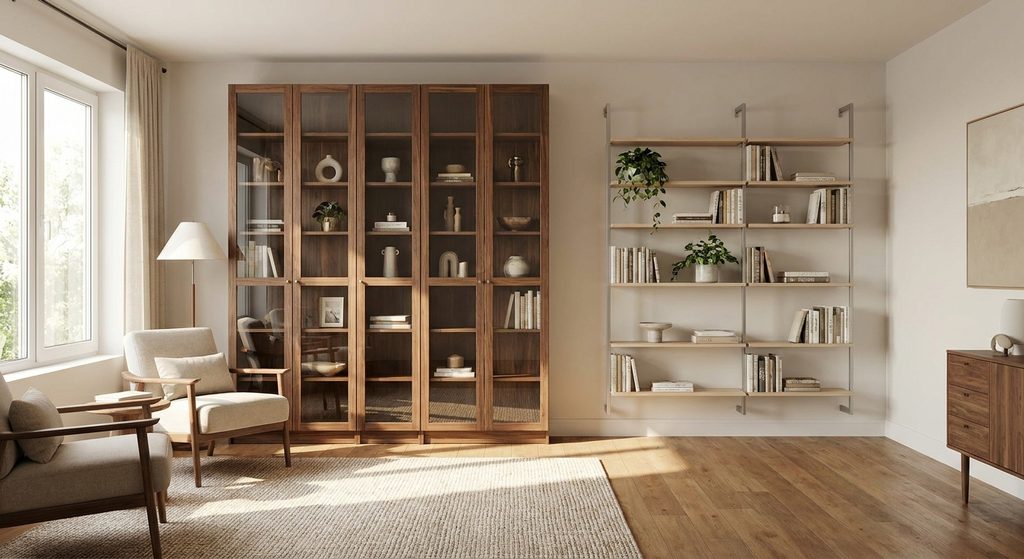
1. Enclosed cabinets vs open shelving
A bookcase usually has full side panels and a stronger cabinet-like body, so it feels more permanent in a room. It often works well for books, files, storage boxes, and items that need a more protected or organized look. A bookshelf usually has open sides or a lighter frame, which makes it feel more casual, flexible, and easier to blend into small or modern spaces.
2. Back panels and side supports
A back panel makes a bookcase feel more stable and visually solid, especially when it stands against a wall with heavy books inside. An open bookshelf may skip the back panel, so the wall remains visible and the whole piece feels lighter. When comparing the two, focus on the details that change real room use:
- Side structure: full side panels feel more enclosed; open side frames feel lighter.
- Back panel: a closed back adds stiffness and hides the wall; an open back keeps the room feeling airy.
- Shelf depth: deeper shelves suit books and storage boxes; shallow shelves suit display items.
- Visual weight: bookcases usually anchor a room; bookshelves usually soften a room.
3. Quick comparison: which one should you choose?
The right choice depends less on the name and more on what the furniture needs to solve. A bookcase is usually better when storage, order, and stronger structure matter more. A bookshelf is usually better when the room needs openness, display space, and flexible styling.
| Your Room or Storage Need | Better Choice | Why It Fits |
|---|---|---|
| Many books, files, or storage boxes | Bookcase | The enclosed body usually feels stronger and more organized |
| Small room or narrow wall area | Bookshelf | The open structure keeps the space feeling lighter |
| Formal living room, study, or office | Bookcase | It gives the room a more finished and anchored look |
| Decorative display, plants, or mixed items | Bookshelf | Open shelves make styling easier and less heavy |
| Flexible layout or rental space | Bookshelf | It is usually easier to move, restyle, and reposition |
This is why a bookcase often works as storage furniture, while a bookshelf often works as display furniture.
Key Takeaway: Choose a bookcase when you need stronger, more enclosed storage. Choose a bookshelf when you want a lighter structure, easier styling, and more visual openness.
II. How much weight can a bookcase or bookshelf hold?
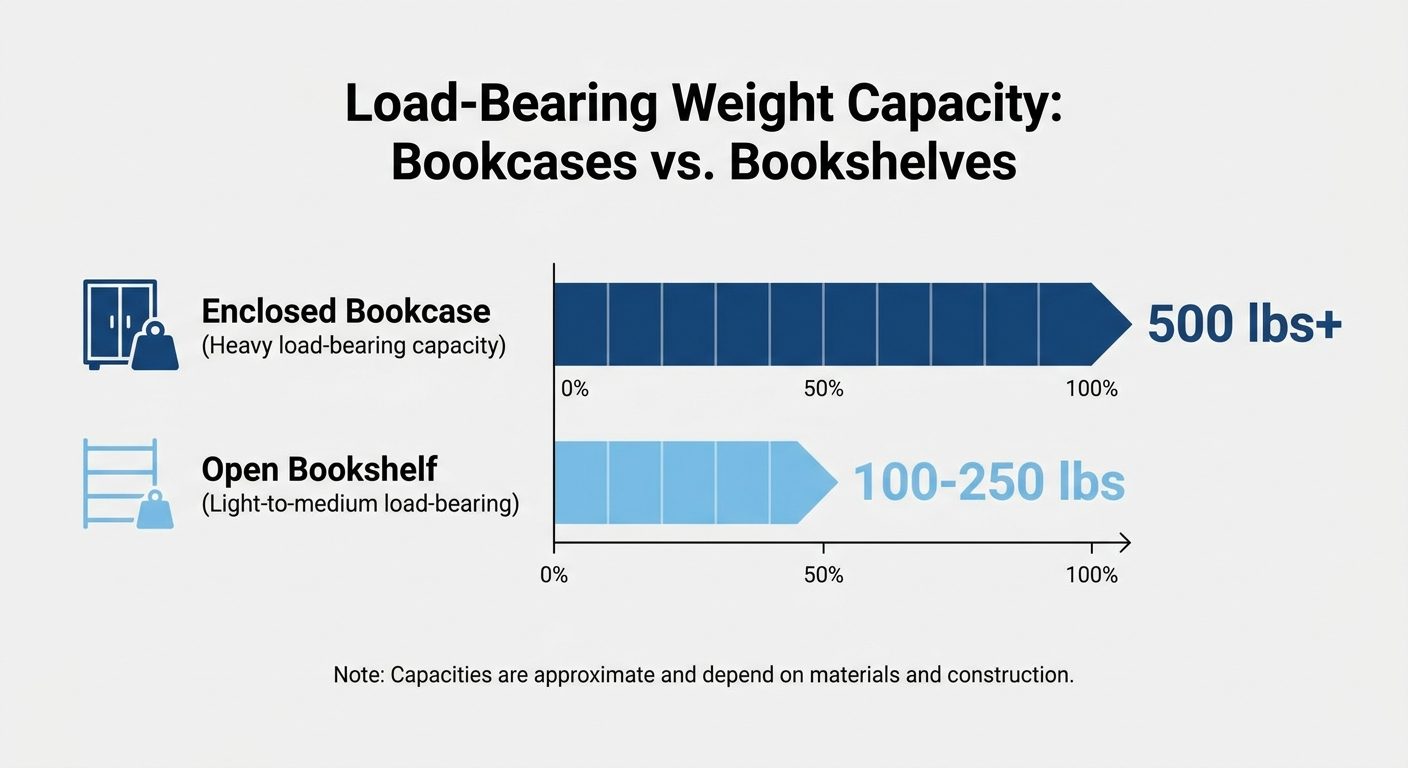
A bookcase usually handles heavier storage better than a bookshelf because its enclosed sides, deeper frame, and back panel often give the whole piece more support. A bookshelf can still be strong, but its real limit depends on shelf span, material thickness, wall support, and how the weight is spread across each level.
1. Heavy books need stronger shelf support
Books are heavier than they look, especially when they fill a full shelf from side to side. A wide shelf with thin material can start to bend over time, even if it looks fine on the first day. This is why bookcases often feel safer for full rows of books, files, photo albums, and storage baskets, especially when the shelf material is chosen for the same load and durability logic used in wood furniture
2. Open shelves work better for mixed display
A bookshelf works well when the items are lighter and more varied. Plants, picture frames, small decor, and a few books do not place the same pressure on each shelf as a full book collection. Before choosing an open bookshelf for daily use, check the details that affect real support:
- Shelf span: shorter shelves usually resist bending better than long open shelves.
- Material thickness: thicker shelves usually support heavier items more safely.
- Side frame: a stronger side frame helps reduce wobbling.
- Wall fixing: tall or narrow bookshelves often need wall anchoring for safer use.
3. Weight comparison: which one is safer for your storage?
The right choice depends on what you plan to place on the shelves every day. A bookcase is usually the safer choice for dense storage. A bookshelf is usually better when the storage is lighter, more decorative, and easier to rearrange.
| Storage Plan | Better Choice | Main Reason |
|---|---|---|
| Full rows of books | Bookcase | Stronger enclosed structure handles dense weight better |
| Files, folders, or document boxes | Bookcase | Deeper shelves and side panels feel more stable |
| Plants, decor, and a few books | Bookshelf | Open shelves are enough for lighter mixed items |
| Children’s books and toys | Bookcase | A steadier base and enclosed sides feel safer |
| Seasonal display pieces | Bookshelf | Easier to restyle without making the room feel heavy |
Weight capacity is not only about the label. It comes from shelf length, material, support points, and how the furniture is used every day.
Key Takeaway: Choose a bookcase for heavier book storage and a bookshelf for lighter display or mixed-use storage. The more weight you place on each shelf, the more structure matters.
III. Which option saves more floor space?
A bookshelf usually saves more visual space than a bookcase because it has a lighter, more open structure. A bookcase may use the same floor area, but its enclosed body often feels larger in the room, especially in narrow bedrooms, apartments, hallways, or small home offices.
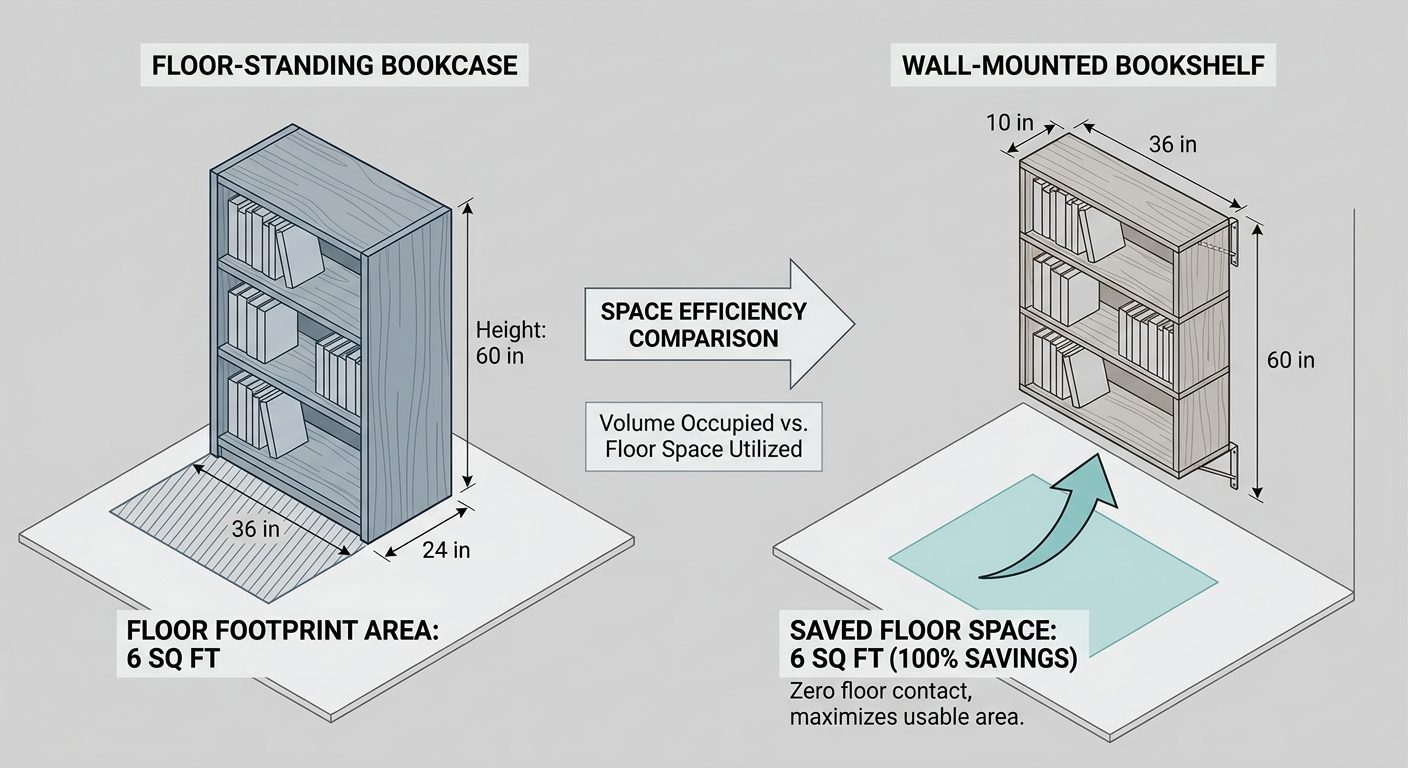
1. Open shelves make small rooms feel lighter
A bookshelf can make a small room feel less crowded because the wall, floor, or surrounding furniture remains more visible. This matters in rooms where every inch already feels occupied. A slim bookshelf, ladder shelf, or narrow open unit can add storage without making the whole wall feel blocked.
2. Bookcases work better when storage needs are higher
A bookcase may take more visual space, but it often gives better storage control. It can hold more books, boxes, files, and mixed items in one organized unit. Before choosing between the two, match the furniture to the space problem you are solving:
- Narrow wall: choose a slim bookshelf to keep the area open.
- Empty large wall: choose a bookcase to anchor the space.
- Small bedroom: choose open shelves for lighter storage.
- Study or office: choose a bookcase when books and files need order.
- Hallway or corner: choose a narrow bookshelf with safe wall support.
3. Space comparison: which one fits your room better?
Floor space is only one part of the decision. The more useful question is whether the furniture should disappear into the room or become a strong storage feature.
| Room Situation | Better Choice | Why It Works |
|---|---|---|
| Small apartment | Bookshelf | Open shelves reduce visual heaviness |
| Large living room wall | Bookcase | A fuller structure helps anchor the room |
| Narrow hallway | Bookshelf | A slim frame keeps movement easier |
| Home office with many files | Bookcase | Enclosed storage feels more organized |
| Bedroom display area | Bookshelf | Lighter shelves feel less bulky near the bed |
A bookshelf usually wins when the room needs openness. A bookcase usually wins when the room needs stronger storage and a more finished look.
Key Takeaway: Choose a bookshelf when visual space matters most. Choose a bookcase when organized storage is more important than keeping the room light.
IV. How do bookcases and bookshelves affect room style?
A bookcase usually makes a room feel more structured, formal, and finished, while a bookshelf usually makes a room feel lighter, more relaxed, and easier to style. The better choice depends on whether the room needs a strong storage feature or a softer display area.
1. Bookcases create a more finished look
A bookcase often feels like a main furniture piece because it has more visual weight. It works well in rooms where storage needs to look calm, balanced, and intentional. This is why bookcases often suit traditional living rooms, home offices, reading corners, and larger wall areas.
A bookcase usually fits better when the room needs:
- A stronger focal point: the fuller structure can anchor an empty wall.
- A more organized look: books, files, and boxes feel less scattered.
- A formal style: closed sides and deeper shelves feel more polished.
- A storage-first layout: the piece looks built for holding many items, not only display.
2. Bookshelves make styling feel easier
A bookshelf usually feels more casual because the structure is open and lighter. It gives more room for negative space, wall color, plants, framed photos, and decorative pieces. This makes it useful when the goal is not only storage, but also softening the room and adding visual interest.
3. Style comparison: which one matches your room better?
The difference is not only about traditional or modern taste. It is also about how much attention the furniture should attract. A bookcase can make the room feel grounded, while a bookshelf can make the same room feel more open and flexible.
| Room Style Goal | Better Choice | Why It Fits |
|---|---|---|
| Formal study or office | Bookcase | The enclosed structure feels more serious and ordered |
| Light modern living room | Bookshelf | Open shelves keep the space relaxed and less heavy |
| Reading corner | Bookcase | It creates a stronger storage and reading zone |
| Decorative wall display | Bookshelf | It gives more freedom for styling objects |
| Minimal room layout | Bookshelf | The lighter frame helps reduce visual clutter |
A bookcase usually works best when the room needs weight and order. A bookshelf usually works best when the room needs lightness and easy styling.
Key Takeaway: Choose a bookcase when you want the furniture to anchor the room. Choose a bookshelf when you want the room to feel lighter, more open, and easier to restyle.
V. Where do ladder bookshelves fit best?
A ladder bookshelf works best in rooms that need light storage without making the wall feel blocked. It belongs closer to the bookshelf side than the bookcase side because its slanted frame, open shelves, and lighter structure are better for display, small items, and relaxed styling.
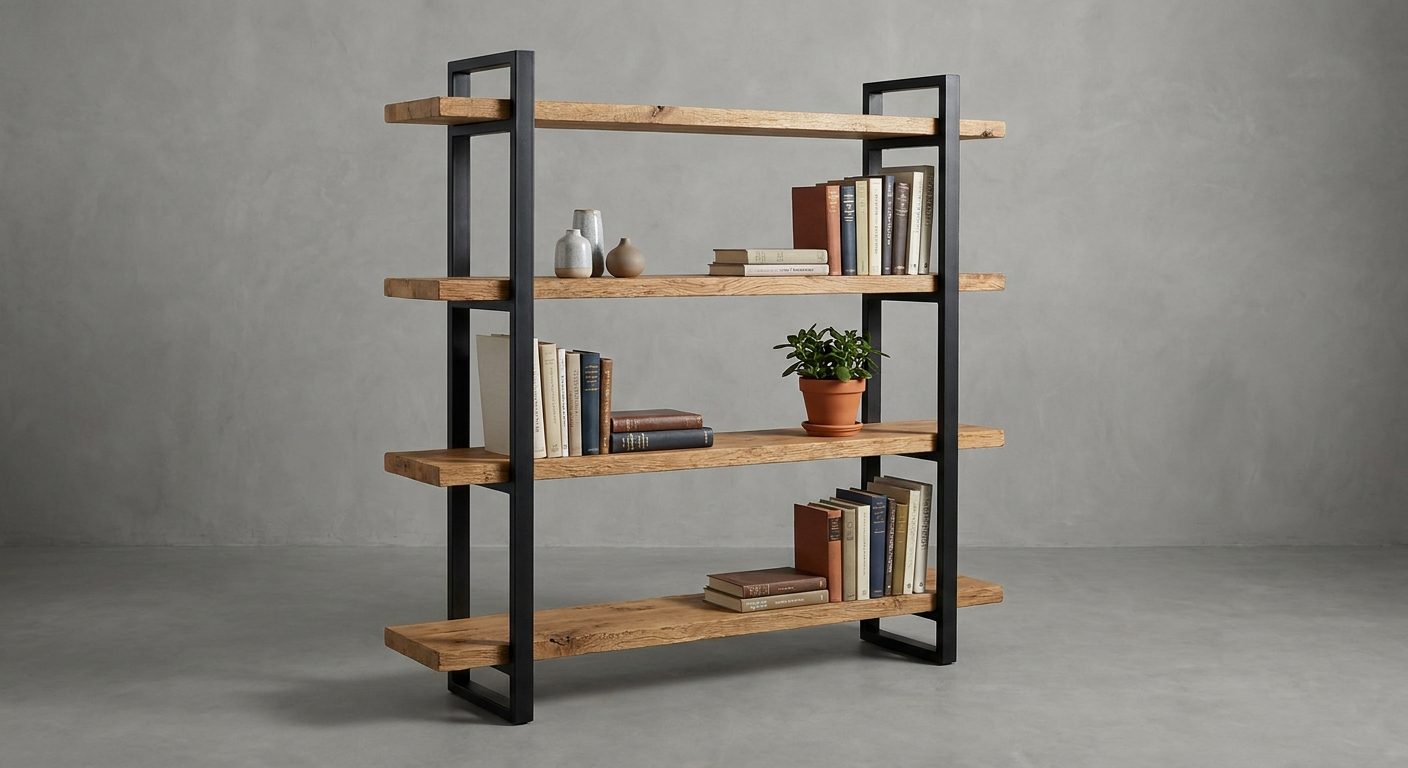
1. Ladder bookshelves suit small and casual spaces
A ladder bookshelf can work well in apartments, bedrooms, reading corners, and narrow wall areas because it does not feel as heavy as a full bookcase. Its wider base and narrower upper shelves create a softer outline, so the room still feels open. It is useful when you want storage, but you do not want one large cabinet-like piece to dominate the wall.
2. They work better for display than dense storage
A ladder bookshelf is usually better for lighter items, not full rows of heavy books. The slanted frame and open sides make it attractive, but they also mean shelf depth and support matter more. Before choosing one, match the shelf to the way it will actually be used:
- Decor and plants: ladder shelves are good for light styling pieces.
- A few books: they work for mixed books, not dense book storage.
- Bedroom storage: they suit small baskets, candles, and daily items.
- Home office corners: they can hold light files, decor, and stationery.
- Children’s rooms: they need careful wall fixing if the unit is tall or narrow.
3. Ladder shelf comparison: when does it make sense?
A ladder bookshelf is not the strongest option, but it can be the right one when the room needs openness and flexible styling. The key is to treat it as light storage, not as a replacement for a full bookcase.
| Room Need | Ladder Bookshelf Fit | Why It Works |
|---|---|---|
| Small apartment wall | Good fit | The open frame keeps the wall from feeling blocked |
| Full book collection | Weak fit | The shelves may not suit dense, heavy storage |
| Bedroom display | Good fit | It adds storage without making the room feel heavy |
| Formal study | Limited fit | A bookcase usually looks more grounded and organized |
| Reading corner | Good fit | It creates light storage for books and decor |
A ladder bookshelf works best when style, flexibility, and visual lightness matter more than maximum storage.
Key Takeaway: Choose a ladder bookshelf for small rooms, relaxed styling, and lighter display. Choose a bookcase when the space needs stronger storage, deeper shelves, and a more permanent furniture piece.
VI. Which one is easier to move, assemble, and reposition?
A bookshelf is usually easier to move, assemble, and reposition than a bookcase because it is often lighter, more open, and less cabinet-like. A bookcase can feel more stable once placed, but its larger body, deeper panels, and heavier structure make it less flexible in rooms that change often.
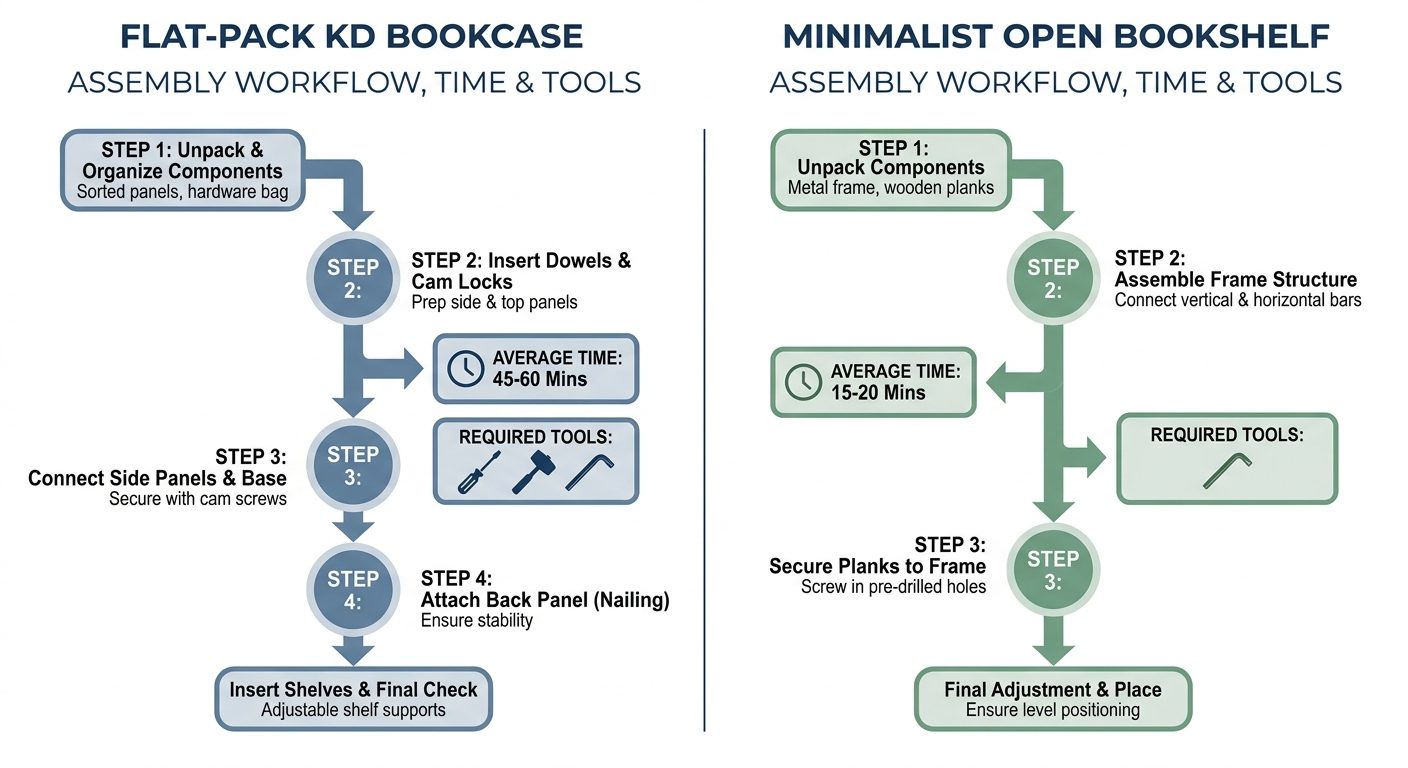
1. Bookshelves are easier for flexible room layouts
A bookshelf works well when the room may change over time. It can move from a bedroom to a living room, from a hallway to a home office, or from a display corner to a storage wall without feeling too heavy. This flexibility matters most in apartments, rental homes, children’s rooms, and small spaces where furniture may need to shift.
Bookshelves usually feel easier to manage because of these details:
- Lighter frame: open sides and slimmer shelves make the unit easier to lift.
- Simpler shape: the open structure is easier to fit through doors and corners.
- Flexible placement: it can work against walls, beside desks, or in narrow corners.
- Easier restyling: items can be moved around without changing the whole room layout.
2. Bookcases feel more permanent after placement
A bookcase usually feels like a fixed storage piece once it is in position. This can be good when the room needs a strong anchor, but it also means the layout needs more planning before placement. Larger bookcases may be harder to move around stairs, narrow hallways, or tight apartment entrances.
3. Movement comparison: which one fits changing rooms better?
The easier choice depends on how often the room layout may change. A bookshelf gives more flexibility. A bookcase gives more visual and storage stability.
| Daily Use Situation | Better Choice | Why It Fits |
|---|---|---|
| Rental apartment | Bookshelf | Easier to move and reposition |
| Long-term study room | Bookcase | Feels stable and permanent once placed |
| Children’s room that changes often | Bookshelf | Easier to move as storage needs change |
| Large living room wall | Bookcase | Stronger presence suits a fixed layout |
| Small home office | Bookshelf | Easier to fit beside a desk or corner |
If the furniture may move again, a bookshelf is usually safer. If the room layout is already fixed, a bookcase can feel more complete.
Key Takeaway: Choose a bookshelf when flexibility matters. Choose a bookcase when the storage piece is meant to stay in one place and become part of the room’s main layout.
VII. Which materials work better for bookcases and bookshelves?
Material choice matters because a bookcase and a bookshelf place different demands on the structure. A bookcase usually needs stronger panels, better side support, and good shelf resistance to bending, while a bookshelf can use lighter materials when the main purpose is display and flexible styling.
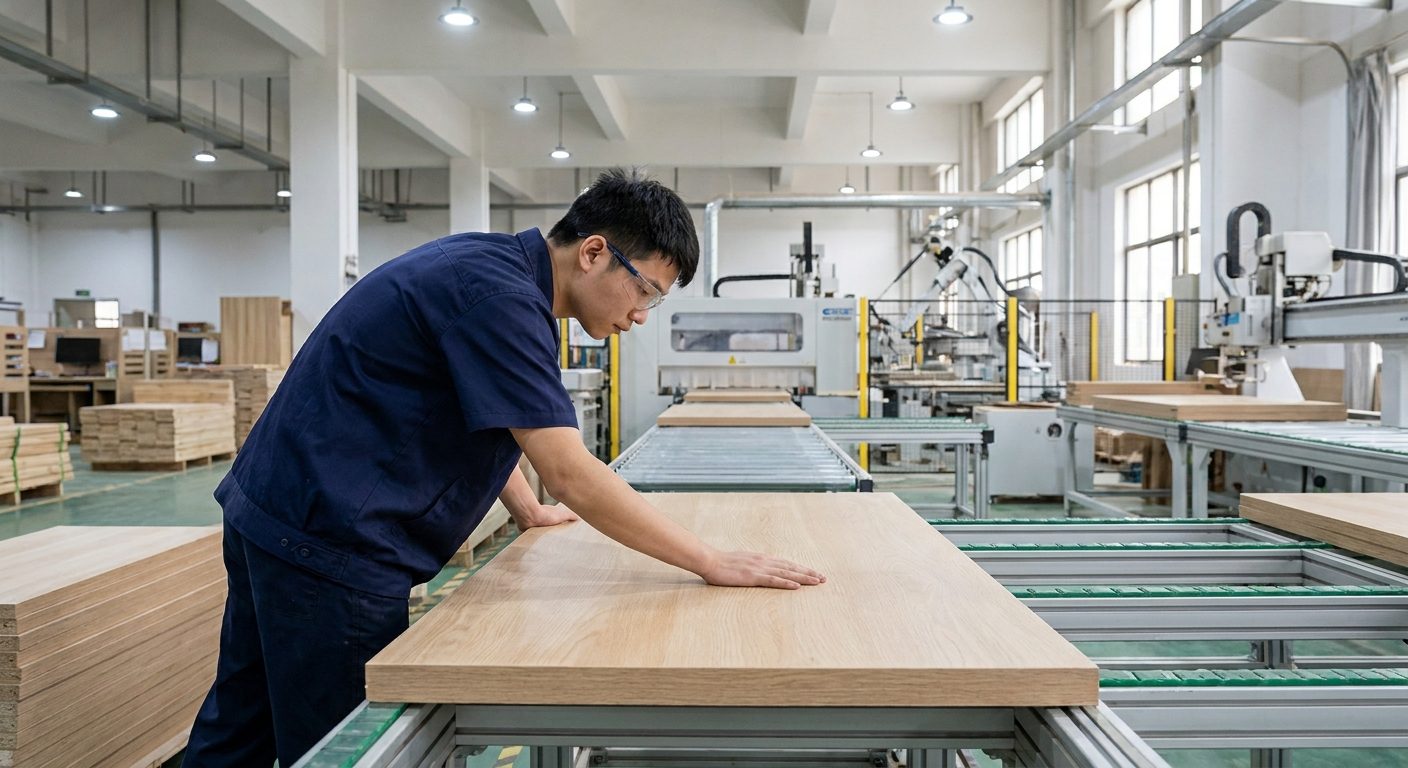
1. Bookcases need materials that hold shape under weight
A bookcase often carries heavier and denser items, so the material must stay stable after long use. Thick engineered panels, plywood, solid wood, or well-supported board structures can all work, but the shelf span and panel thickness must match the weight, especially when comparing particle board and plywood for shelf strength. A tall bookcase also needs enough side strength to avoid leaning or twisting.
For a bookcase, the material choice should support:
- Shelf stiffness: shelves should resist sagging when books fill the full width.
- Side panel strength: taller units need stronger vertical support.
- Back panel stability: a firm back panel helps the whole unit stay square.
- Surface durability: the finish should handle daily contact, cleaning, and book movement.
2. Bookshelves can use lighter materials when storage is lighter
A bookshelf has more flexibility because it often holds mixed items rather than dense storage. Lighter panels, metal frames, open wood frames, or mixed-material designs can work well when the shelves are used for decor, plants, and a smaller number of books, while painted shelves often need a closer look at MDF vs solid wood for surface feel and long-term wear. The risk comes when a light bookshelf is treated like a heavy bookcase.
For a bookshelf, the better material depends on:
- Display weight: light decor allows more open and slim structures.
- Shelf depth: shallow shelves can use lighter construction more easily.
- Frame design: open frames need good joint strength to reduce wobbling.
- Room use: children’s rooms and busy spaces need safer, steadier materials.
3. Material comparison: which one matches your use better?
The strongest material is not always the best choice. A heavy bookcase in a small room can feel too bulky, while a very light bookshelf may not suit full book storage. The better decision comes from matching material strength to real use.
| Material Situation | Better Fit | Why It Works |
|---|---|---|
| Full rows of books | Bookcase | Stronger panels and side support matter more |
| Light decor and plants | Bookshelf | Open, lighter materials are usually enough |
| Children’s room storage | Bookcase | A steadier body can feel safer for mixed items |
| Modern display corner | Bookshelf | Slim frames and lighter materials keep the look open |
| Long-term daily storage | Bookcase | More enclosed structure usually handles wear better |
Material choice should follow the storage load, not only the furniture name.
Key Takeaway: Choose stronger, more stable materials for bookcases that hold heavy storage. Choose lighter materials for bookshelves when the main goal is display, flexibility, and visual openness.
VIII. Which one works better for long-term daily use?
A bookcase usually works better for long-term heavy storage, while a bookshelf works better for lighter daily display and flexible use. The better choice depends on how often the shelves are used, how much weight they carry, and whether the furniture needs to stay stable after years of moving, cleaning, and rearranging.
1. Daily use puts pressure on shelves and joints
A shelf that looks fine at first can still change after long use. Heavy books, repeated cleaning, dragging storage boxes, and uneven weight can slowly affect shelf shape and joint tightness. A bookcase usually handles this better when it has strong side panels, a firm back panel, and shelves with enough thickness.
2. Bookshelves need the right use habits
A bookshelf can last well when it is used within its structure. It is better for mixed items, lighter books, display pieces, and spaces where the layout changes. The main problems usually appear when an open shelf is overloaded or placed where it gets bumped often.
These details affect long-term use most:
- Shelf span: long shelves need stronger material or extra support.
- Weight balance: heavy items should sit lower to reduce tipping risk.
- Joint strength: open frames need firm connections to avoid wobbling.
- Surface finish: frequently touched shelves need finishes that clean easily.
- Room movement: narrow spaces need furniture that will not be bumped daily.
3. Long-term use check: which choice is more practical?
Long-term performance is not only about material strength. It also depends on how the furniture is used in the room every day.
| Long-Term Use Need | Better Choice | Main Reason |
|---|---|---|
| Full book storage for years | Bookcase | Stronger enclosed structure handles weight better |
| Frequently changed display | Bookshelf | Easier to restyle without moving heavy furniture |
| Daily files and storage boxes | Bookcase | Deeper and steadier storage feels more practical |
| Small decor and light books | Bookshelf | Open shelves are easier to adjust and style |
| Busy family room | Bookcase | A heavier structure usually feels more stable |
The better long-term choice is the one that matches the real load, room traffic, and storage habits.
Key Takeaway: Choose a bookcase for long-term heavy storage. Choose a bookshelf for lighter daily use, flexible styling, and rooms where the layout may change.
IX. Are bookcases or bookshelves safer from tipping?
A bookcase usually feels more stable because it has a heavier and more enclosed body, but any tall storage furniture can tip if it is narrow, overloaded, or not fixed properly. A bookshelf can also be safe when it has a balanced frame, proper wall anchoring, and weight placed in the right positions.
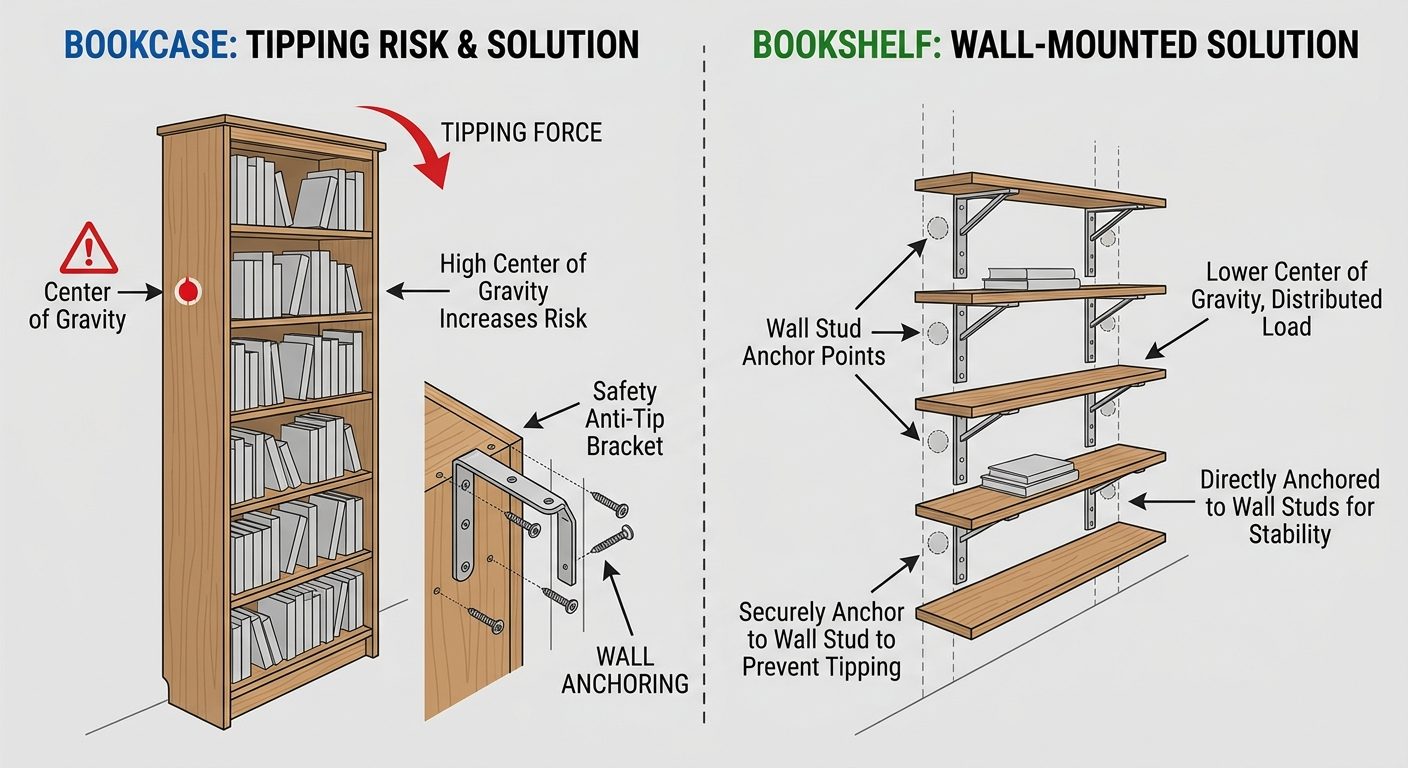
1. Tall furniture needs more attention than low furniture
Height changes the safety risk more than the name does. A tall bookcase or bookshelf can become unstable when heavy books are placed on upper shelves, when children climb on it, or when the floor is uneven. The safest choice is usually the one with a wider base, steady side support, and proper wall fixing.
2. Weight placement can change stability
Heavy items should stay on lower shelves because they help keep the furniture’s center of gravity closer to the floor. Lighter decor, small baskets, and display pieces can go higher. This rule matters for both bookcases and bookshelves, especially in children’s rooms, rental apartments, and busy family spaces where storage pieces may sit near other kids furniture.
For safer daily use, pay attention to these details:
- Base width: a wider lower section usually feels steadier.
- Wall anchoring: tall units should be fixed to the wall when possible.
- Shelf loading: heavy books and boxes belong on lower shelves.
- Floor contact: all feet or panels should sit flat without rocking.
- Room traffic: narrow walkways need furniture that will not be bumped often.
3. Safety check: which one is better for your room?
The safer choice depends on height, depth, weight distribution, and room activity. A short open bookshelf may be safer than a very tall bookcase, while a well-anchored bookcase may be safer than a narrow freestanding shelf.
| Room Situation | Safer Choice | Why It Works |
|---|---|---|
| Children’s room | Bookcase | A steadier body and lower heavy storage can feel safer |
| Narrow hallway | Bookshelf | A slim unit works if it is fixed and not overloaded |
| Tall storage wall | Bookcase | A stronger structure suits heavier storage better |
| Light display corner | Bookshelf | Lower weight reduces pressure on the frame |
| Busy family room | Bookcase | A heavier base usually handles daily contact better |
Safety is less about the label and more about height, anchoring, weight placement, and how the room is used every day.
Key Takeaway: Both bookcases and bookshelves can be safe when matched to the room. For tall furniture, wall anchoring, lower weight placement, and a stable base matter more than the name.
X. How should you choose the right bookcase or bookshelf for your room?
The right choice depends on what the room needs most: stronger storage, lighter display, safer placement, or a better match with the existing furniture. A bookcase is usually better when storage is the main goal, while a bookshelf is better when the room needs openness, styling flexibility, and easier movement.
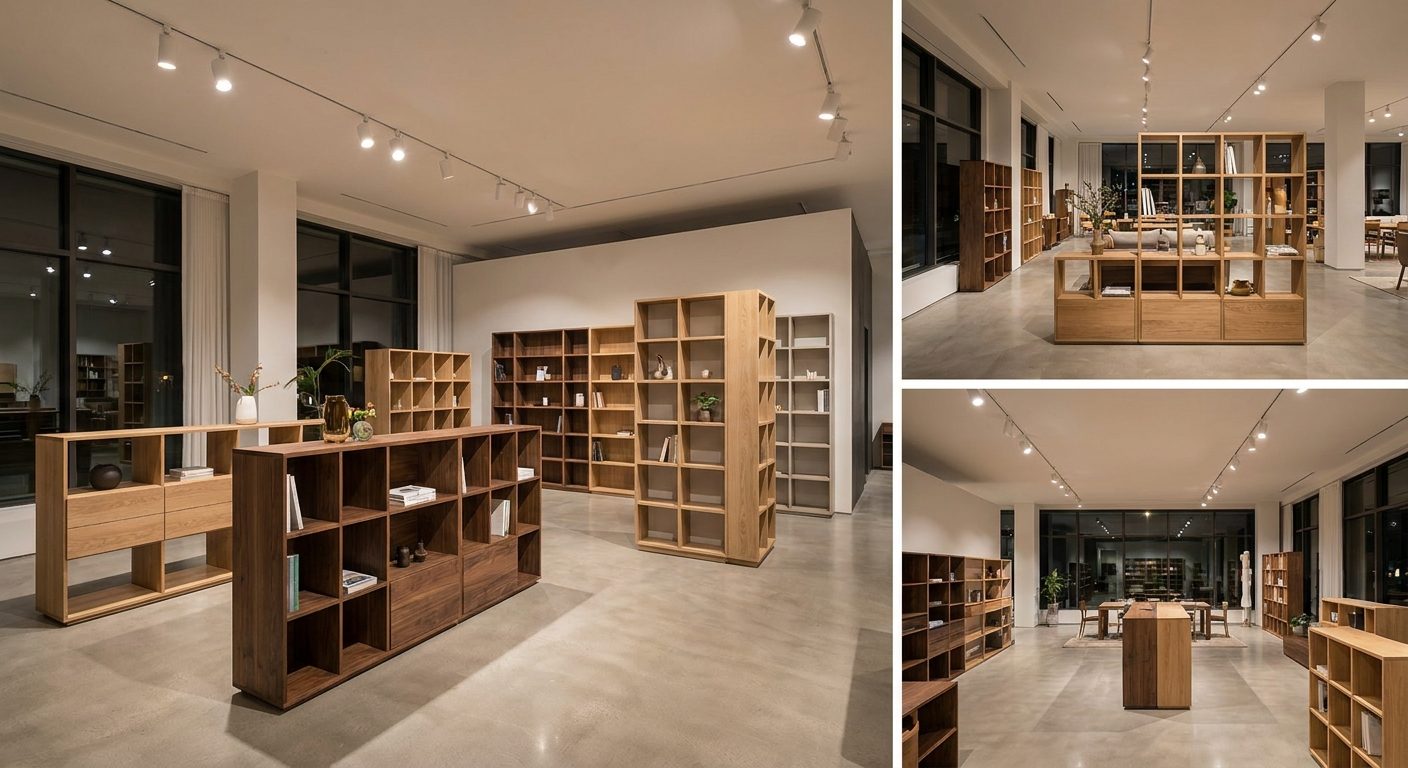
1. Start with the room and wall space
Room size should guide the choice before style does. A tall bookcase can look balanced on a wide living room or study wall, but it may feel too heavy in a small bedroom or narrow hallway. A bookshelf can fit smaller areas more easily, especially when the space needs storage without closing in the room.
2. Match the structure to the storage need
The best choice is the one that matches how the shelves will be used every day. Full book storage needs stronger support, while mixed display needs more visual breathing room. Before choosing the final style, match the piece to these real use details:
- For full book rows: choose a bookcase with stronger side panels and deeper shelves.
- For light display: choose an open bookshelf with enough spacing between shelves.
- For small rooms: choose a slim bookshelf or ladder-style shelf.
- For a formal study: choose a bookcase that looks more grounded and organized.
- For mixed storage: choose a piece with both open shelves and closed sections.
3. Final choice guide: which one fits your space best?
A good storage piece should match the room instead of only filling an empty wall. Size, material, color, shelf depth, finish, and how the piece works with nearby furniture all affect the final result.
| Your Priority | Better Choice | What to Look For |
|---|---|---|
| Maximum book storage | Bookcase | Strong shelves, deeper panels, steady back structure |
| Light display and decor | Bookshelf | Open frame, balanced shelf spacing, easy styling |
| Small-space storage | Bookshelf | Slim depth, lighter color, open sides |
| More formal room style | Bookcase | Full side panels, stronger visual weight, clean finish |
| Matching several furniture pieces | Depends on layout | Consistent material, color, finish, and proportions |
The best result usually comes from matching the storage piece to the room’s size, daily use, and surrounding furniture. If the room needs several coordinated pieces, material, finish, and proportions become just as important as the bookcase or bookshelf label.
Key Takeaway: Choose a bookcase for stronger, more organized storage. Choose a bookshelf for lighter display and flexible room layouts. For a better long-term fit, compare size, material, shelf depth, finish, and how the piece works with the rest of the room.
FAQ
Can I use a bookshelf instead of a bookcase?
Yes, you can use a bookshelf instead of a bookcase when the items are light, and the room needs an open look. A bookshelf works well for decor, plants, small book collections, and mixed displays. For full rows of heavy books or files, a bookcase is usually the safer and more organized choice.
What is the best choice for a small room?
A bookshelf is usually better for a small room because the open structure makes the space feel lighter. Slim bookshelves, ladder shelves, and narrow open units can add storage without making the wall feel blocked. A bookcase can still work if the room has enough wall width and needs stronger storage.
How do I know if a bookcase or bookshelf is strong enough?
Check the shelf thickness, shelf span, side support, back panel, and wall anchoring. Heavy books need shorter spans and stronger panels. Tall units should feel steady on the floor and should be fixed to the wall when possible, especially in children’s rooms or busy family spaces.
Final Check
A bookcase and a bookshelf may look similar, but they solve different room problems. A bookcase gives stronger, more enclosed storage. A bookshelf gives a lighter, more flexible display. Before choosing, compare room size, shelf load, material, stability, and style fit. For more wooden furniture options and size/material choices, you can contact us to review what fits your space better.