
Choosing between a dresser and a chest of drawers can be confusing. Picking the wrong type may waste bedroom space, block walkways, or make storage less accessible.
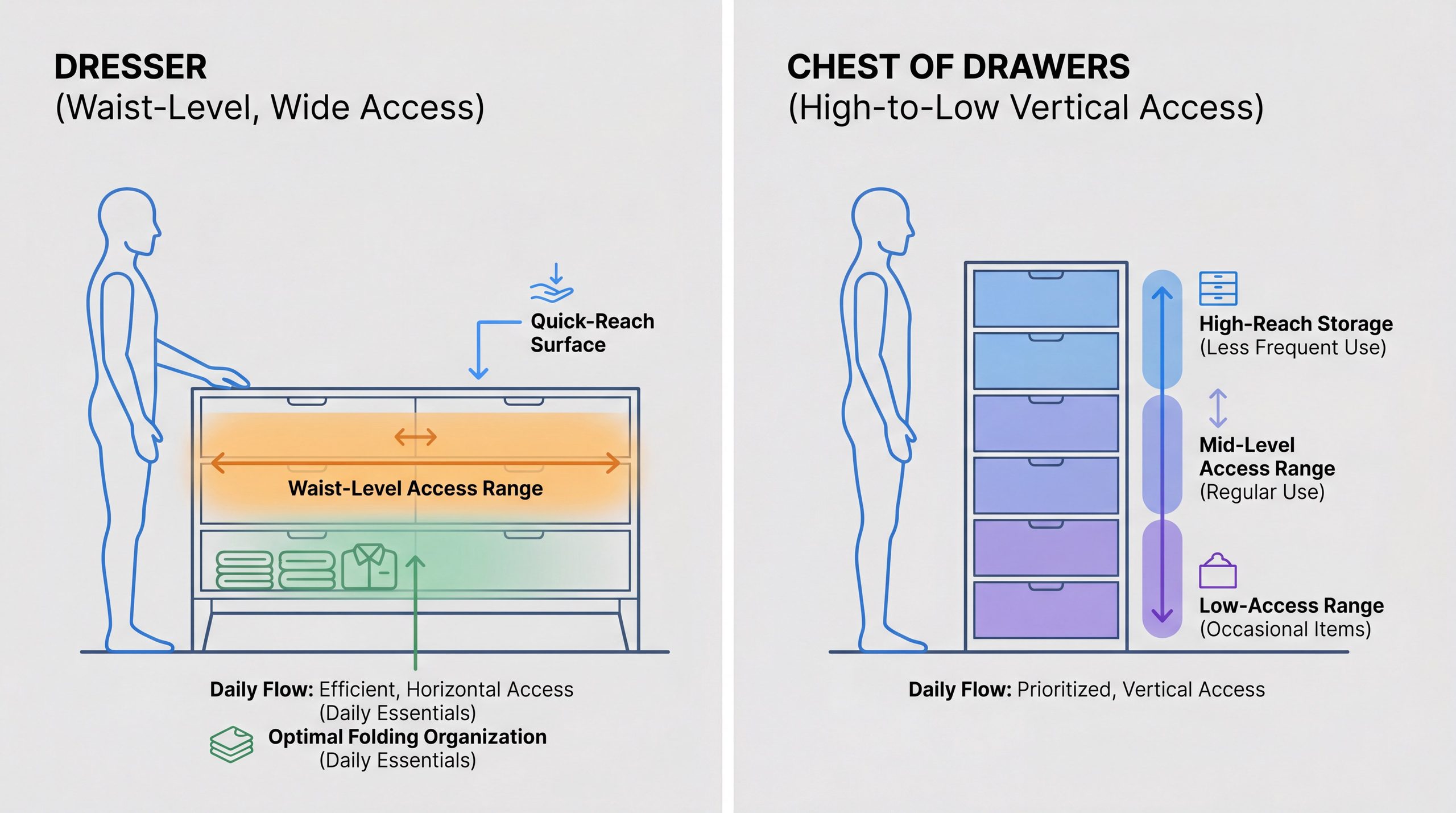
The key difference is simple: a dresser is wider and lower, offering easy horizontal access, while a chest of drawers is taller and narrower, maximizing vertical storage in limited floor space. Understanding this helps readers select the best option for room layout, storage needs, and daily use.
I. What Is the Main Difference Between a Dresser and a Chest of Drawers?
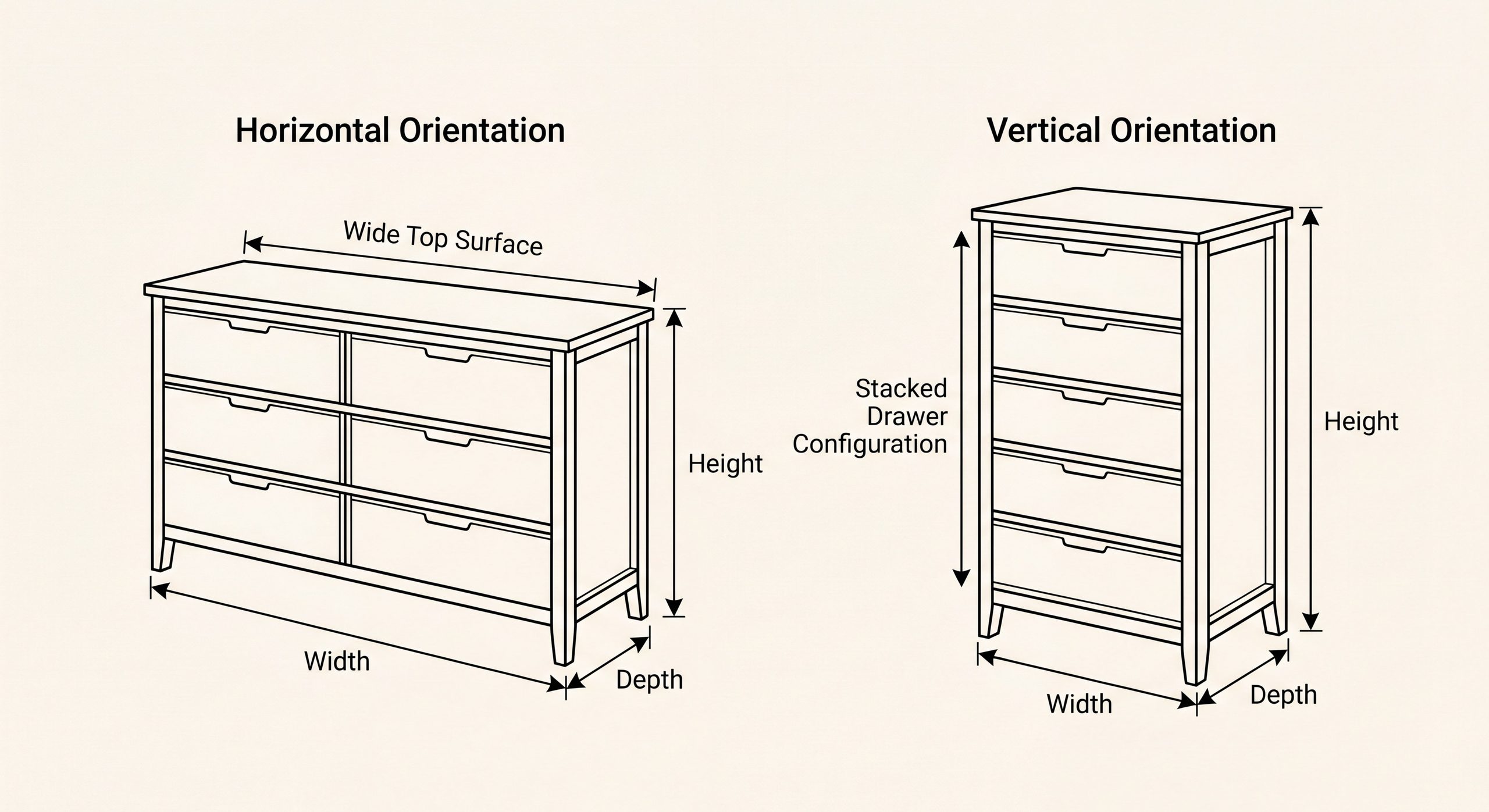
The main distinction is orientation and drawer layout. A dresser spreads drawers horizontally across a wider base, creating an accessible top surface. A chest of drawers stacks drawers vertically, saving floor space but requiring attention to height and stability. These differences affect storage efficiency, room ergonomics, and daily usability.
1. Horizontal Layout Features
Dressers usually feature two or three parallel drawer columns, creating a broad, waist-height surface for easy access. Wide drawers allow side-by-side organization of folded clothing and provide space for mirrors or décor.
Key points for dresser functionality:
- Drawers open smoothly without rubbing against adjacent fronts
- Top surface is suitable for decorative items or mirrors
- Low profile ensures easy daily access
2. Vertical Layout Features
Chests of drawers typically have a single vertical column of stacked drawers. This configuration uses wall height efficiently and keeps floor space open.
Advantages include:
- Fits narrow walls or corners without crowding walkways
- Vertical stacking keeps items organized within a limited floor footprint
- Simple drawer arrangement reduces clutter for taller items
3. Structural Footprint Comparison
The difference between a dresser and a chest of drawers becomes most practical when the furniture is placed in a real bedroom. A dresser needs more wall width but gives users a larger top surface and easier horizontal access, while a chest of drawers fits narrower positions but makes height and stability more relevant.
The table below summarizes the footprint and use differences that help readers choose the better fit.
| Comparison Point | Dresser | Chest of Drawers |
|---|---|---|
| Overall Shape | Wider and lower | Taller and narrower |
| Floor Space Use | Needs more wall width | Uses less floor width |
| Drawer Arrangement | Often arranged in horizontal columns | Usually arranged in a vertical stack |
| Top Surface | More room for a mirror or daily items | Smaller surface area |
| Better Starting Fit | Bedrooms with enough open wall width | Bedrooms with limited floor width |
Key Takeaway: A dresser suits rooms where wall width and usable surface space matter more, while a chest of drawers suits narrower placements where vertical storage is the stronger priority.
II. Which One Takes Up Less Floor Space?
A chest of drawers usually takes up less floor width than a dresser because it stores items through a taller, narrower form. A dresser needs a longer stretch of wall, although its depth may be similar, depending on the model. The practical choice depends on available wall width, drawer-opening clearance, and whether vertical height can be used comfortably.
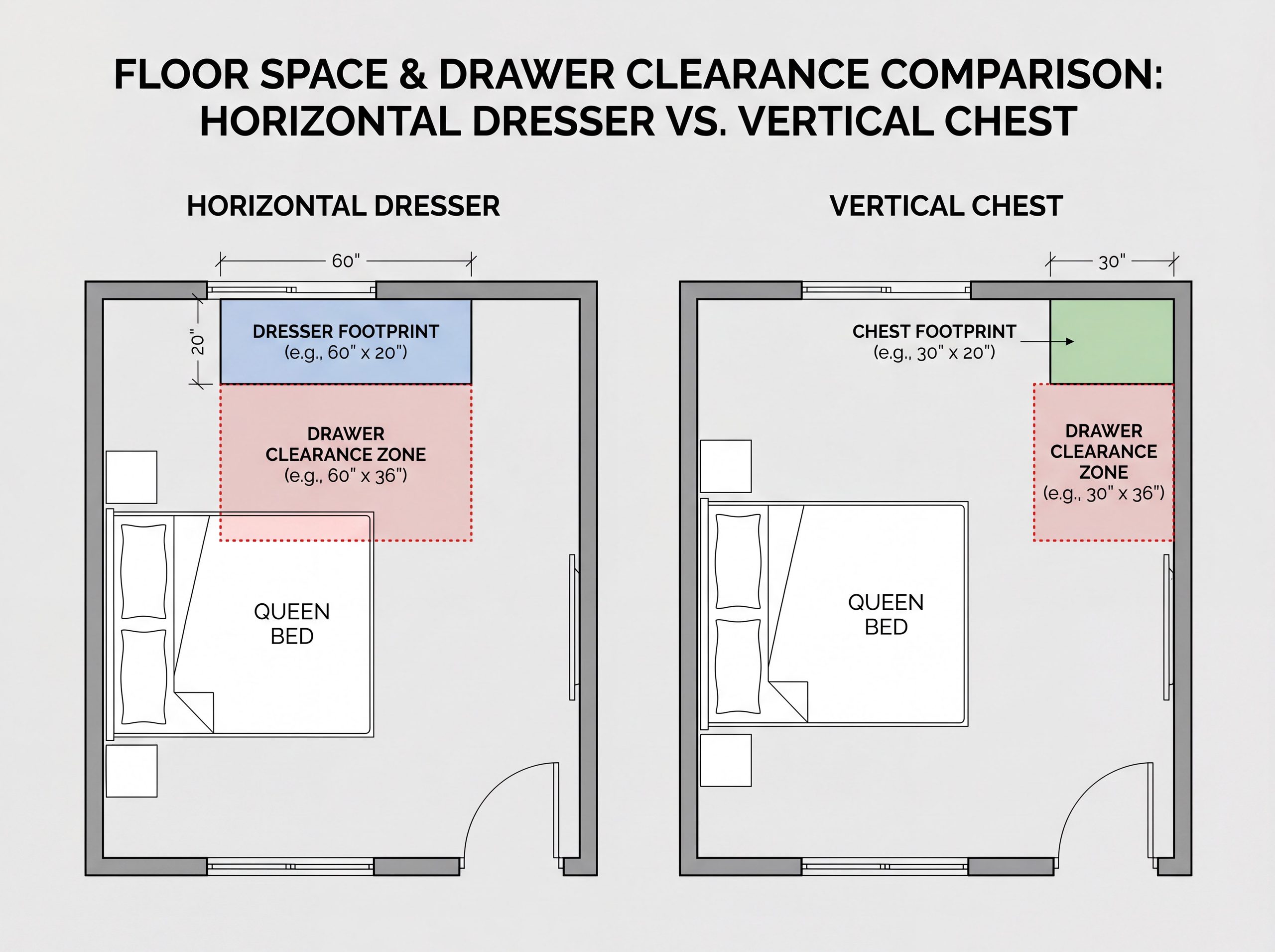
1. Narrow Rooms Usually Benefit From Vertical Storage
A chest of drawers is often easier to place in a narrow bedroom, beside a wardrobe, or in a wall position where a wide dresser would interrupt movement. Its advantage is not that every chest stores more, but that it can provide drawer storage without requiring a long horizontal footprint.
Before choosing a taller unit for a smaller room, check these placement points:
- Measure the available wall width rather than relying only on total room size.
- Leave enough front clearance for drawers to open without blocking the usual walking path.
- Check whether the top drawers remain comfortable to reach in daily use.
- Plan secure wall anchoring, especially where children may use the room.
2. A Dresser Uses More Width but Offers More Surface Space
A dresser takes up more wall width, which can make it difficult to place in a compact bedroom or between doors, windows, and wardrobes. That wider shape also creates its main advantage: a more useful top surface for a mirror, lamps, trays, or items used every day.
3. Floor Space Depends on Width, Depth, and Drawer Clearance
Floor-space judgment should be based on real dimensions, not furniture names alone. A narrow chest is usually easier to place along a short wall, while a dresser becomes more practical where a wider wall is available and the top surface will be used.
The table below compares the placement factors that matter before selecting either format.
| Placement Factor | Dresser | Chest of Drawers |
|---|---|---|
| Wall Width Needed | Usually needs a longer wall position | Usually fits a narrower wall position |
| Vertical Height Used | Lower profile leaves more open wall above | Taller form uses more vertical space |
| Drawer-Opening Clearance | Depends on drawer depth and room path | Depends on drawer depth and placement |
| Top Surface Use | More usable display or mirror space | Smaller surface for limited items |
| Better Starting Choice | Rooms with available wall width | Rooms where floor width is restricted |
Key Takeaway: A chest of drawers is usually the better starting choice for limited wall width, while a dresser is more suitable when the room can support a wider footprint and benefit from a larger top surface.
Space is only one part of the choice. The next difference appears in how the drawers handle clothing and everyday organization.
III. Which One Provides Better Everyday Storage?
Neither a dresser nor a chest of drawers automatically provides better everyday storage; the better choice depends on drawer layout and the items being stored. A dresser often gives broader side-by-side access, while a chest stacks storage vertically in a narrower area. Actual drawer width, depth, height, and movement matter more than the product name alone.
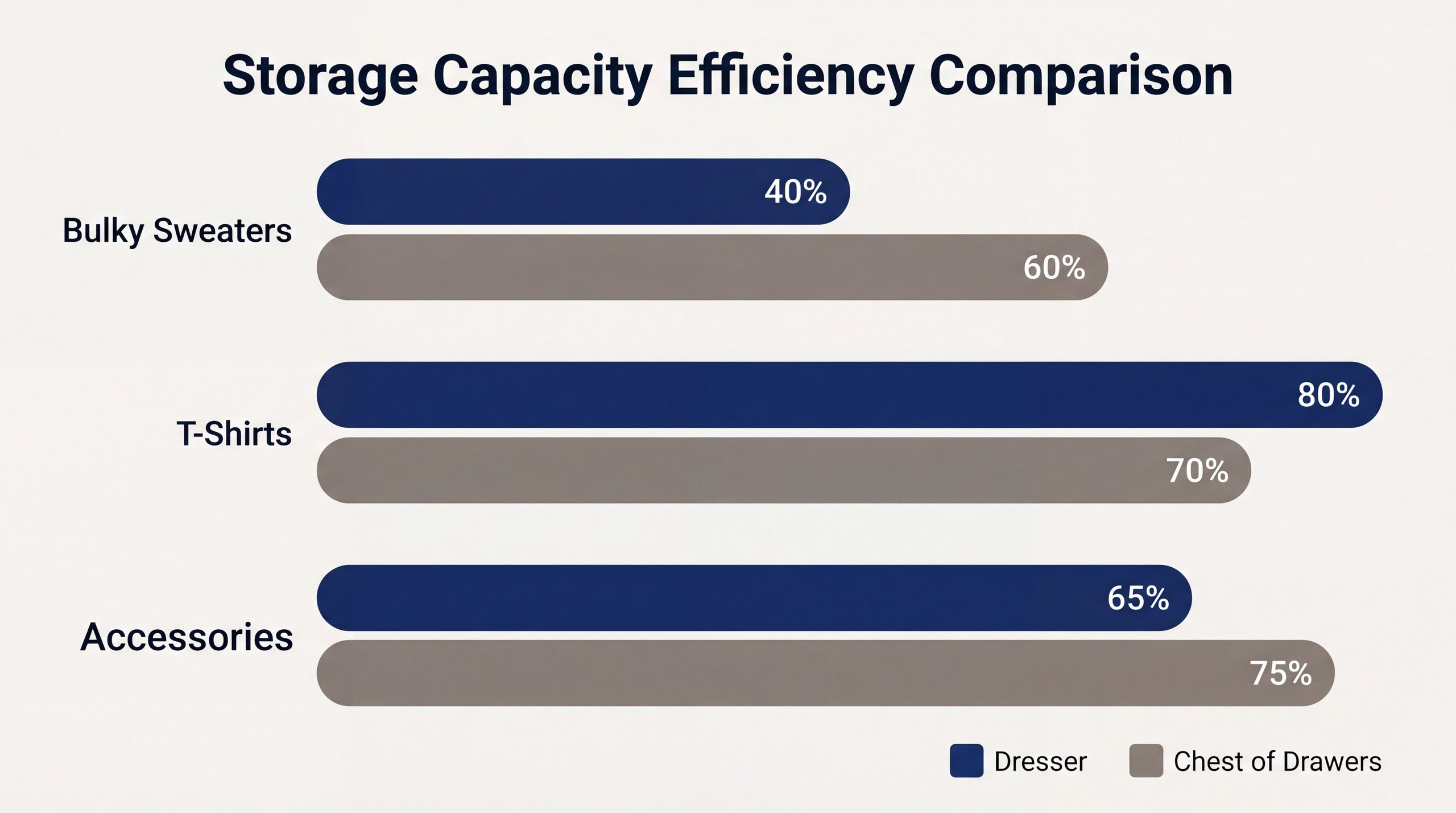
1. Dressers Often Make Everyday Items Easier to Separate
A dresser commonly uses several drawers across a wider front, which can make daily clothing easier to divide by type, person, or frequency of use. This layout works well when users want visible separation for folded tops, underwear, socks, or accessories rather than stacking all storage within one vertical column.
2. Chests Add Storage Where Wall Width Is Limited
A chest of drawers can provide useful clothing storage in bedrooms where a dresser cannot fit comfortably. Its stacked layout may suit folded clothes or spare items, but the actual result depends on drawer dimensions rather than the taller silhouette by itself.
Use these storage checks before comparing two models:
- Compare internal drawer width and depth, not only the outer cabinet size.
- Look at the number of drawers and whether they divide clothing in a useful way.
- Check that drawers can open smoothly when regularly filled.
- Decide whether the lower or upper drawers will be comfortable for the items used most often.
3. Drawer Layout Matters More Than the Name
Everyday storage is better when the drawer arrangement matches how the furniture will actually be used. A wider dresser may make frequently used clothing easier to sort, while a chest may offer a practical storage option where available wall width is the tighter limit.
The table below turns those differences into a direct storage choice.
| Storage Need | Dresser | Chest of Drawers |
|---|---|---|
| Separating Several Clothing Categories | Often easier with wider drawer arrangement | Possible, but depends on drawer count |
| Storage in a Narrow Bedroom Position | May be harder to place | Often easier to accommodate |
| Broad, Easy-to-View Drawer Access | Usually a stronger fit | More vertically divided access |
| Total Storage Capacity | Depends on actual drawer dimensions | Depends on actual drawer dimensions |
| Best Judgment Point | Drawer layout and accessible width | Drawer dimensions and space-saving placement |
Key Takeaway: Choose by drawer layout and usable internal dimensions: a dresser often supports easier everyday sorting, while a chest of drawers provides practical storage where floor width is limited.
IV. Which One Fits Your Bedroom Layout Better?
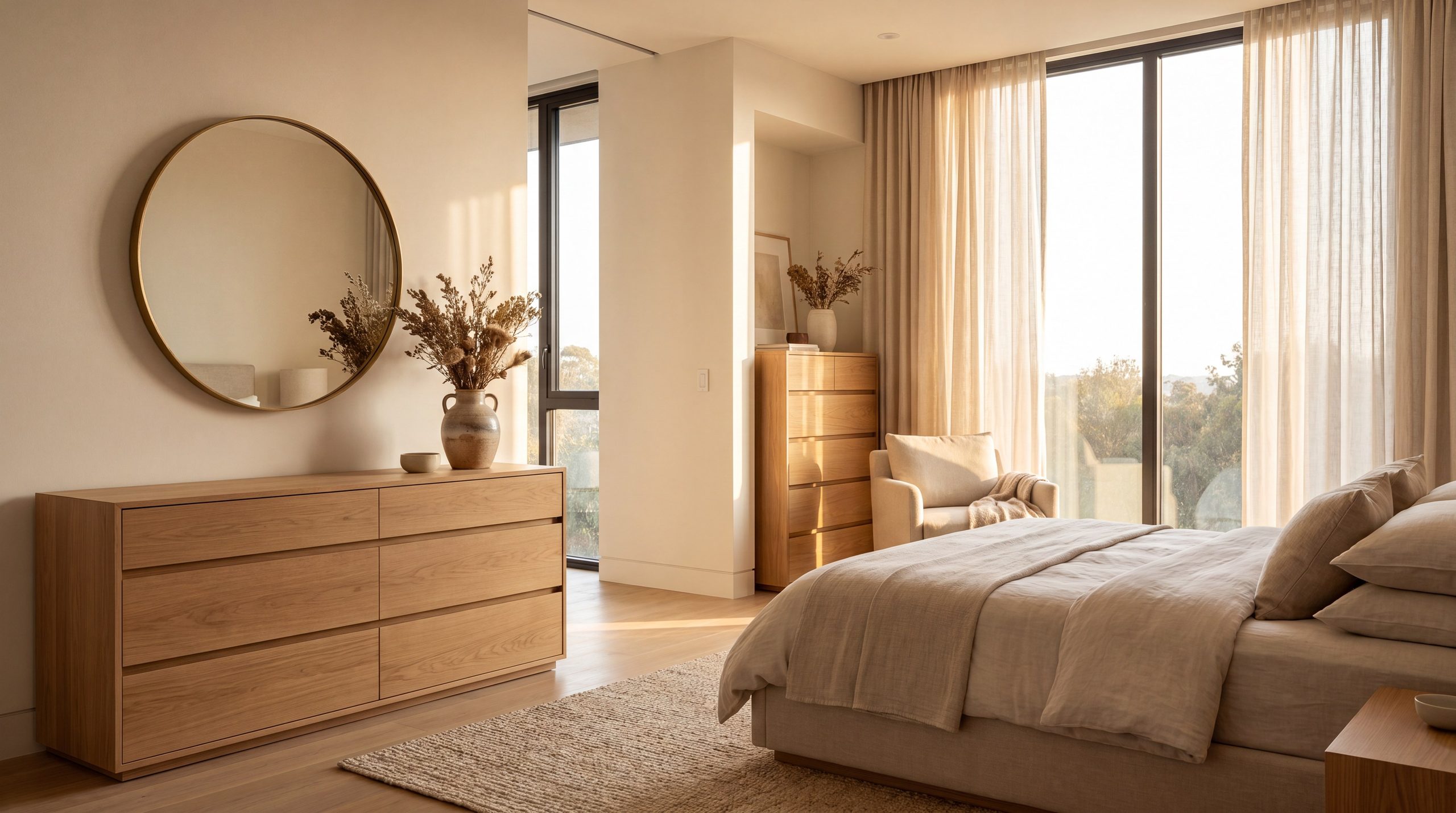
A dresser works best when there is enough wall width for its broader footprint and when its top surface will be used regularly, while a chest of drawers suits narrower positions where horizontal space is limited. The ideal choice depends on actual wall dimensions, door swings, wardrobe placement, and walking paths, rather than general room size.
1. A Dresser Needs a Clear Horizontal Position
A dresser requires a wall wide enough to accommodate its length without obstructing movement or door openings. Its lower profile can also be placed under a mirror or window, provided height and clearance allow safe, comfortable use.
Check placement considerations:
- Full drawer clearance — prevents blocking walkways
- Door swing conflicts — avoids impeding doors
- Wardrobe access — ensures drawers open freely
- Window or outlet blockage — maintains functional space
- Safe wall anchoring — prevents accidental movement
2. A Chest Can Solve Narrow Placement Problems
A chest of drawers is ideal for tight wall sections, corners, or behind doors, where a wide dresser would not fit. Its vertical design preserves floor space but requires careful consideration of reach, visual balance, and stability.
Placement factors to verify:
- Full drawer extension — avoids collision with walls or furniture
- Top reachability — ensures daily access without strain
- Height impact — keeps ceiling line balanced
- Floor space preservation — maintains open walkways
3. Match the Furniture Shape to the Available Position
Selecting the correct piece in a bedroom layout depends on solving space problems, not simply aesthetics. A dresser works well on a wide wall, offering a practical surface, while a chest fits naturally in narrow areas without crowding the room.
The table below summarizes suitable starting points for common bedroom positions.
| Bedroom Position or Need | Better Starting Option | Reason |
|---|---|---|
| Wide open wall opposite the bed | Dresser | Uses horizontal space and provides a functional top surface |
| Narrow wall beside a wardrobe | Chest of Drawers | Fits limited wall width efficiently |
| Position below a mirror | Dresser | Supports mirror placement and daily use |
| Limited walkway space | Chest of Drawers | Minimizes horizontal obstruction |
| Room already has broad storage furniture | Chest of Drawers | Adds vertical capacity without duplicating storage |
Key Takeaway: Choose a dresser when wall width and top-surface use matter; choose a chest when horizontal space is tight and floor clearance is a priority.
V. Can You Use a Dresser as a TV Stand or Vanity?
A dresser often doubles as a vanity or bedroom TV surface because its lower, wider profile provides a stable top. Height, width, load capacity, surface durability, and secure placement all influence suitability. Tall chests are generally less appropriate for surface-based use due to height and stability concerns.
1. A Dresser Is Usually the Better Vanity Starting Point
Dressers pair well with mirrors when height allows comfortable use and the top surface holds daily items. Drawers provide nearby storage for clothing or accessories, though seated vanity use may require proper knee space.
Check functional points:
- Comfortable top height — suitable for standing or seated use
- Clear surface area — accommodates items without crowding
- Easy-clean finish — withstands daily handling
- Secure mirror placement — avoids tipping hazards
2. TV Use Depends on Size and Safe Placement
A dresser can serve as a bedroom TV surface if the screen fits securely and viewing height is appropriate. Chests often place the screen too high, creating strain or stability risks, particularly without anchoring.
Check safety and usability:
- Screen size compatibility — avoids oversized placement
- Viewing height — prevents neck strain
- Stable base — ensures secure setup
- Cable management — maintains tidy and safe use
3. Surface Function Can Make a Dresser More Versatile
Daily use and surface functionality clarify the choice. A dresser is versatile for mirror pairing, low surfaces, or daily items. A chest is better when vertical storage is the main need.
The table below shows which option better supports these additional functions.
| Intended Use | Dresser | Chest of Drawers | Main Check Before Use |
|---|---|---|---|
| Mirror Pairing | Strong fit | Possible, limited surface | Height and wall position |
| Daily Surface Items | More usable top | Limited space | Surface area and finish |
| Bedroom TV Surface | Suitable if sized/stable | Usually less suitable | Screen size, height, stability |
| Pure Drawer Storage | Fits wider wall space | Fits narrow placement | Drawer layout and room fit |
Key Takeaway: A dresser is more versatile when top surface use matters, while a chest of drawers is preferred when floor efficiency and vertical storage dominate.
VI. Which Style Fits a Modern Bedroom Better?
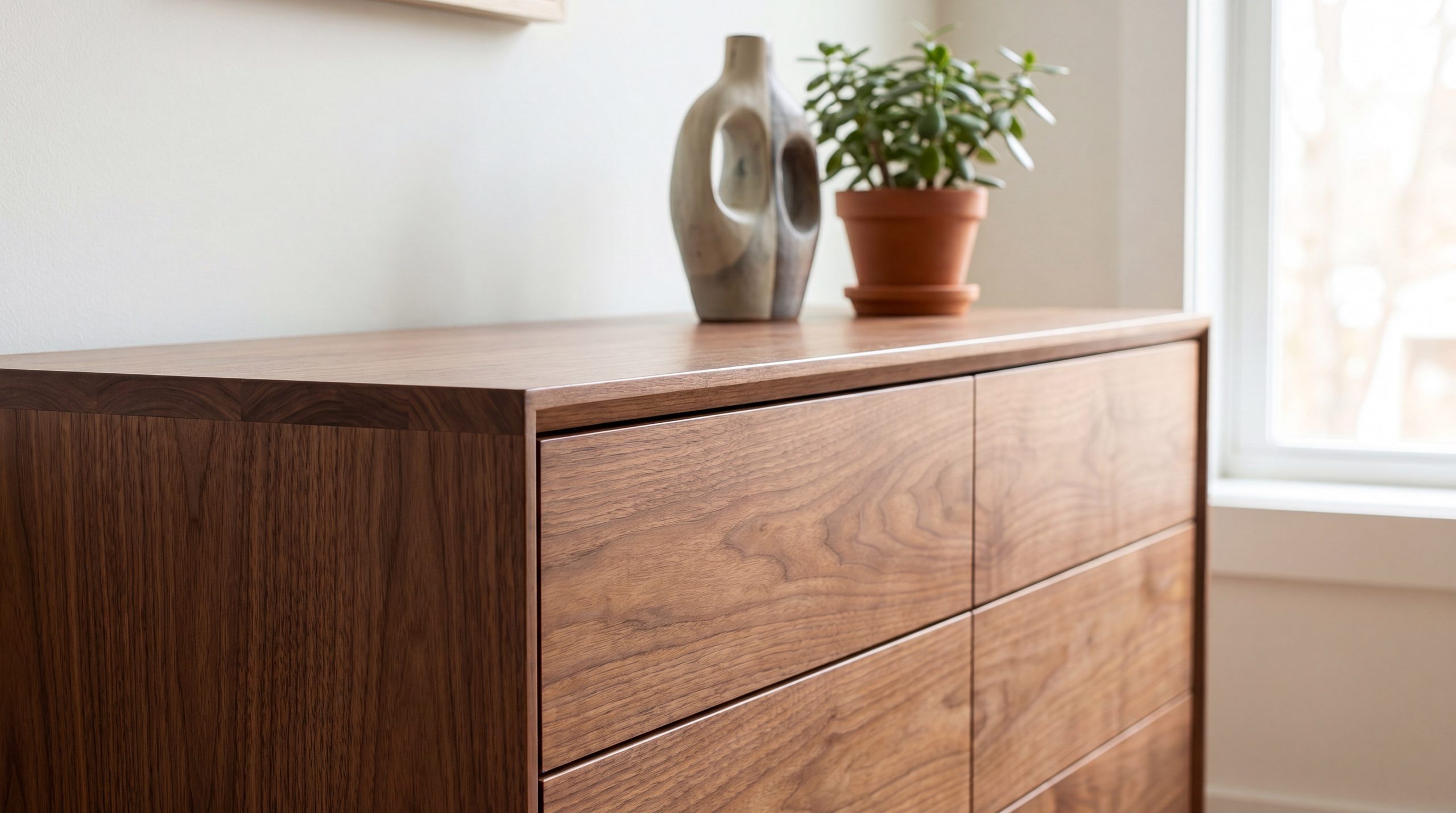
A dresser usually fits a modern bedroom better when the room needs a low, open visual line and a broad surface, while a chest of drawers suits spaces that benefit from a cleaner vertical profile. Neither style is modern by name alone; proportion, wood tone, drawer-front design, hardware, and finish determine whether the piece feels balanced in the room.
1. A Low Dresser Creates a Wider, Calmer Visual Line
A dresser spreads its shape across the wall, which can make the bedroom feel more grounded without adding visual height. This works well where the bed, bedside tables or nightstands, and storage pieces share simple lines and coordinated wood tones, especially when the dresser top is used beneath a mirror or restrained décor.
A low-profile dresser fits best with:
- Clean drawer fronts — less visual clutter
- Consistent wood tone — easier furniture coordination
- Simple hardware — quieter overall appearance
- Usable top surface — mirror or limited display pairing
2. A Tall Chest Adds Vertical Structure Without Filling the Wall
A chest of drawers can suit a modern bedroom when the room needs storage in a narrower area or when a tall silhouette balances other low furniture. Its vertical form should still look intentional rather than crowded, which depends on restrained proportions, consistent finish, and enough clear space around the unit.
3. The Better Style Choice Depends on Proportion and Finish
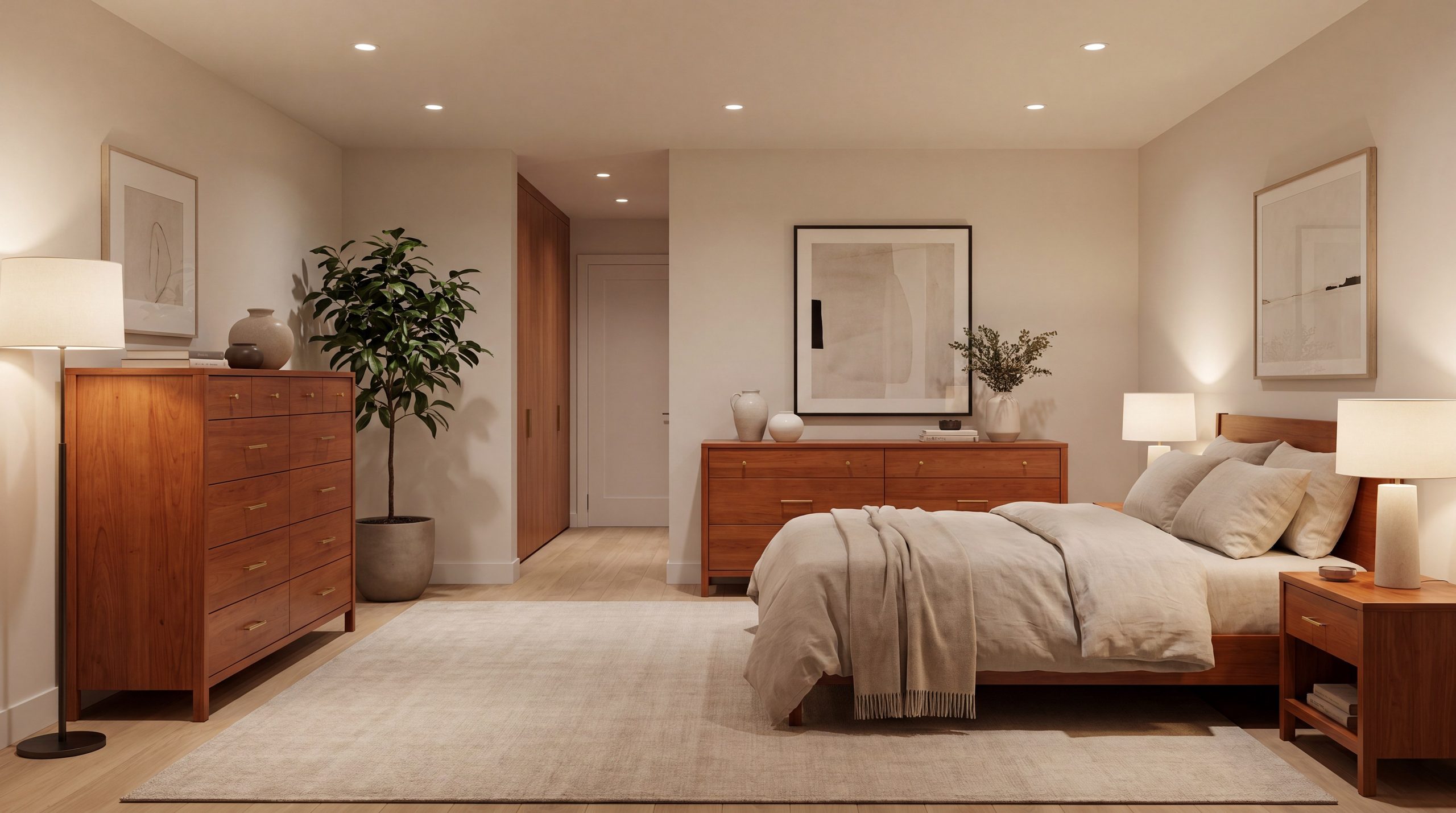
Modern bedroom style is shaped less by choosing a dresser or chest and more by how the piece relates to the room and the surrounding furniture. A wide dresser can make the layout feel calm and horizontal, while a tall chest can create a compact, upright accent; both work when their finish, hardware, and proportions belong in the same visual language.
The table below summarizes the style role each format is more likely to serve.
| Style Goal | Dresser | Chest of Drawers | Main Judgment Point |
|---|---|---|---|
| Low, open room profile | Stronger starting fit | Less likely to create this effect | Overall height and wall width |
| Compact vertical accent | Possible, but uses more width | Stronger starting fit | Height and available surrounding space |
| Mirror or display pairing | More usable top surface | Smaller top surface | Surface size and proportion |
| Coordinated bedroom range | Works as a horizontal anchor piece | Works as a taller companion piece | Finish, drawer-front design, and hardware consistency |
Key Takeaway: Choose a dresser for a lower, broader modern look with useful surface space, or choose a chest of drawers for a narrower vertical accent; in either case, proportion and finish matter more than the furniture name.
Style affects how the furniture sits in a room, but stability determines whether it remains safe in daily use, especially where drawers may be pulled open by children.
VII. Which One Has Greater Tipping Risks?
A chest of drawers generally needs closer tipping-risk attention because its taller, narrower shape places storage weight higher above a smaller base. A dresser may begin with a lower, wider form, but it is not automatically free from tip-over risk. Actual dimensions, drawer extension, loading, anchoring hardware, and compliance requirements matter for both types of bedroom storage.
1. Height and Drawer Use Change Stability
A taller cabinet can become less stable when upper drawers are loaded or several drawers are opened at the same time, particularly if a child pulls or climbs on them. A lower dresser may have a broader stance, but open drawers and added weight on the top can still create a forward tipping hazard.
Check stability through:
- Taller cabinet proportions — greater forward-tip concern
- Multiple open drawers — increased imbalance
- Heavy upper storage — raised weight distribution
- Climbing access — serious child-safety risk
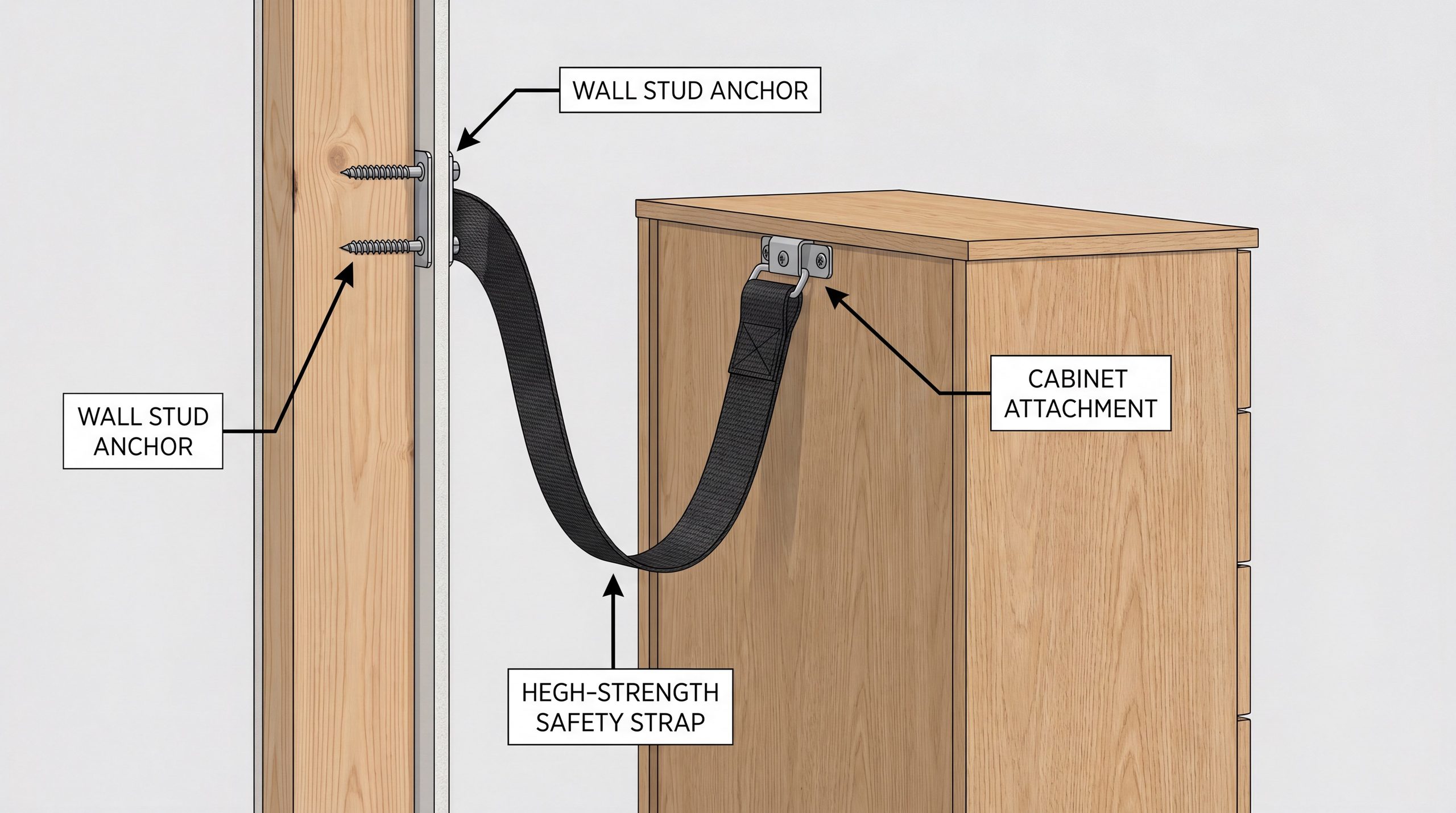
- Secure anchoring — added restraint against tip-over
2. Anti-Tip Provision Is Relevant to Both Formats
Dressers and chests of drawers are both clothing storage units, so safety should not be reduced to the idea that one style is safe and the other is unsafe. For qualifying products supplied to the U.S. market, stability testing, warning labels, and packaged anti-tip devices are part of the applicable clothing storage unit requirements; this makes safety provision a real product-selection point, not an optional extra.
3. Safety Should Be Checked Before Shape or Style
A bedroom storage unit should be judged by how it behaves in foreseeable daily use, not only by how wide or tall it appears. A chest usually calls for stronger attention because of its vertical form, while a dresser still needs proper stability checks and anchoring where required.
The table below shows the safety questions that apply before selecting either format.
| Safety Judgment Point | Dresser | Chest of Drawers | What to Verify |
|---|---|---|---|
| Overall Tipping Exposure | Usually lower-profile, but still relevant | Usually requires closer attention | Dimensions, loading, and stability performance |
| Multiple Drawer Opening | Can still pull weight forward | More concerning in a taller form | Drawer behavior and stability testing |
| Child Interaction Risk | Present if drawers can be climbed or pulled | Present and often more sensitive to height | Anti-tip provision and warning information |
| Wall Anchoring | Relevant where required or recommended | Particularly significant for tall units | Supplied hardware and installation guidance |
| U.S. Market Safety Requirement | May fall within clothing storage unit rules | May fall within clothing storage unit rules | Product scope and applicable compliance documents |
Key Takeaway: A chest of drawers generally demands closer tipping-risk attention because of its height, but both dressers and chests should be checked for stability, anti-tip provision, and applicable safety requirements before selection.
VIII. Which Construction Details Affect Long-Term Use?
Construction details affect long-term use more than the basic dresser or chest of drawers label. A dresser with wide drawers needs stable support and smooth runners, while a taller chest needs a rigid frame and secure anti-tip provision. Material, joinery, drawer fit, and finish all matter because they determine how well the piece performs after repeated daily use.
1. Wide Drawers Need Reliable Support
A dresser often uses wider drawer boxes, which are convenient for organizing folded clothing across a broad opening. That width also makes the drawer fit and runner support more noticeable: poor support can lead to uneven movement, drawer gaps, or sagging under regular storage loads.
The most useful construction checks for wide drawers are:
- Drawers should open and close smoothly without rubbing against adjacent fronts.
- Drawer gaps should look even when the unit is closed.
- Runners should support the drawer width without visible tilting when extended.
- The drawer base should feel firm enough for the intended clothing storage.
2. Tall Units Need Frame Stability and Anti-Tip Provision
A chest of drawers saves floor width by stacking storage upward, but its taller profile makes stability a more serious buying consideration. A rigid frame, secure back construction, smooth drawer movement, and supplied anti-tip hardware all matter because daily use can place more forward pull on a narrow, vertical unit.
3. Material and Finish Affect Daily Performance
Material and finish do not change whether a piece is a dresser or a chest of drawers, but the choice between MDF and solid wood can affect how the furniture feels and performs over time. The better choice is the one whose drawer structure, surface treatment, and stability match the level of daily use expected in the bedroom.
| Construction Detail | Dresser | Chest of Drawers | Why It Matters |
|---|---|---|---|
| Drawer Support | Wider drawers need reliable runners and firm bases | Narrower stacked drawers need consistent alignment | Affects smooth movement and storage use |
| Frame Stability | Low, wide form is usually easier to stabilize | Tall, narrow form needs stronger anti-tip attention | Affects safety and confidence in daily use |
| Surface Finish | Large top surface receives more visible daily contact | Smaller top surface, but edges and fronts still face wear | Affects cleaning and appearance |
| Material Choice | Impacts weight, feel, and drawer performance | Impacts stability, weight, and long-term use | Helps compare real product quality, not just shape |
Key Takeaway: A dresser or chest of drawers should be judged by drawer movement, frame stability, material, finish, and anti-tip provision, not only by its outward shape.
The next question is not only how each piece performs alone, but whether each one adds a clear role within a coordinated bedroom range.
IX. How Do Dressers and Chests Serve Different Roles in a Bedroom Furniture Range?
A bedroom furniture range benefits from including both styles only when they clearly solve different storage and space needs. A dresser can act as the wider anchor piece, often paired with a mirror or larger wall position, while a chest of drawers extends the range for smaller rooms or narrower placements without repeating the same function.
1. A Dresser Works as the Main Horizontal Storage Piece
A dresser typically gives a bedroom range its broader storage option, with a large top surface and a lower silhouette that can coordinate with mirrors, beds, and nightstands. It is most convincing as a range component when its width, drawer arrangement, and finish make it clearly different from a compact vertical storage unit.
2. A Chest Adds a Distinct Small-Space Storage Option
A chest of drawers earns its place in the same range when it provides a genuine alternative for limited wall width or additional vertical storage. It should not be treated as a smaller copy of the dresser; its proportions, drawer layout, and safety provisions need to suit the narrower, taller format.
A bedroom range has a stronger product logic when the two pieces are differentiated through:
- Footprint: the dresser uses a wider wall area, while the chest fits narrower positions.
- Storage role: the dresser provides broad everyday drawer access, while the chest adds vertical capacity.
- Surface use: the dresser offers a practical display or mirror surface, while the chest keeps that role secondary.
- Safety detail: the taller chest receives clear anti-tip attention as part of the product specification.
3. Both Styles Should Add Choice, Not Duplication
Including both formats makes sense when a buyer can immediately understand why each model exists. A range becomes less clear when the dresser and chest differ only in name, while their dimensions, drawer use, or styling do not create a meaningful choice.
| Range Planning Point | Dresser Role | Chest of Drawers Role | Stronger Product Logic |
|---|---|---|---|
| Room Fit | Wider bedroom walls | Narrower spaces or secondary placements | Covers different room constraints |
| Storage Function | Broad, accessible drawer storage | Vertical storage in reduced floor width | Avoids duplicated purpose |
| Top Surface | Suitable for mirror or display pairing | Limited secondary surface | Gives each format a clear use |
| Safety Provision | Anti-tip hardware remains relevant | Anti-tip provision needs stronger visibility | Matches the form of the product |
| Visual Coordination | Establishes the main horizontal line | Adds a taller companion silhouette | Creates a coordinated but varied range |
Key Takeaway: A dresser and a chest of drawers belong in the same bedroom range when their dimensions, storage role, surface use, and safety details give buyers a real choice rather than two nearly identical options.
Once those roles are clear, the final choice becomes much easier: choose the format that solves the actual space and storage problem.
X. Which One Should You Choose?
Choose a dresser when accessible horizontal storage and a usable top surface matter most; choose a chest of drawers when floor space is tighter and vertical storage has greater value. In a dresser vs chest of drawers decision, room fit comes first, followed by drawer use, stability, construction details, and whether the format adds a distinct role within a bedroom range.

1. Choose According to the Main Need
A dresser is usually the stronger option for bedrooms with enough wall width, especially when the top surface will support a mirror, décor, or frequently used items. A chest of drawers is usually more practical where the room needs storage without giving up too much floor width.
Use these direct decision points before choosing:
- Choose a dresser for wider drawer access, a broader top surface, and a lower visual profile.
- Choose a chest of drawers for narrow wall positions, smaller floor footprints, and vertical storage.
- Compare drawer movement, finish, and frame stability before judging either style by appearance alone.
- Give taller units particular attention for anti-tip hardware and secure placement.
2. Daily Use Matters More Than the Furniture Name
Neither format is automatically better in every bedroom or product range. A well-built chest can be the better choice for restricted space, while a well-proportioned dresser can be more useful where surface area and easy drawer access carry more weight in daily use.
3. Final Dresser vs Chest of Drawers Decision Guide
The best choice is the piece that fits the room, suits the storage task, and remains comfortable and stable in repeated use. For a coordinated bedroom range, the stronger option may also be the one that fills a different role rather than repeating an existing model.
| Your Main Priority | Better Starting Option | Reason to Choose It |
|---|---|---|
| Wide top surface for mirror or daily items | Dresser | Its lower, broader form gives more usable surface area |
| Limited floor width | Chest of Drawers | Its vertical form uses less horizontal space |
| Easy access to several clothing categories | Dresser | Multiple drawer columns can separate everyday storage |
| Additional storage in a smaller bedroom | Chest of Drawers | It adds capacity without demanding a long wall |
| Stable everyday use | Either, after checking construction | Drawer fit, frame stability, and anti-tip provision still matter |
| A fuller bedroom furniture range | Both, when roles differ clearly | Each piece can answer a different room and storage need |
If you are comparing dressers and chests of drawers options for a bedroom furniture range, the next step is to confirm the required dimensions, drawer configuration, material, finish, and safety details before selecting a model.
Key Takeaway: Choose a dresser for wider, more accessible storage and useful surface area; choose a chest of drawers for narrower spaces and vertical capacity; choose both in a bedroom range only when each one has a clear and different purpose.
FAQ
Can I use a chest of drawers in a walk-in closet?
Yes. Its small floor footprint and tall, narrow profile allow storage without blocking access to hanging clothes.
Is a dresser or chest of drawers safer for a child’s bedroom?
A dresser usually has a lower center of gravity, making it less prone to tipping. Either unit should be anchored to the wall, especially in children’s rooms.
How do I know if a dresser will fit in my bedroom?
Measure available wall width, depth, and clearance in front of drawers. Ensure at least three feet of open space for full drawer extension and daily use.
Can a chest of drawers support a television?
No. Its tall, narrow profile places the screen too high and increases tip-over risk. A dresser with a wider, lower top is safer for this use.
Closing Note
A dresser is the better choice when wide drawer access and usable surface space matter, while a chest of drawers suits narrower positions where vertical storage has greater value. For a bedroom furniture range, the final decision should also consider dimensions, drawer layout, finish, and anti-tip provision. You can discuss your bedroom furniture requirements with EverWoody when selecting suitable models for your collection.