
An armoire and a wardrobe can look similar in a furniture collection, but choosing the wrong one can leave a room with too little hanging space, too much visual weight, or storage that does not suit daily use.
The main difference between an armoire and a wardrobe is function and design. A wardrobe is usually a simpler freestanding cabinet made mainly for clothing storage, while an armoire is often larger, more decorative, and arranged for a wider mix of stored items.
I. What Is the Main Difference Between an Armoire and a Wardrobe?
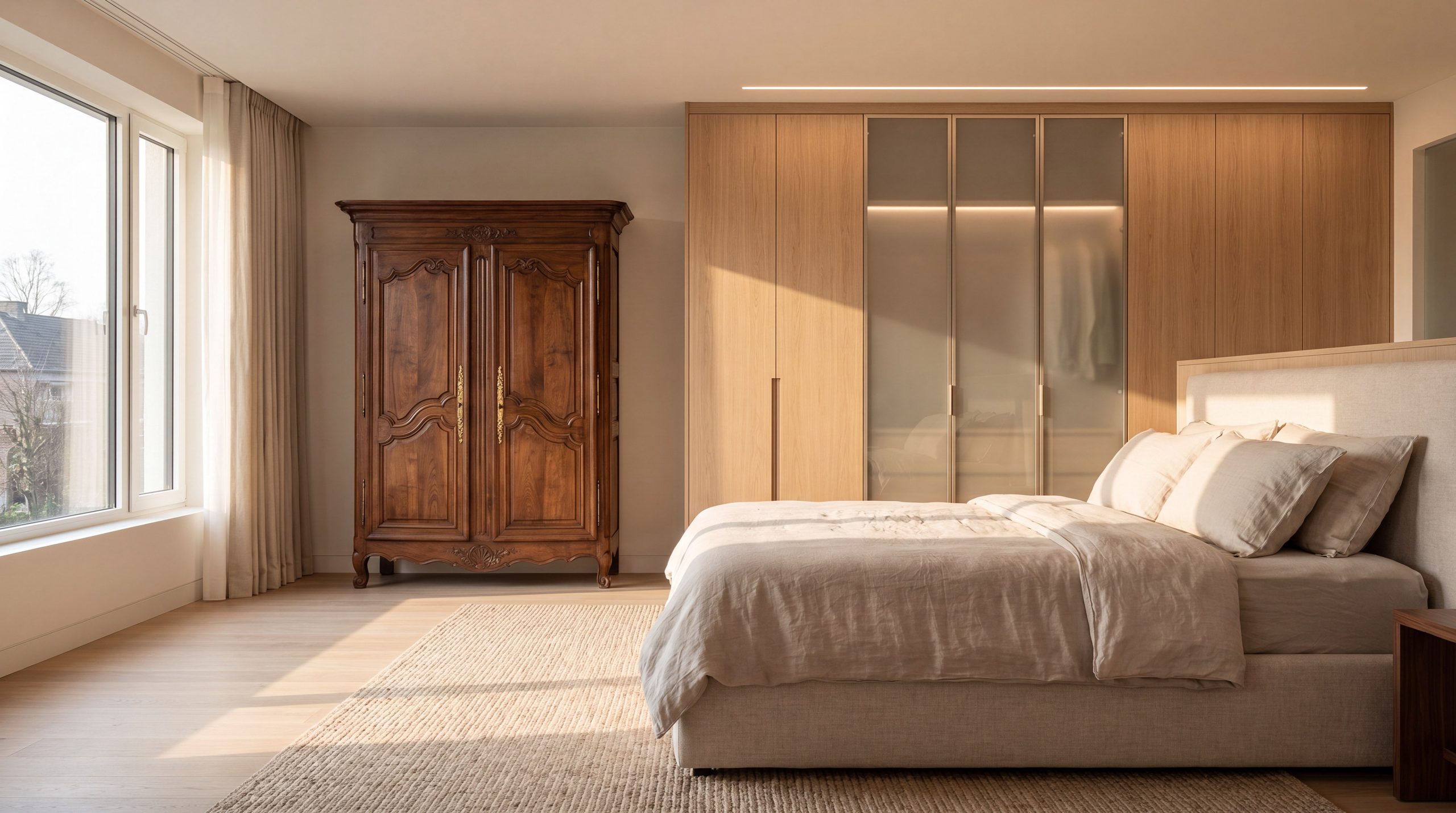
An armoire vs wardrobe comparison starts with purpose: a wardrobe is mainly a freestanding clothing cabinet, while an armoire usually combines clothing storage with shelves, drawers, or broader room use. The two names are sometimes used loosely, but an armoire is generally the more decorative and flexible piece.
1. A Wardrobe Focuses More on Clothing Storage
A wardrobe commonly gives priority to hanging garments, with a rail, an upper shelf, and sometimes drawers or additional compartments. Its appearance is often simpler because its main job is to provide practical clothing storage where a built-in closet is limited or unavailable.
2. An Armoire Works as a More Flexible Storage Cabinet
An armoire is commonly wider or visually heavier, with an interior that may combine hanging space, shelving, and drawers. That layout allows it to store folded clothing, linens, media items, or other household pieces, so it can work beyond the bedroom.
3. Which Differences Matter Most at a Glance?
The name alone does not tell you whether a cabinet will suit the room. Purpose, interior arrangement, overall scale, and visual style give a clearer basis for comparing the two pieces.
| Feature | Wardrobe | Armoire |
|---|---|---|
| Primary purpose | Mainly clothing storage | Clothing storage plus broader household use |
| Interior layout | Often led by hanging space | Often mixes hanging space, shelves, and drawers |
| Visual style | Usually simpler and more functional | Often more decorative or furniture-like |
| Size impression | Commonly slimmer or less visually dominant | Commonly wider, deeper, or heavier in appearance |
| Suitable starting choice | Extra hanging storage in a bedroom | Mixed storage or a statement cabinet |
| Other room use | Usually limited by its clothing-focused layout | Can fit bedrooms, living rooms, dining areas, or home offices |
Key Takeaway: Choose a wardrobe when straightforward clothing storage is the priority; consider an armoire when you need mixed storage capacity or a more distinctive cabinet presence.
The difference becomes clearer once each furniture type is considered on its own.
II. What Is an Armoire?
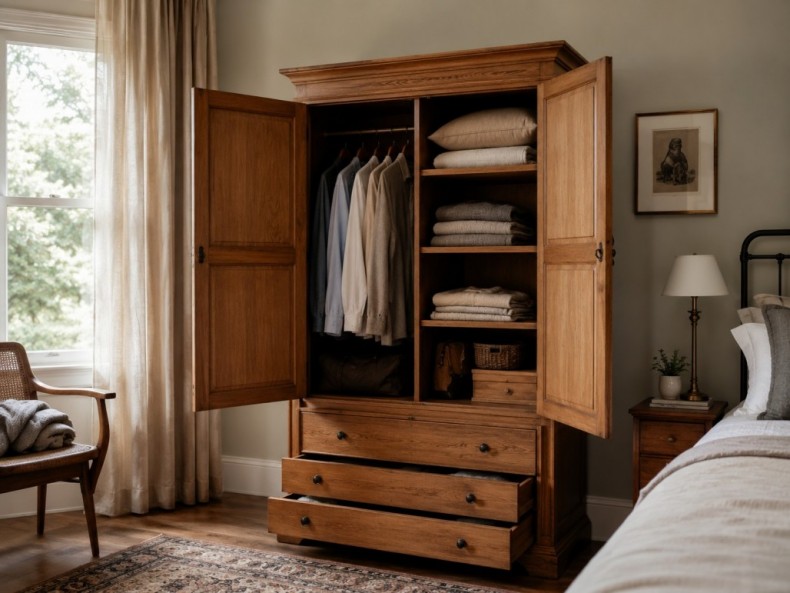
An armoire is a freestanding cabinet that usually offers more than simple hanging storage. It is often built with a stronger decorative presence and a mixed interior arrangement, making it suitable for clothing, folded textiles, household storage, or display-concealing functions in more than one room.
1. An Armoire Usually Combines Several Storage Functions
Many armoires include a hanging rail together with fixed or adjustable shelves and one or more drawers. This combination makes the cabinet useful for items that do not belong on hangers, such as folded knitwear, spare linens, bags, serving pieces, or stored media equipment.
2. An Armoire Can Serve Rooms Beyond the Bedroom
An armoire may stand in a bedroom as a clothing cabinet, but its deeper shelves and more finished exterior can also suit a guest room, living room, dining area, or home office. In those settings, it can conceal items that need storage without making the room feel like a closet area.
Suitable uses for an armoire often include:
- Bedroom storage: A mixed interior can hold hanging garments, folded clothing, and spare bedding in one cabinet.
- Guest room storage: A single piece can provide temporary clothing space while keeping extra linens out of sight.
- Living room use: Shelves behind doors can hide media equipment, board games, books, or general household items.
- Dining area storage: A cabinet with broad shelves can hold table linens or occasional serving pieces where the style fits the room.
3. When Does an Armoire Make the Better Starting Choice?
An armoire makes more sense when the storage requirement is mixed or when the cabinet needs to add visual character to the room. The right interior layout matters more than the label, since two armoires may differ greatly in hanging height, shelf depth, drawer arrangement, and door style.
| Need or Room Situation | Why an Armoire May Fit Better | Point to Check |
|---|---|---|
| Clothing plus folded items | Mixed internal storage reduces the need for another cabinet | Check hanging section and drawer balance |
| Linens or household storage | Broad shelves suit folded items better than a rail-only cabinet | Check shelf depth and access |
| Living room or office concealment | Decorative doors hide stored items in a finished furniture piece | Check cable access or shelf adjustment if needed |
| Traditional or statement-led room | A larger cabinet can anchor the furniture scheme | Check scale against available wall space |
Key Takeaway: An armoire is the stronger option when one cabinet needs to combine storage roles or contribute more visibly to the room design.
A wardrobe is usually more focused, and that narrower role is often exactly why it works well.
III. What Is a Wardrobe?
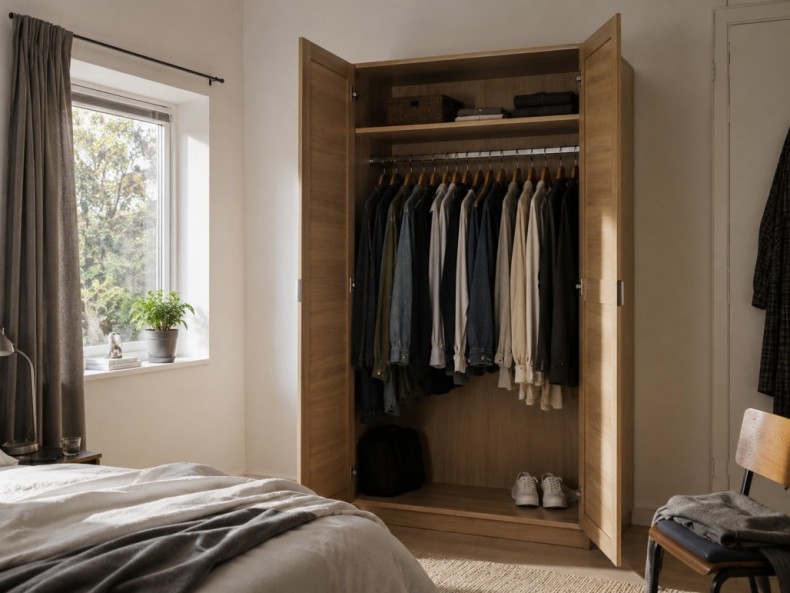
A wardrobe is a freestanding cabinet designed mainly for storing clothes, especially garments that need hanging space. It is often chosen when a room lacks a built-in closet or needs an extra clothing unit without the deeper storage mix or stronger decorative presence often associated with an armoire.
1. A Wardrobe Gives Priority to Hanging Garments
A typical wardrobe centers on a hanging rail, often supported by a top shelf and, in some designs, lower drawers or side compartments. This layout is practical for coats, dresses, shirts, uniforms, and seasonal clothing that should stay accessible and less creased during daily use.
2. A Wardrobe Often Fits Simpler Bedroom Storage Needs
A wardrobe is usually the easier choice when the room needs extra clothing storage without a visually heavy cabinet. Its cleaner structure can work in bedrooms, rented homes, guest rooms, or smaller spaces where the furniture should solve a storage shortage without becoming the main feature of the room.
A wardrobe is usually a sensible choice when:
- Hanging space is the main need: The cabinet can devote more of its interior height to clothing rails.
- The room already has drawer storage: A separate dresser or chest of drawers can handle folded items while the wardrobe handles hanging clothes.
- The layout needs a quieter piece: A simpler exterior is less likely to dominate a compact bedroom.
- Extra closet-style capacity is required: A wardrobe can add practical clothing storage without requiring a built-in installation.
3. When Does a Wardrobe Work Better Than an Armoire?
A wardrobe works better when clothing storage is the clear priority, and the cabinet does not need to serve several household roles. Readers should still examine the internal layout, since a wardrobe with shelves and drawers may suit broader storage needs than a rail-only model.
| Need or Room Situation | Why a Wardrobe May Fit Better | Point to Check |
|---|---|---|
| Hanging clothes are the priority | More interior area can be assigned to garment rails | Check hanging height for longer garments |
| Small or visually busy bedroom | A simpler cabinet may feel less dominant | Check depth and door opening space |
| Existing dresser in the room | The wardrobe can focus on hanging items rather than duplicate drawers | Check whether limited shelving is acceptable |
| Extra closet-style storage needed | It adds clothing capacity without becoming a display piece | Check internal arrangement before choosing |
Key Takeaway: A wardrobe is usually the better choice when the room needs practical, clothing-led storage with a simpler footprint and appearance.
IV. Is an Armoire Larger Than a Wardrobe?
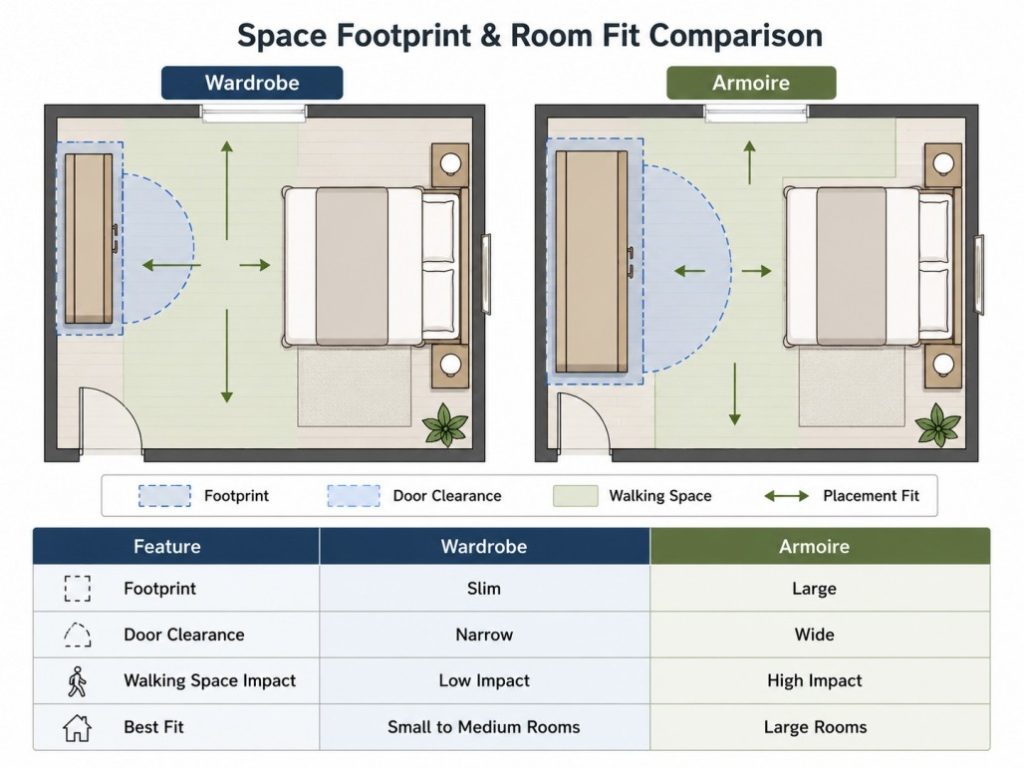
In an armoire vs wardrobe comparison, an armoire is commonly the larger-looking piece, especially when it has crown molding, deeper side panels, drawers, or a raised base. A wardrobe can still be tall or wide, but its simpler form often gives it a lighter footprint in a bedroom or guest room.
1. An Armoire Often Has More Visual and Physical Weight
An armoire may require more wall space because its storage is not limited to hanging garments. Wider shelves, integrated drawers, thicker framing, and decorative door panels can all add to its scale, making it feel more like a substantial furniture cabinet than an extra closet unit.
2. Room Fit Depends on More Than Width
A wardrobe may look easier to place, but either cabinet can become inconvenient when depth, access, or door movement is ignored. In a tighter bedroom, these checks should be considered together with the wider bedroom furniture layout rather than judging the cabinet in isolation. Before choosing a large freestanding storage unit, the following measurements give a more realistic picture of whether it will fit comfortably:
- Wall width: Allow enough room for the cabinet body without crowding nearby furniture or switches.
- Cabinet depth: A deeper cabinet can reduce walking space even when the front view looks manageable.
- Door opening area: Hinged doors need usable space in front of the cabinet, especially near beds or nightstands.
- Delivery route: A fully built cabinet must pass through doors, hallways, stairs, or elevators before reaching the room.
3. Larger Does Not Automatically Mean More Useful
A larger armoire works well only when its additional interior space matches the items being stored. A slimmer wardrobe may suit a room better when the main requirement is hanging shirts, coats, or dresses without adding a visually heavy furniture piece.
| Space Consideration | Wardrobe | Armoire | Better Fit When |
|---|---|---|---|
| Visual footprint | Often simpler and lighter | Often wider or more prominent | The room needs either quiet storage or a focal cabinet |
| Interior depth | Usually led by clothing storage | Often allows broader shelving or mixed storage | Folded items and household storage are involved |
| Wall placement | Easier to position in compact layouts | Needs more balanced surrounding space | The room can support a larger furniture piece |
| Delivery access | Depends on assembly and cabinet size | Can require more careful access planning | Doorways and stairs are checked in advance |
Key Takeaway: An armoire is often larger in appearance and storage flexibility, while a wardrobe is usually easier to place when the room mainly needs practical clothing storage.
Size affects placement, but the interior arrangement decides what the cabinet can actually hold.
V. How Do Their Interior Storage Layouts Differ?
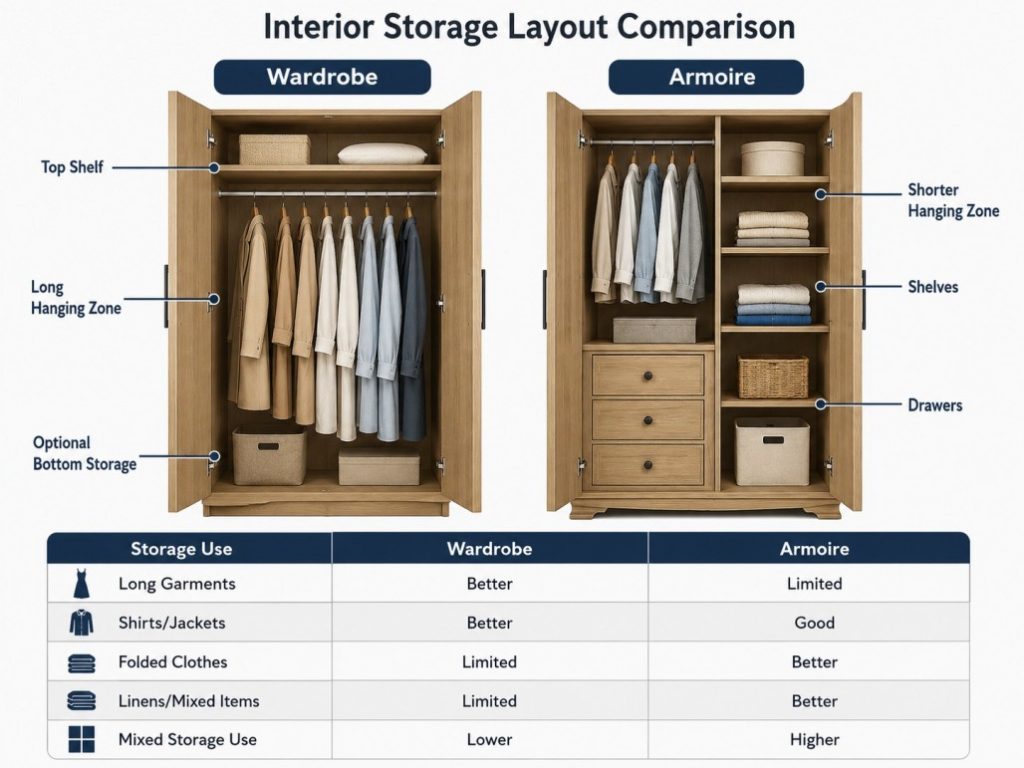
Armoire and wardrobe interiors usually differ because a wardrobe gives more priority to hanging garments, while an armoire more often divides its space among rails, shelves, and drawers. The better choice depends on whether the stored items are mainly clothes on hangers or a mixture of clothing, linens, accessories, and household pieces.
1. A Wardrobe Usually Preserves More Hanging Space
A wardrobe commonly uses a large vertical section for clothes that need to hang freely, such as coats, dresses, shirts, or formal clothing. Shelves or drawers may still be included, but the interior normally stays close to the function of a freestanding closet.
2. An Armoire More Often Handles Mixed Storage
An armoire can be more useful when one cabinet needs to hold different categories of items rather than only hanging clothes. Its interior may combine a short hanging section with deep shelves and drawers, allowing folded garments, bedding, bags, media items, or dining textiles to be stored behind closed doors.
A mixed-storage cabinet becomes more practical when it includes:
- A hanging area for garments that wrinkle easily or need quick access.
- Deep shelves for folded clothing, linens, blankets, or stored household items.
- Drawers for smaller pieces that would become untidy on open shelves.
- Adjustable storage positions where the contents may change over time.
3. The Interior Should Match Daily Storage Habits
A cabinet with more compartments is not automatically better if those compartments reduce the hanging area that is actually needed. Someone storing long garments may prefer a simpler wardrobe, while someone storing folded clothing and spare linens may gain more daily use from an armoire layout.
| Storage Requirement | Wardrobe Layout | Armoire Layout | More Suitable Starting Point |
|---|---|---|---|
| Long hanging garments | Often provides a taller open hanging zone | May have less uninterrupted hanging height | Wardrobe |
| Shirts, jackets, and coats | Commonly easy to organize on rails | Can store them together with folded items | Depends on storage mix |
| Folded clothing and linens | May require added shelves or separate drawer furniture | Often handled within the same cabinet | Armoire |
| Household or media storage | Less natural in a clothing-led layout | Better suited to concealed mixed-use storage | Armoire |
Key Takeaway: A wardrobe is commonly stronger for clothing-led hanging storage, while an armoire suits rooms where one cabinet must manage several types of stored items.
Once the interior suits the intended use, the outer design determines how strongly the cabinet shapes the room.
VI. Which One Looks More Decorative in a Room?
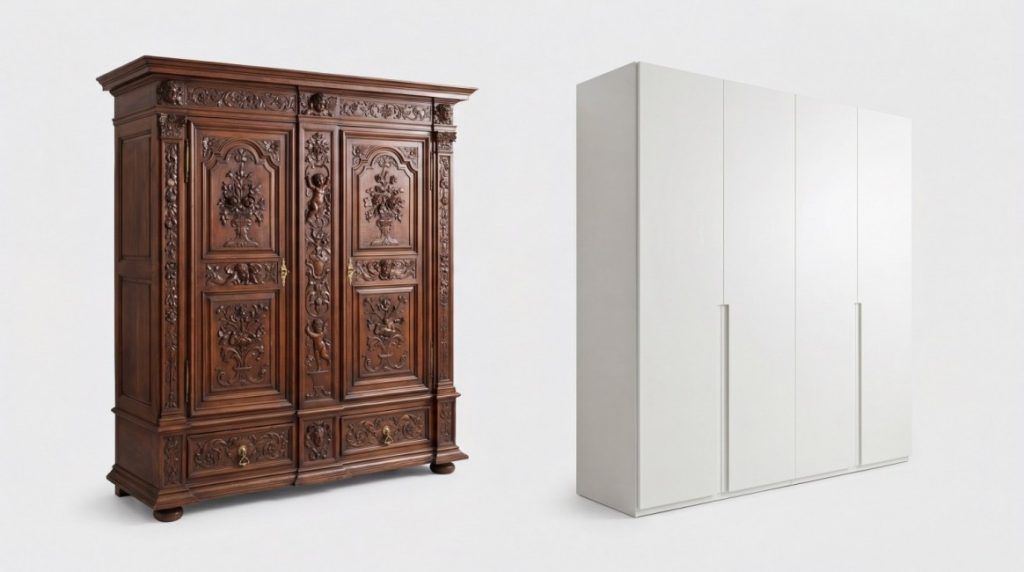
An armoire usually looks more decorative than a wardrobe because it is more often designed as a visible furniture feature rather than a simple clothing-storage unit. A wardrobe can still have attractive doors and finishes, but its styling is commonly quieter, which helps it sit naturally in rooms where storage should not dominate the layout.
1. An Armoire Can Act as a Statement Cabinet
Armoires are often associated with framed doors, molded edges, raised panels, visible wood grain, or a more substantial base and top. These details can make the cabinet feel intentional in a traditional, rustic, transitional, or furniture-led room rather than appearing as a purely practical storage addition.
2. A Wardrobe Often Blends More Quietly Into the Room
A wardrobe commonly uses cleaner surfaces, simpler door fronts, and a more vertical form, allowing beds, dressers, or other furniture pieces to retain attention. This does not restrict wardrobes to modern rooms; wood finishes, paneled doors, and classic handles can still give them warmth without creating the weight of an armoire.
3. Style Should Follow the Role of the Cabinet
The right appearance depends on whether the cabinet should blend into the room or help define it. A decorative armoire can suit a larger bedroom or living area, while a quieter wardrobe may work better in a compact room or a furniture arrangement that already includes strong visual features.
| Design Judgment | Wardrobe | Armoire | Better Choice When |
|---|---|---|---|
| General appearance | Often simpler and quieter | Often more decorative and substantial | The cabinet should either blend in or stand out |
| Room role | Practical supporting storage | Storage plus furniture presence | The cabinet is part of the room’s visual focus |
| Finish direction | Works well with clean or understated finishes | Suits richer wood character or detailed fronts | The desired style calls for restraint or detail |
| Furniture coordination | Easier to pair without dominating | Needs careful scale and finish matching | Existing pieces are already strong or fairly simple |
Key Takeaway: Choose an armoire when the cabinet should contribute strongly to the room style; choose a wardrobe when practical storage should sit more quietly within the furniture arrangement.
VII. Do Door Types Change How an Armoire or Wardrobe Works?
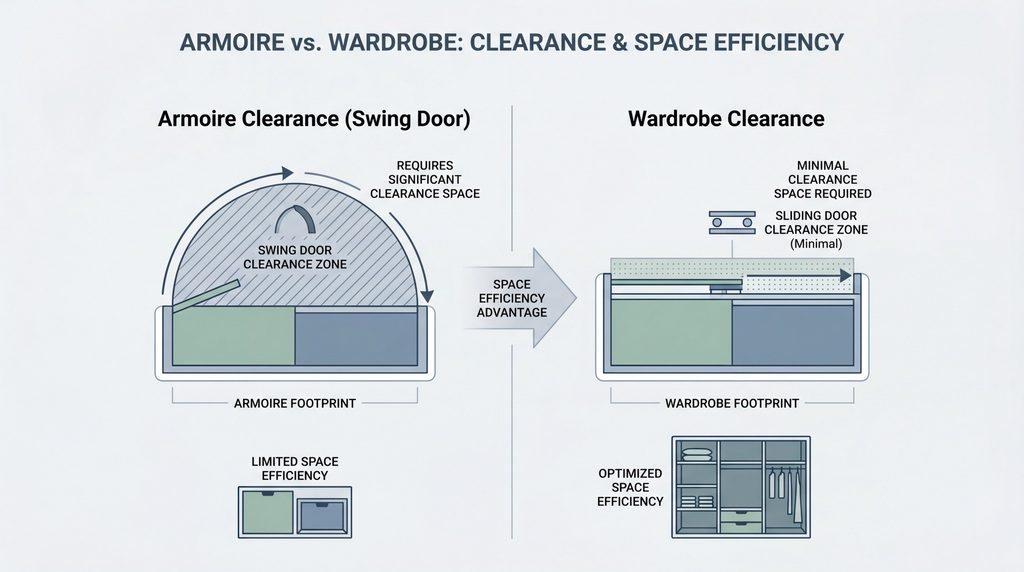
Door type changes how an armoire or wardrobe fits into a room and how easily stored items can be reached. Hinged doors give a full view of the interior, sliding doors save space in front of the cabinet, and mirrored doors can add dressing convenience without changing the cabinet’s main storage role.
1. Hinged Doors Give Full Interior Access
Hinged doors are common on traditional armoires and many freestanding wardrobes because both doors can open at once. This makes shelves, drawers, and hanging sections easier to reach, but the cabinet needs clear floor space in front of it.
Hinged doors work best where:
- The room has open space in front of the cabinet: Doors can swing without hitting a bed, chair, or side table.
- The interior contains several storage zones: Opening both doors makes mixed shelves and drawers easier to use.
- The cabinet style is more traditional: Paneled wooden doors often suit the furniture-led appearance of an armoire.
2. Sliding Doors Help in Tighter Layouts
Sliding doors can make a wardrobe easier to use in a smaller bedroom because they do not project forward when opened. The trade-off is that only part of the interior is visible at one time, which can be less convenient when the cabinet contains multiple shelves or drawers across its full width.
3. Mirrored Doors Add Function but Change the Visual Effect
Mirrored doors are more commonly associated with wardrobes, especially where the cabinet also serves as a dressing area. They can make a small room feel lighter, while solid wooden doors usually give an armoire a stronger furniture presence and conceal storage more quietly.
| Door Type | Daily Advantage | Possible Limitation | More Natural Fit |
|---|---|---|---|
| Hinged solid doors | Full access to the interior at once | Requires opening space in front | Traditional armoire or standard wardrobe |
| Sliding doors | Saves floor clearance in compact rooms | Only part of the interior opens at a time | Space-conscious wardrobe |
| Mirrored doors | Combines clothing storage with dressing use | Adds a more functional visual effect | Bedroom wardrobe |
| Decorative paneled doors | Strengthens the cabinet’s furniture character | Can appear heavier in a small room | Statement armoire |
Key Takeaway: Door type does not define whether a cabinet is an armoire or a wardrobe, but it strongly affects room fit, daily access, and how decorative the piece feels.
The cabinet’s room placement also changes, which differences matter most.
VIII. Where Can You Use an Armoire or Wardrobe?
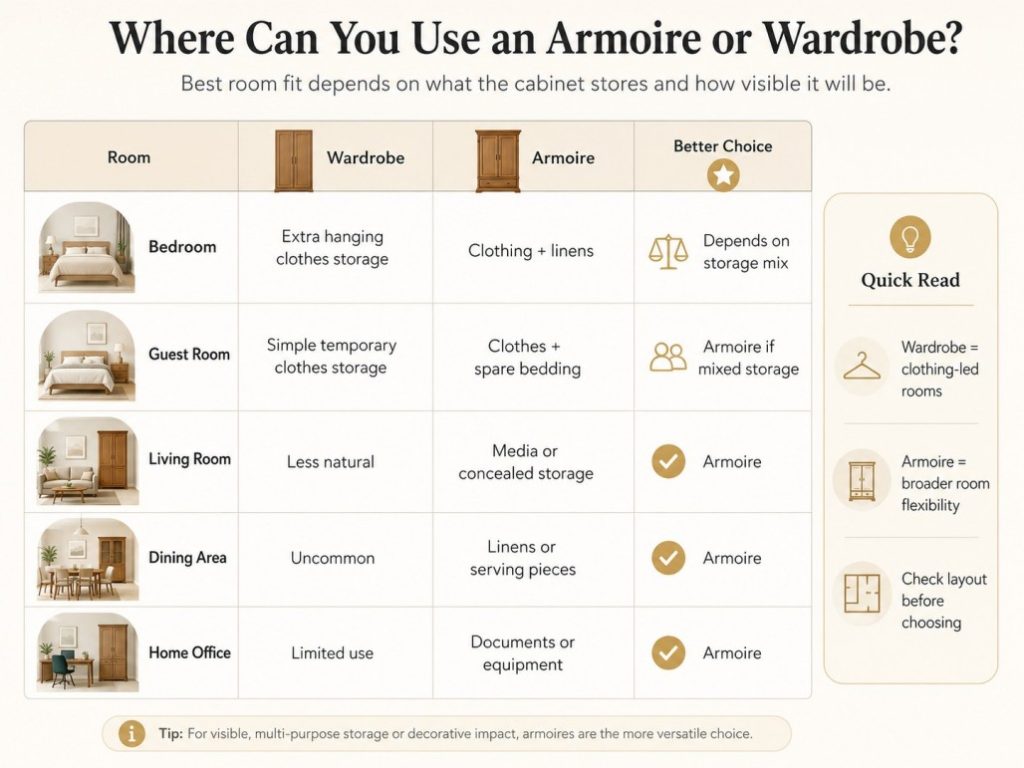
A wardrobe is most naturally used where clothing storage is needed, while an armoire can move more easily beyond the bedroom because its shelves, drawers, and decorative exterior support broader storage roles. The right choice depends on what the room needs the cabinet to hold and how visible it will be.
1. Bedrooms Commonly Suit Both Furniture Types
A wardrobe suits bedrooms that need an extra hanging zone for everyday clothing, coats, or guest use. An armoire works well when the bedroom needs one larger cabinet to hold hanging garments together with folded clothing, accessories, blankets, or spare bedding.
2. An Armoire Can Fit More Naturally in Shared Living Areas
Because an armoire can look like a finished cabinet rather than an added clothing unit, it may work in spaces where storage must stay behind closed doors without making the room feel like a dressing area. A suitable internal layout can make it useful for:
- Living rooms: Media accessories, games, books, or general storage can be concealed behind doors.
- Dining areas: Table linens, serving pieces, or seasonal items can be kept in a decorative cabinet.
- Home offices: Shelves can hold documents, equipment, or supplies when the cabinet style suits the room.
- Entryways or guest rooms: A mixed-storage cabinet can handle coats, bags, linens, or temporary visitor storage.
3. A Wardrobe Remains the Clearer Choice for Closet-Like Use
A wardrobe usually makes more sense when the cabinet exists mainly to add clothing capacity. It can suit a bedroom, guest room, or rental property where a simple freestanding clothes cabinet is needed, without requiring the storage piece to coordinate as strongly with the surrounding living-room or dining-room furniture.
| Room | Wardrobe Use | Armoire Use | Better Starting Choice |
|---|---|---|---|
| Main bedroom | Extra hanging clothing storage | Mixed clothing and linen storage | Depends on interior need |
| Guest room | Simple temporary clothes storage | Clothing plus spare bedding storage | Armoire when storage roles are mixed |
| Living room | Less natural unless designed for concealed utility | Media, games, or general concealed storage | Armoire |
| Dining area | Uncommon for a clothing-led cabinet | Linens or serving-piece storage | Armoire |
| Home office | Limited unless adapted internally | Concealed document or equipment storage | Armoire |
Key Takeaway: A wardrobe is usually strongest in clothing-led spaces, while an armoire is easier to use as a decorative closed-storage cabinet across several rooms.
Once the intended room and stored items are clear, choosing between the two becomes much simpler.
IX. Which Should You Choose: an Armoire or a Wardrobe?
Choose a wardrobe when you mainly need straightforward clothing storage; choose an armoire when you need a cabinet with mixed storage functions or a stronger decorative presence. Neither is automatically better, because the right choice depends on available space, internal layout, and the role the cabinet should play in the room.
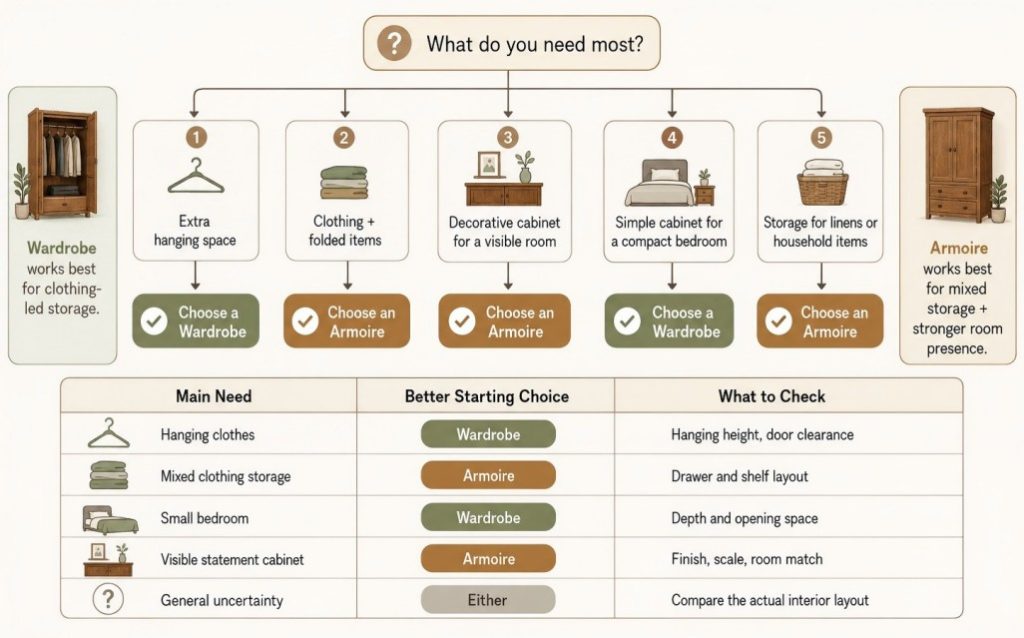
1. Choose a Wardrobe When Hanging Space Is the Priority
A wardrobe is generally the safer choice for a bedroom that lacks sufficient closet space or needs an additional place for hanging clothes. It is also more suitable when the room already has a dresser or other drawer furniture, so the new cabinet does not need to handle every storage category.
A wardrobe is a stronger starting choice when:
- You need an extra hanging rail for clothes, coats, or guest garments.
- The room is compact and a quieter cabinet appearance is preferred.
- Folded clothing is already handled by a dresser or chest of drawers.
- The cabinet should function mainly as a freestanding closet.
2. Choose an Armoire When Storage Needs Are Mixed
An armoire is usually more suitable when one cabinet must hold hanging clothing, folded items, linens, accessories, or concealed household storage together. Its more furniture-led appearance also suits rooms where the cabinet is visible and expected to contribute to the style of the space.
3. Which Choice Matches Your Situation Best?
The most reliable decision comes from matching the cabinet to actual stored items before considering its label. A decorative armoire with the wrong interior can be less useful than a simple wardrobe, while a wardrobe with well-planned compartments may handle more than basic hanging storage.
| Your Main Need | Better Starting Choice | Why It Fits | Check Before Choosing |
|---|---|---|---|
| Extra space for hanging clothes | Wardrobe | Keeps the layout focused on garments | Hanging height and door clearance |
| Clothing plus folded items in one unit | Armoire | Mixed compartments reduce the need for separate storage | Drawer and shelf arrangement |
| Storage for linens or household items | Armoire | Shelves suit folded and non-clothing items | Shelf depth and access |
| Simple cabinet for a smaller bedroom | Wardrobe | Usually feels less visually dominant | Overall depth and opening space |
| Decorative cabinet for a visible room area | Armoire | Has stronger furniture presence | Finish, scale, and room coordination |
| Uncertain between the two | Either, based on layout | Interior function matters more than the name | Compare the actual configuration |
Key Takeaway: Start with what the cabinet must store and where it will stand: a wardrobe is usually the practical clothing-led choice, while an armoire is often the stronger mixed-storage and decorative option.
X. What Should You Check Before Choosing a Wooden Armoire or Wardrobe?
Before choosing a wooden armoire or wardrobe, check whether the cabinet dimensions, internal layout, door movement, material, and finish match its intended use. These details matter more than the furniture name alone, because they decide whether the piece will fit the room, store the right items, and remain practical over time.
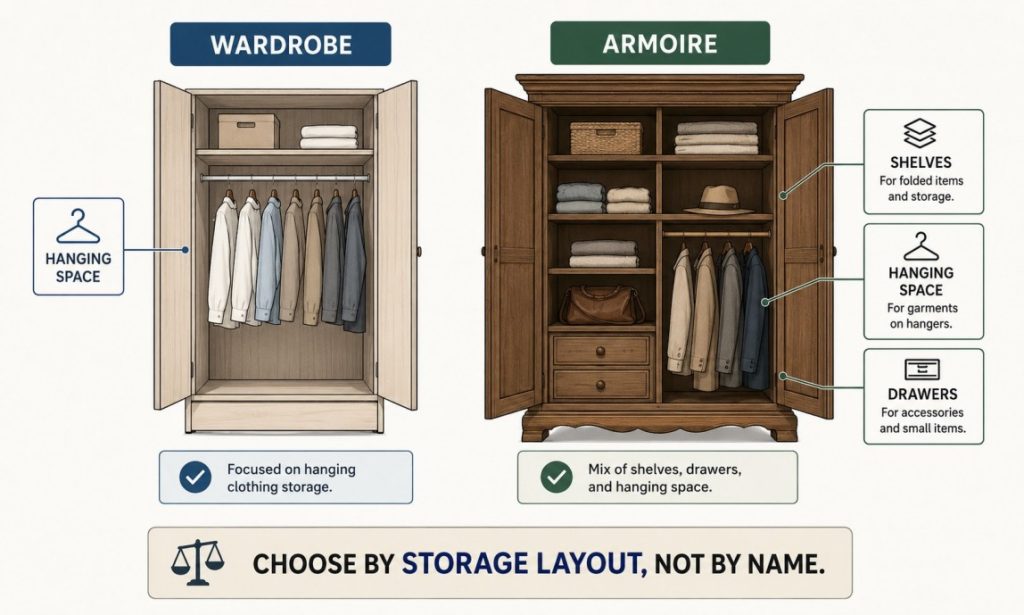
1. Dimensions and Interior Layout Should Be Checked Together
A cabinet can fit against the wall but still fail in daily use if the doors cannot open comfortably or the interior does not match the stored items. A wardrobe intended for long garments needs suitable hanging height, while an armoire intended for folded items or linens needs shelves and drawers arranged for easy access.
The most useful details to check are:
- Overall dimensions: Confirm width, depth, and height against the available room position and delivery path.
- Usable interior space: Compare hanging height, shelf depth, drawer position, and adjustable storage options.
- Door movement: Check whether hinged or sliding doors suit the surrounding furniture layout.
- Furniture coordination: Consider whether the cabinet finish and proportions work with nearby beds, dressers, or storage pieces.
2. Material and Finish Affect Daily Performance
Material does not decide whether a cabinet is an armoire or a wardrobe, but it does affect appearance, weight, door stability, surface wear, and price position. Solid wood can suit natural or painted cabinet collections, while plywood or engineered panels may suit designs where panel stability, controlled surfaces, or different price targets matter.
For example, pine wood furniture can suit bedroom and storage pieces when the design, finish, and expected use match the material. A particle board vs plywood comparison can also help when judging cabinet panels, doors, shelves, and long-term use expectations.
3. A Good Cabinet Choice Depends on the Actual Product Specification
Two cabinets described as armoires can differ greatly in door design, hanging space, drawers, wood finish, and overall scale. The same is true for wardrobes, so the final decision should be based on drawings, dimensions, internal configuration, material choice, and approved finish rather than relying on the category name alone.
| Check Point | Why It Matters for a Wardrobe | Why It Matters for an Armoire | Practical Judgment |
|---|---|---|---|
| Overall size | Keeps extra clothing storage manageable in the room | Prevents a larger cabinet from overpowering the layout | Confirm room position and access path |
| Interior configuration | Preserves the hanging space required for clothes | Confirms whether mixed storage is genuinely useful | Match compartments to stored items |
| Door type | Affects access in a compact bedroom | Affects both access and furniture appearance | Check opening space before selecting |
| Material | Influences panel stability, finish, and price position | Influences weight, detail, and furniture presence | Judge by use and construction, not name |
| Finish and hardware | Helps the wardrobe coordinate with existing bedroom pieces | Helps the armoire work as a visible cabinet feature | Approve the complete visual specification |
For a coordinated bedroom or living room collection, the cabinet should also match related wooden furniture pieces in proportion, finish, door style, and intended storage use.
Key Takeaway: A suitable armoire or wardrobe is chosen by room fit, internal function, material, and finish details, not by the product label alone.
FAQ
Is an armoire the same as a wardrobe?
No. The terms are sometimes used interchangeably, but a wardrobe usually focuses on clothing storage, while an armoire is commonly larger, more decorative, and arranged for mixed storage such as hanging clothes, folded items, linens, or concealed household pieces.
Can an armoire be used outside a bedroom?
Yes. An armoire can work in a living room, dining area, guest room, entryway, or home office when its internal layout and exterior style suit the room. Shelved armoires are especially useful where household items need to stay concealed behind decorative doors.
Can a wardrobe include drawers and shelves?
Yes. A wardrobe can include drawers, shelves, mirrors, or sliding doors. The difference is not that wardrobes must be rail-only cabinets, but that their primary role is usually clothing storage rather than broader mixed-use storage.
Which is better for a small bedroom, an armoire or a wardrobe?
A wardrobe is often the easier starting choice for a small bedroom because it usually has a simpler appearance and can focus on needed hanging storage. However, the actual depth, width, door type, and internal layout matter more than the name.
What is the difference between an armoire and a chifforobe?
An armoire is commonly a larger closed cabinet with shelves, drawers, or hanging space arranged for mixed storage. A chifforobe traditionally combines a wardrobe section for hanging garments with a chest-of-drawers section in one furniture piece, so its split clothing-storage function is more specific.
Final Check
A wardrobe is usually the practical choice for straightforward hanging storage, while an armoire is generally better suited to mixed storage needs or a more decorative furniture role. Before choosing either one, compare the actual dimensions, internal arrangement, door type, material, and finish against the room and the items the cabinet must hold.
For retailers, importers, or furniture brands developing wooden storage collections, EverWoody can help review cabinet size, wood finish, door style, and internal storage arrangements before the product direction is confirmed. You can discuss your project with us when you need a wooden armoire or wardrobe specification suited to your target collection.