
A cabinet can look right in photos and still feel wrong once it is placed in a room. The problem is that sideboards, buffets, and credenzas are often used for very similar furniture, while their best uses are not always the same.
A sideboard vs buffet vs credenza choice usually comes down to use and visual profile: sideboards are the most flexible, buffets are more closely linked to dining and serving, and credenzas often have a lower, more streamlined look. This comparison will help you choose by room, storage needs, and daily function.
I. What Are Sideboards, Buffets, and Credenzas?
Sideboards, buffets, and credenzas are similar long storage cabinets with flat top surfaces, but each term usually points to a different furniture role. A sideboard is the broadest and most flexible name, a buffet is more closely tied to dining and serving, and a credenza often suggests a lower, more streamlined cabinet for storage or display.

1. A Sideboard Is the Most Flexible Name
A sideboard is a storage cabinet commonly placed against a wall, with a top surface that can hold decorative items, lamps, or serving pieces. It may include drawers, shelves, or cabinet doors, and it fits naturally in dining rooms, living rooms, entryways, or hallways.
2. A Buffet Is More Closely Tied to Dining
A buffet is commonly used in a dining room to store plates, glassware, linens, and serving pieces while providing extra surface space during meals. In modern furniture collections, a buffet may look almost the same as a sideboard, because the name often describes its dining purpose rather than a fixed construction style.
3. A Credenza Often Has a Lower, Longer Profile
A credenza commonly refers to a low, horizontal cabinet used for storage, display, or media equipment. It can work in a dining room, but its streamlined shape also makes it a natural fit for living rooms, offices, or spaces where a taller storage cabinet would feel too heavy.
Key Takeaway: The three names overlap, but they usually suggest flexible storage, dining service, or a lower streamlined profile.
II. Sideboard vs Buffet vs Credenza: What Is the Main Difference?
Sideboards, buffets, and credenzas were traditionally separated by their intended room, primary function, and sometimes their height or base profile. In modern furniture collections, those boundaries often overlap: sideboards remain the most flexible option, buffets stay most closely tied to dining and serving, and credenzas more often describe a lower, horizontal cabinet.
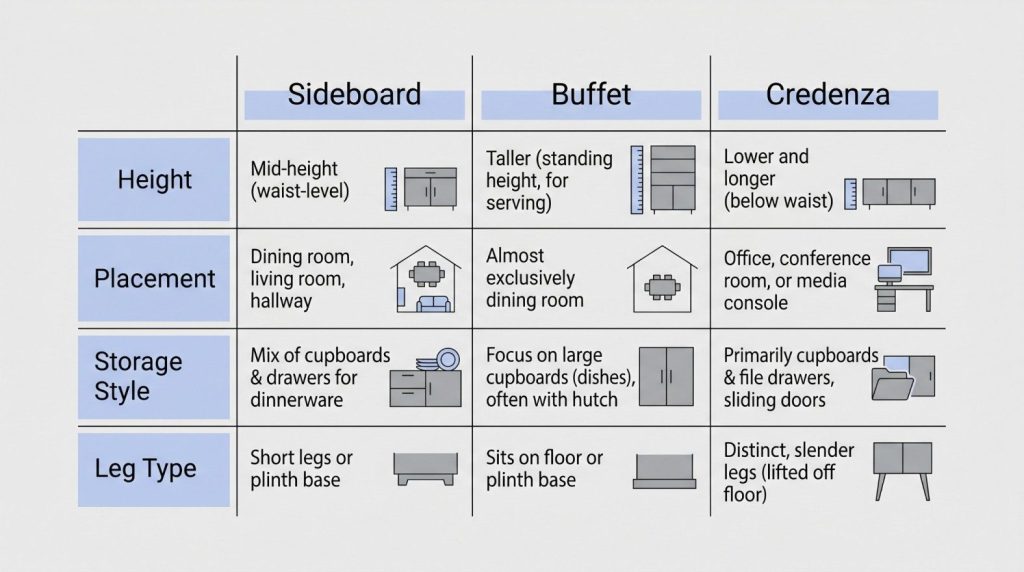
1. Their Most Common Roles Are Different
The quickest way to separate these three cabinets is to match each name with the role it most naturally suggests:
- Sideboard: Flexible storage across dining, living, or entry spaces
- Buffet: Dining-room storage with a surface for serving food or drinks
- Credenza: Low-profile storage for display, media, office, or modern dining use
2. Sideboards and Buffets Overlap the Most
Sideboards and buffets are often difficult to distinguish by appearance alone because both may have drawers, cabinet doors, shelves, and a flat top. A similar cabinet is more likely to be called a buffet when it is marketed for dining-room serving, while sideboard remains the more adaptable term across several rooms.
3. Credenzas Are Usually Easier to Separate Visually
Credenzas are often easier to recognise because they tend to be lower, longer, and more visually horizontal than typical dining storage cabinets. Some designs include sliding doors or media-friendly layouts, but these features are common styling choices rather than rules that apply to every credenza.
In everyday retail use, a cabinet placed in a dining room is more likely to be sold as a buffet or sideboard, while a lower unit used in a living room, office, or media area is more likely to be described as a credenza.
Key Takeaway: Sideboard and buffet differ mainly by use, while credenza is more often distinguished by its lower, horizontal look.
III. How Do Their Size, Height, and Storage Styles Compare?
Sideboards, buffets, and credenzas overlap in design, but their common proportions and storage roles can still guide a practical choice. A buffet is often selected for dining service, a sideboard for flexible room placement, and a credenza for a lower, more horizontal look that suits display, media, or mixed storage.
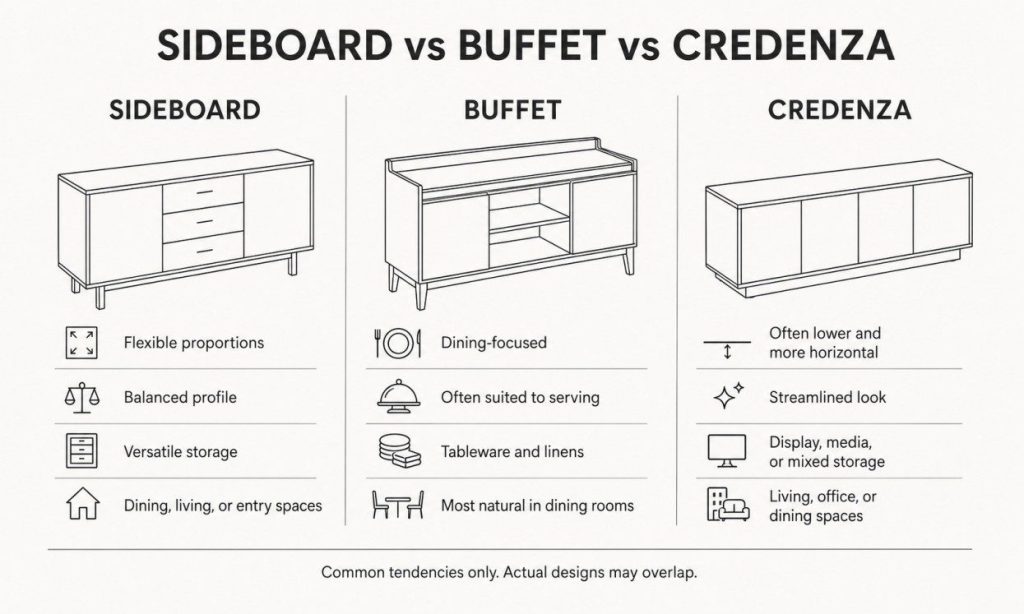
1. Traditional Height and Base Differences Are Useful Clues, Not Rules
Traditional descriptions often present a buffet as a dining cabinet with a convenient serving surface, a sideboard as a versatile storage cabinet, and a credenza as a lower horizontal piece. Modern designs overlap, however: any of the three may use legs or a plinth base, so function and room placement are safer decision points than leg style alone.
2. Storage Style Depends More on Use Than on the Name
Drawers, shelves, cabinet doors, glass fronts, and sliding doors may appear across all three furniture types, so the interior layout should be judged by what you need to store. A buffet is commonly chosen for tableware and serving pieces, a sideboard for mixed household storage, and a credenza for display items, electronics, files, or modern living-room use.
3. Compare Common Tendencies, Not Fixed Rules
The three names are easiest to compare by their usual role, room association, visual character, and storage priorities. These are practical starting points rather than strict definitions, since many modern cabinets may reasonably be marketed under more than one name.
The table below compares the most common tendencies while recognising that actual product names and designs may overlap.
| Comparison Point | Sideboard | Buffet | Credenza |
|---|---|---|---|
| Basic meaning | A versatile storage cabinet placed against a wall | A dining-focused cabinet used for storage and serving | A low-profile storage cabinet often used for display, media, or office needs |
| Strongest association | Flexible room placement | Dining and serving | Lower, streamlined storage |
| Common rooms | Dining room, living room, entryway, hallway | Dining room | Living room, office, dining room, media area |
| Size and length tendency | Available in many sizes; often easier to place across rooms | Often sized to support dining storage and a serving surface | Often longer and more horizontal in appearance |
| Height and base tendency | Mid-height designs with legs or a base are common | Often comfortable for standing serving, with legs or a base | Commonly lower; may use legs, a plinth, or a recessed base |
| Storage depth tendency | Suitable for mixed everyday storage; depth varies by design | Often selected when plates and serving pieces need more room | Depth varies depending on display, media, office, or dining use |
| Interior storage tendency | Drawers, cabinets, and adjustable shelves | Cabinets and drawers for tableware and dining linens | Cabinets, shelves, drawers, or sliding-door layouts |
| Surface use | Lamps, decor, tableware, or occasional serving | Food, drinks, serving dishes, or dining decor | Art, decor, electronics, office items, or occasional serving |
| Most useful when… | One cabinet may need to work across different rooms | The cabinet will support dining storage and serving | A lower cabinet suits the room or media/display function |
| Main caution | The name alone does not define size or storage layout | It may be visually similar to a sideboard | Not every credenza is low, sliding-door, or media-specific |
Key Takeaway: Compare their usual roles first, then choose the size and storage layout that suits your room.
IV. Which One Fits Your Space Better?
The best cabinet for your space depends less on whether it is called a sideboard, buffet, or credenza and more on its visual weight, depth, width, and daily access needs. Sideboards are often easiest to place across different rooms, buffets suit dining layouts, and credenzas work naturally where a low horizontal profile is preferred.
1. Smaller Rooms Need Flexible Proportions
In a compact dining room, entryway, or narrow living area, a sideboard often provides the safest starting point because it is available in many widths and storage arrangements. A low credenza may also work well when you want the cabinet to feel visually lighter, while a large buffet can dominate the room if its top and storage volume exceed what the space needs.
2. Start with the Room and the Main Use
Use the room type and the cabinet’s main task as a quick first filter:
- Sideboard: flexible placement; mixed storage; dining room, living room, or entryway
- Buffet: dining-room placement; serving surface; dishes, glassware, and table linens
- Credenza: low visual profile; display or media use; living room, office, or wide wall space
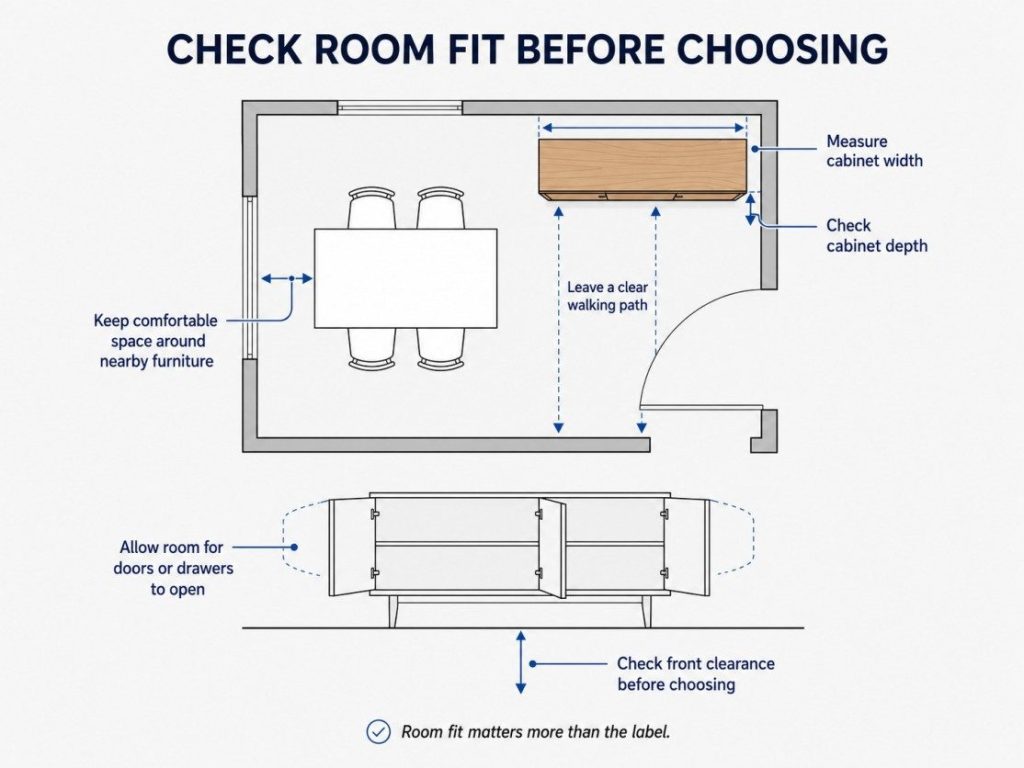
3. Clearance Matters More Than the Product Label
A cabinet that fits along the wall can still feel awkward if drawers, cabinet doors, dining chairs, or walking paths compete for the same space. Check the available width, cabinet depth, door or drawer opening space, and the path around nearby furniture before choosing a larger serving cabinet or a longer low-profile unit.
Key Takeaway: Choose the cabinet that makes the room easy to use, not the one with the most appealing name.
V. Which One Provides the Right Storage for Your Needs?
The right storage choice depends on what you actually want to keep inside the cabinet, not simply whether the product is called a sideboard, buffet, or credenza. A sideboard is a flexible option for mixed storage, a buffet is a natural fit for dining items, and a credenza often works well when storage needs include display objects, media equipment, or office items.
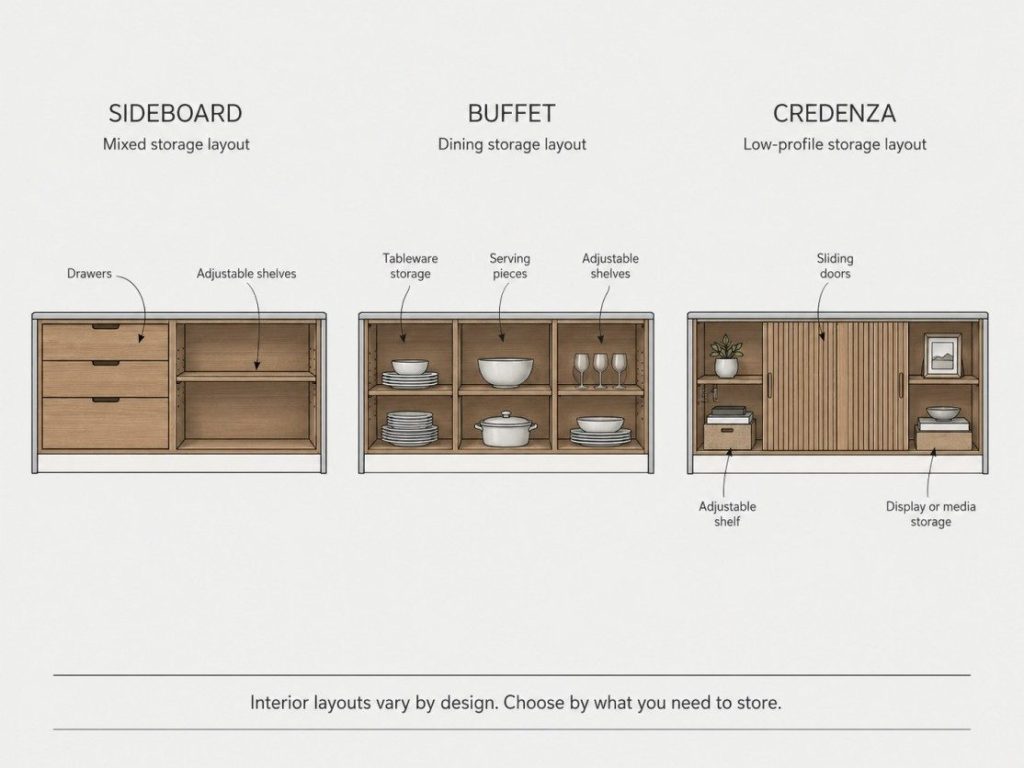
1. Sideboards Work Well for Mixed Everyday Storage
A sideboard is useful when one cabinet needs to handle different types of items, such as table linens, small dishes, books, board games, or entryway essentials. Designs with drawers above closed cabinets are especially practical because smaller items stay organised while larger items remain hidden behind doors.
2. Buffets Suit Tableware and Serving Pieces
A buffet becomes the stronger starting choice when storage is closely tied to dining, especially for plates, glassware, table linens, serving bowls, or platters. Its flat top also matters: the cabinet not only holds dining items, but can also provide an additional surface when food or drinks need to be placed close to the table.
3. Credenzas Suit Low Storage, Display, and Media Needs
A credenza is often selected when the cabinet needs to stay visually low while supporting display pieces, electronics, files, or a mixture of concealed storage and open presentation. The table below separates the three options by storage task, rather than treating one cabinet type as better in every setting.
| What You Need to Store or Display | Better Starting Choice | Why It Often Fits |
|---|---|---|
| Mixed everyday items, linens, books, or small tableware | Sideboard | Flexible layouts with drawers and closed cabinets are common |
| Plates, glasses, serving bowls, platters, or dining linens | Buffet | Dining-focused storage pairs naturally with an extra serving surface |
| Decor, art objects, electronics, files, or media equipment | Credenza | A lower horizontal profile often suits display and multi-use storage |
| A combination of dining items and occasional decor | Sideboard or buffet | The better choice depends on whether serving or flexibility matters more |
| Dining storage with a low, modern room profile | Credenza or sideboard | Either may work when dimensions and interior shelves meet the need |
Once the storage layout is clear, the next practical decision is material: an MDF vs solid wood furniture comparison helps explain how cabinet panels, finishes, and long-term stability may differ.
Key Takeaway: Match the cabinet to what it must hold and how often the top surface will be used.
Once storage needs are clear, the dining room is where the difference between these names becomes easiest to judge.
VI. Which One Works Best in a Dining Room?
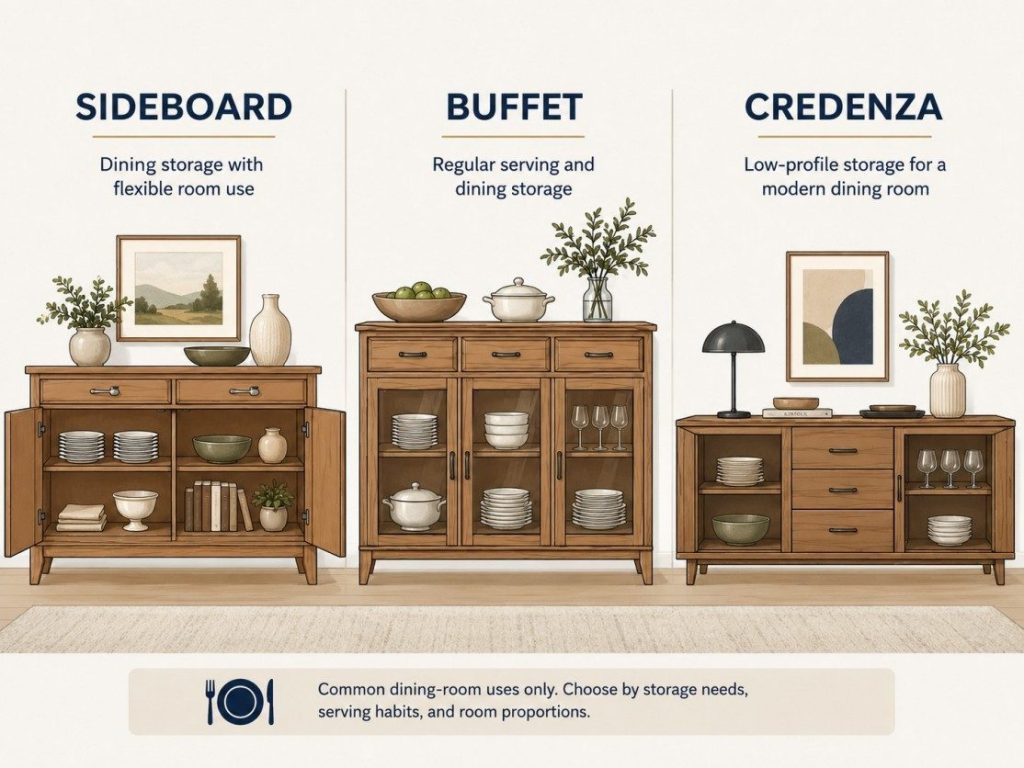
A buffet is usually the most natural choice for a dining room when the cabinet will support both storage and serving, but it is not automatically the best option for every dining space. A sideboard offers more flexibility beyond dining, while a credenza can suit a modern room where a lower visual profile matters more than a dedicated serving function.
1. Choose a Buffet When Serving Is Part of the Plan
A buffet makes the most sense when the cabinet will regularly hold plates, glassware, linens, or serving dishes, and its top will be used during meals or gatherings. It keeps dining-related items close to the table and gives the room a clear service surface without making the dining table carry everything.
2. Choose a Sideboard When the Room Needs More Flexibility
A sideboard is often the better dining-room choice when you need storage now but may later use the cabinet in a living room, hallway, or entryway. It can still store dinnerware and support occasional serving, but its broader identity makes it easier to style outside a formal dining setting.
3. Choose a Credenza When a Lower Profile Fits the Room Better
A credenza can work well in a dining room when you prefer a long, low cabinet beneath artwork or a mirror and do not rely on it as a frequent serving station. It is a good visual match for modern dining spaces, provided the interior storage is suitable for the dishes, glassware, or display items you plan to keep inside.
Key Takeaway: Choose a buffet for regular serving, a sideboard for flexibility, and a credenza for a lower modern dining profile.
A dining room may give these cabinet names their clearest context, but many homes need the same storage piece to work elsewhere.
VII. Which One Works Best Beyond the Dining Room?
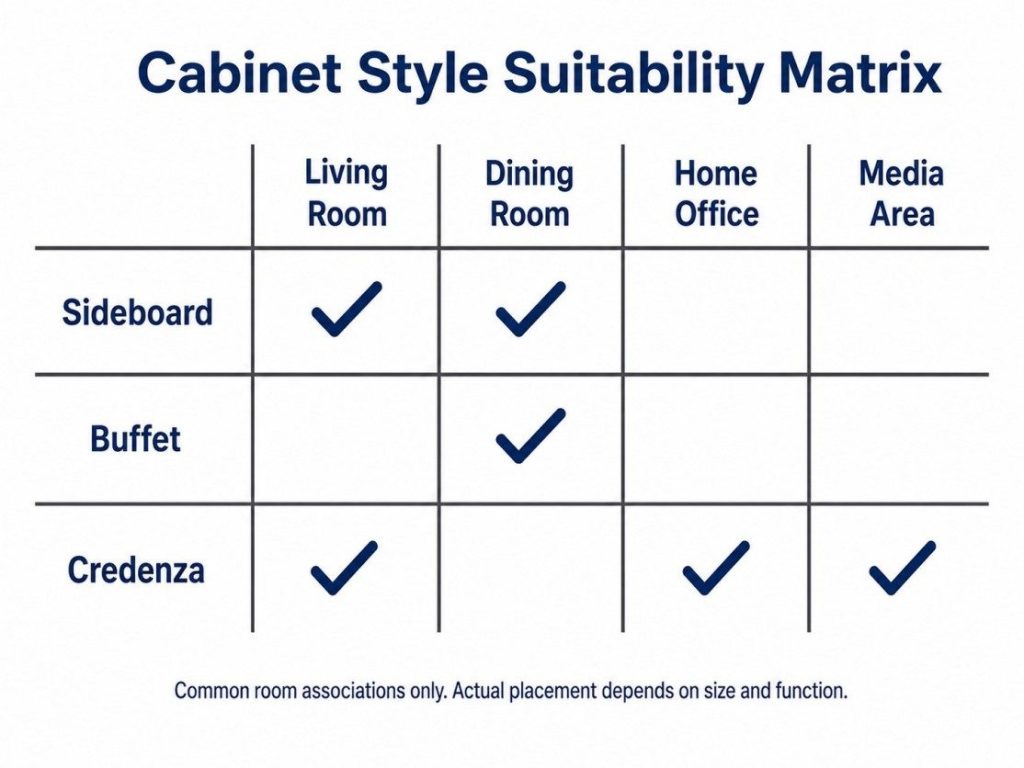
Beyond the dining room, a sideboard is usually the most flexible choice, while a credenza often suits rooms that benefit from a lower, longer cabinet. A buffet can still be placed elsewhere, but its strongest association remains dining storage and serving, so it is less natural as the starting choice for entryways, offices, or media walls.
1. Sideboards Adapt Easily to Living Rooms and Entryways
A sideboard works well outside the dining room because it combines a decorative top with practical concealed storage. In a living room, it can hold books, games, throws, or display pieces; while in an entryway, it can store everyday items without making the space feel tied to dining use.
2. Credenzas Suit Offices and Low Wall Layouts
A credenza is often a natural fit for a home office, media area, or wide living room wall because its lower horizontal profile leaves more visual space above the cabinet. It can sit beneath artwork, shelving, a mirror, or a television while storing files, electronics, or display accessories below.
3. Room Placement Should Follow the Cabinet’s Role
Outside a dining room, the choice becomes clearer when you match the cabinet to the room function rather than relying on the product name. A sideboard usually leads when flexibility matters, while a credenza becomes stronger when the room benefits from a lower visual line or media-friendly layout.
| Room or Placement Need | Better Starting Choice | Why It Often Works |
|---|---|---|
| Entryway storage with a decorative top | Sideboard | Flexible concealed storage without a strongly dining-focused look |
| Living room storage for books, games, or decor | Sideboard or credenza | The choice depends on preferred height and visual profile |
| Home office storage beneath artwork or shelves | Credenza | A low horizontal cabinet keeps the wall visually open |
| Media wall beneath a television | Credenza or low sideboard | Cabinet height, ventilation, and cable access matter most |
| Wide hallway or transitional wall space | Sideboard | It provides practical storage and adapts easily to surrounding decor |
Key Takeaway: Outside the dining room, choose a sideboard for flexibility or a credenza for a lower horizontal layout.
One use deserves a closer look because the wrong cabinet height or interior design can quickly become inconvenient.
VIII. Can a Sideboard or Credenza Work as a TV Console?
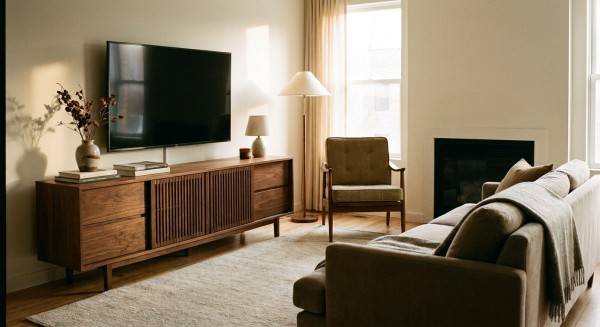
A sideboard or credenza can work as a TV console when its height, depth, ventilation, and cable access suit the equipment, and a low credenza is often the more natural starting point. A sideboard can also work well if it sits low enough and has a practical interior layout for media storage.
1. A Lower Cabinet Usually Gives a Better Viewing Position
A credenza often suits media use because its lower horizontal profile can support a television without making the screen feel too high from a seated position. A low sideboard may perform just as well, but a taller buffet is usually less comfortable for this purpose unless the television is mounted separately and the cabinet is used only for storage.
2. Check Media Function Before Choosing by Name
A cabinet used below a television needs more than an attractive front, because electronics require access, organisation, and airflow. Before using a sideboard or credenza as a media console, check for:
- Screen height: a low surface that keeps the television comfortable to view
- Cable access: rear cut-outs or enough space to route wires neatly
- Ventilation: open space or suitable airflow for devices that generate heat
- Interior fit: shelves or compartments sized for media boxes, routers, or game consoles
- Door function: fronts that do not block access or make device use awkward
3. Choose the Piece That Supports the Equipment Properly
A credenza is often the easier match for a media setup because its low, wide shape aligns naturally with a television wall. A sideboard remains a practical alternative when its dimensions and internal layout work for the equipment, while the product name itself should never replace checking the actual design.
This same function is also common in broader residential furniture collections that include TV stands and complementary living-room storage.
Key Takeaway: For TV use, choose by viewing height, cable access, and airflow before choosing by cabinet name.
IX. Is a Hutch the Same as a Sideboard, Buffet, or Credenza?
A hutch differs from a sideboard, buffet, or credenza because it usually adds upper shelves or display cupboards above a lower cabinet base. That base may resemble a buffet or sideboard, but the visible upper storage section is what gives a hutch its distinct vertical display function.

1. A Hutch Adds Upper Display Storage
A hutch commonly combines a lower cabinet with an upper section of open shelves, glass-front doors, or enclosed display storage. This makes it useful for showing plates, glassware, ceramics, or decorative pieces while keeping additional items stored below.
2. A Buffet or Sideboard Keeps the Top Surface Open
A buffet or sideboard may store many of the same dining items as a hutch, but its flat top remains open for serving, lighting, artwork, or decor. This makes a buffet more practical when food service matters, while a hutch suits rooms where vertical display storage is the main need.
3. A Credenza Keeps the Room Visually Lower
A credenza differs even more clearly from a hutch because it usually emphasises a low, horizontal line rather than upper display storage. Compare the structures below before deciding whether you need a serving surface, a low visual profile, or extra vertical display room.
| Cabinet Type | Main Structure | Strongest Use | Better Starting Choice When… |
|---|---|---|---|
| Sideboard | Low cabinet with a clear top surface | Flexible storage across rooms | You want storage that can move beyond the dining room |
| Buffet | Low cabinet with a serving-friendly top | Dining storage and serving | You regularly place food, drinks, or tableware on top |
| Credenza | Often lower and more horizontal | Display, media, office, or modern dining storage | You prefer a low streamlined look |
| Hutch | Lower cabinet with upper shelves or display cupboards | Vertical display and dining storage | You want to show tableware while storing more items above |
Key Takeaway: Choose a hutch for upper display storage, not simply as another name for a low cabinet.
Once the hutch is separated from the three low cabinet styles, the final choice becomes much simpler.
X. How Should You Choose the Right Storage Cabinet?
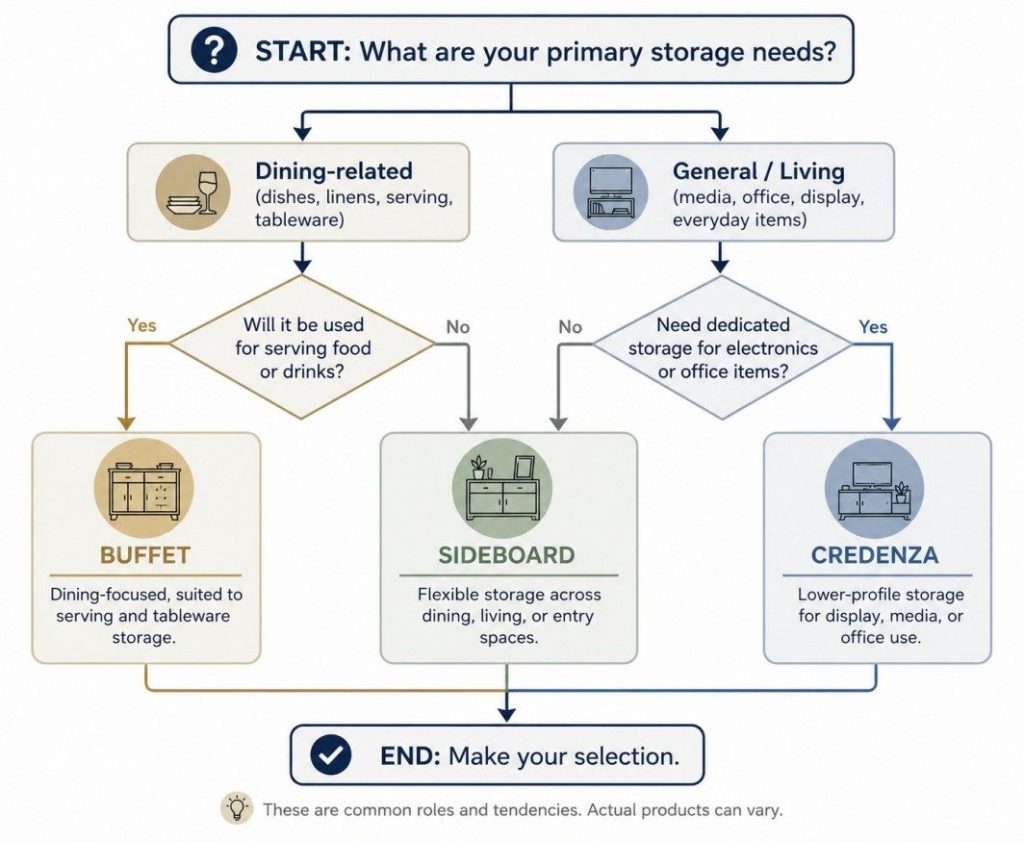
Choose between a sideboard, buffet, credenza, and hutch by starting with daily use, then checking room fit and storage layout. A sideboard suits flexible storage, a buffet suits dining service, a credenza suits lower multi-use storage, and a hutch suits visible storage that extends upward.
1. Start with the Cabinet’s Main Job
The product name becomes useful once you know what the cabinet must do most often. A buffet is the natural starting point for regular serving, a sideboard works across more rooms, a credenza suits low-profile display or media needs, and a hutch adds vertical display storage when wall height is available.
2. Check the Actual Design Before You Decide
Two products sold under different names may solve the same need, while two cabinets with the same name may differ greatly in size, storage access, and visual weight. Use the guide below as a starting point, then confirm the cabinet dimensions and internal design before making a choice.
| Your Main Need | Better Starting Choice | What to Check Before Choosing |
|---|---|---|
| Flexible storage for dining, living, or entry spaces | Sideboard | Width, drawer layout, cabinet storage, and room placement |
| Dining-room storage with a surface for serving | Buffet | Surface height, tableware capacity, and access near the dining table |
| A lower cabinet for display or media equipment | Credenza | Height, cable access, ventilation, and shelf layout |
| Visible tableware storage with upper shelves or glass cupboards | Hutch | Overall height, wall fit, display layout, and stable placement |
| Modern dining storage without a tall visual presence | Credenza or sideboard | Interior capacity, surface use, and room proportions |
3. For a Furniture Range, Choose by Use Before Naming the Product
The same logic also matters when selecting cabinets for a retail range, furniture brand, or residential project. Calling a piece a buffet, sideboard, or credenza is less useful than confirming where it will be used, what it must store, and which visual profile fits the intended room.
For a developed furniture range, the details that shape a workable product are usually clear and practical:
- Size options: widths and heights suited to different room layouts
- Storage layout: drawers, adjustable shelves, doors, or display sections matched to use
- Surface and finish: wood tone and finish selected for dining, living, or media settings
- Functional details: cable openings, ventilation, serving-friendly surfaces, or upper display storage
- Coordinating pieces: matching cabinets or related storage furniture for a consistent range
For importers, retailers, and furniture brands developing cabinet ranges, EverWoody can help review adjusted dimensions, wood finishes, internal storage arrangements, or matching cabinet pieces, and turn the chosen furniture role into a workable specification.
Key Takeaway: Choose the cabinet role first, then confirm the design details that make it fit the room or product range.
Final Check
Sideboards, buffets, and credenzas can look very similar, so the name alone should not make the decision. Start with the cabinet’s daily role: choose a sideboard for flexible storage, a buffet for dining and serving, a credenza for a lower streamlined layout, or a hutch when upper display storage is the priority.
If you are developing a wholesale furniture business and need support with dimensions, wood finishes, storage layouts, or product specifications, contact us to discuss your requirements.