
Buying pine furniture in bulk can look like a safe cost decision at first. Problems often appear later through dents, warping, resin bleed, loose joints, or inconsistent bulk quality.
Pine wood is good for furniture when the product design matches the material’s limits. It works well for cost-sensitive solid wood furniture, painted pieces, bedroom furniture, storage items, and rustic collections. It becomes risky when buyers ignore wood grade, moisture control, knot stability, surface protection, and structural design.
I. Is Pine Wood Good for Furniture Overall?
Pine wood is good for furniture when it is used in the right product category and controlled through proper grading, drying, finishing, and structure. It is not the strongest wood, but it can be a practical, solid wood choice when buyers understand where it performs well and where it needs tighter control.
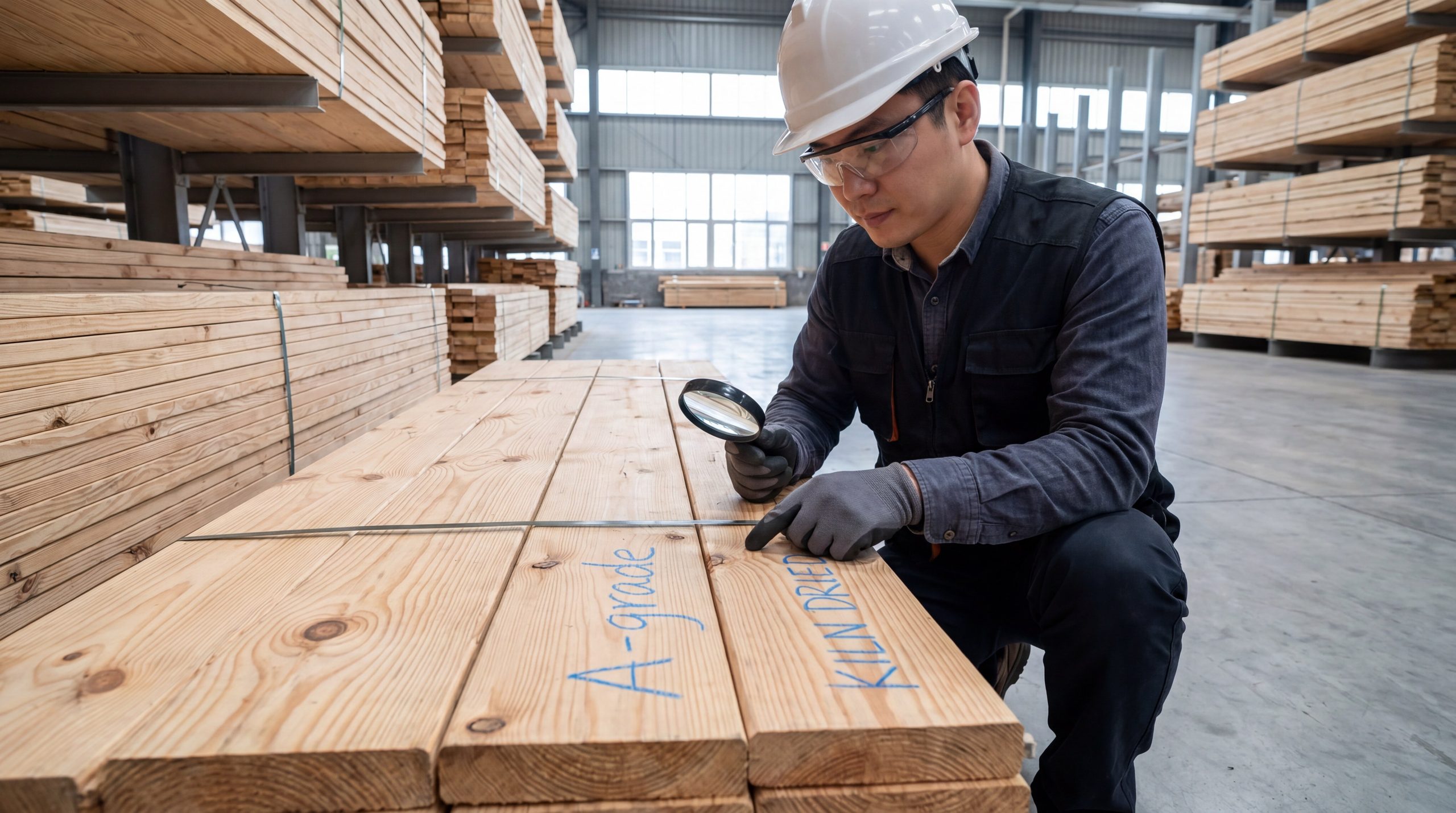
1. Pine Works Best in the Right Furniture Category
Pine is usually a better fit for bedroom furniture, storage furniture, painted furniture, children’s furniture, and rustic-style collections than for heavy-use commercial seating or luxury dining furniture. Its warm grain, lighter weight, and easier machining make it useful for volume furniture lines. The risk begins when buyers use pine in applications that require high impact resistance, strong screw-holding power, or very strict surface durability.
2. Pine Quality Depends on Grade and Species
Not all pine performs the same way in furniture production. Higher-grade pine with fewer unstable knots gives better visual consistency and lower structural risk. Species selection also matters, because some pine is better suited for structural parts while other pine is better for decorative panels, painted surfaces, or lighter-use furniture.
3. Pine Should Be Judged by Control, Not Price Alone
A low pine furniture price can be attractive, but price alone does not tell buyers whether the product will stay stable after shipment. Buyers should check whether the factory controls wood grade, moisture level, knot placement, joint design, surface coating, and bulk production consistency. Without those controls, an attractive sample can still become a risky mass production order.
| Decision Point | Lower-Risk Condition | Higher-Risk Condition |
|---|---|---|
| Product use | Bedroom, storage, painted, rustic-style furniture | Heavy commercial use or luxury durability expectations |
| Wood grade | Clear grading and controlled knot range | Random grade selection or unclear knot limits |
| Structure | Reinforced joints and movement allowance | Thin parts, weak fasteners, tight fixed panels |
| Finish | Primer, sealer, and topcoat matched to use | Thin coating or unclear finishing process |
Key Takeaway: Pine can be a good furniture material, but only when buyers match it with the right use case and verify how the factory controls its natural weaknesses.
II. What Are the Main Advantages of Pine Furniture?
Pine wood is good for furniture when buyers need a solid wood option with controlled cost, lighter weight, easier production handling, and a natural appearance. These advantages are real, but they should support a suitable furniture program rather than replace quality control.
1. Pine Helps Keep Solid Wood Furniture More Accessible
Pine gives buyers a way to offer real wood furniture without moving into the higher cost range of many hardwoods. This is useful for retailers, importers, and project buyers who need a natural wood look at a practical price point. The advantage is strongest when the design accepts pine’s grain, knots, painted finish options, or rustic character.
2. Pine Is Easier to Machine and Customize
Pine is easier to cut, shape, sand, and finish than many denser hardwoods. This can support custom sizes, color variations, molded edges, panel designs, and faster sample adjustment. However, easy machining does not automatically mean stable quality; buyers still need to confirm tolerance control, sanding quality, joint accuracy, and finishing consistency before bulk production.
3. Pine Supports Lightweight Packing and Handling
Pine furniture is usually easier to pack, move, and assemble than heavier hardwood furniture. This can help with knock-down structures, bedroom sets, shelving units, and storage furniture. Still, lighter weight should not be treated as a durability advantage by itself; the furniture must still have suitable material thickness, reliable hardware, and protective packaging.
| Advantage | Why It Matters | Buyer Check |
|---|---|---|
| Lower material cost | Supports price-sensitive solid wood lines | Check whether lower cost comes from lower grade |
| Easy machining | Helps custom shapes and production adjustment | Confirm tolerance, sanding, and joint quality |
| Lighter weight | Helps packing, handling, and assembly | Check structural strength and carton protection |
| Natural appearance | Fits rustic, painted, or warm wood styles | Confirm knot limits and approved visual range |
Key Takeaway: Pine’s advantages are valuable when they match the product’s price point, use case, and quality expectations.
III. What Long-Term Problems Can Pine Furniture Have?
Pine wood is good for furniture only when its long-term risks are controlled before production. The most common problems are dents, scratches, warping, cracking, resin bleed, loose joints, and visible differences between approved samples and bulk shipments.
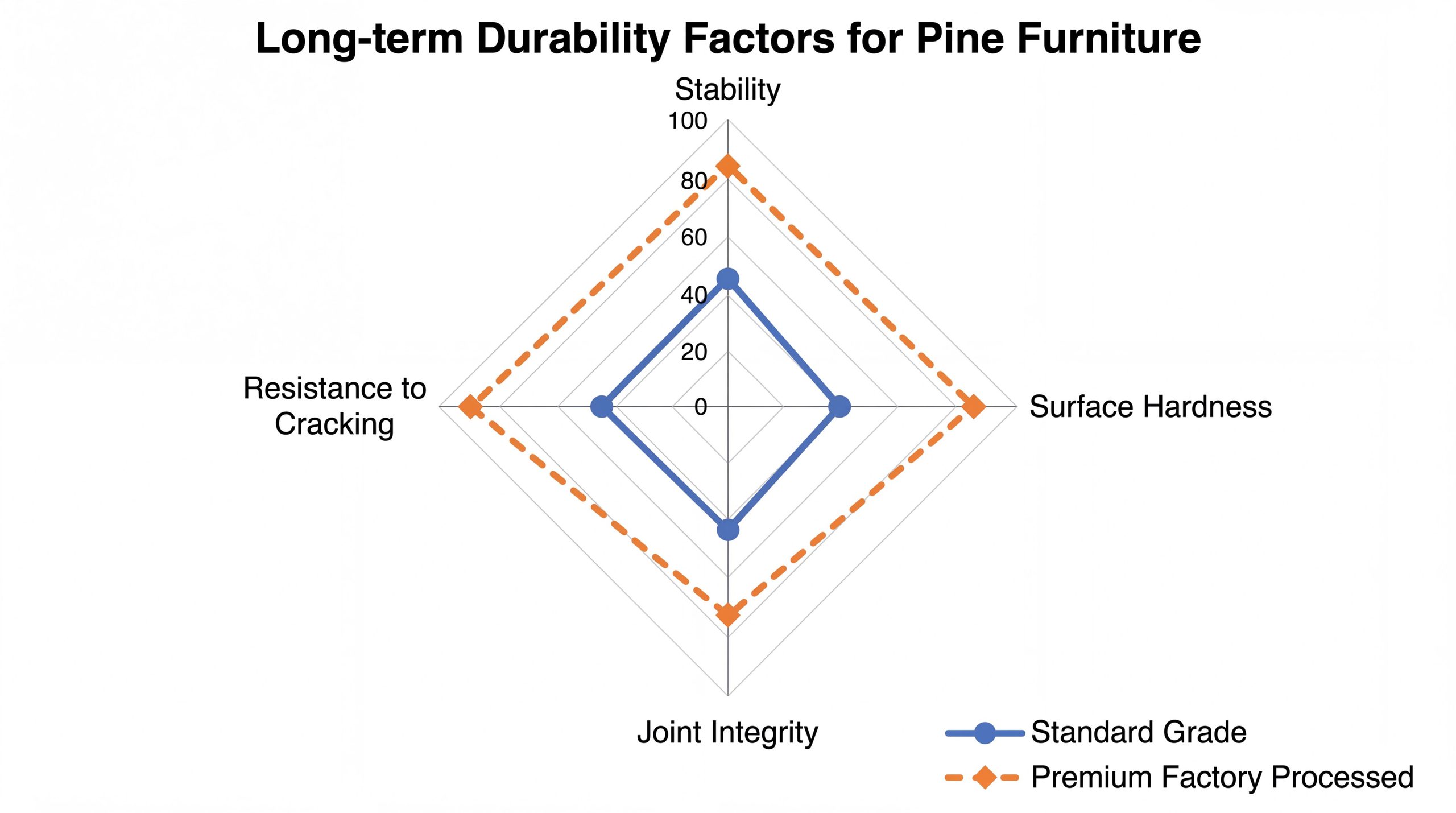
1. Dents and Scratches Can Appear Faster
Pine is softer than many hardwoods, so surface marks may appear faster under daily use. Table edges, shelf corners, chair rails, and children’s furniture surfaces are more exposed to impact and abrasion. Buyers should decide early whether the product can accept a rustic aging effect or whether it needs stronger coating, rounded edges, or a different material for high-impact areas.
2. Moisture Movement Can Cause Warping or Cracking
Pine reacts to changes in humidity during drying, ocean freight, warehouse storage, and final use. If moisture control is weak, panels may cup, doors may shift, drawers may stick, and joints may open after delivery. This is why buyers should not approve pine furniture based only on appearance; drying control and construction design matter just as much as the sample surface.
3. Knots, Resin, and Joints Need Early Control
Knots can create both visual inconsistency and weak points if they appear near joints, screws, or load-bearing areas. Resin can bleed through light paint when knot sealing and primer selection are not suitable. Loose joints may appear when screws, dowels, or connectors are not designed for softer wood fibers.
| Long-Term Problem | Likely Cause | What Buyers Should Confirm |
|---|---|---|
| Dents and scratches | Soft surface fibers | Coating type, edge design, expected use |
| Warping or cracking | Poor drying or climate mismatch | Moisture checks and panel construction |
| Resin bleed | Knots or resin-heavy areas under finish | Knot sealing and primer system |
| Loose joints | Weak fastening in softwood | Screw type, inserts, joint reinforcement |
| Batch inconsistency | Unclear grading and visual limits | Limit samples and bulk inspection checks |
Key Takeaway: Most pine furniture problems are not caused by pine alone; they come from using pine without clear grading, drying, finishing, and structural control.
IV. Why Does Moisture Control Matter So Much for Pine Furniture?
Pine wood is good for furniture only when moisture movement is controlled before production and shipment. If drying, storage, and construction details are not aligned, pine panels can warp, crack, cup, or shift after the furniture reaches a different climate.
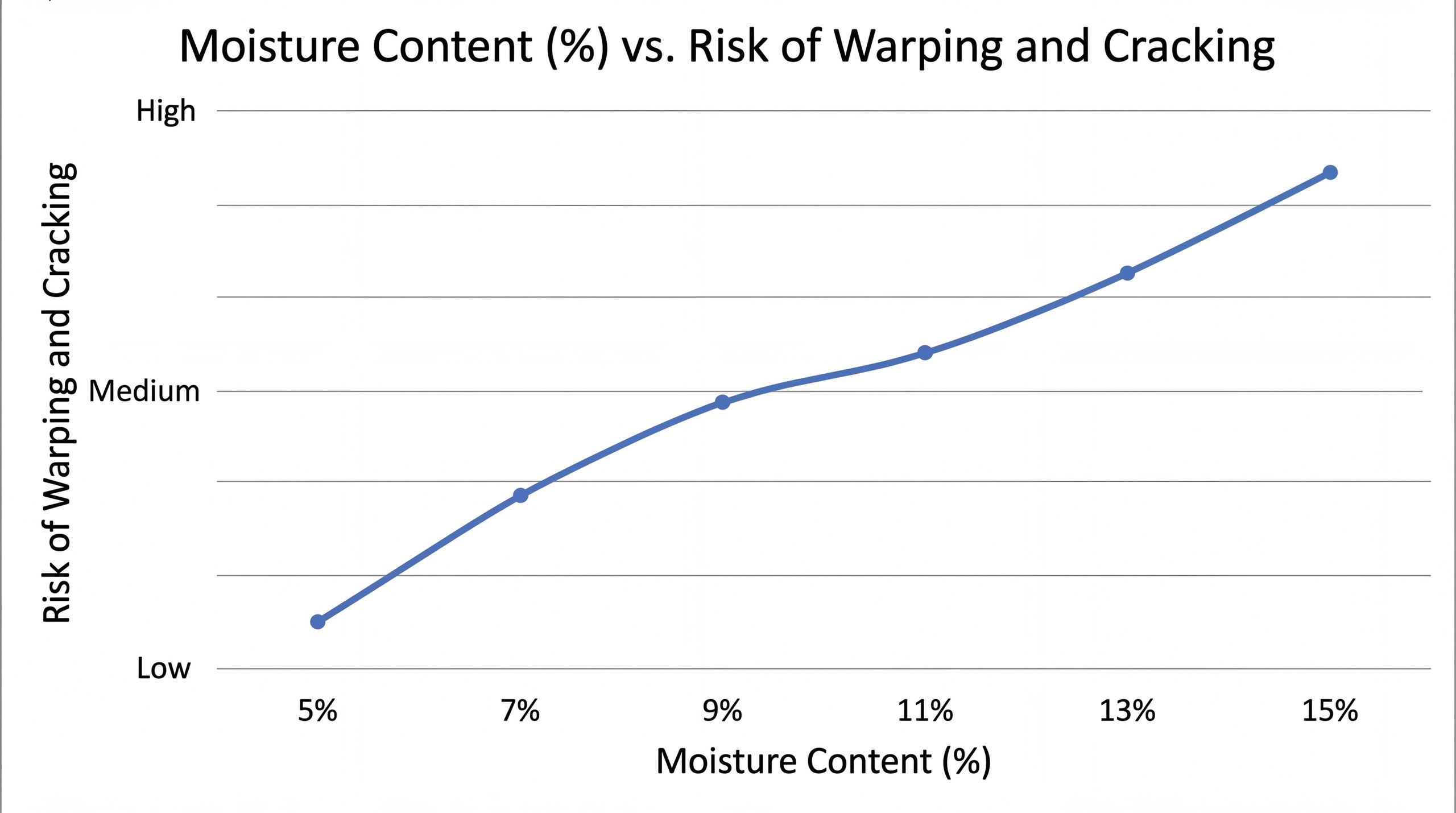
1. Poor Drying Can Create Problems After Delivery
Pine may look stable during sampling, but a hidden moisture imbalance can appear later during ocean freight, warehouse storage, or final use. Doors may become misaligned, drawers may stick, panels may cup, and joints may open. This is why buyers should ask how moisture is checked before machining, before assembly, and before packing.
2. Climate Changes Can Expose Weak Production Control
Furniture may move from a humid production area to a dry warehouse, a heated indoor room, a coastal market, or a seasonal climate. Pine responds to those changes faster than many denser woods. If the structure does not allow controlled movement, pressure can build inside panels, frames, and glued joints.
3. Moisture Records Matter More Than Verbal Promises
A supplier does not need to make dramatic claims about pine stability. The buyer needs clear moisture records, storage control, and inspection checkpoints. These checks should be part of a wider furniture quality control process, not a last-minute inspection after the goods are already packed.
| Moisture Risk | What May Happen | What Buyers Should Check |
|---|---|---|
| Uneven drying | Warping, cupping, surface cracks | Moisture records before machining |
| Climate mismatch | Doors shift, drawers stick, joints open | Target market and storage conditions |
| Poor storage | Moisture reabsorption before packing | Finished-part storage environment |
| No batch records | Inconsistent bulk performance | Inspection logs and random checks |
Key Takeaway: Moisture control is one of the main reasons some pine furniture lasts while similar-looking products fail after shipment.
V. How Do Knots and Resin Affect Pine Furniture Quality?
Pine wood is good for furniture when knots and resin are managed through grading, layout, sealing, and finish control. If these details are ignored, pine furniture can develop yellow stains, weak spots, visual inconsistency, or customer complaints after bulk delivery.
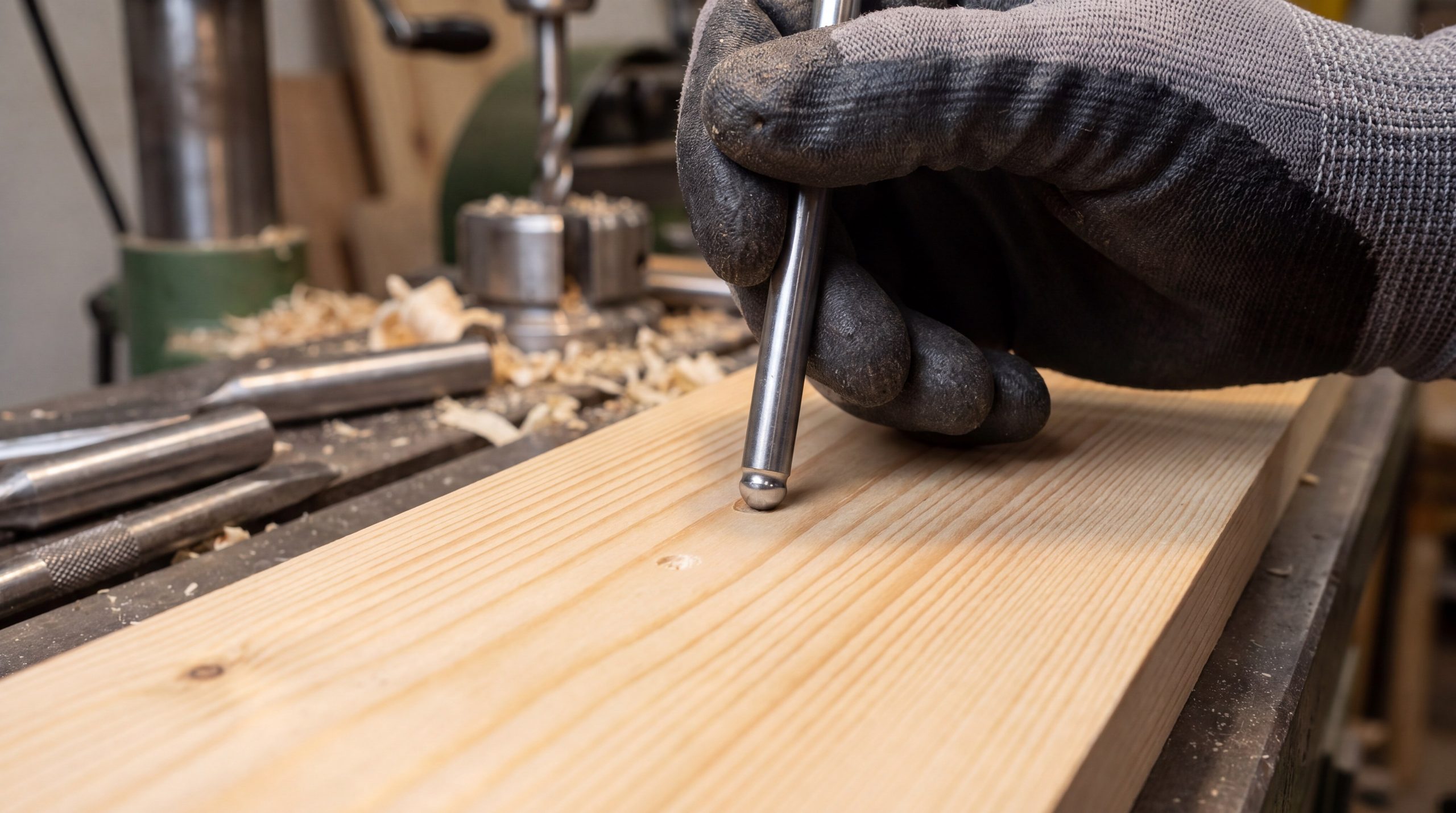
1. Knots Are Both Visual and Structural Issues
Knots are not always defects, especially in rustic furniture. The problem begins when the knot size, type, location, and quantity are not clearly controlled. A knot on a decorative panel may be acceptable, while a loose knot near a joint, screw position, or load-bearing edge can create a much higher risk.
2. Resin Bleed Can Damage Light-Colored Finishes
Pine contains natural resin that may move toward the surface under heat, sunlight, or indoor temperature changes. On white, cream, or light painted furniture, this can show as yellowing or stains around knot areas. The buyer should confirm whether the factory uses knot sealing, suitable primers, and sample aging checks for painted pine furniture.
3. Limit Samples Help Control Bulk Appearance
A single approved sample cannot define every acceptable knot, grain, and color variation in mass production. Buyers should request limit samples that show acceptable and unacceptable visual ranges. This helps prevent disputes when bulk furniture looks more rustic, darker, or more irregular than the original sample.
| Knot or Resin Issue | Lower-Risk Control | Higher-Risk Situation |
|---|---|---|
| Visible knots | Approved visual range | Random knot quantity |
| Loose knots | Excluded from key surfaces and joints | Used near screw or load areas |
| Resin bleed | Knot sealing and suitable primer | Light paint without resin control |
| Batch appearance | Limit samples approved before bulk | Only one perfect sample approved |
Key Takeaway: Pine’s natural knots can support a warm look, but they must be controlled before bulk production to avoid visual and structural complaints.
VI. Why Do Pine Joints and Structures Need Extra Attention?
Pine wood is good for furniture when the structure is designed around softer fibers and natural movement. Weak fasteners, thin parts, poor joint design, or cross-grain stress can turn an acceptable sample into loose, noisy, or unstable furniture after repeated use.
1. Softwood Fibers Can Affect Screw Holding
Pine can hold screws and fittings well when pilot holes, fastener type, and material thickness are correctly matched. Problems appear when standard hardware is used without considering softer fibers. In knock-down furniture, this can lead to stripped holes, loose connectors, or repeated assembly complaints.
2. Load-Bearing Parts Need Better Reinforcement
Pine is often suitable for frames, panels, storage items, and bedroom furniture, but stress points need careful engineering. Bed rails, chair legs, shelf supports, and corner joints should not depend only on basic screws or thin sections. These details are also common failure points in wooden furniture manufacturing when the structure, material, and assembly method are not aligned early enough.
3. Structure Should Allow Natural Wood Movement
Pine panels expand and contract with climate changes. If a factory fixes panels too tightly or uses cross-grain glue-ups without movement allowance, cracking and frame distortion become more likely. Floating panels, proper gaps, and thoughtful grain direction help the furniture stay functional after shipment.
| Structural Area | Common Risk | Better Control |
|---|---|---|
| Screw positions | Stripped holes or loose fittings | Correct pilot holes and stronger hardware |
| Corners and frames | Racking or wobbling | Reinforced joints and thicker parts |
| Panels | Cracking or cupping | Movement allowance and proper grain direction |
| KD assembly | Customer assembly complaints | Tested hardware fit before bulk production |
Key Takeaway: Pine furniture should not be judged only by material cost or surface appearance; joint design and movement control decide whether the product stays stable in real use.
VII. Why Is Pine Finishing More Difficult Than It Looks?
Pine wood is good for furniture when the finishing process controls uneven absorption, resin-heavy areas, and batch color differences. Without proper sealing and finish testing, pine can look blotchy, yellow, uneven, or cheaper than the approved sample.
1. Uneven Absorption Can Cause Blotchy Stains
Pine does not always absorb stain evenly because density can vary across the same board. A stained sample may look warm and natural, while bulk production may show dark patches, cloudy areas, or uneven color. Buyers should confirm whether the factory uses pre-stain conditioners, sealers, or finish samples before approving stained pine furniture.
2. Painted Pine Needs Better Surface Preparation
Painted pine can look clean and modern, but resin and knots make surface preparation more demanding. Light colors are more exposed because yellowing and shadow marks become easier to see. A reliable finish plan should include sanding control, knot sealing, suitable primer, and approval samples that reflect real production material.
3. Batch Color Must Be Controlled Before Bulk Production
A pine bed, cabinet, or shelf line may be produced in separate batches across different months. If the factory does not control base wood color, stain mix, sanding level, and coating thickness, repeat orders may look different from the first shipment. This is one of the most common reasons customers feel the delivered product does not match the photos.
| Finishing Issue | Why It Happens | Buyer Check |
|---|---|---|
| Blotchy stain | Uneven absorption across pine fibers | Pre-stain sealer and finish sample |
| Yellowing on paint | Resin or knots under light coating | Knot sealing and primer system |
| Color mismatch | Different batches or sanding levels | Approved color range and limit samples |
| Weak adhesion | Poor sanding or wrong primer | Cross-cut or adhesion checks |
Key Takeaway: Pine finishing quality depends less on the final color choice and more on how well the factory controls absorption, resin, sanding, and batch matching.
VIII. When Should Buyers Avoid Pine Furniture?
Pine wood is good for furniture in many residential and light-use applications, but it is not the safest choice for every project. Buyers should avoid or upgrade specifications when the product faces heavy impact, strict luxury expectations, or environments that magnify pine’s natural weaknesses.
1. Heavy Commercial Use Needs Caution
Pine can work in some commercial projects, but the design must match the use level. Restaurant seating, hotel furniture, dormitory furniture, and shared-use spaces put more stress on joints, surfaces, and fasteners. If the product will be dragged, stacked, cleaned frequently, or loaded heavily, pine needs a stronger structure and finish control.
2. Luxury Positioning May Create Expectation Gaps
Pine can look warm and natural, but it does not always match customer expectations for premium hardness and long-term surface perfection. If a brand sells furniture as a luxury investment piece, buyers may expect denser hardwoods, fewer knots, and stronger resistance to dents. Using pine in that context requires very clear positioning and careful design.
3. High-Risk Designs Should Be Reviewed Early
Some designs make pine problems more visible. Large flat tabletops, thin shelf panels, sharp edges, long unsupported spans, and tightly fixed cabinet panels can all increase risk. Buyers should review drawings before sampling and confirm whether the factory has adjusted thickness, joint method, edge design, and movement allowance for pine.
| Use Scenario | Pine Risk Level | Recommended Decision |
|---|---|---|
| Bedroom furniture | Lower | Suitable with normal controls |
| Storage cabinets | Medium | Check panel stability and hardware |
| Luxury dining tables | Higher | Consider harder wood or stronger design |
| Heavy-use seating | Higher | Require reinforced structure or alternative material |
Key Takeaway: Pine should not be rejected automatically, but it should be avoided when the use case demands hardness, impact resistance, or luxury durability beyond what the design can support.
IX. What Sourcing Red Flags Should Buyers Watch For?
Pine wood is good for furniture only when the supplier controls raw material selection, drying, structure, finishing, and batch records. Red flags usually appear before shipment, but buyers miss them when they focus only on price, photos, or a polished sample.
1. Unclear Wood Grade Creates Hidden Risk
If the supplier cannot explain which grade of pine is used for visible faces, structural parts, and hidden components, the order becomes harder to control. Mixed grades may create uneven appearance, weak knots, or inconsistent machining. Buyers should ask for clear grading rules before sample approval, not after bulk production starts.
2. Weak Moisture and Kiln Records Are Warning Signs
Pine furniture depends heavily on drying control. A supplier who only says the wood is “dry enough” is not giving buyers usable evidence. Moisture checks, storage practices, and batch records should be reviewed as part of the wider furniture quality inspection checklist for bulk orders, especially before packing and shipment.
3. A Perfect Sample Can Hide Bulk Production Problems
A sample may use better boards, slower finishing, and more careful assembly than the final order. This does not always mean the supplier is acting badly; it often means the production standard was not defined clearly enough. Buyers need limit samples, material rules, finish standards, and inspection points that apply to bulk production.
| Red Flag | Possible Result | Better Control |
|---|---|---|
| No clear grade rule | Mixed knots and color variation | Define grade by visible and structural parts |
| No moisture record | Warping or cracking after delivery | Check batch moisture logs |
| Only one perfect sample | Bulk order looks different | Approve limit samples |
| Vague finish process | Blotching, yellowing, peeling | Confirm sealer, primer, and topcoat method |
Key Takeaway: Most pine sourcing risks can be reduced before production when buyers define standards clearly and ask for evidence instead of relying on verbal reassurance.
X. Is Pine the Right Choice for Your Furniture Project?
Pine wood is good for furniture when the project needs real wood appeal, controlled cost, lighter weight, and a natural or painted look. It becomes a weaker choice when the product requires high impact resistance, luxury durability, or very tight visual uniformity across large batches.
1. Pine Works Best for the Right Market Position
Pine is often a practical choice for entry-level solid wood furniture, rustic collections, painted furniture, bedroom pieces, nursery items, shelving, and storage products. It gives buyers a natural wood story without the cost pressure of many hardwoods. The match is strongest when the expected use is moderate and the design accepts pine’s natural character.
2. Pine Should Be Compared Against Real Alternatives
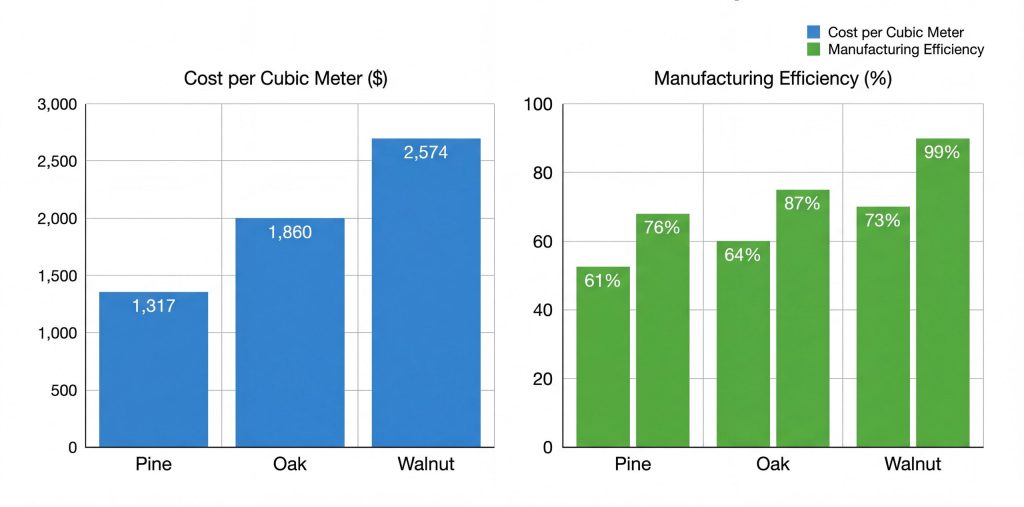
Pine should not be compared only against oak or walnut. For many projects, the real comparison may be rubberwood, MDF, veneer, plywood, or mixed-material structures. Buyers sourcing from China can use a broader furniture sourcing from China strategy to compare material cost, structure, finish requirements, packaging, MOQ, and after-sales risk before choosing one wood species.
3. The Final Decision Should Follow a Risk Checklist
Before placing a pine furniture order, buyers should confirm the product use, target market climate, pine grade, knot limits, drying records, joint structure, finish system, and bulk inspection plan. If these details are clear, pine can be a controlled and commercially useful material. If they remain vague, the low price may create a higher risk later.
| Project Condition | Pine Decision | Reason |
|---|---|---|
| Cost-sensitive solid wood line | Suitable | Good value when quality is controlled |
| Rustic or painted style | Suitable | Natural grain and finish options fit well |
| Heavy impact use | Use caution | Soft surface and fastener risk increase |
| Luxury durability positioning | Consider alternatives | Buyer expectations may exceed pine’s limits |
Key Takeaway: Pine is not a universal answer, but it can be a strong choice when the furniture category, quality controls, and buyer expectations are aligned before production.
Frequently Asked Questions
1. Can I use pine furniture in humid climates?
Yes, but only with proper drying, finish coverage, and construction that allows wood movement. Humid climates increase the risk of swelling, warping, and joint stress, so buyers should confirm moisture control and panel design before bulk production.
2. What’s the best use for pine furniture?
Pine is best for bedroom furniture, storage furniture, painted pieces, children’s furniture, shelving, and rustic-style collections. It is less suitable for heavy commercial seating, luxury dining tables, or products that require very high surface hardness.
3. How do I know if pine furniture will dent easily?
Pine is softer than many hardwoods, so dents are more likely in high-impact areas. Buyers should check the product use, coating system, edge design, and whether the surface will face repeated contact during daily use.
4. Can pine furniture be painted white without yellowing?
Yes, but the factory must control knots and resin before painting. White and light finishes need proper knot sealing, suitable primer, and sample checks because resin bleed can create yellow marks after shipment or use.
5. What should I check before placing a pine furniture order?
Check wood grade, knot limits, moisture records, joint design, finish system, packaging method, and bulk inspection standards. These items matter more than a single attractive sample because pine quality depends on production control.
Closing note
Pine is not a shortcut material. It works when grade, moisture, structure, finish, packaging, and inspection standards are defined before production starts. At EverWoody, we work with buyers to turn these risk checks into practical sampling, production, and shipment standards for more stable bulk orders.