
Rubberwood furniture problems often appear after shipment, not during sampling. Many buyers only discover cracking, color inconsistency, or unstable assembly after bulk production has already been completed.
Rubberwood furniture quality varies mainly because factories use different standards for lumber grading, moisture control, sanding consistency, bonding structure, and finishing processes. Small differences during production can create major differences in long-term stability, appearance consistency, and defect rates during bulk orders.

I. Is Rubberwood Durable Enough for Everyday Furniture?
Rubberwood can be durable enough for everyday furniture when moisture control, joint stability, and lumber grading remain consistent during production. Most durability problems appear when factories reduce drying time, mix lumber grades, or simplify internal construction during mass orders.
Many buyers judge durability based on sample appearance alone. However, long-term performance usually depends more on production consistency than on the rubberwood material itself.
This is why similar-looking products can perform very differently after several months of daily use.
Key Physical Properties of Premium Rubberwood:
- Janka Hardness: Roughly 960 lbf, placing it between white pine and black walnut.
- Grain Texture: Straight to slightly interlocked, providing a uniform aesthetic for modern designs.
- Staining Capacity: Its naturally light blonde color allows it to accept a wide range of finishes without “bleeding.”
| Property | Rubberwood | White Oak | Pine (Radiata) |
|---|---|---|---|
| Density (kg/m3) | 560 – 640 | 750 – 770 | 450 – 520 |
| Janka Hardness | 960 | 1360 | 710 |
| Shrinkage Factor | Low (Very Stable) | Moderate | High |
| Sustainability | Very High (Byproduct) | Moderate | High (Plantation) |
II. Why Do People Have Completely Different Opinions About Rubberwood?
People have completely different opinions about rubberwood because they are often comparing different production standards under the same material name. Rubberwood furniture can be stable, affordable, and practical when drying, grading, bonding, and finishing are controlled properly.
The problem starts when buyers judge only the wood species, product photos, or sample appearance. These signals do not show whether mass production will use the same moisture control, joint strength, coating thickness, or material selection.
That is why rubberwood furniture should be evaluated as a production-controlled product, not just as a material choice.
1. Why Do Some Rubberwood Products Last Much Longer Than Others?
Rubberwood can perform well when the wood is properly dried, selected, glued, sanded, sealed, and assembled. A stable product usually has controlled moisture content, clean joints, even finishing, and enough structural support for its intended use.
Lower-quality rubberwood furniture often looks acceptable at first, but problems appear later. Short drying time, uneven moisture, weak glue, thin coating, poor sanding, or loose assembly can lead to cracking, odor, dents, surface damage, or unstable joints.
2. Why Can Similar Rubberwood Furniture Perform Completely Differently?
Similar appearance does not mean similar performance. Rubberwood furniture made with better drying control and stronger construction may stay stable for years. A cheaper version may fail quickly under the same indoor conditions.
This difference matters because rubberwood is often used in price-sensitive furniture categories. When suppliers reduce cost through faster drying, weaker glue, thinner finishing, or lower-grade panels, the product may still look good in photos but perform poorly in real use.
That is why rubberwood furniture should not be judged only by the material name. The better question is how the material was processed and controlled before it became furniture.
III. What Makes Rubberwood Furniture Quality So Inconsistent?
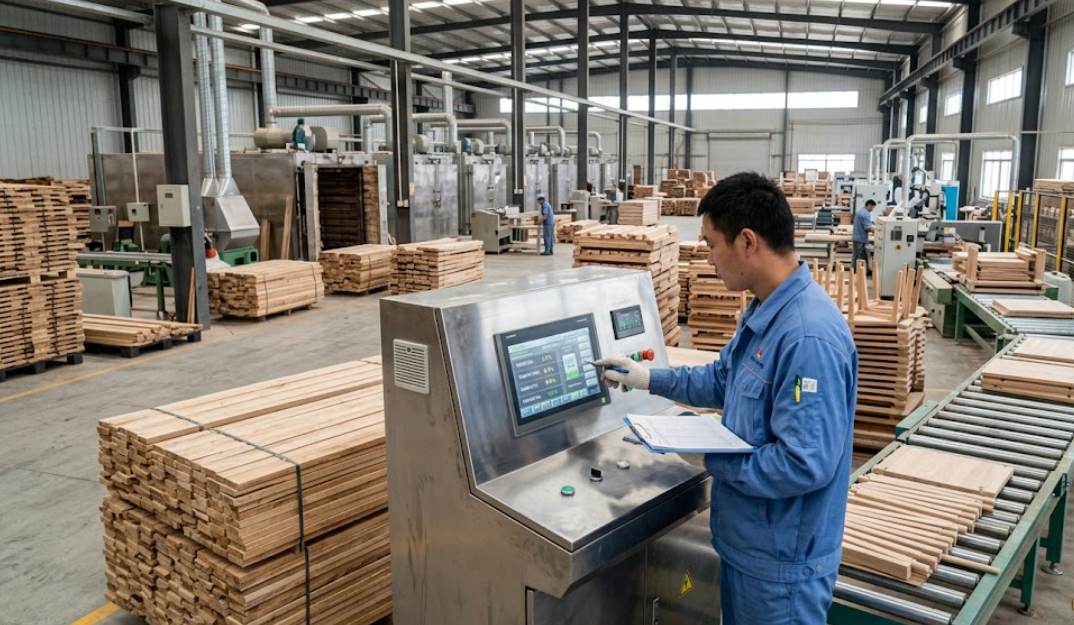
Rubberwood furniture quality becomes inconsistent when factories apply different standards for drying, grading, joint construction, sanding precision, and finishing stability during production. The wood species may remain the same, but production control usually determines whether the final furniture stays stable after long-term use.
Many buyers evaluate rubberwood furniture mainly through samples, photos, or surface appearance. However, these signals rarely show whether moisture movement, bonding consistency, or internal structural stability will remain controlled during full container production.
This is where many sourcing problems quietly begin to develop.
1. Why Do Similar Rubberwood Products Perform So Differently?
Many rubberwood furniture products look nearly identical during sampling but behave very differently after several months of use. In most cases, the difference comes from production consistency rather than from the rubberwood material itself.
Factories may use different lumber grading systems, drying cycles, internal reinforcements, or coating thicknesses even when products share similar designs. These small production differences often become visible only after furniture experiences seasonal humidity changes, repeated assembly, or long-distance transportation.
The following production gaps usually create the largest quality differences during mass orders.
- Mixed lumber grades inside the same production batch
- Uneven moisture content before assembly
- Different sanding precision between workers or workshops
- Thin finishing layers with weak surface protection
- Simplified internal structures during bulk production
- Inconsistent glue application near joints and panels
This is also why stable repeat production matters more than attractive samples alone.
Before comparing quotations, buyers usually need to understand how each wooden furniture manufacturing process affects long-term consistency, especially when samples move into bulk production.
| Production Area | Stable Production Standard | Inconsistent Production Standard |
|---|---|---|
| Lumber grading | Controlled and consistent | Mixed material selection |
| Moisture control | Stable drying process | Uneven internal moisture |
| Joint assembly | Reinforced structure | Simplified connections |
| Surface finishing | Consistent coating thickness | Uneven protection layers |
| Batch consistency | Similar between cartons | Visible variation between batches |
And the impact becomes even more visible once larger panels and structural bonding enter production.
2. Which Production Details Usually Create Long-Term Problems?
Long-term rubberwood furniture problems usually begin inside hidden production details rather than visible surface defects. Many risks remain difficult to identify during sampling because they develop slowly after assembly, transportation, or environmental changes.
For example, furniture may initially appear smooth and stable while internal moisture remains uneven inside thicker panels or finger-jointed components. Once products enter dry indoor environments or seasonal climate changes, internal stress movement may gradually create cracking, deformation, or loose joints.
Buyers often focus heavily on appearance approval during early sourcing stages. However, production consistency usually depends more on hidden control points that remain difficult to verify through finished product photos alone.
For larger furniture pieces, this directly affects structural stability and bonding performance.
IV. Why Do Rubberwood Joints and Panels Fail Over Time?
Rubberwood joints and panels usually fail over time when moisture movement, bonding consistency, or structural reinforcement were not properly controlled during production. Many stability problems remain hidden during sampling and only appear after repeated use, transportation, or seasonal humidity changes.
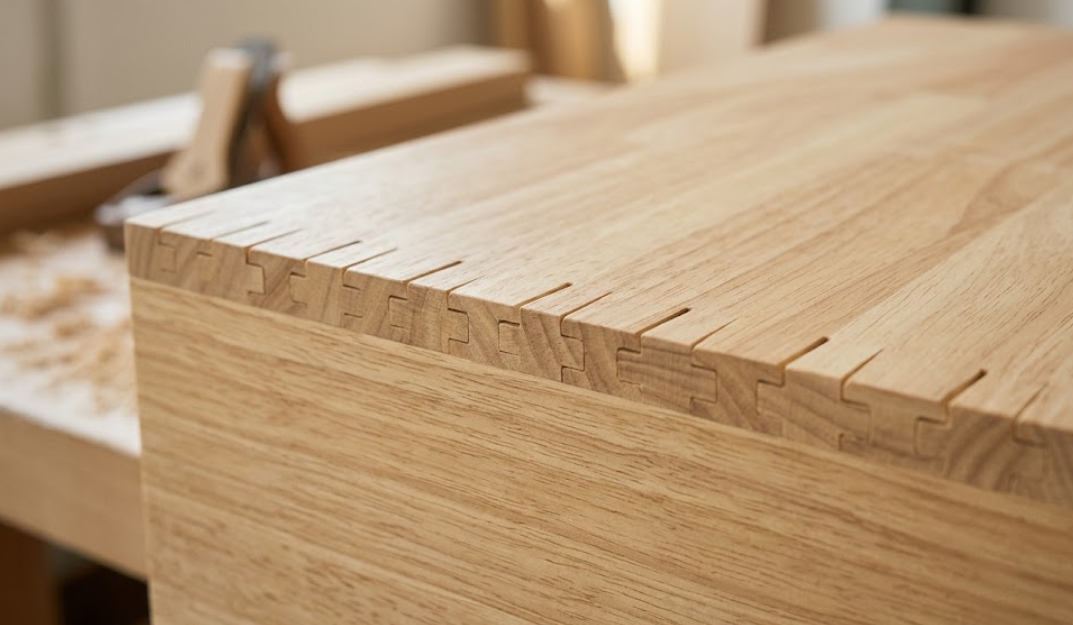
Large panels, finger-jointed boards, and load-bearing connections often experience the highest internal stress during long-term use. If drying stability or glue distribution becomes inconsistent, furniture may gradually develop loose joints, visible gaps, surface cracking, or structural movement months after delivery.
This is why structural stability should be evaluated as a production control issue rather than a simple material characteristic.
1. Which Joint Problems Usually Reduce Furniture Stability?
Many rubberwood furniture problems begin inside connection areas that remain difficult to evaluate through surface appearance alone. Joint structure, glue consistency, and reinforcement methods often determine whether furniture stays stable after long-term daily use.
The following structural problems usually create the highest risk of instability during long-term use.
- Weak reinforcement around load-bearing joints
- Uneven glue distribution inside bonding areas
- Finger-joint gaps becoming visible over time
- Loose screw positioning after repeated assembly
- Thin internal support structures under larger panels
- Joint alignment differences between production batches
These problems may remain invisible during early inspection but gradually appear once products experience transportation stress, seasonal humidity changes, or repeated use.
Before evaluating furniture durability, buyers usually need to understand how structural consistency affects long-term performance.
| Structural Area | More Stable Construction | Higher Long-Term Risk |
|---|---|---|
| Joint connection | Reinforced and aligned | Loose or simplified |
| Glue application | Even and controlled | Uneven bonding areas |
| Finger joints | Tight and consistent | Visible separation gaps |
| Load-bearing zones | Additional reinforcement | Minimal support structure |
| Assembly precision | Stable positioning | Inconsistent alignment |
Structural stability often becomes more important as furniture size and load requirements increase.
2. Why Do Large Panels Create More Long-Term Risk?
Large rubberwood panels usually create more long-term risk because wider surfaces experience stronger moisture movement and internal stress changes over time. Stability problems often become more visible after transportation, warehouse storage, or seasonal environmental changes.
This becomes especially important in tabletops, cabinet sides, shelving systems, and wider structural components where expansion and contraction remain difficult to control consistently during production.
The following situations usually increase long-term panel instability risks.
- Panels assembled before moisture stabilizes fully
- Uneven wood density inside wider glued panels
- Insufficient expansion allowance during assembly
- Thin support structures under large surfaces
- Surface finishing that seals unevenly across panels
This is also why larger furniture pieces often reveal production consistency problems faster than smaller decorative products.
V. Why Does Finishing Make Such a Big Difference in Rubberwood Furniture?
Finishing makes a major difference in rubberwood furniture because surface protection directly affects moisture stability, color consistency, scratch resistance, and long-term appearance during daily use. Many finishing problems remain difficult to identify during sampling and only become visible after transportation, storage, or repeated cleaning.
Rubberwood naturally contains visible grain variation and absorbs coatings differently depending on density, sanding precision, and moisture balance. If finishing processes become inconsistent during production, furniture may gradually develop uneven color tone, surface roughness, coating separation, or visible patch repair areas over time.
This is why finishing quality should be evaluated as part of production consistency rather than surface appearance alone.
1. Why Do Some Rubberwood Surfaces Age Much Faster?
Some rubberwood furniture surfaces age faster because coating thickness, sanding precision, drying stability, and sealing consistency were not controlled evenly during production. Surface appearance may initially look acceptable while long-term protection remains unstable underneath.
This becomes especially common when factories reduce sanding steps, simplify coating layers, or accelerate drying schedules during larger production runs. Small process differences often become much more visible after furniture enters dry indoor environments or experiences repeated cleaning and daily friction.
The following surface conditions usually indicate weaker long-term finishing stability.
- Uneven color absorption across larger panels
- Rough grain texture appearing after several months
- Thin coating layers near corners or edges
- Visible patch repairs under direct lighting
- Surface becoming dry or chalky over time
- Coating separation around joints or panel edges
These finishing problems often develop gradually instead of appearing immediately after production.
Before approving samples, buyers usually need to evaluate whether finishing consistency can remain stable during mass production.
And surface consistency often becomes even harder to maintain once production volume increases.
2. Why Can Samples Look Better Than Bulk Production?
Samples often look better than bulk production because factories usually spend more time controlling sanding precision, color adjustment, coating consistency, and visual inspection during early development stages. Mass production conditions may not always maintain the same level of finishing attention across every batch.
This difference becomes especially visible when furniture includes larger surfaces, natural color variation, curved edges, or multi-step coating processes that require higher labor consistency.
Many buyers focus heavily on sample appearance approval while overlooking whether the same finishing workflow can remain stable during full production volume.
This is also why finishing consistency should be verified across production batches rather than judged through a single sample alone.
VI. Why Do Rubberwood Furniture Prices Vary So Much?
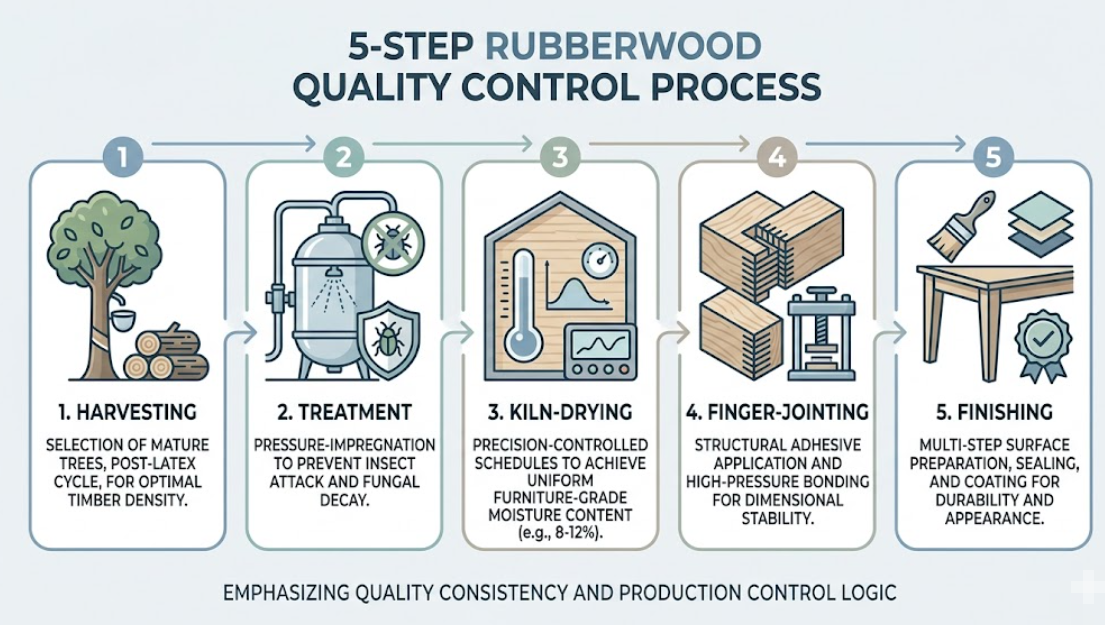
Rubberwood furniture prices vary because factories use very different standards for lumber grading, moisture control, structural reinforcement, finishing consistency, and production efficiency. Products may look similar in photos while carrying completely different long-term stability risks during mass production.
Price differences often become larger when furniture includes wider panels, complex structures, multi-step finishing, or tighter consistency requirements between production batches. In many cases, lower quotations come from simplified production control rather than from the rubberwood material itself.
This is why rubberwood furniture pricing should be evaluated together with production standards instead of appearance alone.
1. Which Production Factors Usually Affect Pricing Most?
Several hidden production variables can significantly affect rubberwood furniture pricing even when products share similar dimensions or designs. Many cost differences come from processing stability, labor consistency, and material selection standards rather than visible appearance changes.
For example, factories may use different drying cycles, sanding precision levels, internal reinforcement structures, or coating processes depending on target price range and production efficiency requirements.
The following production areas usually create the biggest pricing differences during mass production.
- Lumber grading consistency
- Moisture control and drying time
- Joint reinforcement complexity
- Sanding precision and labor hours
- Coating layers and finishing stability
- Quality control frequency during production
These differences often remain difficult to identify through finished product photos alone.
Before comparing quotations, buyers usually need to understand which production standards are included and which areas may have been simplified.
| Production Area | Higher Stability Standard | Lower Cost Simplification |
|---|---|---|
| Lumber selection | Consistent grading control | Mixed material batches |
| Drying process | Longer moisture stabilization | Shortened drying cycle |
| Structural support | Reinforced load-bearing areas | Simplified internal structure |
| Surface finishing | Multi-step coating process | Reduced finishing layers |
| Quality inspection | Multiple production checks | Limited batch verification |
And once production standards begin to diverge, long-term performance differences usually become much more visible after shipment, which is why a clear furniture quality control process matters before bulk orders are approved.
2. Why Can Similar Samples Lead to Very Different Bulk Results?
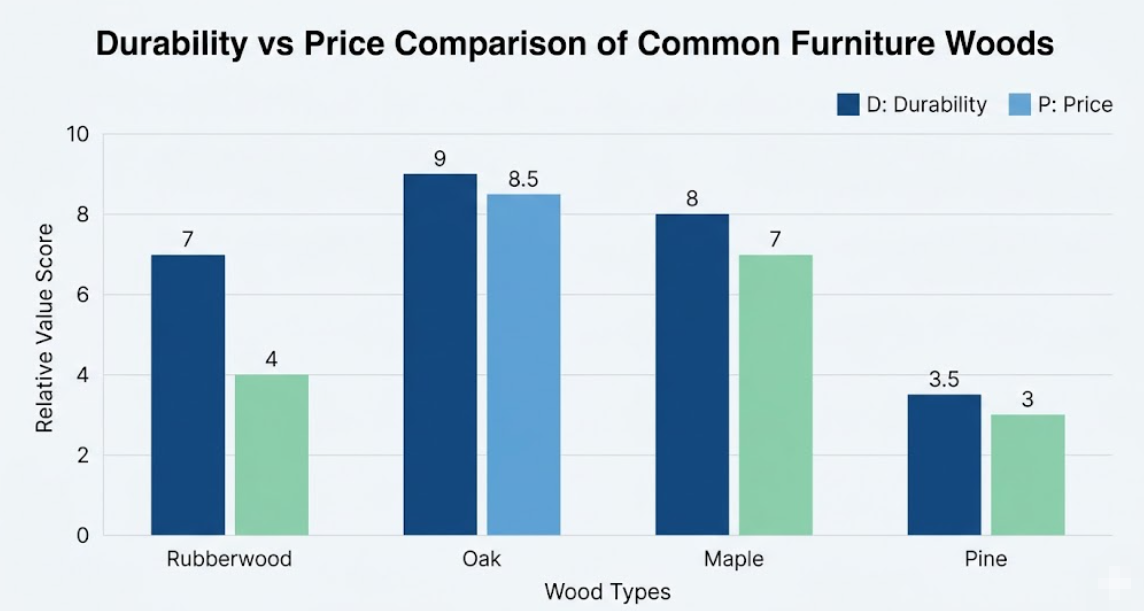
Similar rubberwood samples can lead to very different bulk results because sample production often receives more controlled material selection, slower finishing schedules, and additional inspection attention than mass production batches.
This difference becomes especially important when factories manage multiple orders simultaneously or when production schedules become compressed during peak seasons.
Many buyers compare suppliers mainly through sample appearance and quotation level. However, long-term consistency usually depends more on whether the same production standards can remain stable throughout full container manufacturing.
This is also why stable repeat production matters more than isolated sample quality alone.
Key Takeaway: Rubberwood furniture price differences usually reflect production control differences more than material differences alone. Similar-looking products may carry completely different long-term stability risks during bulk production.
VII. Is Rubberwood Furniture Suitable for Heavy Commercial Use?
Rubberwood furniture can be suitable for heavy commercial use when structural reinforcement, moisture stability, and finishing durability are designed for continuous daily pressure. Most long-term problems begin when actual usage intensity exceeds the original production standard.
Many buyers focus mainly on material hardness or furniture thickness. However, long-term performance usually depends more on structural design consistency and whether production standards match the real usage environment.
1. Which Conditions Usually Push Rubberwood Beyond Its Stable Range?
Rubberwood furniture often becomes unstable in restaurants, schools, retail spaces, or hospitality projects where products experience continuous movement, repeated loading, frequent cleaning, or long-term environmental stress.
The following conditions usually create the highest long-term durability pressure.
- Continuous daily loading without reinforcement
- Frequent movement across uneven flooring
- Repeated assembly and disassembly
- Heavy cleaning exposure around joints
- Large unsupported surfaces under weight
These risks usually develop gradually instead of appearing immediately after delivery.
| Usage Condition | More Stable Production Standard | Higher Long-Term Risk |
|---|---|---|
| Seating structure | Reinforced load-bearing joints | Simplified support structure |
| Large surfaces | Stable panel reinforcement | Minimal expansion allowance |
| Edge protection | Fully sealed finishing | Weak moisture protection |
| Daily cleaning exposure | Durable surface protection | Thin coating stability |
And once usage pressure exceeds structural limits, visible problems usually appear much faster.
2. Why Do Some Commercial Orders Develop Problems Faster?
Some commercial rubberwood furniture orders develop problems faster because residential-level production standards were applied to high-use environments without adjusting structural reinforcement or finishing durability requirements.
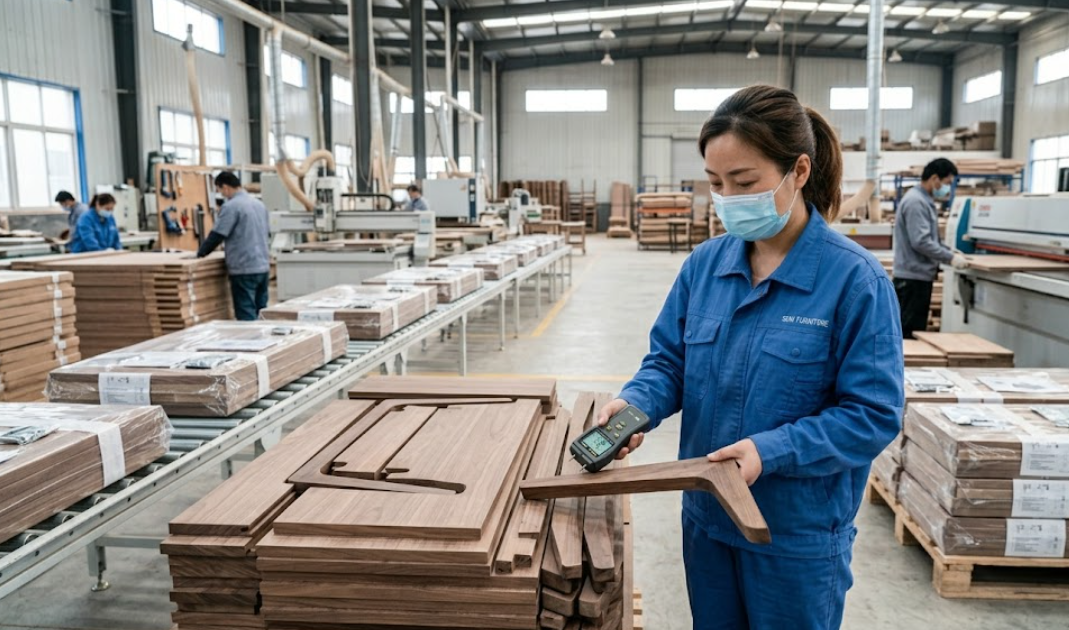
Many long-term problems do not come from the rubberwood material itself. In most cases, the real issue is a mismatch between production standards and actual usage conditions.
VIII. Why Does Some Rubberwood Furniture Last for Years While Other Pieces Fail Quickly?
Some rubberwood furniture lasts for years because moisture stability, structural reinforcement, finishing consistency, and production control remain stable throughout manufacturing. Faster failure usually begins when one or more of these areas become inconsistent during bulk production.
Many buyers assume long-term durability depends mainly on wood hardness. In reality, long-term performance usually depends more on whether production standards remain stable across transportation, environmental changes, and repeated daily use.
1. Which Production Decisions Usually Affect Long-Term Stability Most?
Several hidden production decisions can significantly affect long-term rubberwood furniture performance even when products initially appear stable during inspection.
The following production areas usually affect long-term stability most.
- Moisture stabilization before assembly
- Reinforcement inside load-bearing areas
- Glue consistency across larger joints
- Balanced finishing protection
- Stable lumber grading between batches
These details often become visible only after furniture experiences long-term environmental stress.
| Production Area | Higher Long-Term Stability | Faster Long-Term Failure Risk |
|---|---|---|
| Moisture control | Stable internal balance | Uneven moisture movement |
| Structural support | Reinforced connections | Simplified joint structure |
| Surface protection | Consistent sealing coverage | Weak edge protection |
| Batch consistency | Stable production standard | Variable processing quality |
And once several small inconsistencies begin accumulating together, long-term performance differences usually become much more visible.
2. Why Do Some Problems Only Appear Months After Delivery?
Some rubberwood furniture problems only appear months after delivery because internal stress movement, moisture adjustment, and repeated daily pressure usually develop gradually over time instead of immediately after production.
Many buyers focus heavily on sample approval and pre-shipment appearance. However, long-term stability usually depends more on whether production consistency remains strong enough to tolerate environmental and usage changes after delivery.
IX. How Can Buyers Identify More Reliable Rubberwood Furniture Suppliers?
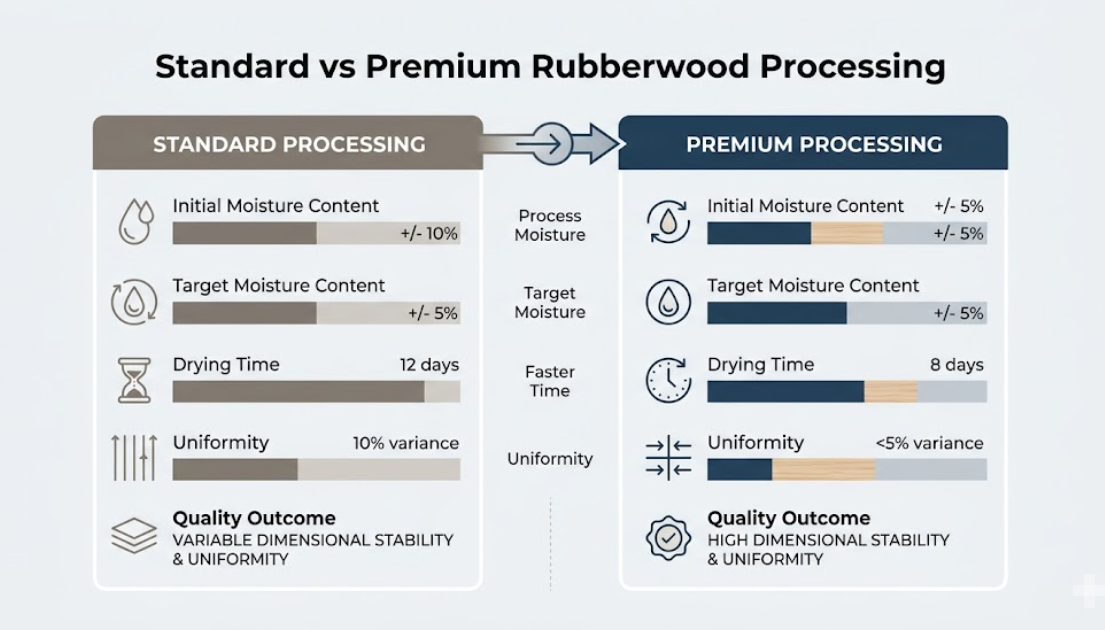
Buyers can identify more reliable rubberwood furniture suppliers by checking process control, structural standards, moisture stability, and batch repeatability instead of relying only on sample appearance or quotation level. Long-term furniture performance usually depends more on process control than on the rubberwood material itself.
Many sourcing problems begin when buyers approve samples without confirming whether the same production standards can remain stable during bulk manufacturing. A visually attractive sample does not always reflect long-term structural consistency, finishing durability, or moisture stability across full production batches.
This is why supplier evaluation should focus on repeat production control instead of isolated sample presentation.
1. Which Supplier Signals Usually Indicate Better Production Stability?
More reliable rubberwood furniture suppliers usually show stronger consistency across production details, communication accuracy, and process transparency during sourcing discussions. Stable suppliers often explain structural standards, moisture control methods, and production limitations more clearly instead of focusing only on appearance or pricing.
This becomes especially important when projects involve larger panels, repeated orders, customized specifications, or long-term commercial usage requirements.
The following supplier signals usually indicate stronger production consistency.
- Clear explanation of moisture control standards
- Consistent sample details across different products
- Stable finishing quality between production photos
- Ability to explain structural reinforcement methods
- Transparent communication about production limitations
- Consistent lumber grading across repeat batches
These signals often reveal more about long-term stability than marketing materials or factory size alone.
Before approving production, buyers usually need to confirm whether supplier standards can remain stable after scaling into full container manufacturing.
| Supplier Evaluation Area | More Reliable Signal | Higher Long-Term Risk |
|---|---|---|
| Moisture control | Clear drying standards | Vague production explanations |
| Structural details | Consistent reinforcement logic | Simplified assembly focus |
| Production consistency | Similar batch appearance | Large variation between samples |
| Finishing stability | Controlled coating consistency | Uneven surface quality |
| Communication accuracy | Clear limitation discussion | Overly broad promises |
And once production consistency becomes difficult to verify clearly, long-term quality risks usually increase much faster, especially when buyers skip a structured supplier audit checklist before confirming cooperation.
2. Which Questions Should Buyers Confirm Before Production Starts?
Buyers should confirm production consistency standards before production starts because many rubberwood furniture problems become difficult to correct after assembly, finishing, packaging, or shipment stages have already begun.
Customized specifications, repeat batches, mixed containers, and larger structural components make these confirmations more necessary.
The following confirmation points usually help reduce long-term production inconsistency risks.
- Moisture content control range during production
- Whether sample materials match bulk production standards
- Structural reinforcement methods inside load-bearing areas
- Finishing consistency requirements between batches
- Inspection checkpoints before packaging
- Replacement process if visible batch variation appears
These discussions often help define production expectations more clearly before manufacturing pressure begins increasing during bulk orders.
This is also why reliable sourcing decisions usually depend more on clarification quality than on quotation speed alone.
X. So, Is Rubberwood Actually Good for Furniture?
Rubberwood can be a good furniture material when production consistency, structural stability, moisture control, and finishing standards remain properly controlled during manufacturing. Most long-term problems come from unstable production systems rather than from the rubberwood material itself.
Many buyers evaluate rubberwood furniture mainly through appearance, pricing, or sample presentation. However, real project results depend on whether suppliers can maintain the same standards through bulk manufacturing, transportation, and daily use.
This is why similar rubberwood furniture products may produce completely different long-term results even when initial samples appear nearly identical.
1. When Does Rubberwood Become a Reasonable Furniture Choice?
Rubberwood becomes a reasonable furniture choice when production standards match the actual usage environment, structural requirements, and long-term consistency expectations of the project. Stable production control usually matters more than material reputation alone.
This matters in residential furniture, repeat retail programs, customized projects, and commercial environments where stable results affect customer satisfaction more than short-term appearance.
The following conditions usually make rubberwood furniture more suitable for long-term use.
- Stable moisture control during production
- Reinforced structural design for intended usage
- Consistent lumber grading between batches
- Balanced finishing protection across surfaces
- Clear production communication before manufacturing
- Stable repeat production capability
These factors usually influence long-term furniture performance much more than the wood species alone.
Before approving production, buyers often need to evaluate whether supplier standards match the real usage requirements of the project, especially for repeat programs involving residential furniture with stable appearance and structure requirements.
And once production standards remain aligned with actual usage conditions, rubberwood furniture can often perform much more reliably than many buyers initially expect.
2. What Should Buyers Focus on Most Before Placing Orders?
Buyers should focus most on production consistency, structural standards, and long-term stability verification before placing rubberwood furniture orders. Many sourcing risks begin when decisions rely mainly on samples, quotations, or appearance comparisons without confirming how bulk production standards will actually be maintained.
This becomes especially important during larger orders, customized projects, repeated production programs, or environments with continuous daily usage pressure.
Many long-term furniture problems do not come from a single visible defect. Instead, they usually develop gradually when several small production inconsistencies accumulate together across structure, finishing, moisture control, and assembly stability.
This is also why reliable sourcing decisions depend more on verified control points than on material assumptions alone.
FAQ Section
1.Can rubberwood furniture still be reliable if different suppliers offer very different prices?
Yes, but price differences often reflect production control differences rather than material differences alone. Similar-looking products may use very different standards for drying, reinforcement, finishing, and batch consistency.
2. How can buyers verify whether bulk production will match approved samples?
Buyers usually need to confirm moisture control standards, structural details, finishing consistency, and inspection checkpoints before production starts. Sample appearance alone rarely proves long-term production stability.
3. What usually causes rubberwood furniture problems after shipment instead of before delivery?
Most long-term problems develop gradually after transportation, environmental changes, or repeated daily use. Internal moisture movement, weak reinforcement, or inconsistent finishing often remain difficult to identify during early inspection stages.
Final check
Rubberwood furniture is not defined by the material alone. Long-term performance usually depends on whether production standards, structural requirements, and usage conditions remain properly aligned throughout manufacturing and bulk delivery.
This article focused on the real reasons rubberwood furniture quality varies between suppliers, how long-term problems usually begin, and which production details buyers should verify before placing orders.
If you are reviewing rubberwood furniture suppliers or comparing production consistency across different projects, you can continue evaluating sourcing and manufacturing standards through EverWoody.