
Many people search for the strongest wood because they want furniture that feels solid, lasts longer, and resists damage. The risk is choosing by hardness alone, then facing cracks, loose joints, or poor long-term stability.
The strongest wood is not one universal species; it depends on whether you mean hardness, bending strength, stiffness, or crushing strength. For furniture, hickory, hard maple, white oak, ash, and beech are more practical choices than rare ultra-hard woods because they balance strength, workability, availability, and real-use stability.
I. What Is Usually Called the Strongest Wood?
The strongest wood usually means the wood that performs best under a specific test, not one species that wins every furniture use case. Some woods rank high in hardness, while others perform better in bending, stiffness, crushing strength, or daily structural use. That is why the strongest wood for furniture must be judged by the stress the product will face.
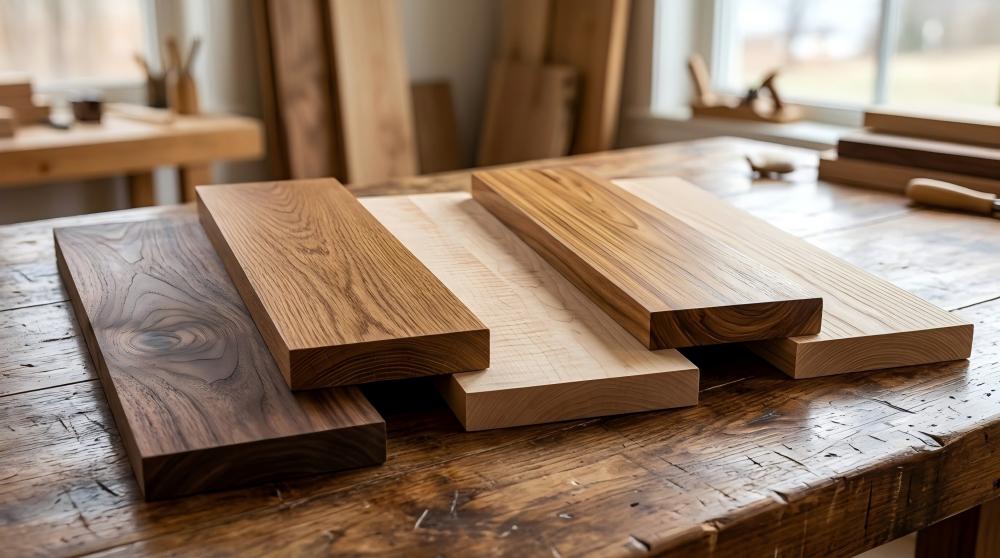
1. The Short Answer Depends on the Test
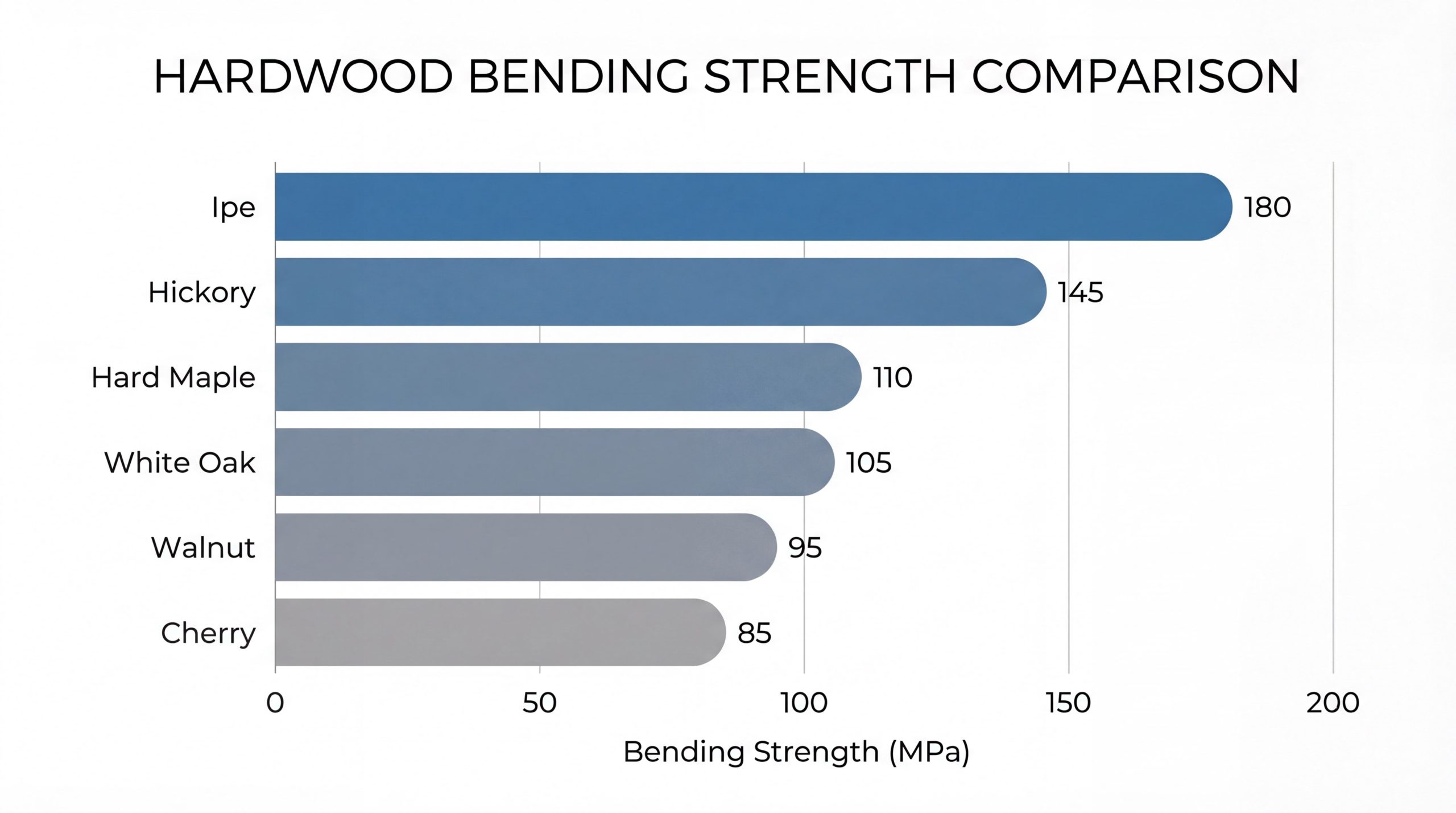
A wood can be “strong” in several different ways. A hardwood may resist dents well, but that does not automatically make it the best choice for chair legs, table frames, shelving, or cabinets. The better question is not only “which wood is strongest?” but “strongest for what use?”
Common strength meanings include:
- Hardness: resistance to dents and surface wear
- Bending strength: performance under pressure or weight
- Stiffness: resistance to flexing under load
- Crushing strength: resistance under compression
- Stability: lower movement risk after drying, machining, and assembly
2. Why Rare Ultra-Hard Woods May Not Fit Furniture
Some rare woods look impressive in strength rankings, but they are not always practical for furniture production. They may be too heavy, difficult to machine, unstable during processing, hard to source consistently, or unsuitable for repeat orders.
For furniture, strong wood also needs to be cut, dried, joined, sanded, finished, packed, and shipped without creating new problems. If the material is difficult to process, the final product may face higher risks in joints, surfaces, finish quality, or batch consistency.
3. Practical Strong Woods for Real Furniture Use
For real furniture use, practical, strong woods often matter more than extreme ranking winners. Hickory, hard maple, white oak, ash, and beech are more realistic choices because they balance strength, availability, workability, and long-term stability.
The table below shows how to read “strongest wood” in a practical way.
| Searcher’s Meaning | Better Wood Direction | Furniture Use | Risk to Confirm |
|---|---|---|---|
| Hardest surface | Hard maple, hickory, dense hardwoods | Tabletops, chairs, high-wear parts | Surface hardness does not confirm joint stability |
| Strong under load | Oak, ash, beech, selected hardwoods | Frames, legs, rails, support parts | Structure and joint design still matter |
| Most durable in daily use | White oak, hard maple, beech | Residential furniture, dining sets, cabinets | Moisture and finish must match the use environment |
| Strongest on a ranking list | Rare ultra-hard species | Usually limited furniture relevance | Supply, machining, cost, and consistency may not fit orders |
| Best practical choice | Use-based hardwood selection | Bulk furniture production | Sampling must lock grade, moisture, and structure |
Key Takeaway: The strongest wood is not one fixed answer. For furniture, the useful answer depends on how the product is used, which part carries stress, and whether the selected wood can stay consistent from sample to bulk production.
II. Is the Hardest Wood Always the Strongest?
The hardest wood is not always the strongest wood for furniture because hardness mainly describes surface dent resistance. A hard surface can still fail if the wood is brittle, poorly dried, hard to machine, or placed in a weak structure. Strength must be judged by use, load direction, joints, moisture control, and repeatable production.
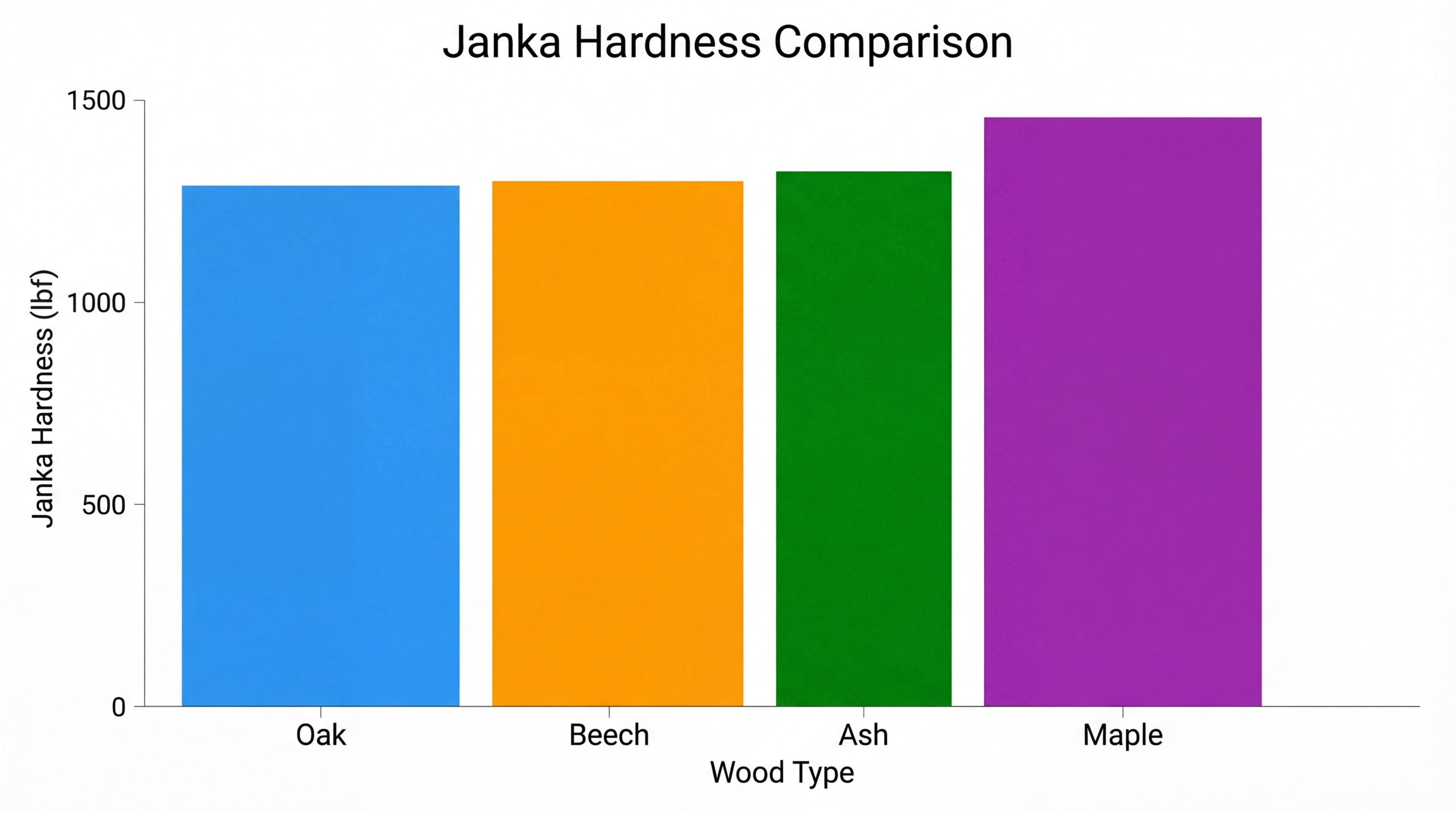
1. Hardness Mainly Means Dent Resistance
Hardness is useful when the main risk is visible surface damage. Tabletops, chair seats, armrests, and exposed edges may benefit from harder wood because these areas face repeated contact, cleaning, and handling.
2. Strength Also Means Load Control
Furniture strength depends on how pressure moves through the whole product. Chair legs, table frames, bed rails, shelves, and support parts need the wood, joint method, and hardware position to work together.
3. When Hardness Can Mislead Furniture Buyers
Hardness becomes misleading when it is treated as a full quality answer. If you are comparing material categories, this guide on hardwood vs softwood furniture gives a clearer view of how structure, moisture, and production control affect long-term performance.
Use this table to separate hardness from real furniture strength.
| Factor | What It Measures | Furniture Risk | What to Check |
|---|---|---|---|
| Hardness | Surface dent resistance | Hard surface may still have weak joints | High-touch areas and edge protection |
| Bending strength | Resistance under load | Shelves, rails, or frames may flex | Load points and support structure |
| Stiffness | Resistance to movement | Furniture may feel loose or unstable | Frame design and connection method |
| Crushing strength | Compression resistance | Legs or support points may deform | Stress points and contact areas |
| Workability | Processing behavior | Hard wood may cause machining or fitting issues | Sample and bulk repeatability |
Key Takeaway: Hardness helps judge surface wear, but it does not prove full furniture strength. A safer decision connects wood hardness with structure, joints, moisture, finishing, and repeatable bulk production.
III. Which Strong Woods Work Better for Furniture?
The strongest wood for furniture should be practical enough for real products, not just impressive on a ranking list. Hickory, hard maple, white oak, ash, and beech are more useful choices because they can support strength, machining, finishing, availability, and repeatable order control.
1. Hickory for Heavy-Use Furniture
Hickory is often chosen when impact resistance and heavy use matter more than easy processing. It fits better when the product needs:
- Higher impact resistance for stress-prone parts
- Stronger frame support in chairs or heavy-use items
- Better shock resistance in parts that face repeated force
- Clearer drying control before cutting, drilling, and finishing
2. Hard Maple for Smooth Wear Resistance
Hard maple is useful when the product needs a harder surface and a cleaner finish. It is a practical choice for furniture parts that face frequent contact, but buyers still need to check whether the surface, edge, and joint performance match the final use.
3. White Oak, Ash, and Beech for Stable Use
White oak, ash, and beech are often more realistic than rare ultra-hard woods because they fit common furniture structures better. If you are comparing strong woods for indoor product lines, residential furniture projects usually need this balance between strength, stable structure, finish quality, and repeatable production.
The table below gives a simple way to compare practical strong wood choices.
| Wood | Main Advantage | Best Use | Buyer Caution |
|---|---|---|---|
| Hickory | Strong under heavy use | High-stress parts, impact-prone areas | Confirm machining and drying control |
| Hard maple | Hard surface and smooth finish | Tabletops, seats, exposed surfaces | Check edge and joint performance |
| White oak | Strong structure and stable use | Tables, cabinets, frames | Confirm moisture and finish match |
| Ash | Good strength with workable structure | Frames, chairs, rails | Confirm board selection consistency |
| Beech | Practical strength for indoor furniture | Chairs, cabinets, painted parts | Confirm drying and movement risk |
Key Takeaway: Practical strong woods should be judged by furniture use, not by ranking fame. The better choice is the wood that can meet the product structure, finish target, and production repeatability at the same time.
IV. Why Is the Strongest Wood Not Always Best?
The strongest wood is not always the best furniture wood because furniture needs more than strength. A good material must also machine cleanly, hold joints, accept finishing, stay stable after drying, and remain available for repeat production. If one of these points fails, a stronger species can create a weaker final product.
1. Workability Affects Production Quality
Some very strong woods are harder to cut, drill, sand, glue, or finish consistently. If the production process cannot control these steps well, buyers may see rough edges, fitting issues, uneven finishing, or higher variation between sample and bulk production.
2. Heavy Wood Can Raise Handling Risk
Heavy wood can feel solid, but it may also increase pressure on joints, cartons, loading, and shipping. Before choosing a heavier species, the product should be checked for:
- whether the structure can support the extra weight
- whether knock-down parts are easy to assemble
- whether cartons can protect corners and edges
- whether the final item fits the target market’s handling needs
3. Availability Changes Cost and Consistency
A wood species may look good in theory, but still be risky if supply is unstable or grade control is unclear. If you are comparing material options beyond strength alone, this guide on best wood for furniture gives a broader way to judge use, stability, cost, and production fit.
Use this table to check when “stronger” may not mean “better.”
| Issue | Why It Matters | Lower-Risk Choice | Confirmation Needed |
|---|---|---|---|
| Difficult machining | Can affect fitting, sanding, and edges | Wood the factory can process consistently | Sample workmanship and bulk repeatability |
| High weight | Can stress joints and packaging | Species matched to product size | Structure, carton design, and loading method |
| Unstable supply | Can affect color, grade, and cost | Commonly available strong hardwood | Grade range and order consistency |
| Poor finishing fit | Can create uneven surface results | Wood matched to finish target | Finish sample and approval standard |
| Over-focus on ranking | Can ignore real furniture use | Use-based material selection | Product function and risk points |
Key Takeaway: The strongest wood is not automatically the safest choice. A better furniture material is strong enough for the intended use and practical enough for stable production, finishing, packaging, and repeat orders.
V. What Is the Strongest Wood for Furniture Parts?
The strongest wood for furniture parts depends on where the stress happens. A tabletop needs surface resistance and stability, while chair legs, rails, frames, and shelves need better load control. The safest choice is not one wood for every part, but a material decision matched to function, structure, and assembly risk.
1. Tables Need Surface and Joint Stability
For tables, strong wood must handle surface wear, weight, edge impact, and movement around joints. A dense hardwood may help the surface resist dents, but the apron, legs, fasteners, and moisture control decide whether the table stays stable after real use.
2. Chairs Need Load and Impact Control
Chairs place more stress on joints than many buyers expect. The main risk points usually appear in:
- Seat frame: movement starts when load is carried by weak joints
- Chair legs: cracking risk rises when drilling weakens the grain direction
- Back frame: repeated leaning can create joint movement
- Stretchers: loose fitting can reduce frame stability after use
3. Storage Furniture Needs Panel and Frame Balance
Storage furniture needs a different strength logic because large panels, shelves, doors, and frames move in different ways. A strong wood may still cause problems if the structure is heavy, the panels are not balanced, or the hardware fixing points are not confirmed.
The table below shows how strong wood should be matched to furniture parts.
| Furniture Part | Main Stress | Suitable Wood Direction | Inspection Focus |
|---|---|---|---|
| Tabletop | Surface wear and movement | Hard, stable hardwood | Surface finish, edge protection, moisture control |
| Table legs | Compression and side force | Strong hardwood with good machining | Joint tightness and leg alignment |
| Chair frame | Repeated load and impact | Tough, workable hardwood | Joint strength, screw position, frame balance |
| Shelves | Bending under weight | Stiff material with proper support | Span, thickness, support structure |
| Cabinet doors | Movement and appearance | Stable wood or controlled panel structure | Warping, hinge fixing, finish consistency |
Key Takeaway: The strongest wood for furniture is not chosen by species name alone. Each part faces a different stress pattern, so wood choice must be linked with structure, hardware, moisture control, and inspection points.
VI. Does Moisture Change Wood Strength in Furniture?
Moisture can change how the strongest wood performs in furniture because wood still expands, shrinks, cracks, or warps when its condition does not match the production and use environment. A strong species may look correct during sampling, but poor moisture control can weaken joints, distort panels, and create problems after shipment.
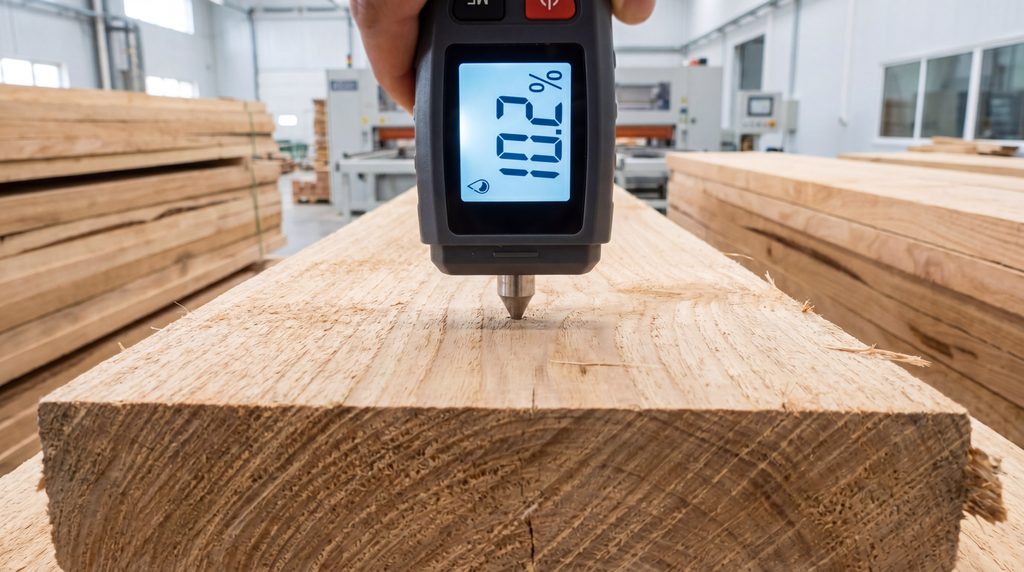
1. Strong Wood Can Still Crack or Warp
Strong wood does not remove moisture risk. Cracking, warping, raised grain, and joint loosening often appear when the wood, glue, finish, and destination environment are not aligned before production.
2. Moisture Standards Must Be Confirmed Early
Moisture control should be confirmed before cutting, assembly, and finishing, not only during final inspection. In real orders, furniture quality control works better when material condition, production process, and packing risk are checked before defects become visible.
3. Finishing Cannot Fix Poor Moisture Control
Finishing can protect the surface, but it cannot fully correct unstable wood underneath. Moisture-related risk usually appears through:
- Panel movement: doors, tops, or side panels start to deform
- Joint stress: glued or screwed areas loosen after movement
- Surface defects: coating cracks, raised grain, or uneven finish appear
- Packing damage: trapped moisture or pressure marks show after transport
The table below shows where moisture risk should be controlled.
| Risk Point | What Happens | Stage to Confirm | Evidence Needed |
|---|---|---|---|
| Wood condition | Cracking, warping, or movement | Before cutting | Moisture reading and material approval |
| Component variation | Uneven shrinkage between parts | Before assembly | Consistent checks across key parts |
| Joint area | Loosening or stress cracks | During assembly | Joint fit and glue control |
| Finish layer | Raised grain or surface cracks | Before packing | Approved finish sample and curing check |
| Packing environment | Hidden moisture or transport marks | Before shipment | Carton condition and packing review |
Key Takeaway: Moisture can turn a strong wood into an unstable furniture material. The safer choice is not only a strong species, but a controlled material condition that survives production, finishing, packing, and delivery.
VII. Why Can Strong Wood Still Fail in Furniture?
Strong wood can still fail in furniture when material strength is not matched with moisture control, joint design, processing stability, and bulk production discipline. Many problems blamed on “weak wood” actually come from unclear standards before production starts, especially when the approved sample does not fully represent the mass order.
1. Samples May Use Better-Selected Boards
A sample can look stronger than the final order if the material selection is not locked early. Better boards, slower handling, and closer finishing may create a sample that looks stable, while bulk production faces more variation in grain, moisture, color, and component matching.
2. Batch Sorting Affects Visible Consistency
Batch sorting matters because one wood species can still contain different board qualities. In real furniture production, risk often appears through:
- Mixed grain direction: parts move or finish differently
- Uneven density: load-bearing parts may feel less stable
- Color variation: finished products look inconsistent across the order
- Moisture variation: panels or joints react differently after shipping
3. Material Name Does Not Prove Final Quality
A wood species name is only the starting point, not the final quality proof. Even a common furniture material such as rubberwood can perform very differently when moisture control, joint placement, and batch consistency are not clearly managed, as shown in this guide on rubberwood furniture disadvantages.
The table below shows why strong wood can still fail after sample approval.
| Stage | Possible Difference | Risk Level | Control Action |
|---|---|---|---|
| Sample selection | Better boards used for approval | Medium to high | Lock material grade and visible standards |
| Bulk cutting | Mixed grain or density enters production | Medium | Separate key structural components |
| Assembly | Joint fit changes between batches | High | Confirm assembly method and tolerance |
| Finishing | Color or surface reaction varies | Medium | Approve finish standard by material batch |
| Packing | Heavy parts receive weak protection | Medium to high | Review carton, corner, and stacking logic |
Key Takeaway: Strong wood still needs controlled execution. The safer question is not only which wood is strongest, but whether the same material selection, drying, structure, finishing, and packing logic can survive bulk production.
VIII. What Should Buyers Check Before Choosing Wood?
Buyers should choose the strongest wood only after confirming the product use, structure, moisture control, finish target, and production repeatability. A strong species can still be the wrong choice if it does not match the product size, stress points, target price range, or bulk order control method.
1. Start From Product Use, Not Species
Wood selection should start with how the furniture will be used. A dining table, chair, shelf, cabinet, and bed frame do not carry stress in the same way, so the strongest wood on paper may not be the safest choice for every product.
2. Match Wood Choice With Structure and Finish
The wood must work with the structure and finish, not against them. A stable design usually connects these points clearly:
- Use area: indoor, outdoor, heavy-use, decorative, or storage
- Stress point: surface wear, load-bearing, bending, impact, or movement
- Structure: solid wood, frame construction, panel structure, or mixed material
- Finish target: natural look, stained finish, painted finish, or protective coating
3. Confirm Production Control Before Sampling
Sampling should confirm more than the species name. Before approving a sample, buyers should check how the material will be selected, dried, machined, assembled, finished, and packed during the real order; this is where a clear wooden furniture manufacturing process becomes useful.
Use this table before locking the wood choice.
| Question | Why It Matters | Acceptable Answer | Red Flag |
|---|---|---|---|
| Where will the furniture be used? | Use environment affects wood behavior | Wood is matched to indoor, outdoor, or heavy-use needs | Species chosen only by ranking |
| Which part carries stress? | Different parts need different strength | Stress points are identified before sampling | One wood is used for all parts without review |
| How is moisture controlled? | Strong wood can still move or crack | Material condition is checked before production | Moisture only checked at the end |
| Can the finish stay consistent? | Dense or uneven wood may react differently | Finish sample is approved on the same material | Finish is judged only by photos |
| Can bulk match the sample? | Sample quality may not represent the order | Grade, structure, and process are locked | Supplier only confirms species name |
Key Takeaway: The right strong wood is chosen through product use, not species fame. A safer decision confirms structure, moisture, finish, and bulk production control before the sample becomes the standard.
IX. How Do You Check Strong Wood Furniture?
Strong wood furniture should be checked by looking at stress points, not only by confirming the species name. The most useful inspection focuses on joints, load areas, hardware fixing, surface condition, moisture-related movement, and packaging protection. This is where strength becomes a real product result instead of a material claim.
1. Check Joints, Load Points, and Hardware
Strong wood still needs stable connections. Legs, rails, shelves, back frames, hinges, screws, and knock-down fittings should be checked because most furniture problems appear where material strength meets structure.
2. Check Finish, Edges, and Surface Damage
The surface should match the intended use, not just look good in photos. Edges, corners, sanding marks, coating consistency, and high-touch areas need close checking because harder wood can still show visible defects if machining or finishing is not controlled.
A practical inspection should focus on:
- Joint areas: loose fitting, gaps, cracks, or poor alignment
- Load points: legs, frames, shelves, rails, and support parts
- Surface zones: dents, sanding marks, coating flaws, rough edges
- Hardware fixing: screw bite, hinge position, and fitting tolerance
3. Check Packaging for Heavy Wood Furniture
Heavy wood furniture needs packaging that protects parts during handling, stacking, and transport. If the item is shipped in knock-down form, the carton, internal protection, hardware packing, and corner support should be reviewed before shipment; a clear furniture quality inspection checklist can help keep these checks aligned with the approved sample.
The table below shows where inspection should focus.
| Inspection Area | Common Risk | What to Confirm | Responsibility Boundary |
|---|---|---|---|
| Joints and frames | Loosening, gaps, or weak alignment | Fit, glue, screws, and assembly method | Supplier confirms production execution |
| Load-bearing parts | Flexing, cracking, or movement | Material direction and structure support | Buyer confirms intended use requirement |
| Surface and edges | Dents, rough sanding, uneven coating | Finish sample and visible acceptance level | Both sides align on approved standard |
| Hardware fixing | Loose screws or poor positioning | Hole position, screw bite, and fitting tolerance | Supplier follows confirmed structure |
| Packaging | Corner damage, pressure marks, missing parts | Carton strength, internal protection, hardware packing | Both sides confirm shipping method |
Key Takeaway: Strong wood furniture should be inspected where failure is most likely to appear. Species name matters, but joints, load points, finish, hardware, and packaging decide whether the finished product can match the approved standard.
X. How Do You Choose the Right Strong Wood?
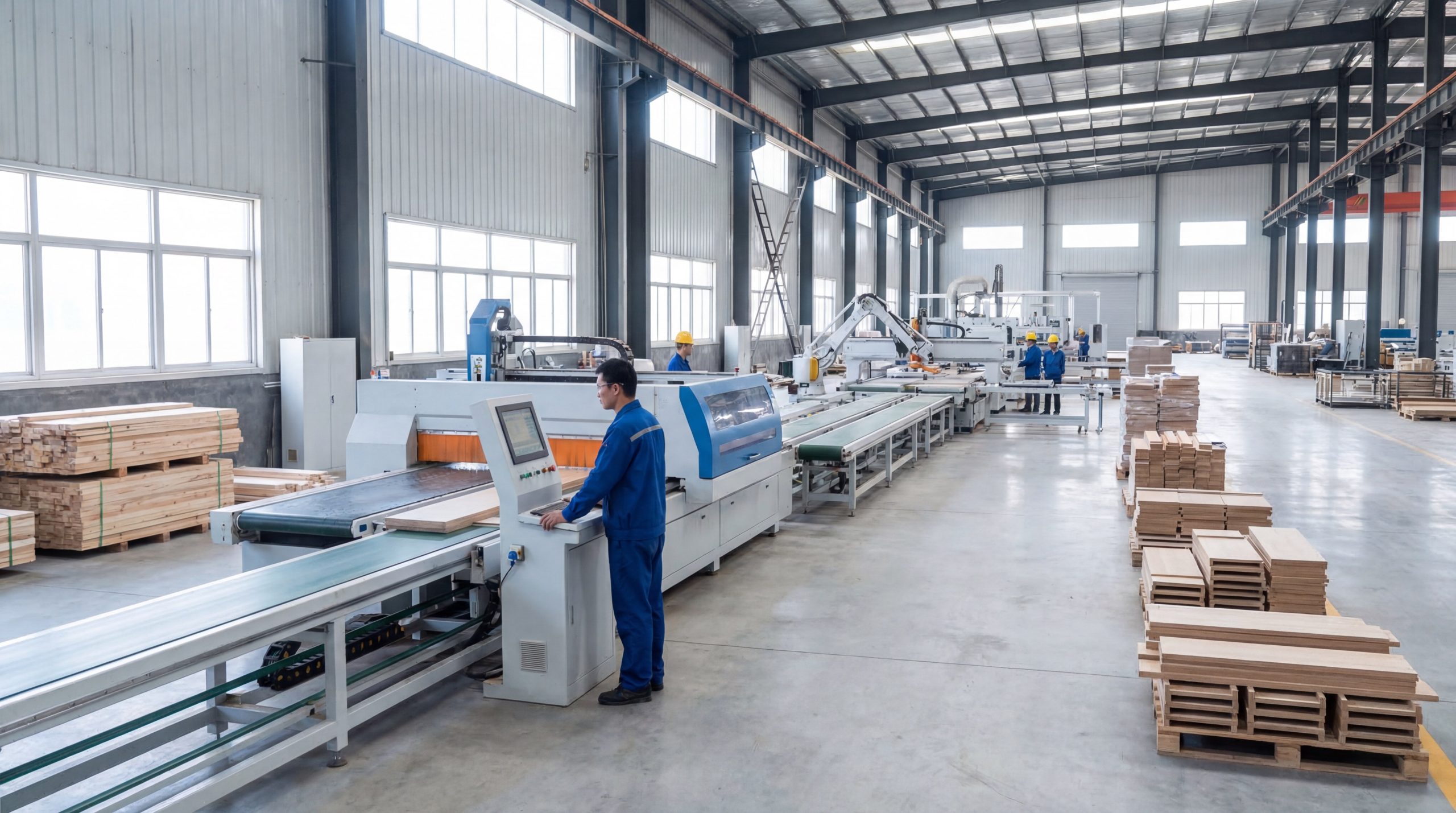
The right strong wood is chosen by matching material strength with product use, structure, finish, supply stability, and inspection control. A famous strong species may not be the safest option if it creates processing problems, unstable color, difficult finishing, or inconsistent results in repeat orders.
1. Start From Product Use, Not Species Fame
A strong wood should be selected after the product’s function is clear. Furniture used for dining, seating, storage, display, or outdoor exposure will not face the same stress, so the material decision must follow the product use instead of a ranking list.
2. Balance Strength, Stability, and Supply
A safer choice usually sits between strength and controllability. Before locking the wood, compare:
- Strength fit: can the wood handle the real stress points?
- Stability fit: can it stay controlled after drying and finishing?
- Production fit: can it be machined and assembled consistently?
- Supply fit: can the same grade be repeated for future orders?
3. Use Sampling to Lock the Standard
Sampling should turn the wood choice into a confirmed production standard. This means the sample should clarify material grade, visible color range, moisture control, structure, finish, hardware fixing, and packaging logic before bulk production starts.
If the same material still creates defects later, the issue often sits in control details rather than the species name alone. A review of common wooden furniture quality issues can help connect material choice with visible problems buyers may need to prevent.
Use this table to make the final wood decision.
| Buyer Goal | Better Wood Direction | Risk to Avoid | Next Action |
|---|---|---|---|
| Strong surface | Hard, stable hardwood | Dent resistance mistaken for full strength | Confirm surface, edge, and finish standard |
| Strong structure | Tough, workable hardwood | Weak joints hidden behind strong material | Check load points and assembly method |
| Stable appearance | Wood with controlled movement | Color, grain, or panel variation | Approve visible range before bulk |
| Repeat orders | Available, consistent material | One good sample, unstable later supply | Lock grade and process expectations |
| Lower quality risk | Use-based material selection | Choosing by species fame only | Match wood, structure, finish, and inspection |
Key Takeaway: The right strong wood is not the most impressive name on a list. It is the wood that fits the product, stays stable in production, and can be checked against clear standards before shipment.
FAQ
1. Can I choose furniture only by Janka hardness?
No. Janka hardness helps judge dent resistance, but it does not prove full furniture strength. A hardwood can still fail if the structure, moisture control, joint design, or production process is not aligned with the final use.
2. What’s the best strong wood for dining tables?
Hard maple, white oak, ash, beech, and similar practical hardwoods are often safer choices than rare ultra-hard woods. A dining table needs surface resistance, joint stability, moisture control, and a finish that can handle repeated contact.
3. How do I know if strong wood will stay stable?
You need to confirm more than the species name. Material condition, moisture control, board selection, structure, finish sample, and packing method should be checked before the sample is approved for bulk production.
4. Can very hard wood still crack or warp?
Yes. Very hard wood can still crack, warp, or loosen if the moisture condition, grain direction, structure, or finishing process is not controlled. Hardness does not remove the risk of natural wood movement.
Closing note
The strongest wood is useful only when it fits the product, structure, finish, and production plan. At EverWoody, we help buyers confirm these points before bulk orders, so strength becomes a checked production standard, not just a material claim. You can discuss your furniture project with us.