
Choosing the wrong wood for furniture often leads to cracking, instability, or costly rework after production.
The best wood depends on use: teak works best outdoors, oak provides strong structural support, while rubberwood ensures stable, large-scale production.
Quick Answer: Best Wood for Furniture
- Best wood for durability → Teak (resists moisture and cracking over time)
- Best wood for outdoor furniture → Teak or Eucalyptus (weather-resistant, low maintenance)
- Best budget wood → Pine (low cost, but shorter lifespan)
- Best wood for strength → Oak or Walnut (higher density, better load-bearing)
- Best for mass production → Rubberwood (stable supply, consistent quality)
But here’s what most buyers overlook.
These recommendations only work when the wood matches the actual use case. The same material can perform well in one situation and fail in another.
Below is how to choose the right wood step by step, based on real use conditions rather than assumptions.
I. How to Choose the Best Wood for Furniture by Use Case
Choosing the best wood for furniture depends on the specific use case—indoor, outdoor, or cost-driven production. Different environments place different demands on stability, durability, and moisture resistance, so the right choice must match how and where the product will be used.
Indoor Furniture: Stability Comes First
For indoor products, stability matters more than extreme hardness. Climate-controlled environments still create seasonal dryness, which can cause certain woods to shrink or crack.
- Rubberwood performs well due to low shrinkage after proper drying
- Pine offers a low-cost option for painted or entry-level furniture
- Oak provides stronger durability for long-term use
Outdoor Furniture: Moisture Resistance Is Critical
Here is the deal: outdoor furniture fails fast if the wood cannot handle moisture and UV exposure.
- Teak remains the most reliable due to its natural oil content
- Acacia works as a cost-effective alternative
- Pine or untreated hardwood should be avoided outdoors
Kids and High-Frequency Use Furniture
Products used frequently or by children require a balance between durability and safety.
- Rubberwood is widely used due to its consistent structure
- Maple or Beech can be used for higher durability requirements
- Softwoods without proper finishing may dent easily
Which Wood Lasts Longest in Furniture?
If durability matters more than price or appearance, hardwoods like teak and oak usually last longer than softer or plantation-grown woods. Rubberwood performs well in stable indoor environments, but it does not match the long-term wear resistance of denser hardwoods under heavy use.
- Teak and white oak usually perform better in long-term wear, moisture resistance, and structural stability.
- Walnut and maple are durable choices for indoor furniture that sees regular daily use.
- Rubberwood and pine make sense for cost-sensitive projects, but they depend more on controlled indoor conditions.
Key Takeaway: The best wood for furniture depends on use conditions first, but durability and lifespan should be evaluated alongside appearance and cost.
II. Supply Stability: Can You Scale This Wood?
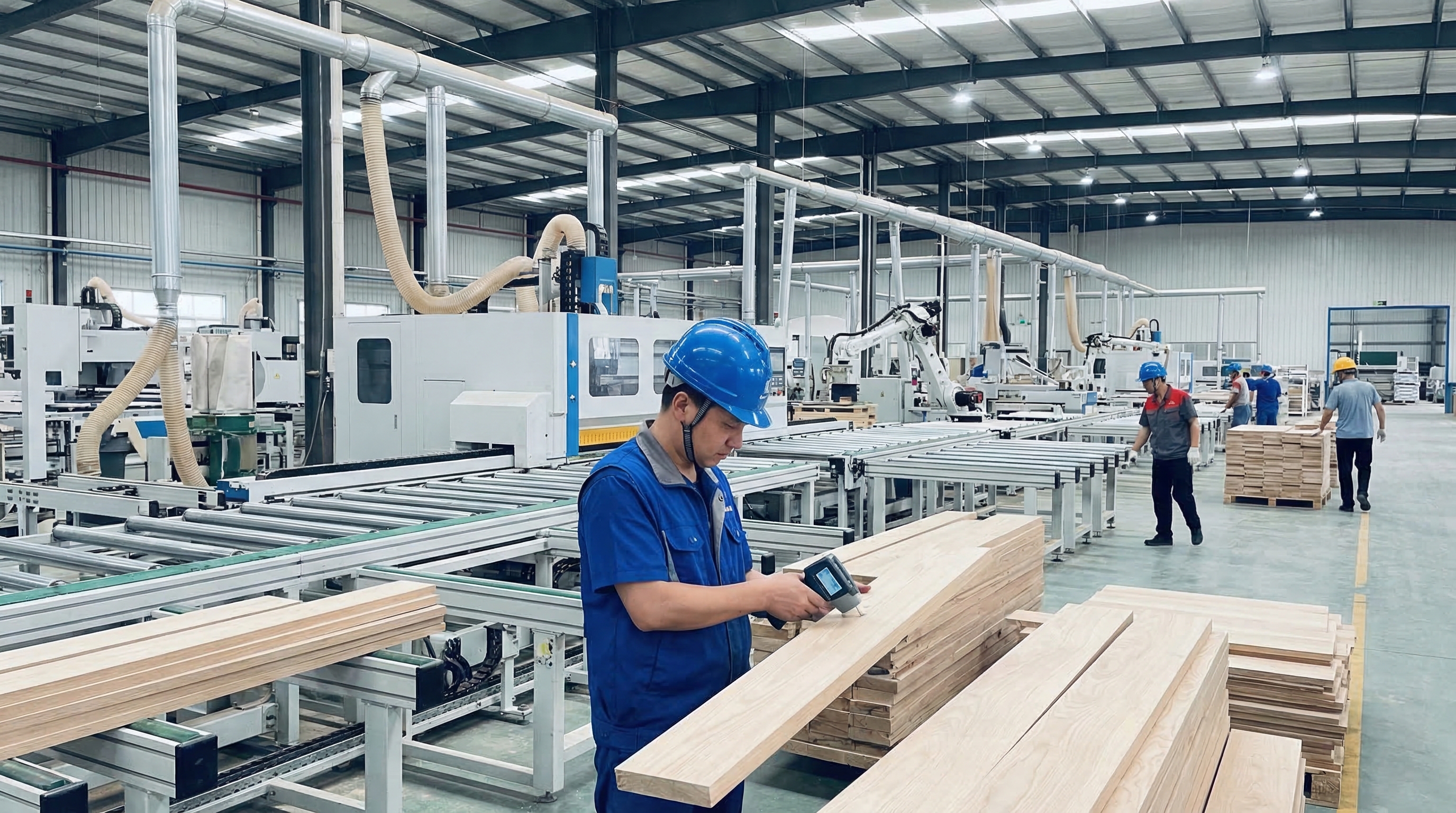
For bulk production, the best wood for furniture is the one you can source consistently at scale, not necessarily the one with the best physical properties. Supply stability becomes the key constraint beyond sampling, as unreliable materials can lead to stockouts, price fluctuations, and delayed shipments.
Scaling Material Procurement
When scaling production, consistency matters more than appearance. Standardized grading systems ensure predictable yield and stable quality across batches, which is critical for bulk orders. Without grading consistency, even small variations in raw timber can disrupt production efficiency and final product uniformity.
Standardized grading is what makes bulk production predictable:
- Grade A: Minimal defects, suitable for visible surfaces and premium finishes
- Grade B: Minor defects allowed, ideal for painted or cost-controlled products
- Industrial Grade: Higher defect tolerance, typically used for internal structures
Supply Chain Risk Mitigation
Supply risk becomes the main cost driver once you move into bulk orders. If material availability fluctuates, your cost and delivery schedule will follow. Species with stable plantation supply can reduce these risks, while slow-growth hardwoods are more exposed to seasonal shortages and price spikes.
Production Lead Time Variables
Lead time differences between wood species directly affect your delivery schedule. Softwoods allow faster kiln drying and shorter production cycles, while hardwoods require longer preparation time, increasing the risk of delays during peak production periods.
Key Takeaway: Supply stability, not material performance, determines whether your bulk order can be executed on time and within budget.
This comparison shows how different wood species perform from a supply perspective:
| Species | Supply Stability | Price Volatility | Lead Time Risk | Scalability |
|---|---|---|---|---|
| Pine | Very High | Low | Low | Excellent |
| Rubberwood | High | Low | Low | Excellent |
| Oak | Medium | Medium | Medium | Limited |
| Walnut | Low | High | High | Poor |
Here is the deal: if your product line depends on stable replenishment, supply characteristics matter more than material prestige.
III. Stability Risks: How Wood Species Impact Mass Yields
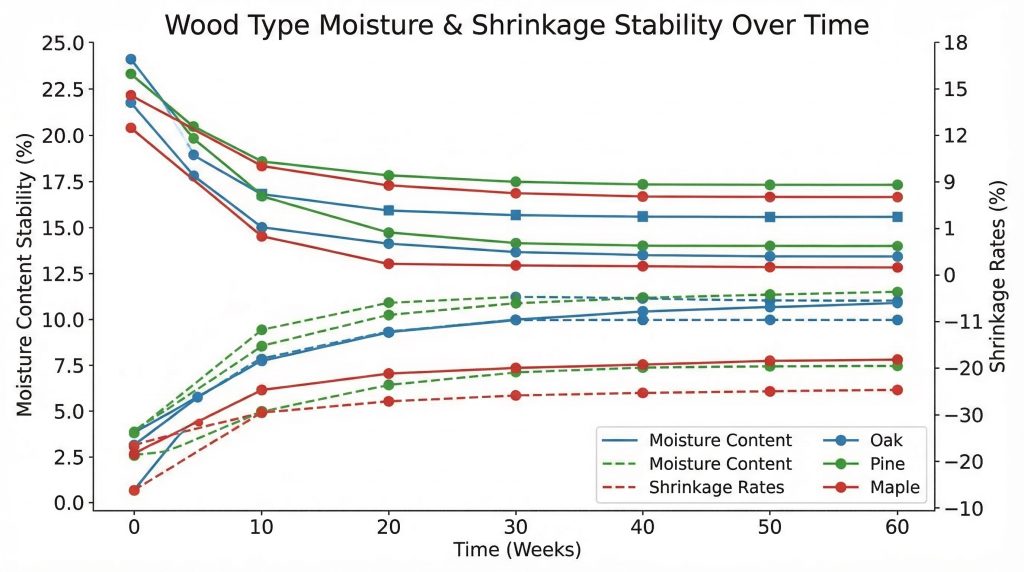
In high-volume production, the best wood for furniture is the one that delivers stable yield ratios under machining and drying conditions. Different species behave differently in processing, directly affecting rejection rates, material waste, and overall production stability.
1. Calculating Net Yield Ratios
Net yield refers to the percentage of usable material after removing defects such as knots, splits, and sapwood.
- Gross Material: Total volume of raw timber purchased
- Defect Loss: Material removed during cutting and grading
- Net Yield: Final usable volume entering production
Higher-yield species reduce material waste and stabilize cost-per-unit, especially in bulk manufacturing environments.
2. Managing Grain Tension and Processing Stability
Wood species with interlocked or irregular grain structures increase the risk of tearing during machining. This often requires slower feed rates and additional finishing steps, which can disrupt production flow and increase labor costs.
Stable-grain species allow smoother machining and more predictable output, making them better suited for large-scale furniture production.
3. Minimizing Batch Rejection Rates
Factory-level quality control focuses on identifying species-specific risks before assembly begins. Internal defects, moisture variation, and structural inconsistencies can lead to batch-level rejection if not properly controlled.
Key takeaway: High-stability wood species significantly reduce rejection rates and improve production consistency in bulk orders.
Table: Yield and Stability Comparison by Wood Type
| Wood Type | Typical Yield % | Machining Ease | Stability Rating |
|---|---|---|---|
| Rubberwood | 85–90% | Excellent | High |
| Pine | 75–80% | High | Moderate |
| Oak | 65–70% | Moderate | High |
| Ash | 70–75% | High | Moderate |
Think about this: A lower-cost wood with poor yield often results in a higher final cost than a stable, higher-yield species.III. Managing Cost Structures for Profitable Sourcing
IV. Managing Cost Structures for Profitable Sourcing

For cost-driven sourcing, the best wood for furniture is the one that minimizes total production cost, not just material price. Different species affect machining speed, labor intensity, and finishing efficiency, which directly determine final unit cost in bulk production.
Direct Material vs. Processing Labor
Harder woods require more frequent tool sharpening and slower cutting speeds, which directly increases the labor cost per unit.
- Softwood Machining: High-speed processing with minimal tool wear.
- Hardwood Machining: Intensive labor for sanding and precision joining.
- Finishing Labor: Porous woods may require more coats of sealant to achieve a high-end look. Evaluating these hidden costs ensures that your MSRP remains competitive while maintaining healthy profit thresholds.
Volume Pricing and Contractual Stability
But it doesn’t stop there. Negotiating long-term supply contracts for specific species allows us to offer you stable pricing even when global timber markets are volatile.
Tooling and Overhead Considerations
The density of the wood you choose dictates the energy consumption and equipment maintenance schedules of the factory. Heavy, dense woods like Oak increase overhead through higher electricity usage and accelerated wear on CNC components.
Key Takeaway: Optimized cost structures are achieved by selecting wood species that align with your factory’s existing machine capabilities and labor expertise.
The table below breaks down the typical cost components for a mid-range dining table SKU based on different wood selections.
| Component | Pine (Softwood) | Rubberwood (Medium) | Oak (Hardwood) |
|---|---|---|---|
| Raw Material | 40% | 50% | 65% |
| Labor/Machining | 30% | 30% | 20% |
| Finishing | 15% | 10% | 10% |
| Overhead/Waste | 15% | 10% | 5% |
But here is the deal: the “cheapest” wood on the market can become the most expensive if it requires double the sanding time to reach your quality standards.
V. Outdoor vs. Indoor: Selecting for Environmental Stress
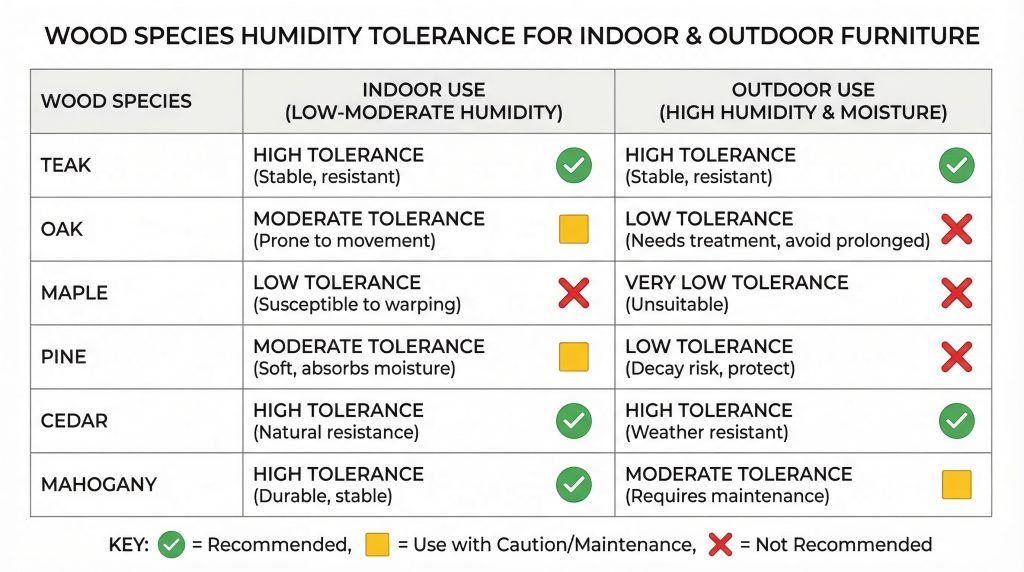
For indoor vs. outdoor use, the best wood for furniture is the one that can maintain stability under specific environmental stress—especially humidity, temperature variation, and biological exposure.
Outdoor Exposure: Decay and Weather Resistance
Outdoor woods must possess inherent biological properties that repel insects and resist fungal growth under humid conditions.
- Teak: High silica and oil content for extreme weather resistance.
- Cedar: Natural tannins that prevent rot and deter pests.
- Acacia: Dense grain that provides a cost-effective alternative for patio furniture. Sourcing the wrong species for outdoor use leads to rapid product failure and an influx of warranty claims from your customers.
Indoor Stability: Movement and Dry Conditions
Here is the deal: indoor furniture faces the challenge of dry air from heating systems, which can cause low-density woods to shrink and joints to loosen. We recommend species with low tangential shrinkage rates to maintain the integrity of your Residential Furniture designs over time.
Finishing Compatibility by Environment
The environmental stress on the wood also dictates which finishing technologies should be applied during production. Outdoor species require breathable oils or marine-grade varnishes, while indoor items benefit from high-durability UV lacquers.
Key Takeaway: Environmental alignment is the most critical factor in reducing long-term quality risks and maintaining brand reputation.
This comparison table evaluates species performance across indoor and outdoor stress factors to guide your SKU development.
| Feature | Teak (Outdoor) | Acacia (Outdoor/Indoor) | Maple (Indoor) |
|---|---|---|---|
| UV Resistance | Excellent | Moderate | Low |
| Water Repellency | Very High | Moderate | Low |
| Joint Stability | Excellent | High | Moderate |
| Maintenance Need | Low | Moderate | Low |
Believe it or not, using a high-quality indoor hardwood for an outdoor project is a guaranteed recipe for order-level failure.
VI. Moisture Control: The Hidden Risk Behind Wood Failure
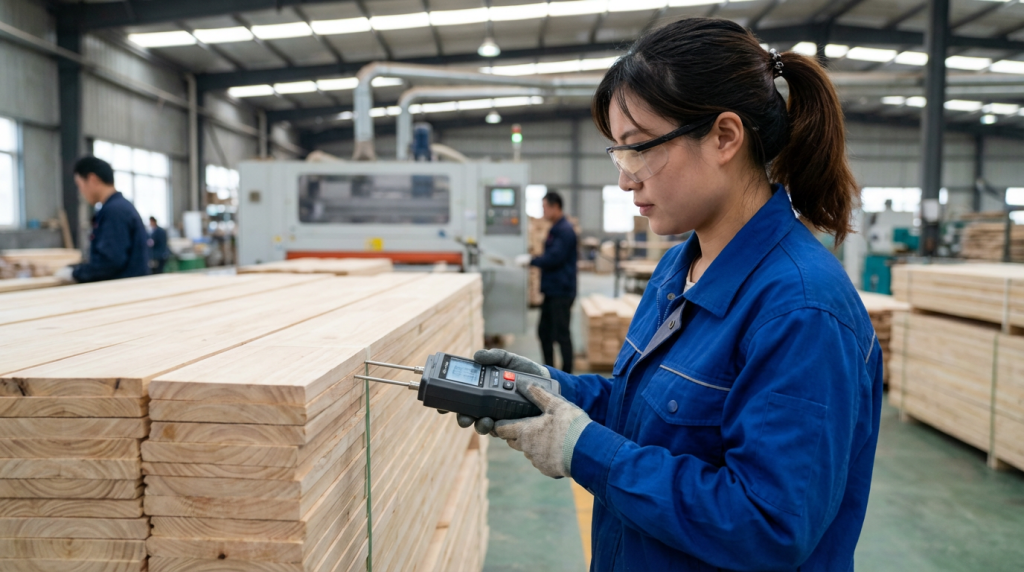
For moisture-sensitive environments, the best wood for furniture is the one that can maintain dimensional stability under controlled moisture content. Different species respond differently to drying and humidity changes, which directly determines the risk of warping, cracking, and joint failure in production and shipping.
1. Regional Moisture Content Standards
Different markets require different equilibrium moisture levels to ensure dimensional stability after delivery:
- North America / Europe: 6–8% MC for heated indoor environments
- Tropical Regions: 12–15% MC to prevent swelling
- Dry Climates: Requires controlled slow-drying to avoid internal stress
Selecting the wrong moisture range leads to post-delivery deformation and increased warranty risk.
2. Kiln Drying and Process Control
Kiln drying is essential for stabilizing internal moisture before machining. Controlled drying reduces internal tension, minimizes deformation, and prevents biological contamination.
Poor drying processes create hidden internal stress, which may only appear after the product reaches the customer.
3. Post-Processing Equilibration
After kiln drying, wood must rest in controlled conditions to balance internal stresses. Skipping this stage results in:
- Joint loosening
- Surface cracking
- Dimensional instability
Key takeaway: Moisture imbalance is one of the leading causes of structural failure in exported furniture.
Table: Moisture-Related Failure Risks
| Condition | Risk Factor | Typical Outcome | Solution |
|---|---|---|---|
| Too High MC | Swelling | Warping / Joint Stress | Extended drying |
| Too Low MC | Shrinkage | Cracking / Gaps | Controlled humidifying |
| Uneven MC | Internal Tension | Warping / Distortion | Equalization stage |
| Rapid Drying | Surface Stress | Checking / Splits | Controlled kiln ramp |
VII. Pine vs Rubberwood: Best Choices for Scalable Production
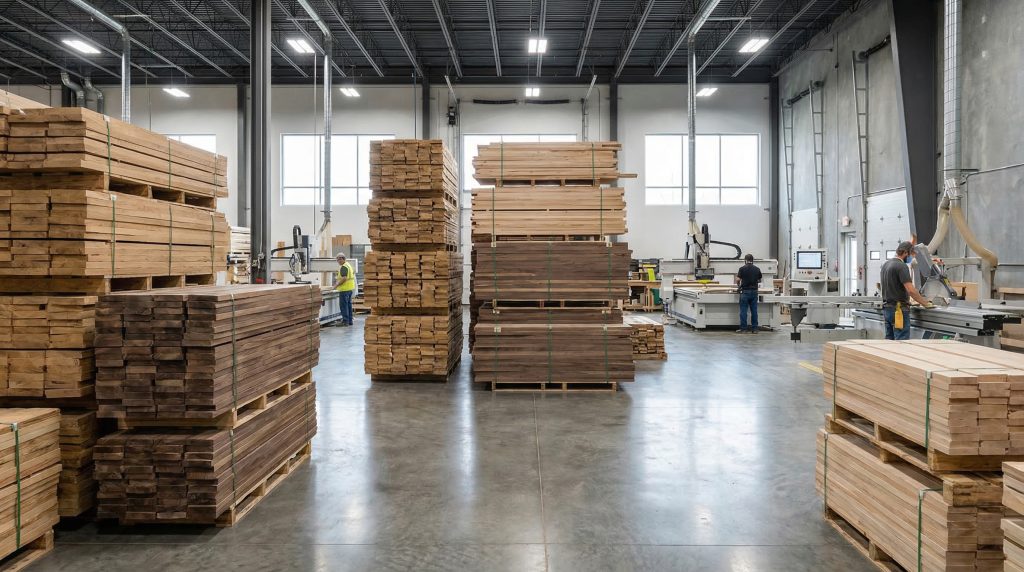
For scalable production, the best wood for furniture is the one that balances cost, machinability, and consistent supply—making pine and rubberwood the most practical choices. These materials are widely used in large-volume production because they support stable output, predictable quality, and efficient processing.
Why Rubberwood Works in Mass Production
Rubberwood, often called “Parawood,” is an eco-friendly hardwood that provides exceptional stability for medium-density furniture.
- Low Shrinkage: One of the most stable woods after proper kiln drying.
- Easy Staining: Its light, neutral color takes a wide variety of stains and finishes.
- Sustainable Source: Harvested from plantation trees that have completed their latex cycle. This species is particularly effective for large Kids & Nursery Furniture orders where safety and durability are paramount.
When Pine Becomes the Better Choice
The reality is simple: Pine’s rapid growth and widespread availability make it the unbeatable leader for entry-level price points. While it is softer than hardwoods, modern UV-hardening finishes can significantly improve its surface resistance to dents and scratches.
Why These Woods Scale Reliably
Factories prefer these species because they allow for standardized machine settings that do not need to be adjusted frequently. This consistency reduces the likelihood of “human error” defects during the high-speed assembly of your order.
Key Takeaway: Pine and Rubberwood provide the highest degree of production predictability for large-scale, cost-sensitive furniture programs.
Below is a summary of why these two species are favored by top-tier furniture manufacturers for high-volume execution.
| Metric | Pine | Rubberwood | Application |
|---|---|---|---|
| Cost | Very Low | Low | Mass Market |
| Machining Speed | Very Fast | Fast | Efficiency-Focused |
| Color Consistency | High | Very High | Uniform Appearance |
| Finishing | Painted/Rustic | High-Gloss/Walnut Look | Versatile |
But that’s not all: the sustainability story of Rubberwood is a major selling point for modern consumers who prioritize eco-friendly sourcing.
VIII. Premium Woods: When Higher Cost Delivers Better Value
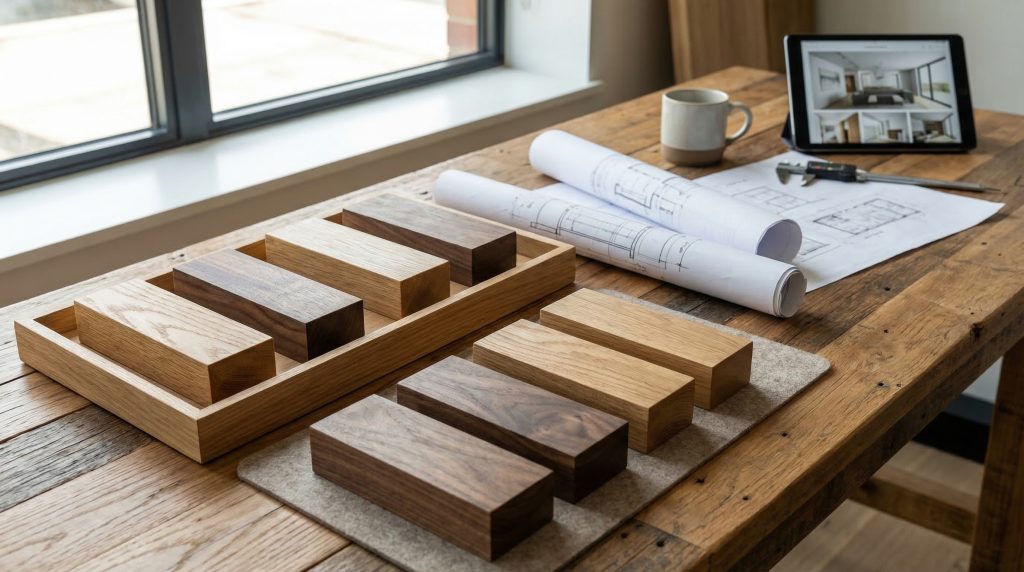
For premium product lines, the best wood for furniture is chosen when durability, visual consistency, and perceived value justify higher material costs—making species like oak and walnut the preferred options. These woods are used when appearance, long-term performance, and brand positioning matter more than cost efficiency.
Why White Oak Is Preferred for Durability
White Oak is revered for its strength and its distinctive ray fleck patterns, especially when quarter-sawn.
- Janka Hardness: A high rating ensures resistance to heavy wear in commercial settings.
- Closed Pore Structure: Makes it naturally resistant to liquids and staining.
- Finish Versatility: Works exceptionally well with “Cerused” or “Wire-brushed” textures. Investing in White Oak ensures your products have a “generational” lifespan, increasing their perceived value.
When Black Walnut Justifies Its Cost
But it doesn’t stop there. Walnut is chosen for its deep, chocolate tones and its ability to hold intricate carvings and sharp edge profiles without splintering. It is the gold standard for executive office furniture and premium dining collections.
Balancing Cost vs Long-Term Value
When sourcing these woods, you must account for the higher “Select” or “FAS” (First and Seconds) grading costs to ensure a clean aesthetic. We help you manage these costs by optimizing cutting patterns to reduce the waste of these expensive raw materials.
Key Takeaway: Oak and Walnut are strategic investments for brands that compete on durability, prestige, and timeless design aesthetics.
The table below compares the two leading premium hardwoods to help you decide which fits your luxury SKU requirements.
| Characteristic | White Oak | Black Walnut | Target Market |
|---|---|---|---|
| Hardness (Janka) | 1,360 lbf | 1,010 lbf | Heavy Use |
| Price Tier | High | Ultra-High | Luxury |
| Grain Pattern | Open/Prominent | Tight/Swirly | Designer |
| Weight | Heavy | Medium-Heavy | High-End |
Think about this: a Walnut table often sells for three times the price of a Pine table, yet the labor cost to build it is only marginally higher.
IX. Engineered vs Solid: Choosing the Right Structure for Stability and Cost
For structural selection, the best wood for furniture depends on whether stability or natural appearance is the priority—engineered wood is preferred for dimensional stability and cost control, while solid wood is chosen for natural aesthetics and premium positioning. Choosing the wrong structure can lead to warping, cost inefficiencies, or product failure in production and use.
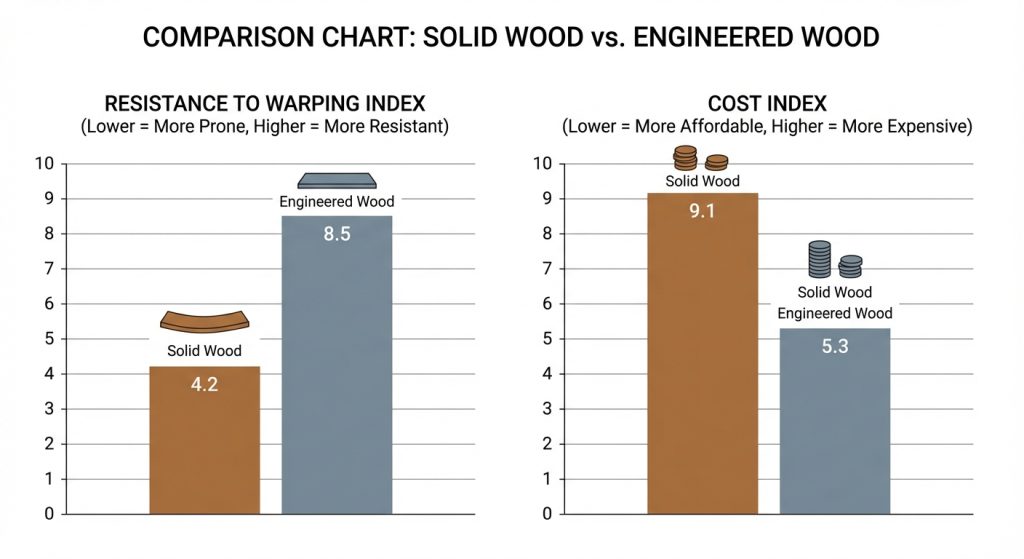
1. Assessing Resistance to Warping
Solid wood is “alive” and moves with changes in humidity, whereas engineered wood (like high-density plywood or MDF) is dimensionally stable. But that’s not all: by veneering a stable core with a high-quality hardwood like Oak or Walnut, you get the aesthetic of solid wood with the performance of a modern composite. This is critical for wardrobes and large tabletops shipped across different climate zones.
2. Cost-Benefit for Importers
Engineered wood products are often more cost-effective because they allow for 100% utilization of the timber veneer. This reduces the waste factor significantly compared to solid wood manufacturing. As an importer, this means more consistent pricing and a lower risk of structural claims from your retail partners.
- Stability Comparison:
- Solid Wood: High “character,” moderate warping risk.
- Plywood Core: High strength, low warping risk.
- MDF Core: Best for painting, zero warping risk.
- Particle Board: Budget-friendly, lower durability.
- Honeycomb: Ultra-lightweight for large structures.
3. Longevity and Repairability
The “gray zone” here is that solid wood can be sanded and refinished multiple times, whereas veneered engineered wood has a limited lifespan if damaged. You must decide if your brand stands for “heirloom quality” (Solid) or “functional value” (Engineered). We support both manufacturing styles and help you choose based on your specific market requirements.
Key Takeaway: Use engineered cores for large, flat surfaces to ensure stability, and solid wood for legs and frames to provide structural strength.
This table compares the real-world performance of Solid vs. Engineered furniture components.
| Feature | Solid Hardwood | Engineered Core (Plywood/MDF) |
|---|---|---|
| Dimensional Stability | Low (Expands/Contracts) | Very High |
| Weight | Heavy | Moderate |
| Repairability | High (Can be sanded) | Low (Veneer is thin) |
| Aesthetic Depth | Authentic | Consistent |
| Cost | High | Medium-Low |
| Warping Risk | Moderate | Minimal |
| Joinery Strength | Superior | Moderate |
| Humidity Resistance | Variable | High |
| Waste Factor | 30-50% | 5-10% |
| Shipping Safety | Prone to cracking | Prone to edge-impact damage |
Bottom line: The best furniture is often a hybrid, utilizing each material where it performs best.
X. Compliance and Certification: The Final Barrier Before Market Entry
For market entry, the best wood for furniture must meet compliance and certification requirements in target markets, not just cost and performance criteria. Non-compliant materials can block shipments entirely, making certification standards a critical factor in final material selection.

1. Certification Requirements by Market
Different markets apply different compliance standards, and these are not interchangeable. A product that passes in one region may fail in another.
- North America: CARB P2 and EPA TSCA focus on formaldehyde emissions
- European Union: EN standards and REACH regulate safety and chemical use
- FSC Certification: Confirms responsible sourcing and is increasingly required by retailers
If certification is not aligned with your target market, the risk is not just delay, but full shipment rejection.
2. Material Legality and Traceability
Here is where things become stricter. It is no longer enough for the product to perform well. Buyers are now expected to prove where the wood comes from.
You need to verify:
- Chain of Custody (CoC) documentation
- Compliance with Lacey Act (USA) or EUTR (EU)
- Supplier transparency on timber origin
Without this, shipments can be held at customs or flagged during retailer audits, even if the product itself meets quality standards.
3. Matching Compliance to Product Type
Compliance is not only market-driven. It also depends on what you are producing.
- Children’s furniture requires stricter safety and non-toxic finishes
- Indoor furniture must meet emission limits for long-term use
- Outdoor furniture must comply with treatment and durability standards
Using the wrong compliance standard for the wrong product type often leads to hidden risk that only appears after the product reaches the market.
Table: Key Compliance Factors by Market
| Market | Key Standard | Focus Area | Risk if Ignored |
|---|---|---|---|
| USA | CARB P2 / EPA TSCA | Emission control | Shipment rejection |
| EU | EN / REACH | Chemical safety | Retail non-compliance |
| Global | FSC | Source legality | Brand trust risk |
| USA / EU | Lacey Act / EUTR | Timber legality | Legal penalties |
The bottom line is simple: compliance is not a final checkbox. It determines whether your product can move from factory to market without disruption.
Frequently Asked Questions
What’s the best wood for humid tropical climates?
Teak and mahogany perform well in high-humidity environments due to their natural oils and low shrinkage rates. These properties help prevent expansion, warping, and decay. Softwoods without proper treatment tend to absorb moisture quickly and are more likely to fail in tropical conditions.
How do I know if the wood is properly kiln-dried?
You should request a moisture content report or verify readings with a digital moisture meter. For most indoor furniture, the acceptable range is typically 6–12%. Wood that feels unusually cold or produces a dull sound when tapped may still contain excess moisture, increasing the risk of deformation after delivery.
What’s the best way to prevent furniture from warping during shipping?
Proper moisture control is critical. Wood should be kiln-dried to the correct moisture level before production. Using stable species and engineered cores for large panels can further reduce movement. Consistent packaging and controlled loading conditions also help minimize environmental stress during transit.
Final check
Choosing the best wood for furniture comes down to matching material performance with real use conditions, production scale, and compliance requirements. If these factors are clearly defined, most sourcing risks can be avoided early.
If you are comparing material options for an active project, it often helps to review practical production considerations such as moisture control, yield stability, and supply consistency alongside a broader sourcing overview.