
Outdoor wood furniture can look solid at delivery, then fade, crack, peel, or absorb moisture after real weather exposure. The wrong finish often turns appearance into a maintenance problem.
The best outdoor wood finish is usually exterior stain or penetrating oil, depending on wood species, exposure level, appearance target, and maintenance plan.
Stain gives better color and UV protection for many outdoor furniture pieces, while oil keeps a more natural look but usually needs more regular care. Sealers and exterior paint can work in specific conditions, but they also need clearer checks before bulk use.
I. What Is the Best Outdoor Wood Finish Overall?
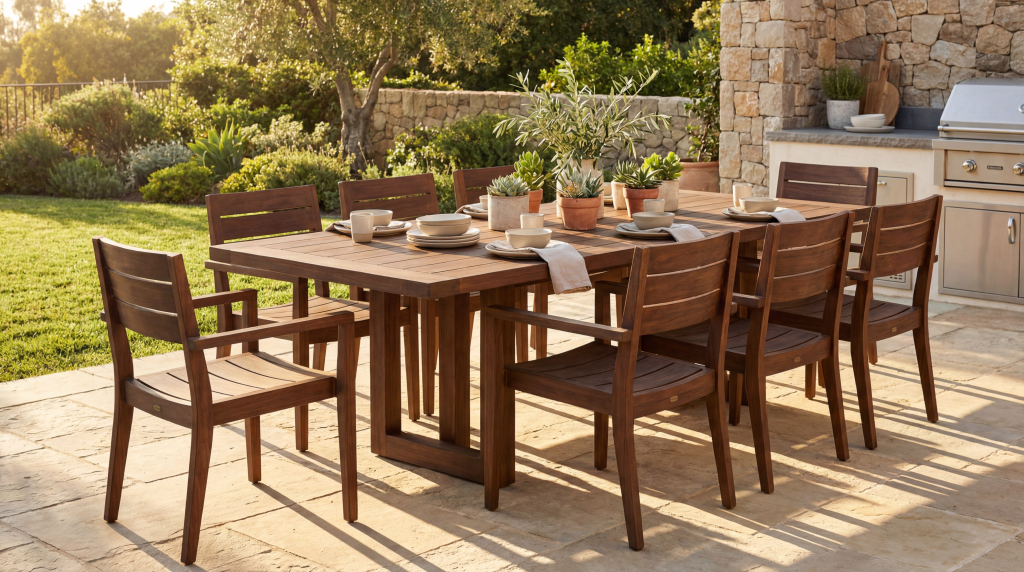
Exterior stain is usually the best outdoor wood finish overall for wood furniture when the goal is balanced protection, visible wood grain, and easier production approval. Oil, sealer, and paint can also work, but they should be selected by exposure level, wood type, surface look, and maintenance expectations.
1. Exterior Stain Is the Safest Starting Point
Exterior stain is often the safest first choice because it protects color while still showing the wood grain. It also gives buyers a clearer sample standard, since tone, grain visibility, touch feel, and coverage can be checked before bulk production.
2. Oil Works Better for Some Hardwood Furniture
Oil works better for suitable hardwood furniture when the target is a natural look and smooth hand feel. The main risk is maintenance expectation, because an oil finish may look attractive at the sample stage but need clearer care notes after outdoor use.
Oil works better when these details are already controlled:
- Match the oil finish with the actual wood species
- Check surface feel after packing and unpacking
- Confirm how much natural color change is acceptable
- Keep one approved sample for repeat orders
- Add care notes if the buyer’s market expects low upkeep
For some outdoor wooden furniture ranges, oil only makes sense when the finish look, care expectation, and repeat production standard are aligned.
3. Paint and Sealer Need Clear Use Limits
Paint and sealer can protect outdoor furniture, but they are not automatic upgrades over stain. Paint gives stronger color coverage but hides the grain, while clear sealer keeps a natural look but needs better control around edges, joints, and hidden surfaces.
Use this table as a first filter before choosing the finish direction.
| Finish Type | Better For | Main Risk | What to Check |
|---|---|---|---|
| Exterior stain | Visible grain with color protection | Batch color variation | Approved color range and surface feel |
| Penetrating oil | Natural hardwood appearance | Higher care expectation | Wood species, care notes, repeatability |
| Clear sealer | Natural look with surface protection | Weak edge or joint coverage | Edges, joints, hidden surfaces |
| Exterior paint | Solid color and stronger coverage | Peeling if wood movement is ignored | Surface prep, edge sealing, repair rules |
The finish should be selected around real exposure, not only around the look of a fresh sample.
Key Takeaway: Exterior stain is usually the safest first choice for outdoor wood furniture because it balances appearance, protection, and approval control. Oil, sealer, and paint can work, but only when their limits are clear before production.
II. Is Stain, Oil, Sealer, or Paint Better Outside?
Stain is usually better outside when wood furniture needs balanced protection, visible grain, and easier approval across production. Oil, sealer, and paint can still be better in specific cases, but the decision should follow exposure level, wood species, surface appearance, and later maintenance expectations.
1. Stain Balances Protection and Wood Movement
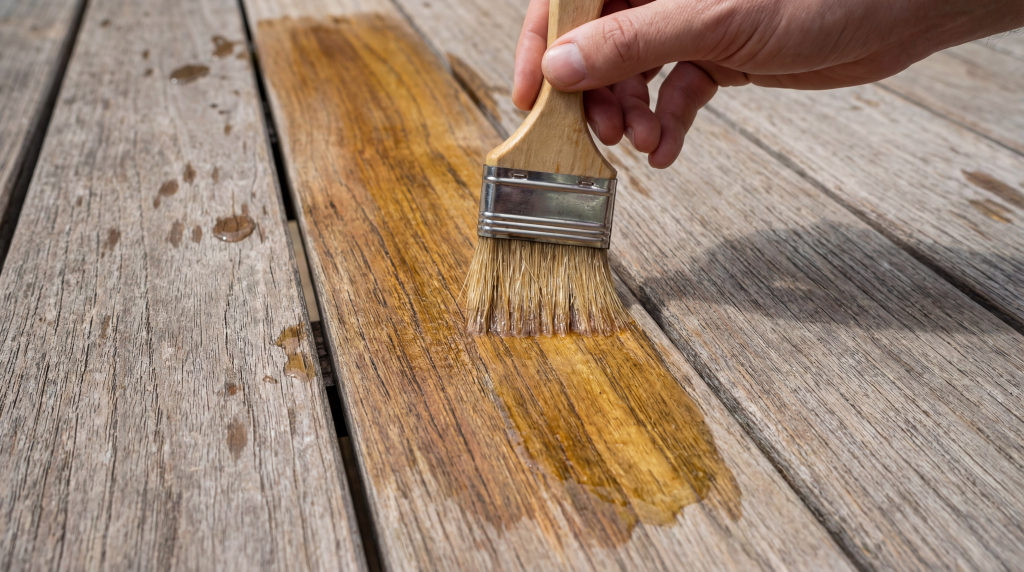
Stain works well for outdoor furniture because it protects the surface without fully hiding the wood character. It is also easier to compare between sample and bulk production, since color tone, grain visibility, and touch feel can be checked directly.
The main risk is loose approval language. If the order only says “brown stain” or “outdoor stain,” the final result can still vary by wood batch, sanding condition, coating process, and drying control.
2. Oil Keeps the Wood Look More Natural
Oil is better when the buyer wants a natural wood look and accepts a higher care requirement. It can make outdoor furniture feel warmer and less coated, but it may not suit markets where customers expect a low-maintenance surface.
Before choosing oil, check the decision from the selling side, not just the sample side:
- Use oil when natural grain is part of the selling point
- Avoid oil when buyers expect a uniform coated look
- Confirm care instructions before shipment
- Check whether packaging pressure may mark the surface
- Keep an approved sample for future repeat orders
Oil can be a good finish, but it should not be selected only because the sample looks premium.
3. Paint Gives Coverage but Can Peel
Paint gives the strongest visual coverage because it hides wood color differences and creates a more uniform look. It can work well for outdoor furniture when the market wants solid colors, but it needs stronger control around surface preparation, edges, corners, and later repair rules.
Use this table before deciding which finish is the better fit.
| Finish Option | Better Outside When | Higher-Risk Situation | Approval Focus |
|---|---|---|---|
| Stain | Wood grain should remain visible | Color range is not defined | Color tone, grain visibility, coverage |
| Oil | Natural hardwood look matters | Market expects low care | Surface feel, care notes, repeatability |
| Clear sealer | Natural appearance is preferred | Edge coverage is weak | Edges, joints, hidden surfaces |
| Paint | Solid color consistency matters | Wood movement is ignored | Surface prep, peeling risk, repair method |
The better finish is the one that matches the selling expectation and the production control method at the same time.
Key Takeaway: Stain is usually the safer outside choice for wood furniture because it balances protection and visible grain. Oil, sealer, and paint can work, but they should be approved through real use conditions, not only fresh sample appearance.
III. What Finish Protects Outdoor Wood from Rain and Sun?
Exterior stain usually protects outdoor wood from rain and sun better than many clear film finishes because it helps reduce moisture absorption while slowing visible fading. For outdoor furniture, the safer choice is not the thickest-looking finish, but the finish that matches real exposure, wood movement, and later maintenance expectations.
1. Rain Damage Starts with Surface Absorption
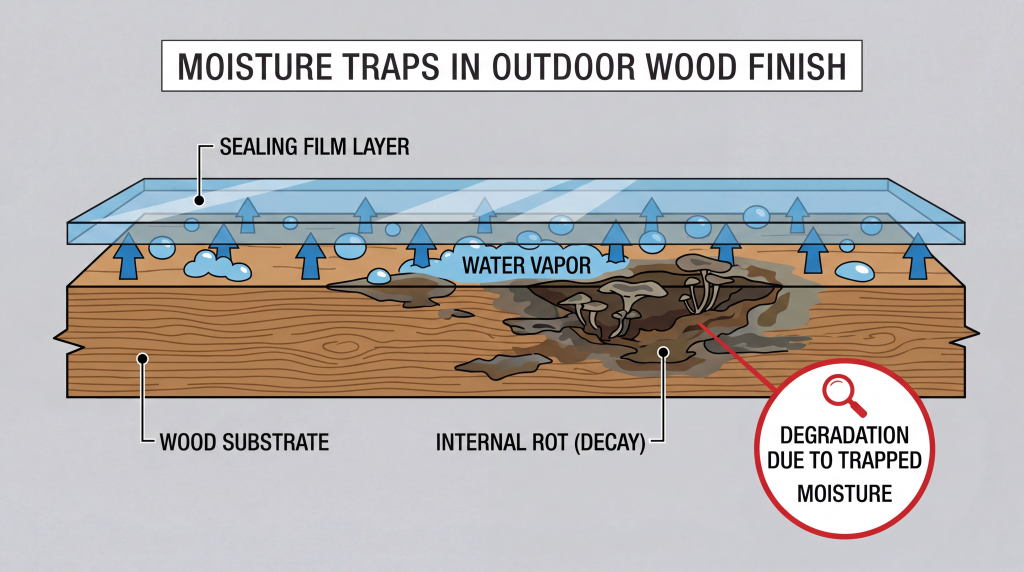
Rain protection starts with reducing uneven moisture absorption on the surface, edges, end grain, and joints. A finish may look complete on the main surface, but outdoor furniture often shows problems first in corners, screw areas, slats, and undersides, where coverage is harder to inspect.
2. Sun Exposure Causes Fading and Surface Wear
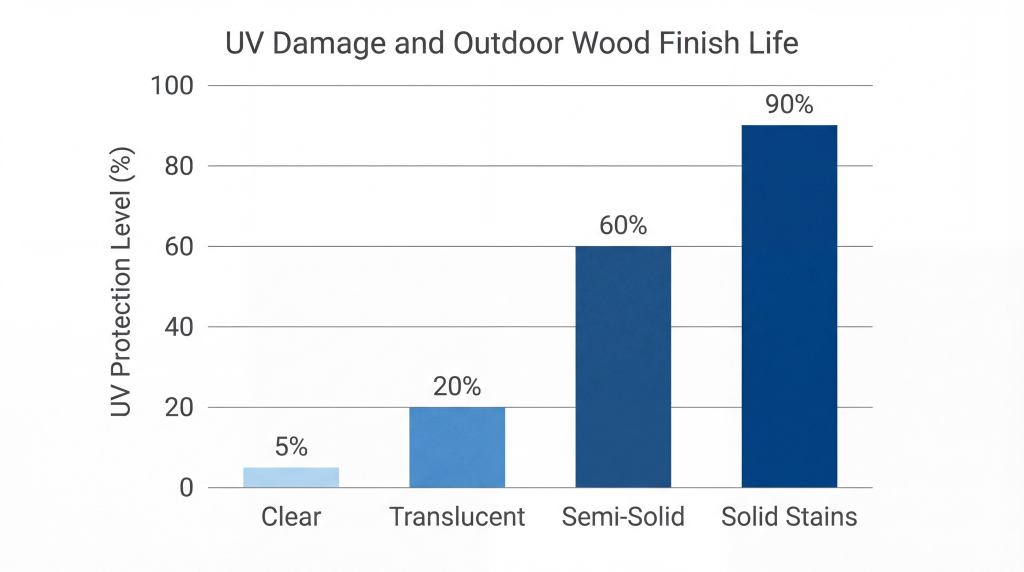
Sun protection is mainly about slowing visible fading, surface dryness, and rough touch feel after outdoor placement. The sample should not be judged only under indoor lighting, because the approved color may look different once the furniture is placed in real sunlight.
Sun-facing samples need a more realistic review:
- Place the sample under natural light, not only showroom light
- Compare exposed surfaces with hidden or shaded areas
- Check whether the buyer accepts natural color change
- Confirm if the finish needs later care instructions
- Keep the approved sample for future batch comparison
3. Full Outdoor Exposure Needs Stronger Protection
Full outdoor exposure needs stronger finish control than covered patio use because rain, sunlight, temperature shifts, and repeated hand contact happen together. This does not mean every item needs the heaviest coating, but the exposure condition must be confirmed before the finish is approved.
Use this table to judge the finish risk by exposure condition.
| Exposure Condition | Finish Risk | Better Choice | What to Check |
|---|---|---|---|
| Covered patio | Lower risk | Stain, oil, or sealer | Color, touch feel, edge coverage |
| Partial sun and rain | Medium risk | Exterior stain or stronger sealer | UV fading, water marks, joint coverage |
| Full open-air use | Higher risk | Stain, paint, or sealed system | Edges, end grain, fastener areas |
| High-contact surfaces | Higher visible wear | Stain or paint with clear approval | Tabletop wear, chair arms, seat edges |
A finish that works under cover may not be safe for fully exposed furniture.
Key Takeaway: Exterior stain is usually the safer finish for rain and sun protection, but exposure level decides the final choice. Buyers should check moisture-prone areas, sun-facing surfaces, and high-contact parts before approving the finish for production.
IV. Is Exterior Stain Better Than Polyurethane Outside?
Exterior stain is usually better than polyurethane outside when wood furniture faces rain, sun, and repeated movement. Polyurethane can work in protected outdoor areas, but exposed furniture often needs a finish that handles wood movement, surface wear, and later maintenance more safely.
1. Stain Handles Outdoor Movement More Safely
Exterior stain is usually safer for outdoor furniture because it works with the wood surface instead of creating a thick, hard film. This matters when the wood expands, contracts, absorbs humidity, dries in the sun, and still needs to keep a usable surface.
2. Polyurethane Can Fail on Exposed Furniture
Polyurethane can look smooth and clear at the sample stage, but it becomes a higher risk when furniture stays in open rain and strong sun. The concern is not the material name itself, but the mismatch between a hard film finish and outdoor wood movement.
Polyurethane only becomes a safer choice under tighter limits:
- Use it mainly for covered or semi-protected locations
- Check edges and end grain for full coverage
- Confirm the repair method if the film gets damaged
- Avoid vague approval terms like “clear outdoor coating”
- Keep the approved sample for surface gloss and touch comparison
This is also where a normal finish decision becomes part of furniture quality control, because the issue is not only what coating is used, but how consistently it is prepared, applied, dried, checked, and packed.
3. Covered Outdoor Use Changes the Decision
Covered outdoor use changes the decision because the furniture is not facing the same level of rain and sunlight as fully exposed pieces. In a covered patio, balcony, or shaded commercial area, polyurethane may be acceptable if the surface standard, coverage areas, and repair expectations are defined before production.
Use this table before choosing between exterior stain and polyurethane.
| Use Condition | Safer Choice | Main Risk | What to Check |
|---|---|---|---|
| Full rain and sun | Exterior stain | Film cracking or peeling | Surface movement, edges, repair rules |
| Covered patio | Stain or polyurethane | Wrong exposure assumption | Actual placement and care expectation |
| Clear natural look | Stain or sealer | Weak UV protection | Color change and surface feel |
| High-contact furniture | Stain with clear approval | Visible wear on touch areas | Chair arms, seats, table edges |
Polyurethane is not automatically wrong outside, but it needs a narrower use condition than many buyers expect.
Key Takeaway: Exterior stain is usually better than polyurethane for exposed outdoor wood furniture. Polyurethane may work in protected settings, but only when exposure level, edge coverage, surface repair, and sample approval are clearly defined.
V. What Is the Best Finish for Outdoor Wood Furniture?
Exterior stain is usually the best finish for outdoor wood furniture when tables, chairs, benches, and storage pieces need balanced weather protection, visible wood grain, and practical production approval. The final decision should follow the furniture part that wears first, not only the finish name on the sample.
1. Tables Need Better Surface Resistance
Outdoor tabletops need a stronger finish approval because flat surfaces show water marks, cleaning marks, food contact, and sunlight changes more clearly than decorative parts. The sample should be reviewed from daily-use angles, not only from the front view.
A tabletop finish standard should be judged by daily-use details:
- surface touch after the finish is fully dry
- color depth under natural light
- edge coverage around the top panel
- visible marks after normal hand contact
- repair method for scratches or surface damage
2. Chairs Wear Fast on Arms and Seats
Chair arms, seats, and front edges usually wear faster because they receive repeated hand contact and body pressure. If the finish feels rough, sticky, uneven, or too thin in these areas, the problem will become more visible after outdoor use.
3. Hidden Areas Still Need Finish Coverage
Hidden areas still need finish coverage because moisture often enters from undersides, inner corners, screw holes, and joints. These areas may not affect the first impression, but they can affect cracking, swelling, mildew risk, and later complaints.
Use this table to match furniture parts with finish approval priorities.
| Furniture Part | Main Finish Risk | Better Finish Focus | Approval Priority |
|---|---|---|---|
| Tabletop | Water marks and visible wear | Surface resistance and color control | Flat surface, edges, cleaning marks |
| Chair arms | Repeated hand contact | Smooth touch and coating strength | Arms, front edges, corners |
| Seat panels | Friction and pressure marks | Even coating and stable feel | Seat edge, slats, joint areas |
| Underside | Moisture entry | Complete finish coverage | Bottom surfaces, screw holes, inner corners |
| Storage pieces | Uneven weather exposure | Consistent finish on all faces | Doors, sides, base, back panels |
The finish should be approved by real product use, not only by how the front surface looks in a sample photo.
Key Takeaway: The best finish for outdoor wood furniture depends on where the product will wear first. Tables, chairs, and storage pieces need different approval checks, so finish decisions should cover high-contact parts, hidden areas, edges, and real exposure points before production.
VI. How Does Wood Type Change the Finish Choice?
Wood type changes the finish choice because each species absorbs finish, moves with moisture, shows grain, and handles outdoor exposure differently. The best outdoor wood finish for one species may create color variation, weak coverage, or maintenance pressure on another, so finish approval should start with the actual wood, not only the coating name.
1. Softwood Needs More Surface Protection
Softwood usually needs more surface protection because it can absorb the finish unevenly and show dents or grain differences more clearly after use. If pine or similar softwood is used outdoors, the finish approval should focus on absorption control, edge coverage, and whether the final look can stay consistent across the visible parts.
2. Dense Hardwood Often Works Better with Oil
Dense hardwood often works better with oil or stain when the buyer wants a natural surface rather than a heavily coated look. The risk is that some hardwoods may resist absorption, darken unevenly, or change color outdoors if the finish and care expectations are not aligned.
Set the finish rule by wood behavior, not by appearance alone:
- Use stain when color control and UV protection matter more
- Use oil when natural grain and hand feel are the main target
- Use paint when solid color consistency matters more than grain
- Use sealer only when edge and joint coverage can be controlled
- Keep a physical approved sample for each wood species
A finish that looks stable on one wood may not repeat cleanly on another. For broader material selection, the wood choice should also match the product’s real use case, not only the finish plan, which is why our guide to choosing the best wood for furniture can support the early decision.
3. Mixed Materials Need Sample Approval
Mixed materials need stricter sample approval because solid wood, veneer, plywood, and engineered parts may absorb finish differently. A color that looks even on one surface can become mismatched on edges, panels, frames, or replacement parts if the finish standard is not confirmed across all visible materials.
Use this table to connect wood type with finish approval risk.
| Wood or Material Type | Finish Behavior | Main Risk | Approval Focus |
|---|---|---|---|
| Softwood | Absorbs finish more visibly | Uneven tone or dents | Surface preparation and stain control |
| Dense hardwood | May suit oil or stain better | Color change or low absorption | Natural color, oil effect, repeatability |
| Veneer surface | Thin visible layer | Sanding or color mismatch | Sample limits and surface handling |
| Plywood or mixed panels | Different surface layers | Edge and face inconsistency | Edge sealing and color matching |
| Painted mixed material | Hides grain differences | Peeling or weak adhesion | Surface prep and coating standard |
The more mixed the material structure is, the more the finish standard must be confirmed before production.
Key Takeaway: Wood species and material structure decide how safe a finish choice really is. Buyers should approve the finish on the actual wood and mixed materials used in production, not on a separate sample board that may behave differently.
VII. Why Do Outdoor Wood Finishes Peel or Crack?
Outdoor wood finishes peel or crack mainly because the finish system does not match moisture movement, surface preparation, or real exposure conditions. The problem often starts before outdoor use, when the sample approval focuses on color but does not define sanding, drying, edge coverage, and repair expectations.
1. Poor Preparation Raises Failure Risk
Poor preparation raises finish failure risk because stain, paint, or sealer cannot perform well on an uneven, dusty, oily, or poorly sanded surface. A sample may still look clean in photos, but the bulk order can show rough touch, weak adhesion, or uneven color if preparation steps are not controlled.
2. Moisture Inside Wood Pushes Finish Apart
Moisture inside wood can push the finish apart when the surface is sealed before the wood condition is suitable for outdoor use. This risk is more visible on thick panels, end grain, joints, and parts packed too soon after finishing.
3. Thick Film Finishes Need More Caution
Thick film finishes need more caution because they can create a harder surface layer while the wood underneath still moves. This does not make every film finish wrong, but it means exposed outdoor furniture needs clearer approval rules than indoor furniture.
Harder film finishes need a more complete control path:
- Review the finish on the actual production wood
- Touch edges, corners, and end grain by hand
- Compare gloss and surface feel with the approved sample
- Define how small scratches or chips will be repaired
- Confirm packing starts only after the finish is ready for handling
Use this table to separate normal finish risk from preventable approval gaps.
| Failure Sign | Common Cause | Risk Level | Better Control |
|---|---|---|---|
| Peeling surface | Weak adhesion or wrong exposure match | High risk | Confirm preparation and use condition |
| Cracked film | Wood movement under a hard layer | High risk | Check coating type and repair rule |
| Uneven stain | Inconsistent sanding or absorption | Medium risk | Approve color range on real wood |
| Rough touch | Dust, poor sanding, or weak finishing control | Medium risk | Check hand feel before packing |
| Edge failure | Thin coverage on corners or end grain | High risk | Inspect edges and hidden areas |
Peeling and cracking are rarely solved by choosing a stronger-sounding finish name alone.
Key Takeaway: Outdoor finish failure often comes from unclear preparation, moisture condition, exposure match, and repair rules. Buyers should approve the full finish process, not only the color of a fresh sample.
VIII. What Should Be Confirmed Before Bulk Production?
The finish standard should be confirmed before bulk production through an approved sample, written finish details, and clear inspection points. For outdoor wood furniture, a good-looking sample is not enough if the color range, surface feel, edge coverage, drying condition, and packing protection are not aligned.
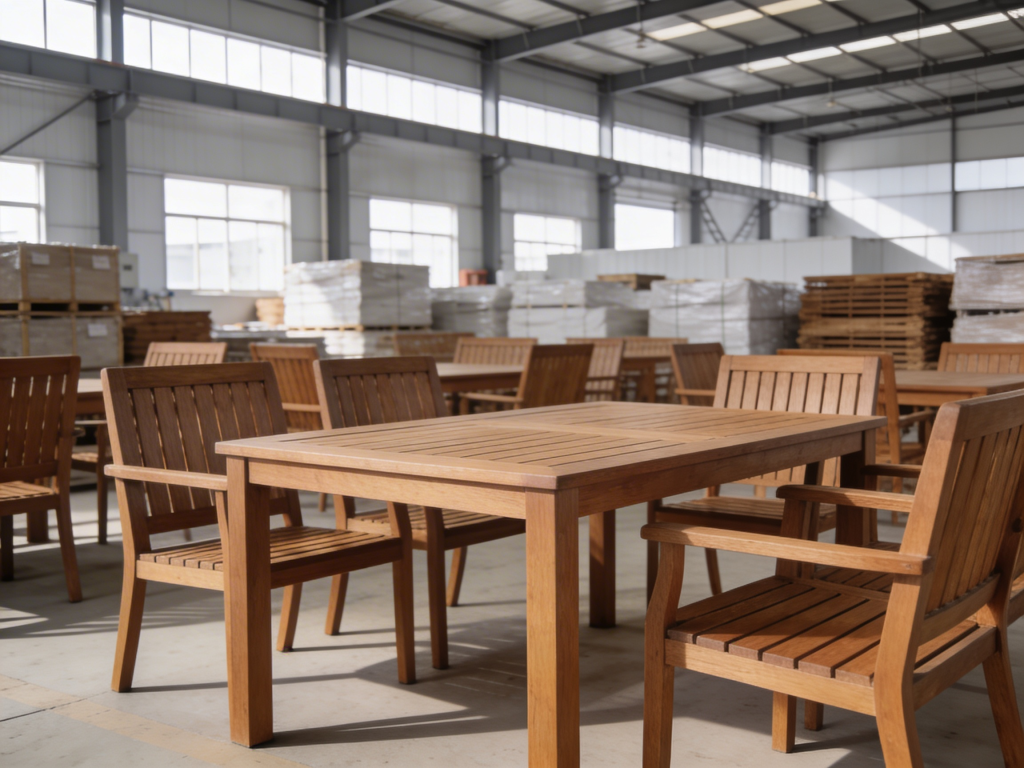
1. Samples Must Define the Finish Standard
The approved sample should define the finish standard, not just show a preferred color. It should represent the actual wood species, sanding level, coating effect, gloss level, grain visibility, and touch feel expected in production.
2. Color Tolerance Needs Written Confirmation
Color tolerance needs written confirmation because outdoor wood furniture often uses natural wood, and natural variation cannot be judged by one perfect photo. Buyers and suppliers should agree which differences are acceptable, which areas must stay closer to the approved sample, and which visible changes need correction before shipment.
A useful finish approval note should make these items visible:
- approved color sample or physical reference
- acceptable light and dark range
- gloss or matte surface expectation
- grain visibility requirement
- visible defect examples that need rework
3. Rework Rules Should Be Clear Early
Rework rules should be clear early because finish problems can affect schedule, cost, packing, and shipment readiness. If scratches, color variation, rough touch, or weak edge coverage are found late, both sides need a shared rule for repair, replacement, or acceptance.
For larger orders, these checks should connect with the wider furniture manufacturing process, because finish approval is tied to sanding, drying, coating, assembly, inspection, and packing.
Use this table to define the finish standard before production starts.
| Confirmation Item | Why It Matters | Risk If Unclear | Better Control |
|---|---|---|---|
| Approved sample | Sets the visible standard | Sample and bulk mismatch | Keep a physical reference |
| Color range | Controls natural variation | Repeated disputes | Define acceptable light and dark limits |
| Surface feel | Affects user perception | Rough or sticky touch | Touch-check before packing |
| Edge coverage | Protects weak areas | Moisture entry | Inspect corners, joints, and undersides |
| Rework rule | Reduces late conflict | Delays and unclear responsibility | Agree repair or replacement method |
Finish approval should move from “looks good” to “can be repeated and checked.”
Key Takeaway: Before bulk production, buyers should confirm the finish standard with a real sample, written color range, surface feel, edge coverage, and rework rules. This reduces disputes caused by unclear expectations rather than real manufacturing failure.
IX. How Should Outdoor Furniture Finish Be Inspected?
Outdoor furniture finish should be inspected by color, coverage, touch feel, weak areas, and packing protection, not only by the front surface appearance. A finish can look acceptable in photos but still create risk if edges, joints, undersides, screw holes, and high-contact parts are not reviewed against the approved sample.
1. Check Color, Coverage, and Touch Feel
Color, coverage, and touch feel should be reviewed together because buyers notice them as one finish result. A surface that has the right color but feels rough, sticky, dusty, or uneven can still create complaints after delivery.
The inspection should move from “looks fine” to visible checks:
- Compare the product with the approved sample under natural light
- Touch the surface after the finish is ready for handling
- Review visible color difference across panels and parts
- Inspect coating coverage on edges and corners
- Separate repairable defects from unacceptable defects
2. Inspect Edges, Joints, and Hidden Areas
Edges, joints, and hidden areas need special attention because outdoor moisture often reaches these places first. The front panel may look good, but unfinished undersides, thin corner coverage, or exposed screw areas can weaken the product after real outdoor use.
This is why finish inspection should be connected with a broader furniture quality inspection checklist for bulk orders, especially when the order includes different sizes, materials, or assembly structures.
3. Packaging Should Not Damage the Finish
Packaging should protect the finish without creating pressure marks, color transfer, sticking, or rubbing damage during transport. Outdoor furniture often uses larger panels, slats, legs, and KD parts, so the finish must be ready for packing and separated properly inside the carton.
Use this table to inspect finish risk before shipment.
| Inspection Area | What Can Go Wrong | Risk Level | Better Control |
|---|---|---|---|
| Main surface | Color mismatch or rough touch | Medium risk | Compare with approved sample |
| Edges and corners | Thin coating or exposed wood | High risk | Inspect by hand and sight |
| Joints and screw areas | Moisture entry points | High risk | Review coverage after assembly |
| Hidden surfaces | Missed or uneven finish | Medium risk | Check undersides and inner parts |
| Packing contact areas | Rubbing, sticking, or marks | High risk | Confirm separation and drying condition |
A finish problem found before shipment is much easier to handle than a finish problem found after goods arrive.
Key Takeaway: Outdoor furniture finish inspection should cover visible appearance, hand feel, weak coverage areas, and packing risk. The goal is not to find fault late, but to confirm that the approved finish can survive handling, shipping, and real outdoor use.
X. How Should Buyers Make the Final Finish Decision?
Buyers should make the final finish decision by matching the finish to real exposure, wood type, surface appearance, maintenance expectation, and production control. For outdoor wood furniture, the safest choice is not always the most protective-sounding finish, but the one that can be repeated, inspected, packed, and explained clearly.
1. Match Finish to Real Exposure
The finish should match where the furniture will actually be used. A covered balcony, shaded patio, poolside area, garden, and open commercial terrace do not create the same finish risk, so they should not automatically use the same approval standard.
A safer decision flow is simple:
- Start with the real use location
- Identify rain, sun, and contact level
- Match the finish to the wood species
- Approve the finish on the actual product
- Keep the sample for bulk comparison
- Define care notes before shipment
This keeps the decision tied to use conditions, not only to finish names.
2. Balance Appearance with Maintenance Risk
Appearance and maintenance should be judged together because a beautiful finish can still create trouble if the care expectation is unclear. Natural oil may look warm, clear sealer may look clean, stain may look balanced, and paint may look uniform, but each one creates a different promise to the final user.
3. Confirm the Finish Before Placing Orders
The finish should be confirmed before placing orders because late changes can affect sampling, production timing, inspection, packing, and shipment planning. If the buyer needs a custom color, special surface feel, or specific outdoor performance expectation, it should be discussed before the order enters production.
For custom outdoor furniture projects, finish decisions should also connect with material choice, structure, packaging, and order planning. If these points are still open, it is safer to review them together with furniture sourcing from China decisions instead of treating finish as a separate cosmetic detail.
Use this table as the final decision filter.
| Decision Point | Lower-Risk Choice | Higher-Risk Situation | Final Action |
|---|---|---|---|
| Exposure | Finish matches real placement | Covered and exposed use are mixed | Define use condition clearly |
| Wood type | Finish tested on actual wood | Sample board differs from production wood | Approve real material sample |
| Appearance | Color range is accepted | One perfect color is expected | Confirm acceptable variation |
| Maintenance | Care expectation is clear | Market expects no upkeep | Add care notes or change finish |
| Production | Finish can be repeated | Approval depends on photos only | Keep physical sample and checklist |
The final finish decision should be easy to explain, easy to inspect, and realistic for the product’s use environment.
Key Takeaway: Buyers should choose the finish by exposure, wood type, appearance, maintenance, and production repeatability. A finish decision is safer when it can be confirmed on a real sample and checked again before shipment.
FAQ
1. Can I use oil instead of stain for outdoor wood furniture?
Yes, oil can work if the wood species suits it and the buyer accepts regular care. It is better for a natural surface look, but it should not be used when the market expects a low-maintenance, highly uniform coated finish.
2. What’s the best outdoor wood finish for rain?
Exterior stain or a properly sealed finish is usually safer for rain exposure. The main point is not only the finish type, but also edge coverage, end grain protection, joint areas, and whether the finish has been checked on the actual furniture.
3. How do I know if a finish will peel outside?
Peeling risk is higher when a hard surface film is used on moving wood without clear preparation and exposure control. Check surface preparation, edge sealing, moisture condition, and the repair method before approving the finish.
4. Can painted wood furniture be used outdoors?
Yes, painted wood furniture can be used outdoors when the surface preparation, edge sealing, and repair rules are clear. Paint gives solid color coverage, but it can show chips or peeling if the finish system does not match the product structure and exposure.
5. What’s the safest finish choice for bulk outdoor furniture orders?
The safest choice is usually an exterior stain approved on the actual production wood. It gives a practical balance between appearance, protection, and inspection control, while still allowing natural wood variation to be managed.
Final check
The right outdoor wood finish should match exposure, wood type, appearance, maintenance, and production checks. If you need help confirming finish samples, inspection points, or outdoor furniture production details, contact us to review your project. Good finish decisions start before production, not after complaints.