Facility teams enhance workspace productivity by integrating ergonomic workstations, acoustic privacy pods, and biophilic elements that significantly reduce cognitive load. Modern open-plan offices frequently devolve into chaotic landscapes of ringing phones and visual clutter that aggressively erode your team’s ability to maintain deep concentration throughout the business day. This persistent environmental friction leads to escalating frustration, missed project deadlines, and a measurable decline in high-value output, effectively draining your company’s potential for sustained innovation and growth. By strategically re-engineering the physical environment to prioritize human physiological needs and psychological comfort, smart facility managers can reclaim lost hours and transform the office into a high-performance engine for organizational success.
I. Ergonomics Boosts Workspace Productivity
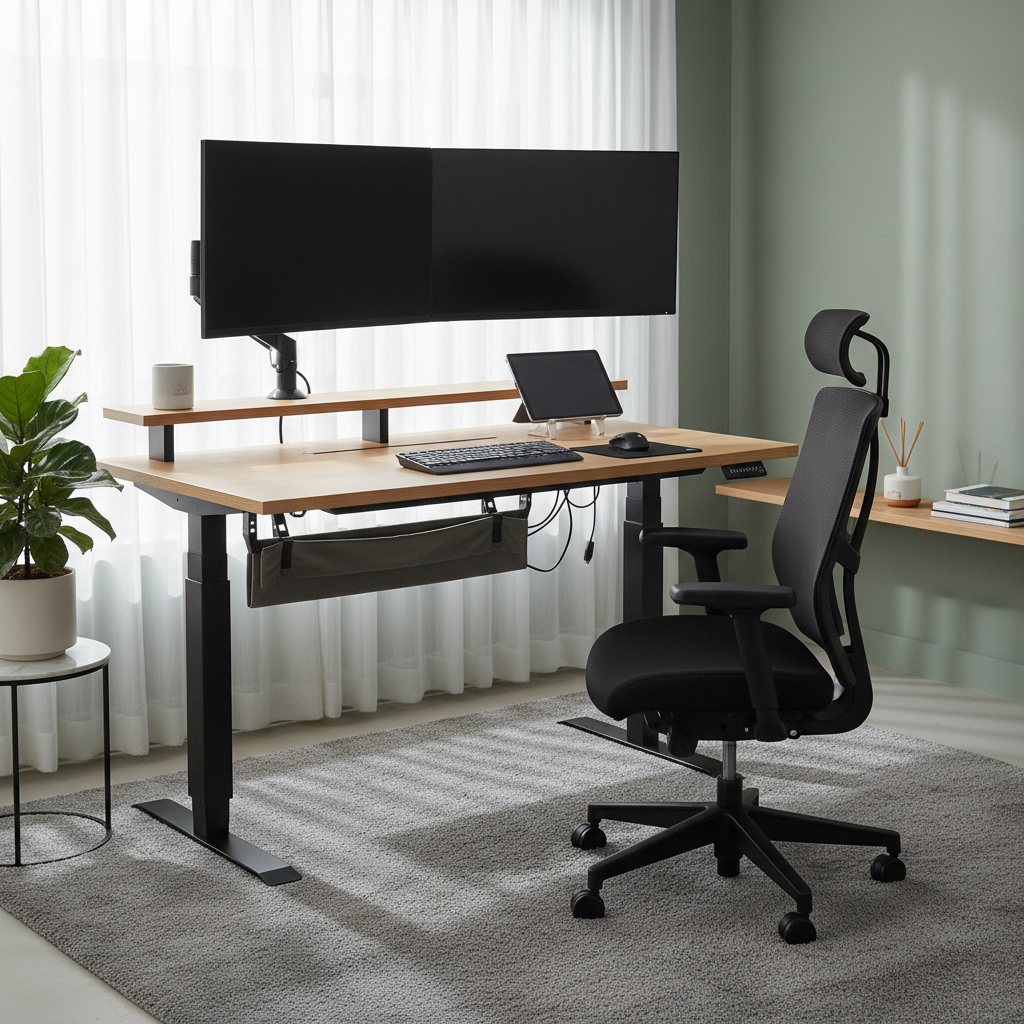
Facility teams implement height-adjustable surfaces and specialized seating to ensure that physical discomfort never interrupts the flow of workspace productivity for your employees. By providing tools that adapt to individual body types, you essentially eliminate the distracting neck strain and lower back pain that typically force workers to abandon their tasks for frequent recovery breaks. This intentional investment in musculoskeletal health creates a stable physical foundation where cognitive endurance can flourish without the constant interruption of bodily fatigue or chronic office-related injuries.
How do ergonomic chairs improve focus?
Here is the deal. High-performance seating solutions provide the necessary lumbar support and pelvic tilt required to maintain an upright, alert posture that directly facilitates sustained neural engagement during complex analytical tasks. When your staff isn’t constantly shifting in their seats to alleviate pressure points or muscle stiffness, they can dedicate their entire cognitive bandwidth to problem-solving and strategic execution. By integrating premium office furniture into the floor plan, facility managers create a professional atmosphere where the body feels supported enough to let the mind operate at its highest possible frequency.
- Adjustable lumbar tension settings.
- Breathable mesh backrests for temperature control.
- Synchro-tilt mechanisms for natural movement.
Can adjustable desks reduce physical fatigue?
Think about it. Standing desks empower your workforce to alternate between sitting and standing throughout the day, which maintains consistent blood flow and prevents the lethargy associated with static, sedentary work positions. This dynamic approach to the workday keeps metabolic rates higher and oxygen levels steady, ensuring that mental sharpness doesn’t dip during the notorious mid-afternoon slump. Basically, giving employees control over their physical orientation reduces the cumulative exhaustion that often leads to errors or decreased motivation during long, demanding shifts.
- Electric height presets for rapid transitions.
- Anti-fatigue floor mats for standing periods.
- Spacious work surfaces for multi-monitor setups.
Key Takeaway
Physical comfort is the baseline requirement for mental endurance and high-quality professional output.
| Ergonomic Feature | Primary Benefit | ROI Metric |
|---|---|---|
| Lumbar Support | Spinal alignment | Lower absenteeism |
| Standing Desks | Metabolic boost | Higher PM energy |
| Monitor Arms | Eye-level viewing | Reduced headaches |
The data confirms that removing physical strain leads to a direct and measurable improvement in employee concentration.
II. Optimized Flow for Workspace Productivity
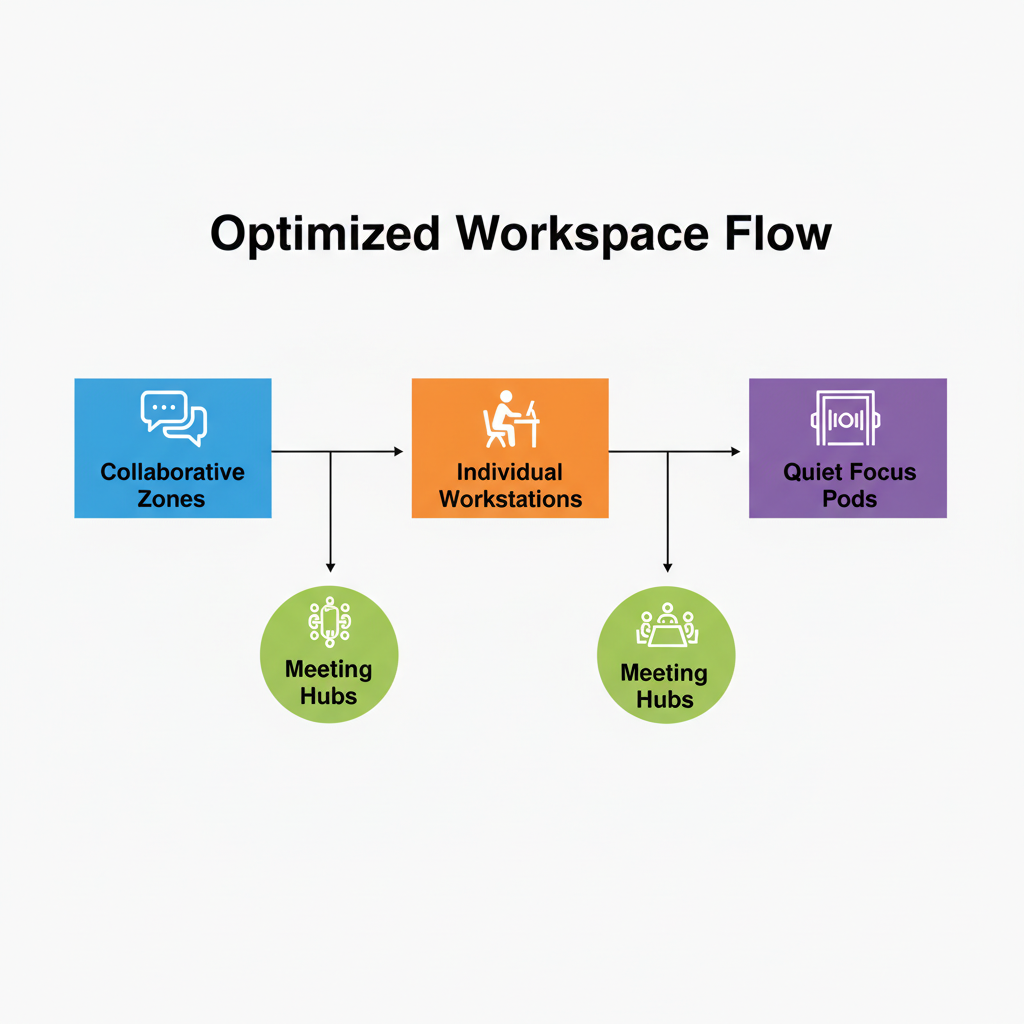
Logical spatial planning maximizes workspace productivity by minimizing the time your team spends navigating the floor to access necessary resources or collaborate with colleagues. When you organize the layout around the specific sequences of your daily business operations, you remove the subtle frustrations of bottlenecks and poorly placed equipment that disrupt deep work. A streamlined environment ensures that every movement has a purpose and that the transition between different tasks remains as fluid and frictionless as possible for everyone.
Does floor plan layout affect daily output?
What is the catch? A poorly conceived floor plan forces employees to take long, circuitous routes to basic amenities, which adds unnecessary physical and mental steps to their already busy schedules. By clustering related departments together and placing high-use tools in central hubs, you significantly reduce the aggregate time lost to simple transit throughout the office. This spatial logic helps maintain the momentum of creative projects because the physical environment supports the natural speed of your team’s thoughts and professional interactions.
- Adjacent placement of collaborative departments.
- Clear, unobstructed primary walking paths.
- Strategic location of shared resource centers.
How does furniture placement impact social flow?
So, basically. Arranging modular tables and chairs into intentional “neighborhoods” encourages spontaneous collaboration without allowing the noise of these interactions to wash over the entire focused work area. You can use large pieces of furniture as soft boundaries that guide traffic away from quiet zones, ensuring that social energy is contained within appropriate spaces. This clever use of the physical environment allows for a vibrant community atmosphere while still protecting the sanctity of the individual workspaces where the most intensive output occurs.
- Acoustic furniture as spatial dividers.
- Open sightlines to promote accessibility.
- Touchdown spots for quick informal chats.
Key Takeaway
Spatial efficiency removes the invisible barriers that slow down project timelines and frustrate high-performing staff members.
| Layout Strategy | Practical Application | Flow Improvement |
|---|---|---|
| Neighborhoods | Departmental grouping | Faster communication |
| Transit Hubs | Centralized printing | Reduced foot traffic |
| Buffer Zones | Hallways between quiet/loud | Noise control |
A logical floor plan allows the workforce to focus on their results rather than navigating an inconvenient office.
III. Natural Light for Workspace Productivity
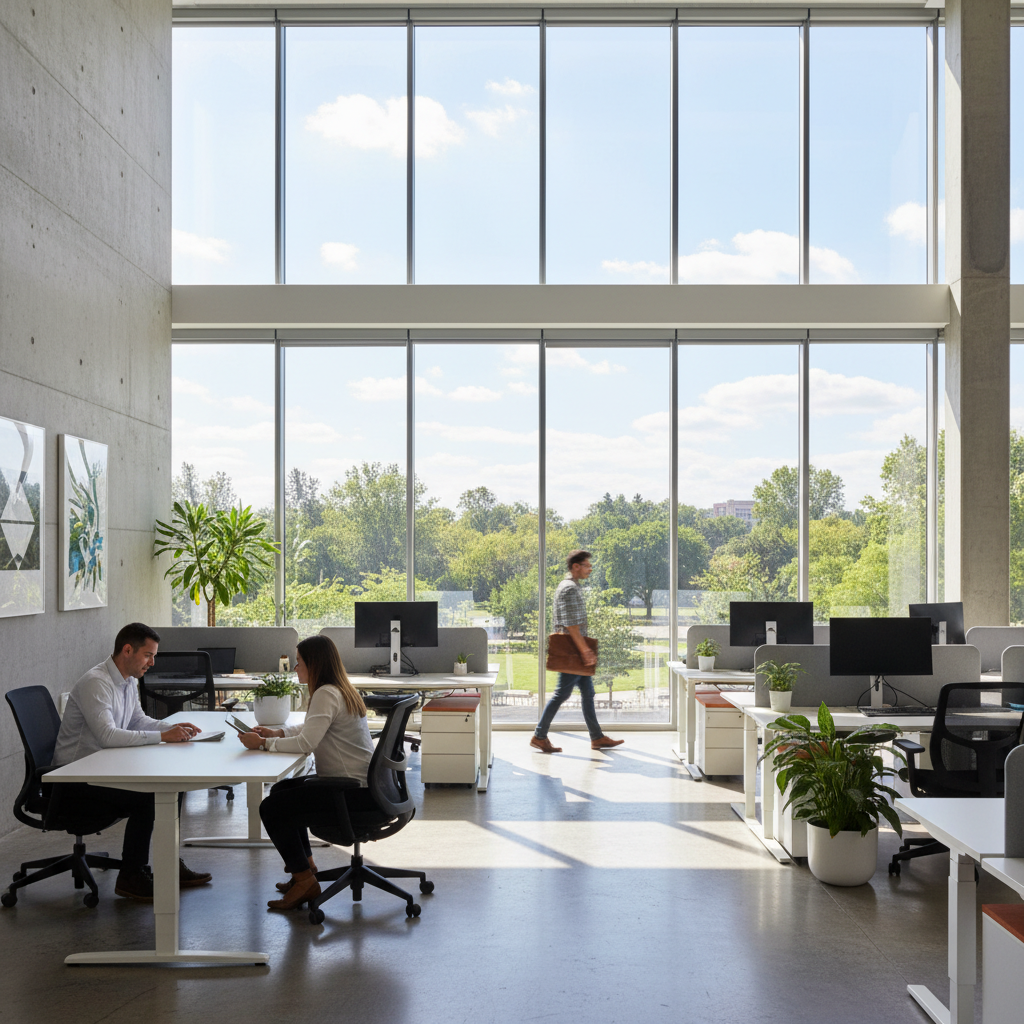
Maximizing exposure to daylight is a fundamental strategy for boosting workspace productivity because it directly influences the biological rhythms and mental alertness of your workforce. Sunlight is the most effective tool you have for creating an inviting, high-energy environment that prevents the clinical, draining feeling often found in windowless or poorly lit corporate spaces. By ensuring that every desk has a line of sight to the outdoors, facility teams can dramatically improve the overall atmosphere and professional performance of the entire company.
Can natural light reduce employee eye strain?
Believe it or not. Full-spectrum daylight provides a balanced illumination that is far more compatible with human vision than the flickering, blue-heavy output of standard industrial fluorescent lighting systems. This reduction in visual stress prevents the development of tension headaches and digital eye strain, allowing your team to stay comfortable while working on intensive computer-based tasks for several hours. When the lighting is consistent and natural, you will notice that staff members remain more engaged and less prone to the irritability that stems from physical ocular fatigue.
- Balanced light spectrum for visual clarity.
- Reduced reliance on harsh overhead fixtures.
- Lower contrast between screens and background.
Does window access improve mental alertness?
What is the point? Exposure to natural light cycles helps synchronize the human circadian rhythm, which ensures that your employees feel awake and sharp during standard business hours and sleep better at night. This biological alignment leads to higher levels of daytime energy and a significant reduction in the brain fog that often plagues workers in artificial, isolated environments. Well, giving your team access to a view of the sky and shifting light patterns keeps their minds connected to the outside world, which provides a necessary mental reset during a long day.
- Regulation of serotonin and melatonin.
- Visual breaks to prevent mental burnout.
- Warmer, more welcoming aesthetic appeal.
Key Takeaway
Natural illumination is a biological necessity that fuels cognitive energy and prevents the physical drain of artificial environments.
| Light Source | Biological Effect | Focus Level |
|---|---|---|
| Natural Daylight | Circadian alignment | Maximum |
| LED (Warm) | Comfort and stability | High |
| Fluorescent | Visual stress | Low |
Strategic use of daylighting is perhaps the most cost-effective way to immediately improve office morale and alertness.
IV. Biophilic Greenery for Workspace Productivity
Integrating living plants into the office design significantly raises workspace productivity by creating a calming atmosphere that fosters higher levels of creative and analytical thinking. This biophilic approach addresses the deep-seated human need for a connection to nature, which is often neglected in the pursuit of cold, modern office aesthetics. By surrounding your employees with organic textures and vibrant greenery, you provide a psychological buffer against the stress of high-pressure deadlines and the sterility of typical corporate life.
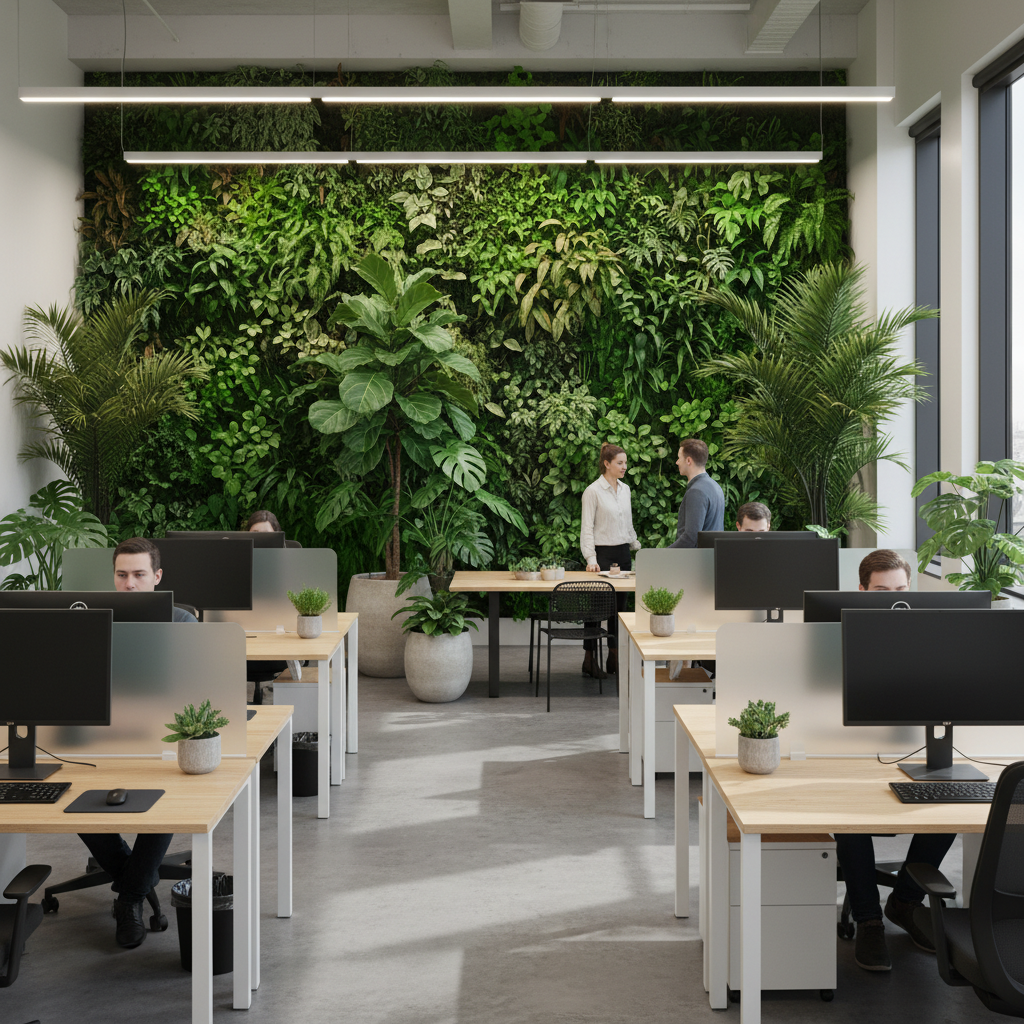
Why do office plants increase creativity?
Here is the deal. The presence of organic shapes and varying shades of green breaks up the monotonous, rigid lines of an office, which helps stimulate the more imaginative parts of the human brain. Nature-inspired environments encourage a more relaxed mental state that is far more conducive to “out-of-the-box” problem solving and the synthesis of complex, diverse ideas. Basically, when you bring the outdoors inside, you create a space that feels alive and inspiring rather than just a place to process data and fill out spreadsheets.
- Visual variety that sparks imagination.
- Organic textures to counter cold tech.
- Natural color palettes for mental calm.
How does nature-inspired design lower stress?
What’s the catch? Natural elements like wood grain and stone surfaces have a grounding effect that measurably lowers the levels of cortisol, the primary stress hormone, in your staff’s bloodstreams. This reduction in physiological tension allows your team to handle difficult challenges with a clearer head and a more resilient emotional state throughout the stressful work week. So, by choosing materials that feel tactile and warm, facility teams can build an office that acts as a restorative sanctuary rather than a source of persistent anxiety.
- Reduced atmospheric CO2 and toxins.
- Tactile wooden surfaces for comfort.
- Improved humidity levels for better breathing.
Key Takeaway
A green workspace provides the psychological and physiological relief required for sustained high-performance cognitive work.
| Biophilic Element | Mental Benefit | Aesthetic Value |
|---|---|---|
| Indoor Trees | Stress reduction | High Impact |
| Living Walls | Air purification | Modern/Pro |
| Wood Finishes | Grounding/Warmth | Professional |
Investing in biophilic design creates a workspace that supports the long-term mental health of every employee.
V. Organized Desks for Workspace Productivity
Facility teams focus on high-quality storage solutions to maintain workspace productivity by effectively shielding your employees from the mental clutter caused by physical disarray. A clean workstation allows the brain to dedicate its full processing power to the primary objective rather than being distracted by the visual noise of loose papers and tangled cables. By providing a specific home for every tool and document, you empower your team to start each morning with a clear mind and a sense of professional control over their environment.

How does a clean desk lower cortisol levels?
Think about it. The human brain is hardwired to scan its surroundings for potential problems, and a messy desk presents a constant stream of minor irritations that trigger a low-level stress response throughout the day. When you clear away the physical debris of past projects, you essentially tell your nervous system that it is safe to focus deeply on the single task currently at hand. Well, a tidy workspace creates a feeling of mastery and competence that directly translates into more confident decision-making and a higher overall volume of daily output.
- Reduced visual distraction during tasks.
- Faster retrieval of essential materials.
- Higher perceived professionalism and order.
What storage solutions prevent visual clutter?
So, basically. Implementing modular shelving and sleek under-desk cabinets allows your team to stow away everything that isn’t immediately necessary for their current work session. You can also use kids and nursery furniture design principles for smaller storage needs to ensure that even the smallest items have a designated, organized space. This commitment to minimalism ensures that the work surface remains a blank canvas for new ideas rather than a storage graveyard for half-finished assignments and ancient office supplies.
- Integrated cable management systems.
- Sleek, lockable mobile pedestals.
- Minimalist wall-mounted shelving.
Key Takeaway
Organizational tools provide the structural clarity needed for your staff to achieve a state of high-focus “flow” in their work.
| Storage Solution | Benefit | Clutter Type |
|---|---|---|
| Cable Trays | Visual peace | Tech/Wires |
| Drawer Dividers | Fast access | Small supplies |
| Wall Shelves | Surface clearing | Large items |
Removing visual chaos is the most direct path to reducing employee stress and increasing their weekly focus.
VI. Quiet Zones Drive Workspace Productivity
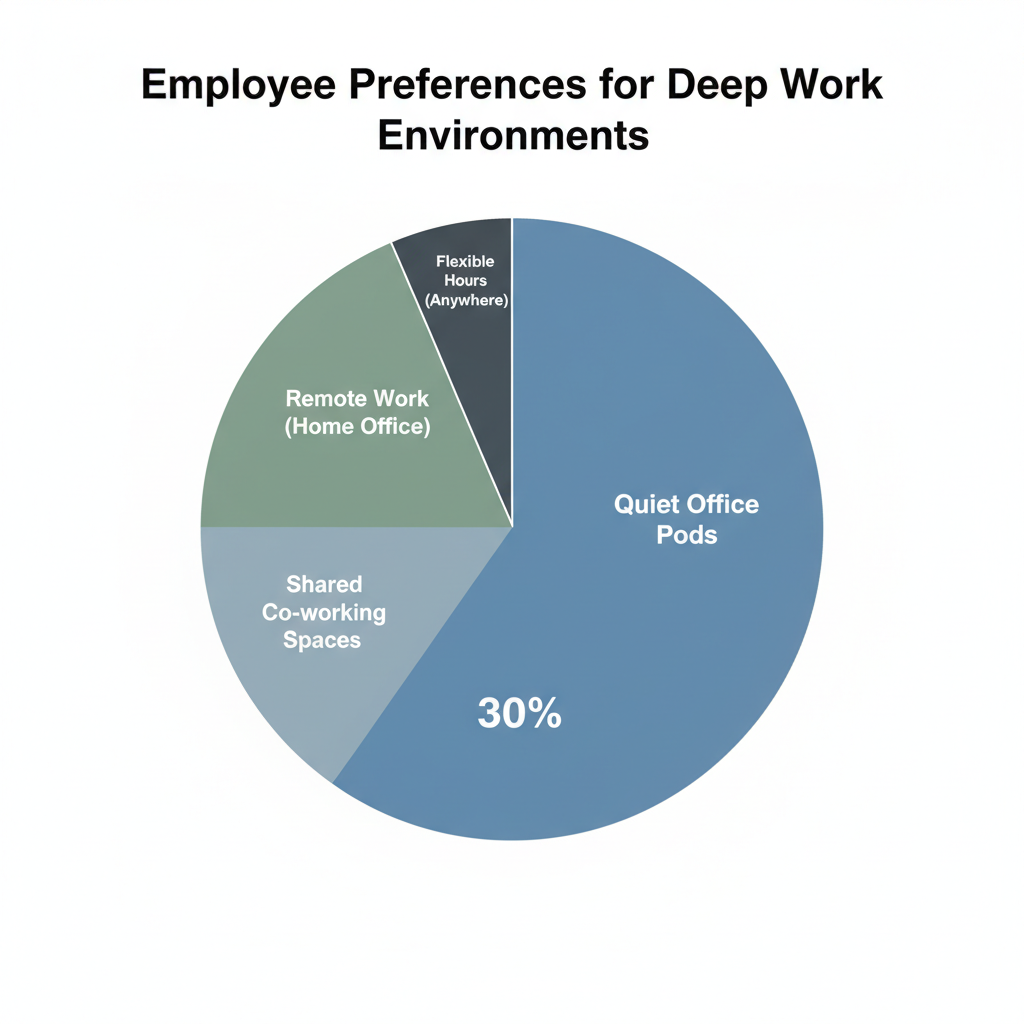
Establishing dedicated silent areas is a non-negotiable requirement for maximizing workspace productivity in an era where open-plan layouts dominate the professional landscape. These zones provide a critical sanctuary for your most intensive “deep work” projects that require absolute concentration and protection from the constant interruptions of modern office life. By creating a physical boundary between social collaboration and solo focus, facility teams can ensure that high-value thinking is never sacrificed for the sake of a vibrant, active floor plan.
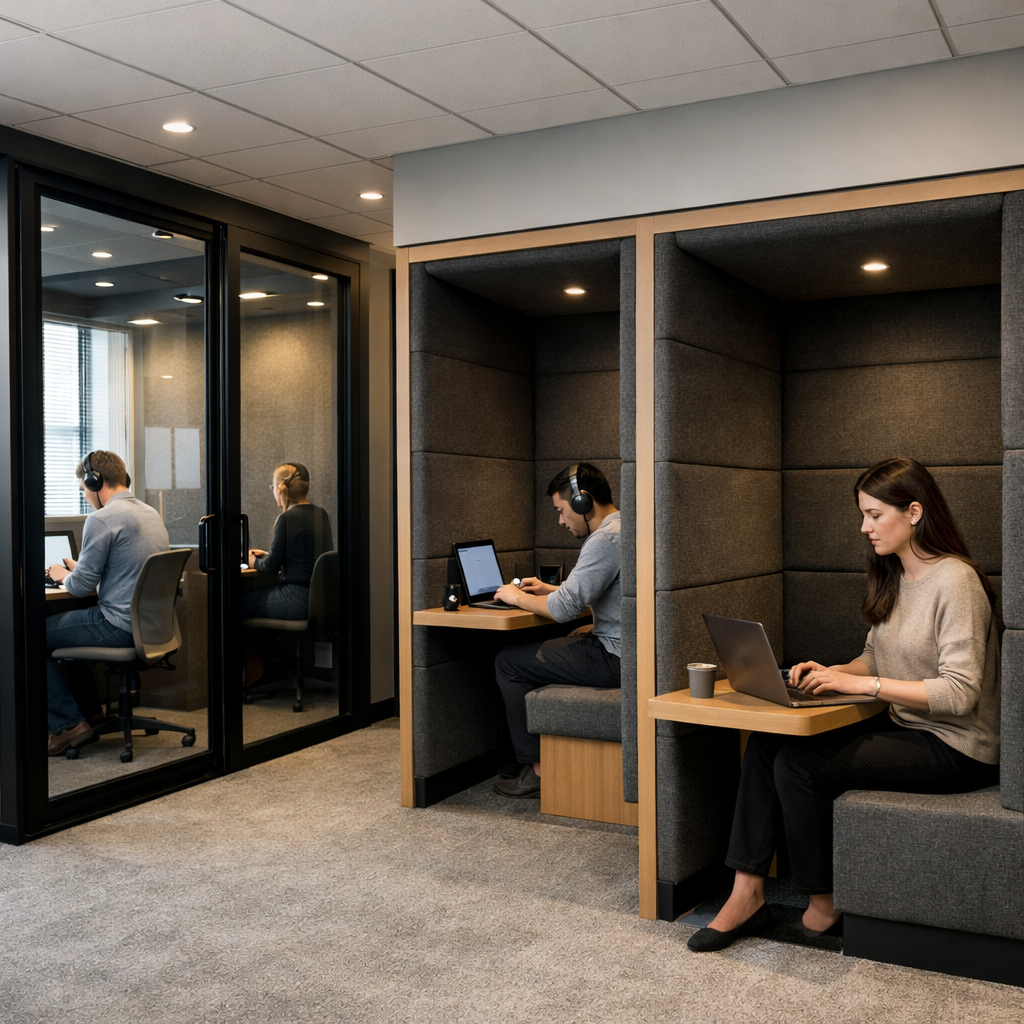
Where should facility teams put focus pods?
Here is the deal. Focus pods should be located in the quietest corners of the building, far away from high-traffic zones like the elevators, breakrooms, or the main entrance, where conversations are naturally louder. This strategic placement ensures that the physical shell of the pod isn’t overworked by excessive ambient noise, providing a truly silent interior for concentrated work sessions. If you place these pods in the “dead ends” of the office layout, you naturally limit the number of people walking past, which further reduces visual and auditory distractions for the user inside.
- Low-traffic peripheral office locations.
- Proximity to library or research areas.
- Away from communal kitchen hubs.
How do acoustic panels block noise pollution?
What’s the catch? Specialized educational furniture and wall treatments use high-density materials to absorb sound waves rather than letting them bounce off hard surfaces and create a distracting echo throughout the room. These panels effectively dampen the background hum of air conditioning systems and distant conversations, creating a “soft” acoustic environment that is much easier on the human nervous system. So, by layering these absorbent materials throughout the office, you can maintain a sense of calm even when the building is full of active, communicating employees.
- High-absorption felt wall coverings.
- Ceiling baffles to break up sound.
- Heavy-duty sound-dampening partitions.
Key Takeaway
Acoustic control is the primary defense against the concentration-killing noise that typically plagues the modern open office.
| Acoustic Tool | Noise Reduction | Usage Case |
|---|---|---|
| Focus Pods | Absolute Silence | Deep analysis |
| Wall Panels | Echo dampening | Main work floor |
| Soft Flooring | Footstep muffled | High traffic |
Silence is a valuable resource that allows your most talented employees to produce their best possible work without interruption.
VII. Flex Design and Workspace Productivity
Adopting a flexible approach to furniture and spatial design allows your facility to maintain high workspace productivity as your company’s needs and team sizes evolve. Modular systems empower you to reconfigure the office layout in a matter of hours to support a sudden pivot in strategy or a new collaborative project without the need for expensive construction. This physical agility ensures that the environment always serves the current goals of the business rather than acting as a static constraint on your team’s creativity and growth.

What are the main benefits of hot-desking?
What is the point? Hot-desking allows your staff to choose the specific environment that best suits their current task, whether they need a quiet corner for writing or a large communal table for a group brainstorming session. This variety prevents the mental stagnation that often comes from sitting at the same desk every single day, which can breathe new life into an employee’s professional routine and output. Well, by utilizing high-quality residential furniture styles in these zones, you can create a “home-away-from-home” feel that makes the office a more attractive place to spend the workday.
- Optimized use of available square footage.
- Increased cross-departmental interaction.
- Freedom for employees to find their focus.
How do multipurpose zones support agile teams?
Believe it or not. A single zone equipped with foldable tables and mobile whiteboards can transform from a formal presentation room into a casual lounge area or a collaborative workshop space in minutes. This versatility allows you to host a wide range of activities within a smaller footprint, which is a major advantage for growing companies with limited real estate. Basically, when the furniture is designed to move, the entire office becomes a dynamic tool that can be shaped to meet the unique demands of any project your team takes on.
- Wheeled desks for rapid re-grouping.
- Stackable chairs for clear floor space.
- Folding partitions for temporary privacy.
Key Takeaway
Flexible design ensures that your physical assets remain useful and relevant regardless of how your business model changes.
| Flex Solution | Operational Benefit | Mobility |
|---|---|---|
| Mobile Desks | Fast team re-scaling | Maximum |
| Folding Walls | Temporary meeting rooms | High |
| Nesting Chairs | Space-saving storage | High |
An adaptable office is a future-proofed office that supports long-term output and organizational resilience.
VIII. Better Movement for Workspace Productivity
Encouraging physical activity throughout the day is a proven strategy for elevating long-term workspace productivity and preventing the mental fatigue associated with sedentary work. When your office design nudges people to get up and walk, you are essentially facilitating a natural “brain break” that clears the mind and allows for fresh perspectives to emerge. This commitment to movement keeps the workforce physically engaged and mentally sharp, ensuring that the afternoon hours remain just as productive as the start of the morning.
Why should employees move more during work?
Here is the deal. Regular physical activity boosts blood circulation and oxygen flow to the brain, which is the biological fuel required for high-level problem solving and creative thinking. When people stay in one position for too long, their metabolism slows down, and they often experience a “foggy” mental state that leads to procrastination and errors. So, by creating a culture that celebrates movement, you are directly investing in the cognitive sharpness and long-term health of every single person on your payroll.
- Enhanced alertness through circulation.
- Reduced risk of chronic desk pain.
- Mental resets between deep tasks.
How does layout design encourage walking?
Think about it. By placing popular amenities like high-end coffee stations or the central mailroom further away from the main seating clusters, you create natural opportunities for your team to take short, healthy walking breaks. These intentional “friction points” force employees to step away from their screens and move their bodies, which often leads to the most creative “eureka” moments that occur when the mind is at rest. You see, a slightly spread-out office isn’t an inconvenience; it’s a clever health intervention that keeps your staff vibrant and ready to tackle their next major challenge.
- Centralized but distant water hubs.
- Open, attractive internal staircases.
- Standing-height collaborative counters.
Key Takeaway
Movement is the natural enemy of mental stagnation and a critical component of a high-performance office culture.
| Movement Trigger | Action Taken | Energy Impact |
|---|---|---|
| Distant Printer | Short walk break | Low-Medium |
| Standing Meeting | Posture shift | High |
| Central Kitchen | Social movement | Medium |
Designing for movement ensures that physical vitality supports the mental output of your entire professional team.
IX. Tech Management for Workspace Productivity
Facility teams protect workspace productivity by streamlining the integration of technology so that it supports rather than distracts from the core work of the company. When you manage the physical presence of hardware and cables effectively, you remove the “tech friction” that often leads to frustration and lost time during the business day. A well-organized technical environment ensures that your employees spend their energy on their actual jobs rather than wrestling with tangled wires or searching for the right adapter in a cluttered boardroom.

How do gadget-free zones aid deep work?
What is the catch? By designating certain rooms as “analog-only,” you provide a sanctuary where your team can brainstorm or write without the constant bombardment of digital notifications and the temptation to check emails. These tech-free environments allow for a level of presence and mental depth that is almost impossible to achieve when smartphones and laptops are always within arm’s reach. Well, removing the digital noise for even one hour a day can lead to significant breakthroughs in complex projects that require your staff’s undivided attention and creative energy.
- No-phone policies in focus areas.
- Large, wall-mounted analog whiteboards.
- High-quality stationery and notebooks.
Can focus-mode tech reduce digital distraction?
So, basically. Integrating smart office systems that automatically signal a “Do Not Disturb” status on an employee’s digital profile when they are in a quiet zone helps protect their mental flow from unnecessary interruptions. This technology acts as a digital gatekeeper, ensuring that only the most urgent communications reach the worker while they are performing intensive, high-value tasks. Basically, by syncing the physical space with digital status indicators, you create a seamless environment where the entire company respects the importance of focused, uninterrupted output.
- Automated “occupied” status lights.
- Simplified room booking applications.
- Integrated desk-charging solutions.
Key Takeaway
Effective tech management ensures that digital tools remain useful servants rather than distracting masters in the workplace.
| Tech Strategy | Benefit | Focus Shielding |
|---|---|---|
| Analog Rooms | Deep ideation | Very High |
| Status Lights | Fewer interruptions | High |
| Cable Hiding | Visual calm | Medium |
Balancing high-tech utility with low-tech focus areas creates the perfect environment for modern professional excellence.
X. Cultural Values for Workspace Productivity
The physical design of your office is the most powerful way to signal your company values and build a foundation for high workspace productivity through trust and transparency. When you invest in a beautiful, functional environment, you are telling your employees that their comfort and contribution are highly valued by the organization. This sense of being respected and supported creates a loyal, motivated workforce that is far more likely to go above and beyond to achieve the company’s long-term goals and mission.
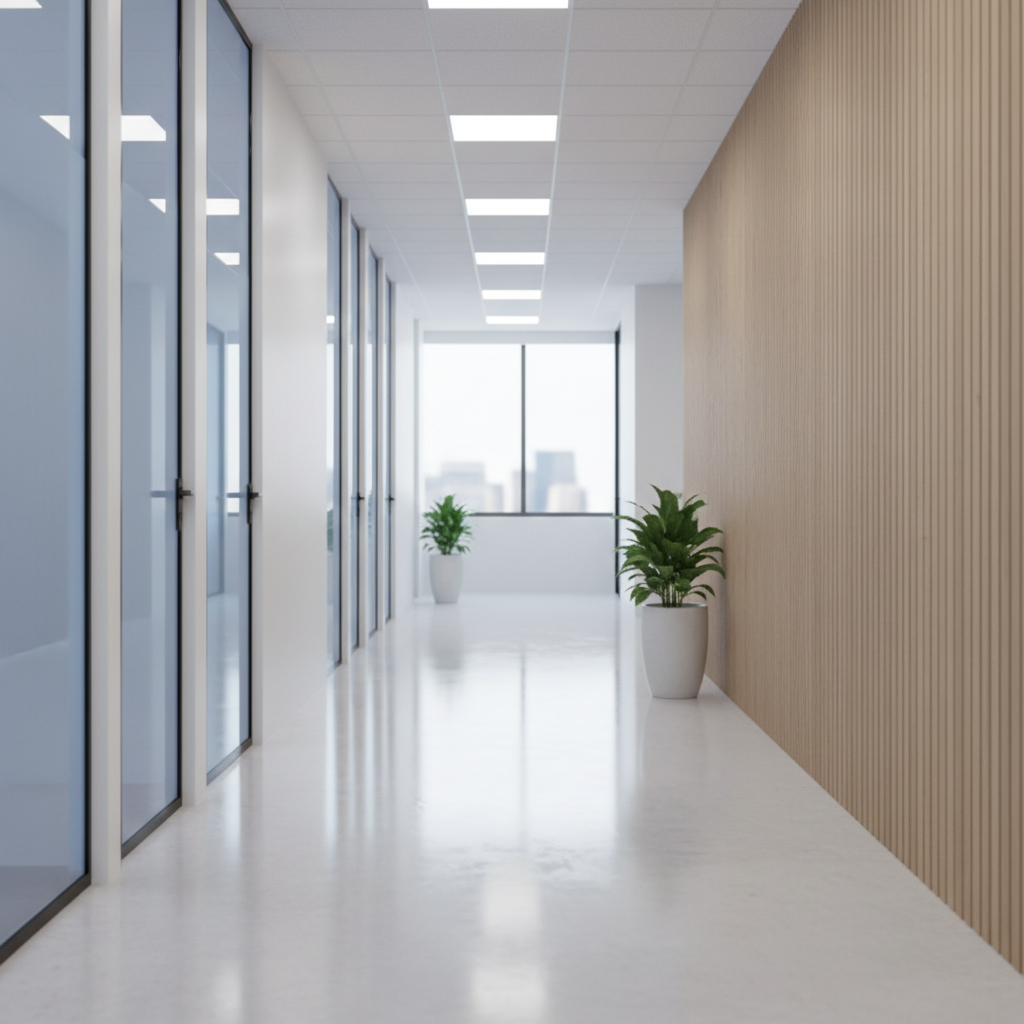
Does office design reflect company missions?
Here is the deal. A workspace that prioritizes open communication and high-quality hospitality furniture in communal areas shows that your brand is committed to collaboration and human-centric service. When the physical environment matches the corporate rhetoric, it builds a sense of authenticity and integrity that resonates deeply with both your employees and your visiting clients. So, by making conscious choices about every chair and color palette, you are essentially writing your company’s story in a way that everyone who enters the building can clearly see and feel.
- Inclusive and accessible layout features.
- Brand-consistent aesthetic and materials.
- High-quality finishes for visitor trust.
How does an employee-centric space build trust?
What is the point? Providing your team with a variety of specialized zones—including places for both intense work and restorative relaxation—demonstrates that you trust them to manage their own productivity and well-being. This autonomy is a massive driver of professional satisfaction because it allows workers to feel like experts in their own work style rather than just cogs in a rigid corporate machine. Naturally, when people feel trusted and cared for by their physical environment, they respond with higher levels of creativity, loyalty, and consistent high-quality output every single day.
- Choice of diverse work environments.
- Premium amenities for staff comfort.
- Privacy zones for personal phone calls.
Key Takeaway
An office that reflects your values is a place where your team will feel proud to work and motivated to succeed.
| Value | Design Application | Team Impact |
|---|---|---|
| Transparency | Glass interior walls | Higher trust |
| Innovation | Flexible maker-labs | Creative risk |
| Wellness | Meditation/Quiet rooms | Lower burnout |
A value-aligned office is the most sustainable way to drive long-term business performance and employee retention.
Frequently Asked Questions
Q1: Can I improve my workspace productivity without a massive budget for new furniture?
Absolutely. You can start by simply clearing away all surface clutter, adding a few low-maintenance indoor plants, and designating one existing conference room as a permanent “silent zone” for deep focus.
Q2: What is the single most effective change for employee focus?
Reducing noise pollution through acoustic panels or private pods is almost always the most effective intervention because sound is the primary killer of concentration in modern offices.
Q3: How do I convince my team to actually use the new movement-focused areas?
Lead by example and host standing-only meetings or coffee breaks in the communal zones to show your staff that getting up from their desks is not only allowed but encouraged by the leadership team.
Q4: Is natural light really that important for worker output?
Yes. Biological studies consistently show that access to daylight reduces headaches, improves sleep quality, and keeps energy levels much higher during the standard workday than artificial lighting alone.
Q5: Does an organized desk really affect my brain?
Definitely, visual clutter forces your brain to constantly process unnecessary information, which drains your mental energy and makes it much harder to achieve a state of flow in your work.
To explore how high-quality wooden furniture can transform your professional environment, contact us today .