
Traditional procurement methods often overlook the physiological strain that static environments place on a modern workforce. This systemic neglect agitates hidden costs through increased absenteeism, lower engagement, and chronic musculoskeletal issues. You can mitigate these operational threats when you specify office furniture by integrating high-adjustability standards and biophilic materials that support the natural range of human motion.
I. DEFINE HUMAN-FACTOR TO SPECIFY OFFICE FURNITURE
You must first identify how physical environments interact with biological needs to specify office furniture that truly reduces risk. Human-factor risk involves the disconnect between a fixed workstation and the fluid movements required for healthy circulation and posture. By focusing on these intersections, you transform the office from a static space into a high-performance health tool.
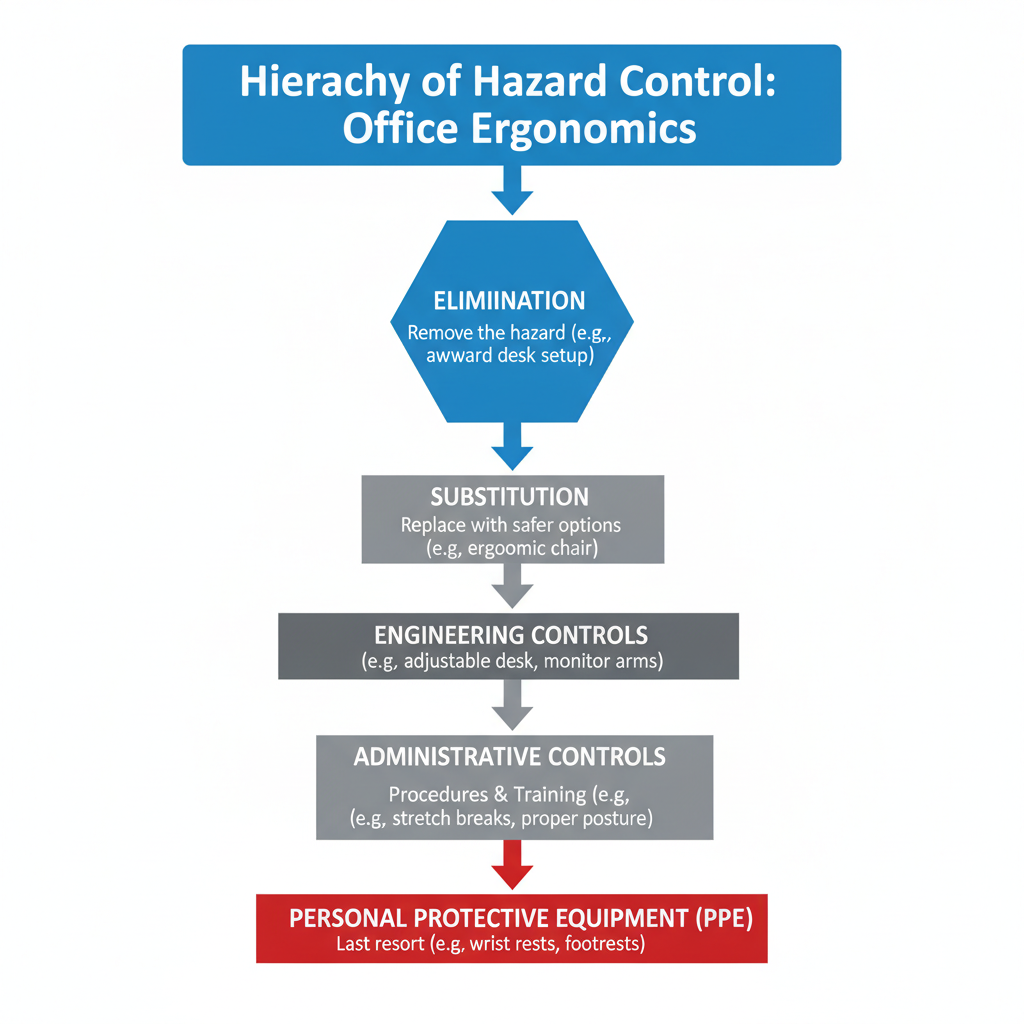
Hierarchy of Hazard Control for Office Ergonomics
This flowchart visually represents the hierarchy of hazard control applied to office ergonomics. It outlines a systematic approach to managing ergonomic risks, prioritizing the most effective control measures.
What is human-factor risk?
You should view this risk as any environmental element that forces your body into awkward, non-neutral positions for extended periods. The bottom line? Poor alignment leads to cumulative trauma that decreases your overall efficiency.
- Repetitive motion strain.
- Static muscle loading.
- Poor circulation patterns.
How does furniture impact health?
When you choose items that lack adjustability, you essentially force your workforce to adapt to the furniture rather than the furniture adapting to them. Think about this:
- Fixed heights cause neck strain.
- Rigid seats stop blood flow.
- Shallow desks cramp wrists.
Key Takeaway: Defining risk allows you to target specific ergonomic interventions that protect your team from long-term injury while maximizing daily productivity.
| Risk Category | Impact Level | Furniture Solution |
|---|---|---|
| Postural Strain | High | Adjustable Seating |
| Visual Fatigue | Medium | Monitor Arms |
| Respiratory Risk | Low | Low-VOC Materials |
The identification of these risk factors is the primary step in engineering a resilient corporate environment.
II. ROI GAINS WHEN YOU SPECIFY OFFICE FURNITURE
Financial returns become evident when you specify office furniture that prioritizes long-term health over the lowest initial purchase price. Investing in ergonomic quality reduces the “hidden” expenses associated with worker compensation claims and high turnover rates. A proactive procurement strategy ensures that your capital expenditure directly supports employee retention and operational continuity.
Can ergonomics save money?
You will see a significant reduction in long-term operational costs when your workstations are designed to prevent injury before it starts. Here is the truth:
- Lower insurance premiums.
- Reduced disability payouts.
- Higher talent retention.
Why focus on long-term costs?
You must realize that a cheap desk often costs more in medical leave and lost productivity than a premium Office Furniture solution ever would. Consider this:
- Five-year durability cycles.
- Decreased maintenance needs.
- Sustainable asset value.
Key Takeaway: Calculating the return on investment requires you to look beyond the invoice and account for the total cost of workforce health over a decade.
| Financial Metric | Standard Gear | Ergonomic Gear |
|---|---|---|
| Initial Cost | Low | Moderate |
| Annual Productivity | Baseline | +15% Boost |
| Health Claims | Variable | Significant Decrease |
Strategic spending on furniture acts as a form of insurance against the high cost of human-factor failures.
III. SPECIFY OFFICE FURNITURE FOR LUMBAR HEALTH
The most critical component is to specify office furniture that provides dynamic support for the spine’s natural curvature across various body types. You need to look for seating that accommodates the 5th to 95th percentile of your workforce through intuitive adjustment mechanisms. Proper lumbar support ensures that your team remains focused and comfortable throughout the entire eight-hour workday.
What makes a chair ergonomic?
You should search for chairs that offer multi-point adjustments, specifically targeting the lower back and seat depth to maintain neutral posture. Look:
- Dynamic lumbar tension.
- Height-adjustable armrests.
- Breathable mesh materials.
How to accommodate all sizes?
You can solve the “one-size-fits-all” problem by choosing chairs with sliding seat pans and high-weight-capacity gas cylinders. The result?
- Total inclusive design.
- Reduced hip pressure.
- Better lower leg circulation.
Key Takeaway: Advanced seating prevents the onset of lower back pain, which is the leading cause of work-related disability in corporate environments.
| Feature | Primary Function | User Benefit |
|---|---|---|
| Seat Pan Slide | Depth Control | Thigh Support |
| Lumbar Dial | Tension Control | Spine Alignment |
| Tilt Lock | Angle Stability | Position Variety |
Ensuring that every employee has a custom-fitted seat is non-negotiable for enterprise-scale health management.
IV. SPECIFY OFFICE FURNITURE FOR ACTIVE WORK
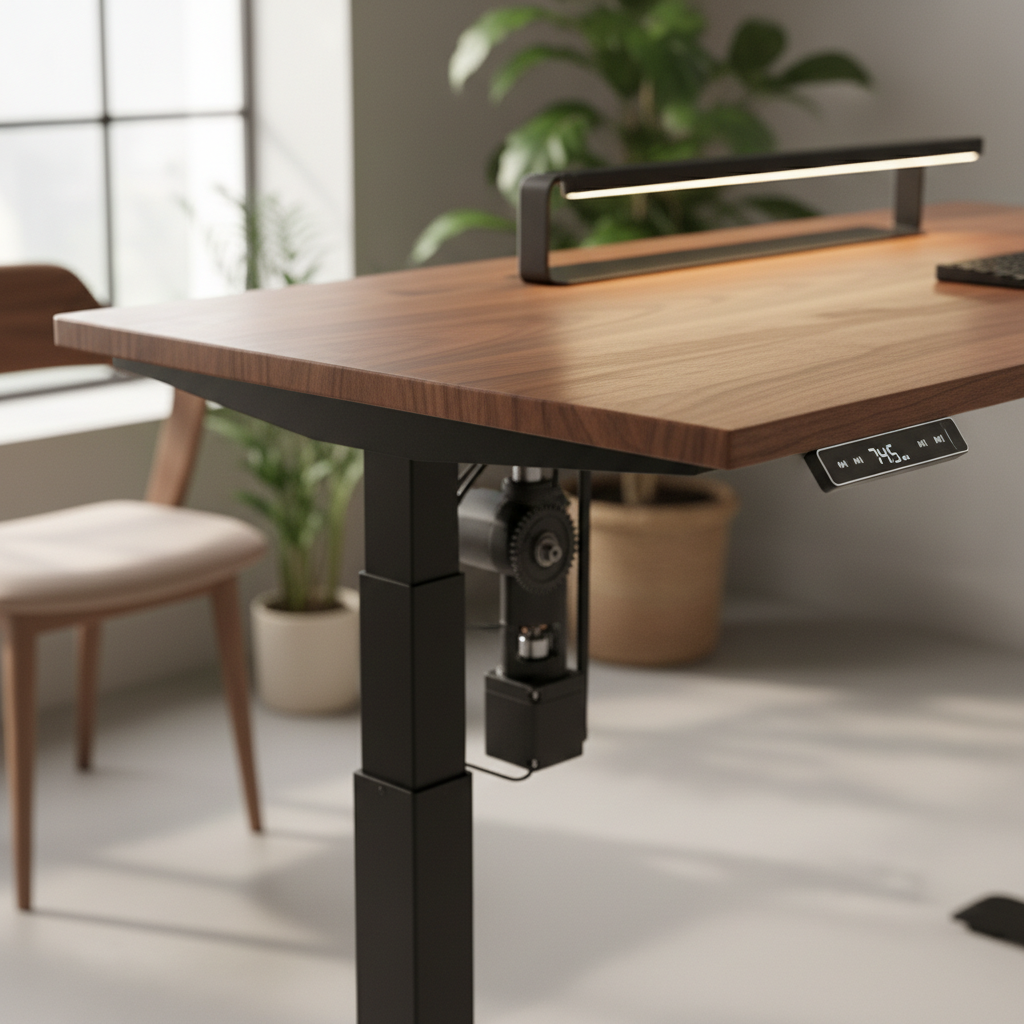
Modern wellness initiatives require you to specify office furniture that encourages movement rather than rewarding sedentary behavior. You should implement height-adjustable surfaces that allow your employees to transition between sitting and standing seamlessly. This movement keeps metabolic rates higher and reduces the physical fatigue associated with holding a single position for hours.
Are standing desks necessary?
You will find that offering height-adjustable options is the most effective way to combat the negative health impacts of a sedentary lifestyle. Now:
- Improved caloric burn.
- Enhanced mental alertness.
- Varied muscle engagement.
How to ensure motor quality?
You must verify that the lifting mechanisms are rated for commercial use and can handle the weight of multiple monitors without lagging. The secret?
- Dual-motor synchronicity.
- Anti-collision safety sensors.
- Whisper-quiet operation levels.
Key Takeaway: Active workstations empower your team to take control of their physical comfort, leading to a more energetic and engaged workplace culture.
| Component | Minimum Standard | High-End Standard |
|---|---|---|
| Motor Type | Single | Dual-Linear |
| Noise Level | < 55 Decibels | < 45 Decibels |
| Speed | 25mm per second | 38mm per second |
The transition to active surfaces is the most visible way to signal a commitment to workforce well-being.
V. SPECIFY OFFICE FURNITURE FOR WRIST SAFETY
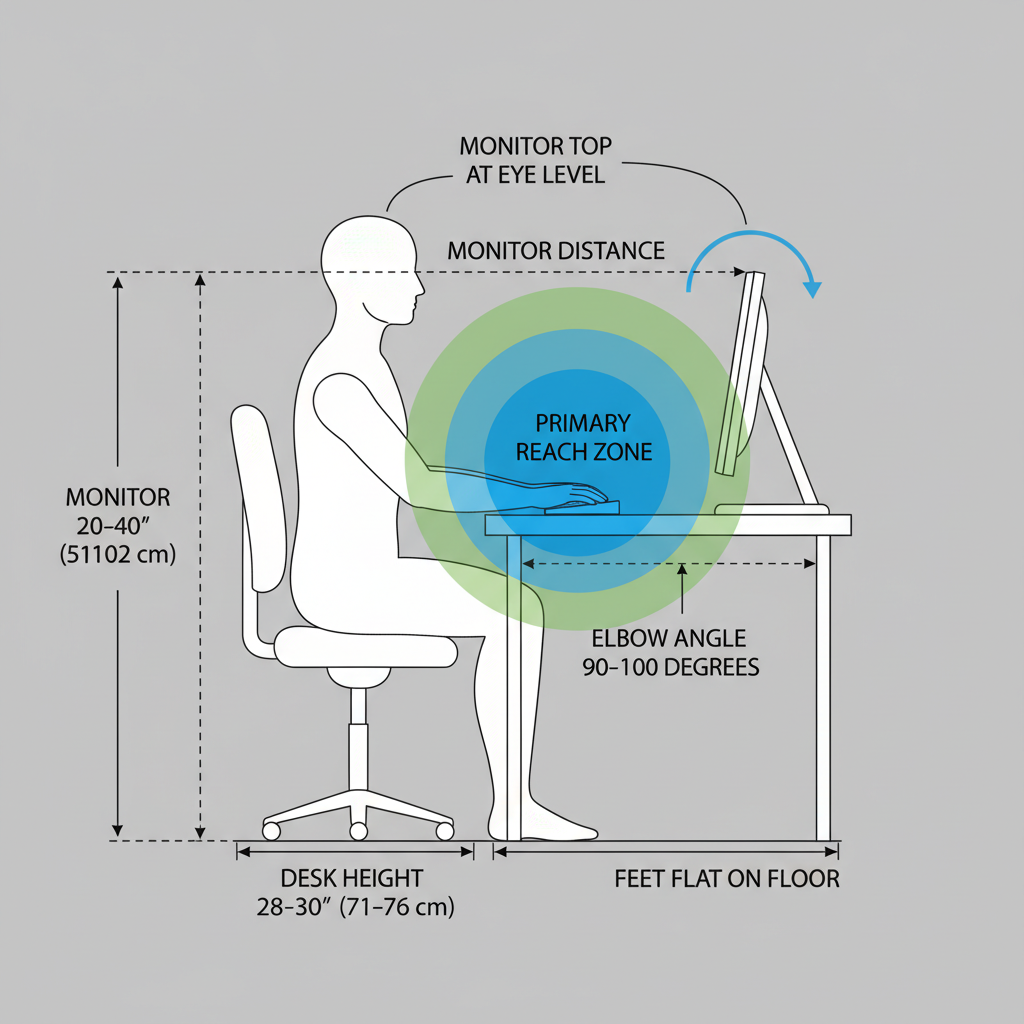
You must carefully specify office furniture dimensions to ensure that the desk surface depth allows for proper reach zones and neutral wrist alignment. If your desks are too shallow, your employees will be forced to compress their reach, leading to carpal tunnel and shoulder strain. Selecting the right depth and edge profile ensures that the interface between the human and the computer remains ergonomic.
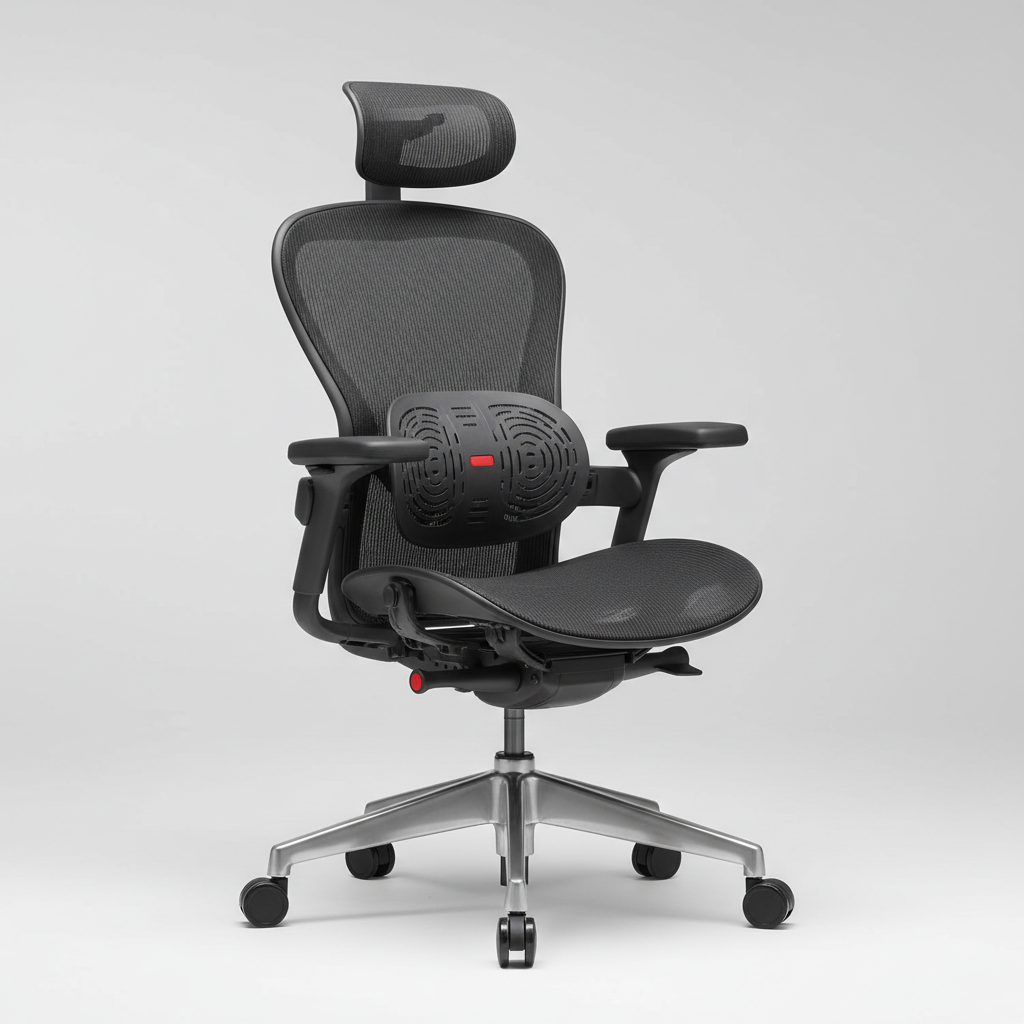
How deep should desks be?
You should aim for a minimum depth of 30 inches to allow for monitor distancing and a “primary reach zone” for your keyboard. Why does this matter?
- Prevents elbow overhang.
- Optimizes focal distance.
- Reduces shoulder shrugging.
Is the reach zone critical?
You can prevent repetitive strain injuries by ensuring that the most frequently used items are within an easy, 15-inch radius of the body. Think about this:
- No over-reaching for phones.
- Neutral wrist positioning.
- Minimized torso twisting.
Key Takeaway: Surface geometry is as important as chair adjustability, as it dictates the physical layout of every task performed at the computer.
| Zone | Distance | Recommended Items |
|---|---|---|
| Primary | 0-15 Inches | Keyboard, Mouse |
| Secondary | 15-25 Inches | Phone, Documents |
| Reference | 25+ Inches | Monitor, Lamp |
Properly spaced work surfaces provide the physical foundation required for long-term upper-body health.
VI. SPECIFY OFFICE FURNITURE FOR VISUAL COMFORT
Lighting integration is a vital part of your plan to specify office furniture that reduces eye strain and headaches across the floor. You should select furniture that works in tandem with task lighting and monitor arms to control glare and focal distance. When visual ergonomics are ignored, you risk a significant drop in employee focus and a sharp increase in error rates.
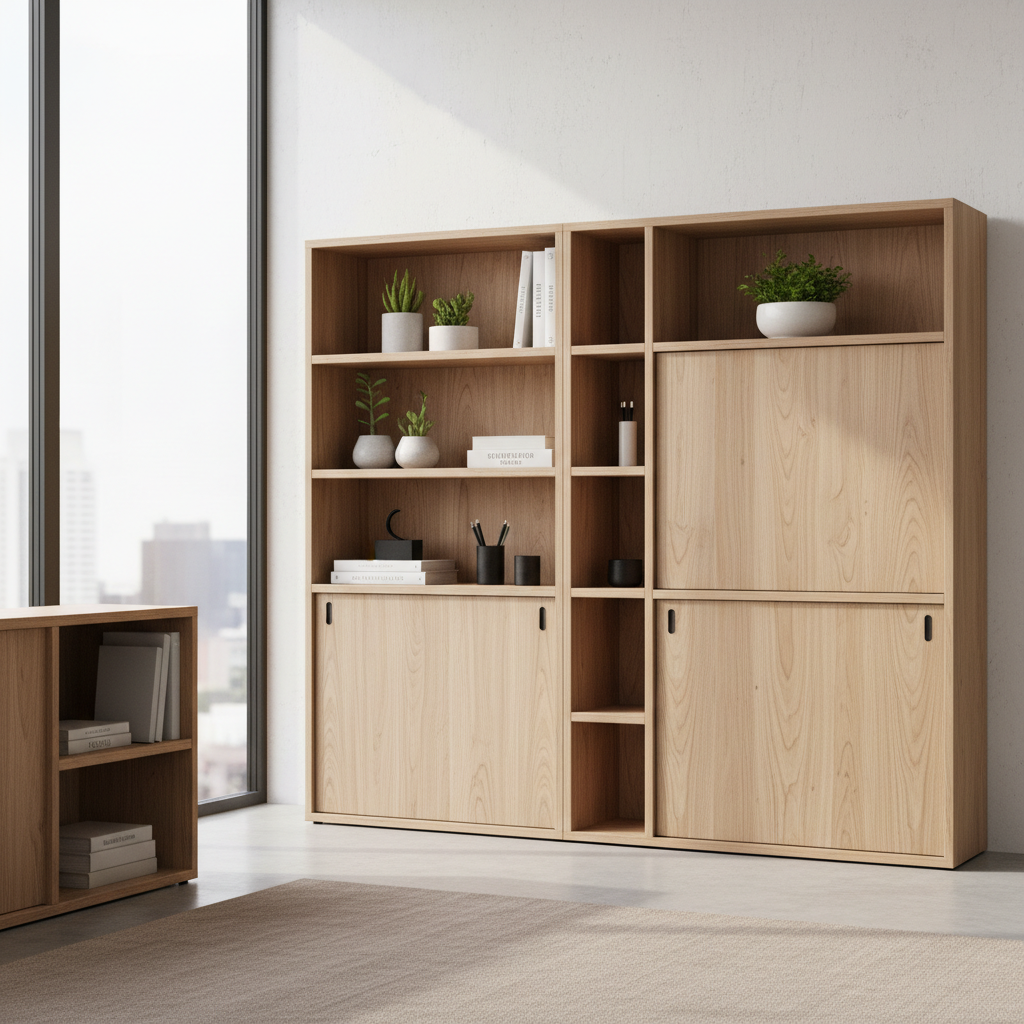
Does lighting affect productivity?
You will notice that soft, indirect lighting combined with adjustable task lamps significantly reduces the “computer vision syndrome” affecting many offices. Even better:
- Lower fatigue levels.
- Better mood regulation.
- Fewer migraine incidents.
How to reduce eye strain?
You can solve this by specifying monitor arms that allow for independent height and depth adjustments for every screen. But that’s not all:
- Correct 20-20-20 focal rules.
- Glare-free surface finishes.
- Personalized light levels.
Key Takeaway: Visual comfort is a pillar of ergonomic success that directly impacts the speed and accuracy of information processing.
| Light Source | Function | Benefit |
|---|---|---|
| Ambient | Overall Visibility | Safe Navigation |
| Task | Focused Work | Reduced Squinting |
| Natural | Circadian Rhythm | Improved Sleep |
Combining furniture with intelligent lighting creates a workspace that is both physically and mentally sustainable.
VII. SPECIFY OFFICE FURNITURE WITH SAFE MATERIALS
Your health strategy must include a mandate to specify office furniture made from low-VOC and sustainable materials to protect indoor air quality. Human-factor risk extends to the chemicals we breathe; synthetic laminates and glues often release harmful gases over time. By choosing natural wood or certified sustainable options, you ensure the environment is chemically safe for long-term exposure.
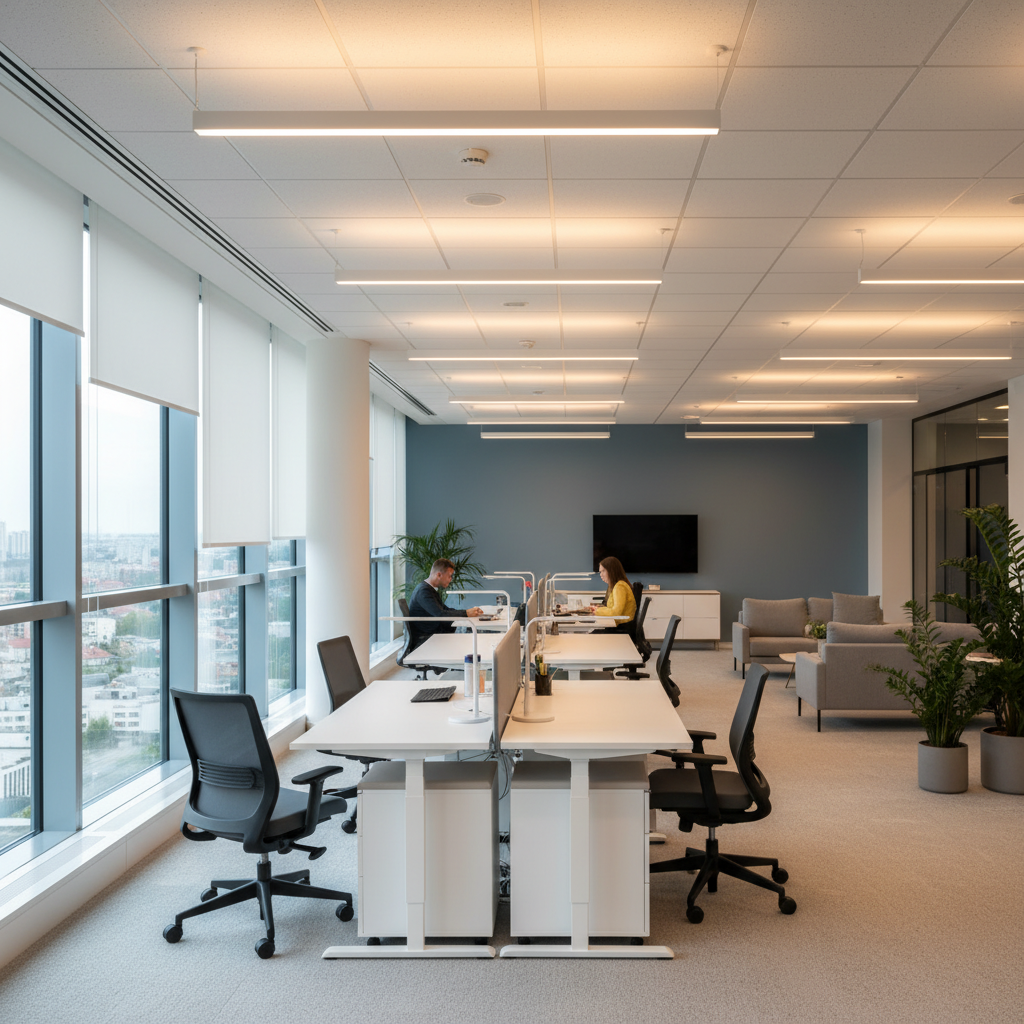
Are VOCs a risk factor?
You should be concerned about volatile organic compounds because they can cause respiratory irritation and long-term neurological health issues in enclosed spaces. Wait, there’s more:
- Hidden formaldehyde risks.
- Chemical sensitivity issues.
- Poor air quality scores.
Why choose solid wood?
You will find that natural materials found in our Educational Furniture lines offer a tactile, biophilic benefit while being inherently safer than plastic alternatives. The best part?
- Durable lifespan.
- Non-toxic finishes.
- Natural humidity control.
Key Takeaway: Material integrity is the foundation of a healthy office, ensuring that the air your team breathes is as clean as their posture is straight.
| Material | Health Rating | Durability |
|---|---|---|
| FSC Solid Wood | Excellent | Very High |
| E1 Particle Board | Moderate | Medium |
| Standard Plastic | Low | Variable |
Selecting safe materials is a commitment to the “unseen” ergonomics of respiratory and neurological health.
VIII. SPECIFY OFFICE FURNITURE FOR HYBRID TEAMS
The rise of flexible work means you must specify office furniture that supports “hot-desking” without sacrificing ergonomic consistency. You should implement modular systems that are easy to adjust for different users who might occupy the same desk on different days. This prevents the “ergonomic drift” that occurs when non-assigned seating leads to poor individual setups.
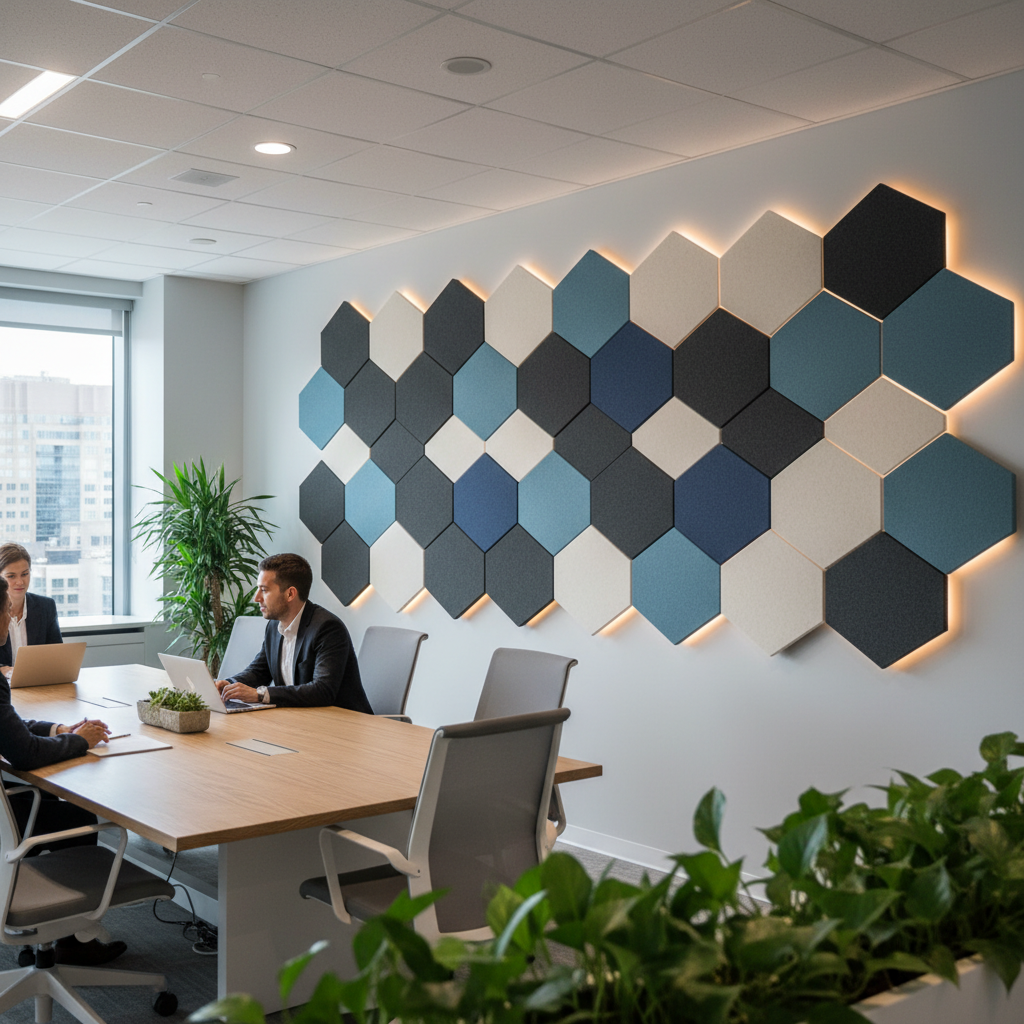
How to design for hot-desking?
You can maintain high standards by choosing desks with memory-height settings that allow users to return to their preferred level instantly. It gets better:
- Faster setup times.
- Consistent user experience.
- Mobile storage options.
Can pods reduce stress?
You should consider acoustic pods and modular dividers to provide the mental “privacy” needed for deep work in an open-plan setting. Why?
- Reduced noise pollution.
- Lower cortisol levels.
- Improved verbal privacy.
Key Takeaway: Hybrid furniture must be versatile enough to serve a rotating workforce while remaining robust enough for high-frequency use.
| Zone Type | Focus Area | Furniture Choice |
|---|---|---|
| Quiet Zone | Concentration | Acoustic Pods |
| Collaboration | Creative Flow | Modular Tables |
| Social Zone | Recovery | Ergonomic Sofas |
Adapting your furniture to the way your team actually works—rather than how they used to work—is essential for modern risk reduction.
IX. VET VENDORS TO SPECIFY OFFICE FURNITURE
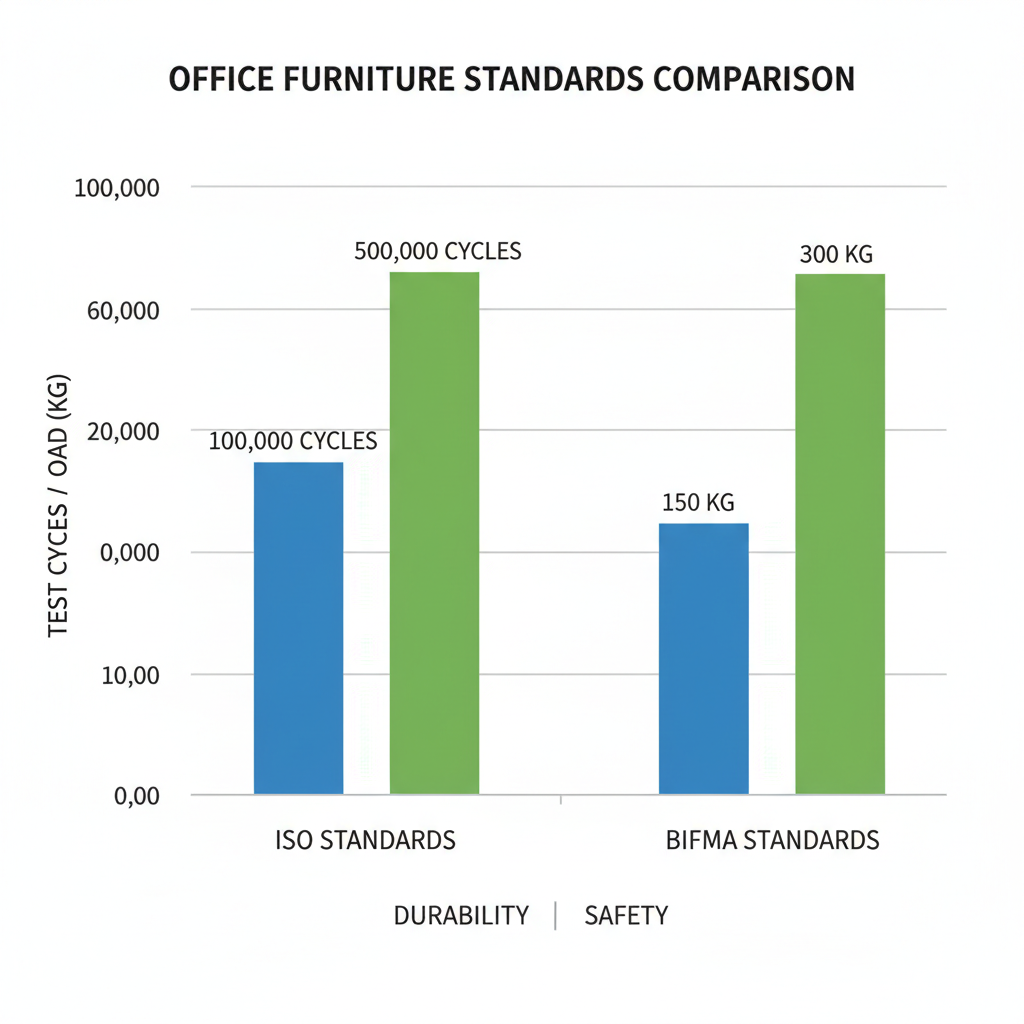
You must establish a rigorous vetting process to specify office furniture from manufacturers that adhere to global safety and durability certifications. It is not enough to look at a catalog; you must verify that the products have undergone stress testing for thousands of cycles. Ensuring your vendor has a proven track record in the B2B sector protects your investment and your people.
What certifications matter most?
You should prioritize manufacturers who meet BIFMA and ISO standards for load-bearing capacity and material safety. Consider this:
- Structural integrity tests.
- Finish durability checks.
- Weight limit verification.
How to test at scale?
You can request prototype samples to be used by a test group before committing to a full-scale enterprise rollout. The result?
- Fewer post-purchase issues.
- Better user feedback.
- Higher overall satisfaction.
Key Takeaway: Vetting your suppliers ensures that the “ergonomic” label on a product is backed by actual engineering data and safety performance.
| Certification | Focus Area | Verification Method |
|---|---|---|
| BIFMA X5.1 | Chair Safety | Cycle Stress Testing |
| ISO 9001 | Quality Control | Audit History |
| FSC | Sustainability | Source Tracking |
Rigorous vendor selection is the final safeguard in your human-factor risk management framework.
X. FUTURE-PROOF AS YOU SPECIFY OFFICE FURNITURE
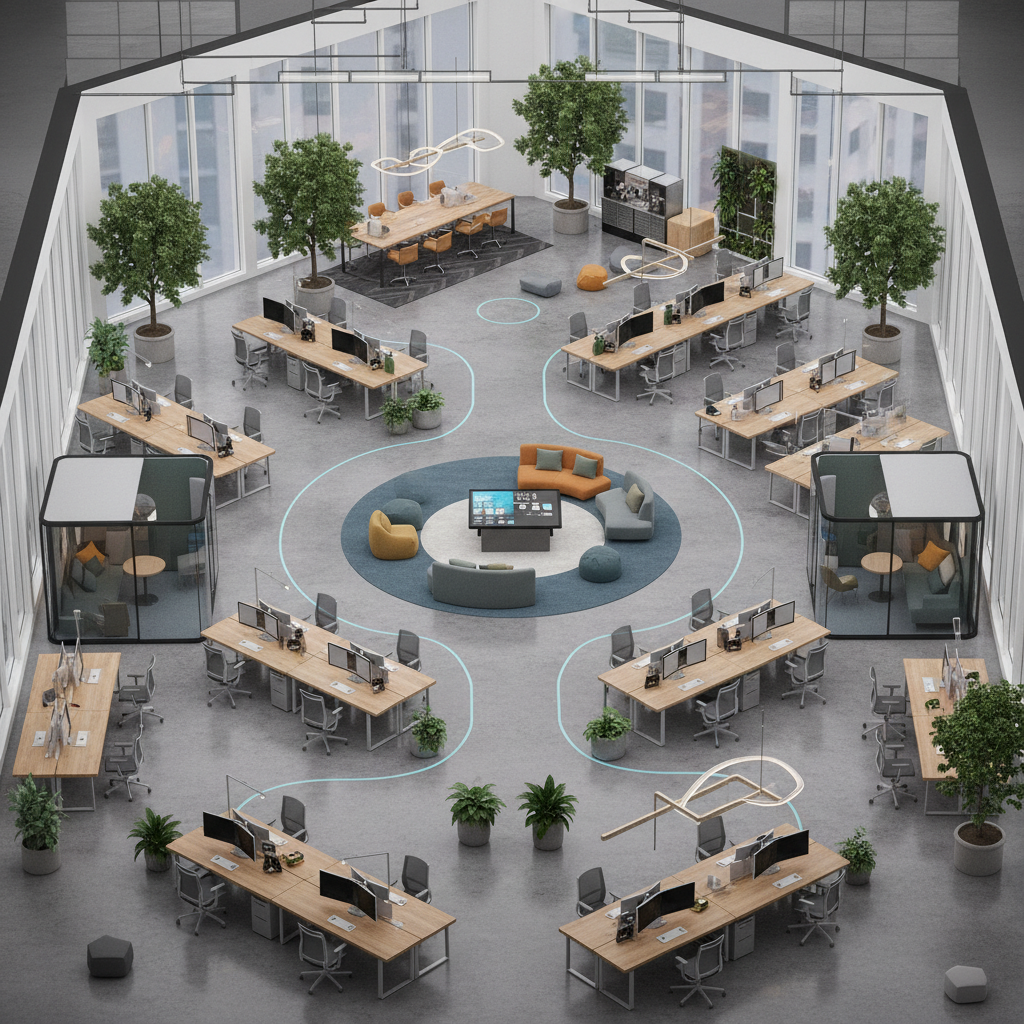
Your final step is to specify office furniture that is modular and upgradeable to meet the changing needs of the next decade. Technology and health science evolve quickly, so your furniture should be able to integrate new monitor types or power requirements without a full replacement. A future-proofed office is one that remains ergonomic even as the nature of work transforms.
Is specification a one-time event?
You must treat furniture procurement as an ongoing process of data collection and environmental adaptation. Why?
- Tech shifts happen fast.
- Body habits change.
- New health data emerges.
How to adapt?
You can choose modular desks and reconfigurable storage that allow you to change your floor plan without buying new assets. The bottom line?
- Lower future costs.
- Higher layout agility.
- Prolonged asset life.
Key Takeaway: Specifying for the future means buying furniture that is designed to be repaired, upgraded, and moved as your business grows.
| Strategy | Action | Outcome |
|---|---|---|
| Modularity | Modular Systems | Easy Expansion |
| Tech-Ready | Cable Management | Clean Workspaces |
| Repairability | Spare Part Availability | Extended ROI |
Building an adaptive environment is the ultimate way to ensure human-factor risk stays low for the life of your facility. To begin your transformation, contact us today .
Frequently Asked Questions
Can I specify office furniture that works for both home and office?
Yes, because ergonomic principles like seat height and lumbar support remain constant regardless of the environment. High-quality home office gear should mirror commercial standards to ensure consistency for hybrid workers.
What’s the best way to determine if a chair is actually ergonomic?
Look for multiple adjustment points, specifically seat depth and independent lumbar height. If a chair only has one or two levers, it likely cannot accommodate the diverse range of human body shapes.
How do I know if my desks are deep enough for my team?
Measure the distance between the monitor and the user’s eyes; if it is less than 20 inches, the desk is likely too shallow. A shallow desk forces poor posture and increases eye strain significantly.
Can I integrate sustainable materials into a high-tech office?
Absolutely, as modern office lines prove that natural wood can be precision-machined for high-tech environments. Sustainable materials often provide better air quality and tactile comfort than synthetic alternatives.
What’s the best approach to managing furniture for a rotating workforce?
Specify furniture with intuitive, “set-and-forget” memory controls so that every new user can find their ideal position in seconds. This prevents the fatigue that occurs when people work in poorly adjusted temporary setups.