
Improper cleaning of luxury inventory leads to moisture retention and rapid fungal growth. This compromises product lifespan and triggers expensive retail returns. Our professional guide ensures your outdoor furniture cushions remain pristine, hygienic, and mold-free through every season.
To clean outdoor furniture cushions without mold, vacuum surface debris and scrub with a solution of 1/2 cup dish soap and 1 cup white vinegar per gallon of warm water. Always rinse thoroughly and stand cushions vertically in direct sunlight. UV rays and vertical orientation ensure internal foam layers dry completely, preventing trapped moisture.
I. Standard Protocols for Outdoor Furniture Cushions
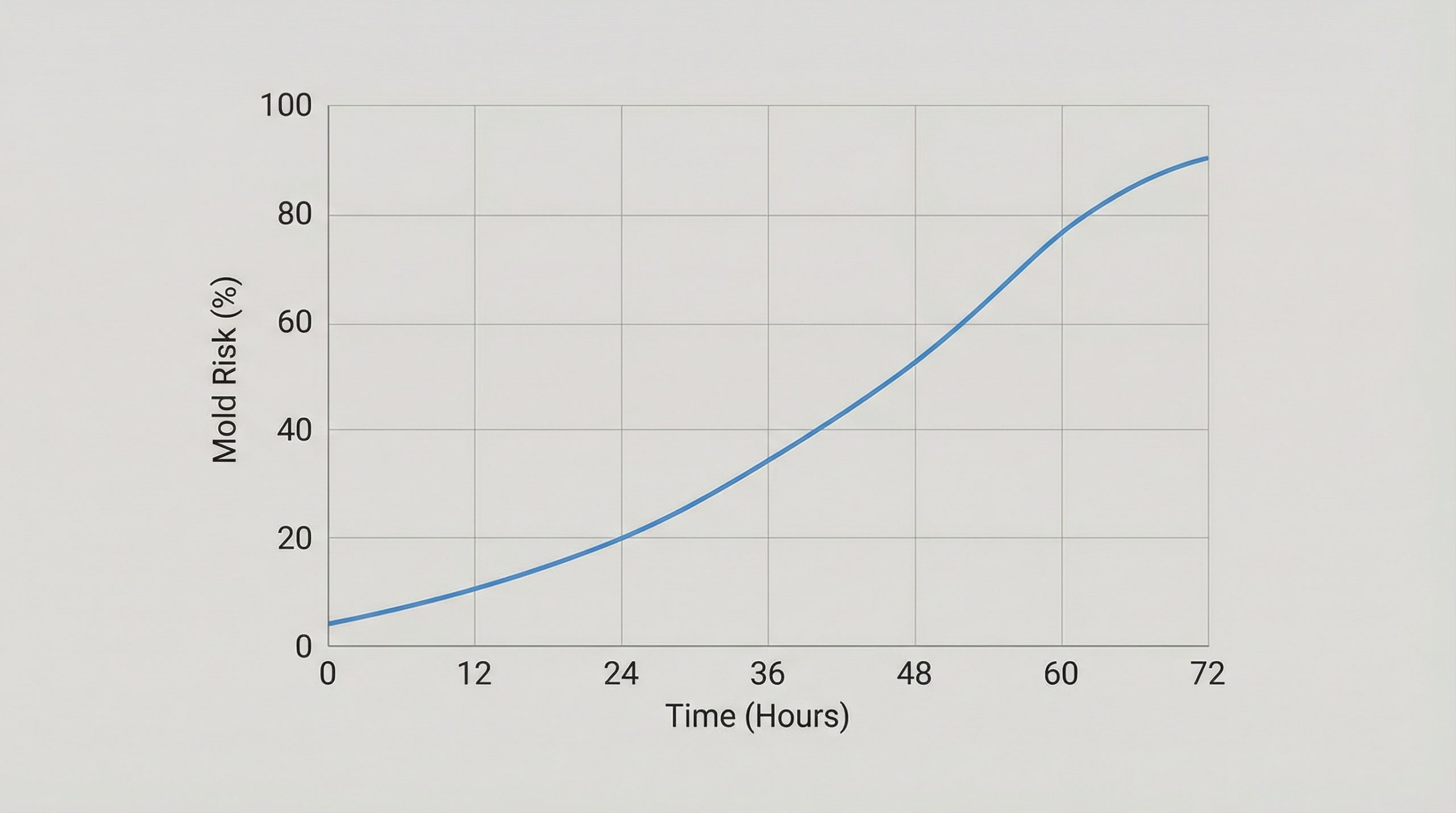
Maintaining the integrity of outdoor furniture cushions requires a systematic approach to moisture management and soil removal. B2B importers must standardize these processes to ensure that warehouse stock and floor models maintain their aesthetic value. Establishing a routine helps prevent the accumulation of organic matter that serves as a primary food source for mold spores.
Standardized Maintenance Cycles
Regular maintenance ensures that fabric protectors remain active and surfaces stay clear of contaminants. Your cleaning schedule should reflect the environmental exposure levels of the specific region where the furniture is deployed.
High-traffic retail environments require more frequent spot-cleaning to manage oils and particulate matter.
- Perform a light vacuuming every week to remove loose dust and pollen.
- Execute a deep-cleaning cycle at least twice per year for seasonal transitions.
- Treat liquid spills immediately with a blotting technique rather than aggressive rubbing.
Validating Fabric Integrity
Before applying any chemical agent to the textile, you must verify the material specifications provided by the manufacturer. Most performance fabrics used in residential furniture are designed for durability but may react poorly to harsh bleach concentrations. Understanding the weave density and fiber type helps in selecting the appropriate soft-bristle brush for agitation.
Professional Drying Metrics
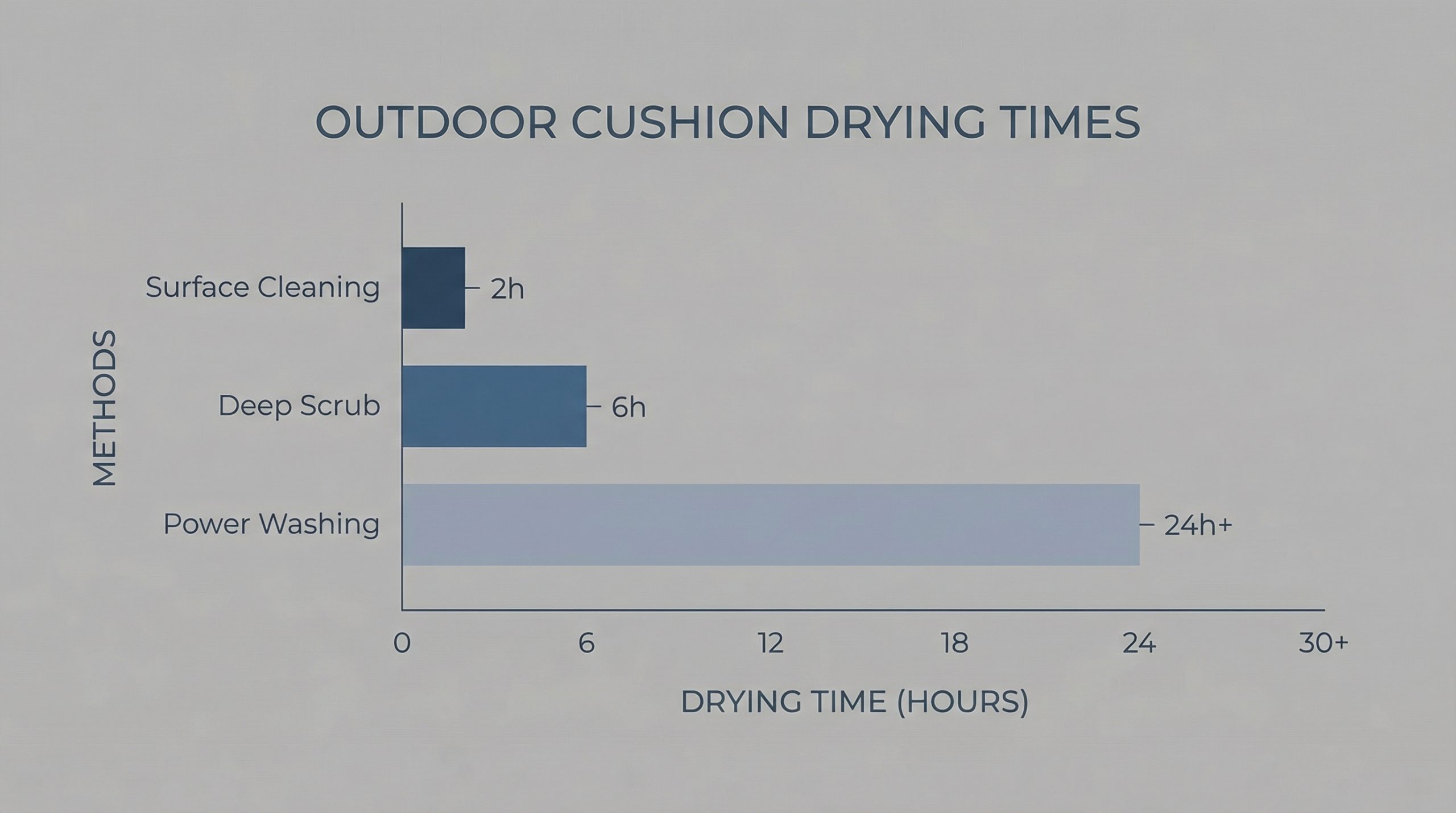
The drying phase is the most critical step in preventing the colonization of mold within the internal foam layers. Professional methods prioritize airflow and gravity to pull moisture away from the core of the outdoor furniture cushions.
The following data illustrates the efficiency of various drying configurations in professional settings.
| Method | Drying Time (Hours) | Moisture Retention Risk | Ideal Use Case |
|---|---|---|---|
| Flat Surface (Shade) | 24-48 | Very High | Small accent pillows only |
| Flat Surface (Sun) | 12-24 | Moderate | Light upholstery covers |
| Vertical (Sun/Airflow) | 4-6 | Low | Standard high-density foam cushions |
Look at this.
Key Takeaway: Standing cushions vertically in the sun reduces drying time by up to 75%, effectively eliminating the moisture window required for mold growth.
II. Fabric Identification for Outdoor Furniture Cushions
Identifying the specific textile composition of your outdoor furniture cushions determines the chemical tolerance for various cleaning agents. Professional buyers often choose solution-dyed acrylics for their inherent resistance to UV degradation and fungal growth. Knowing the difference between polyester and acrylic fibers prevents permanent damage during the scrubbing process.
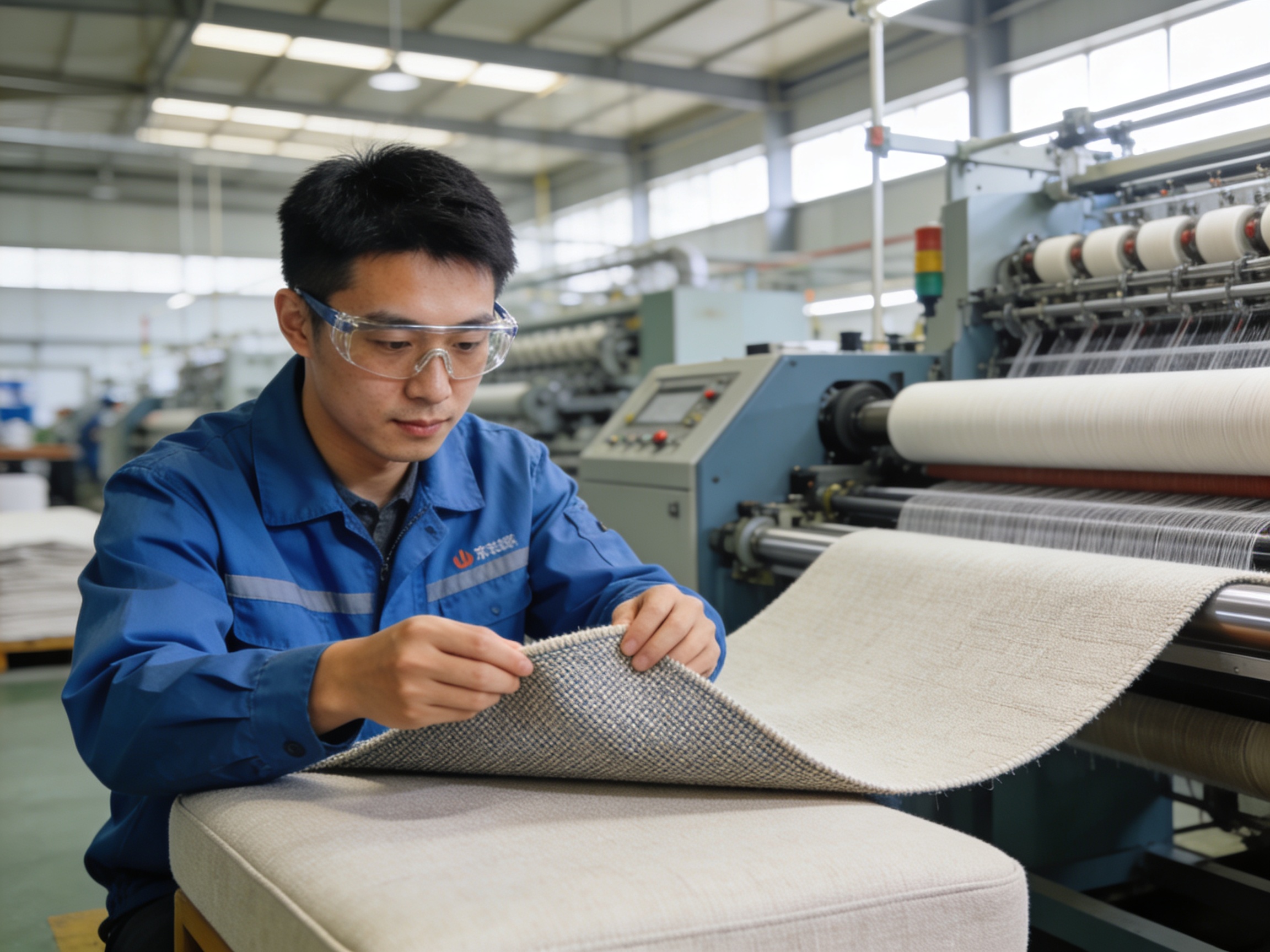
Material Specification Assessment
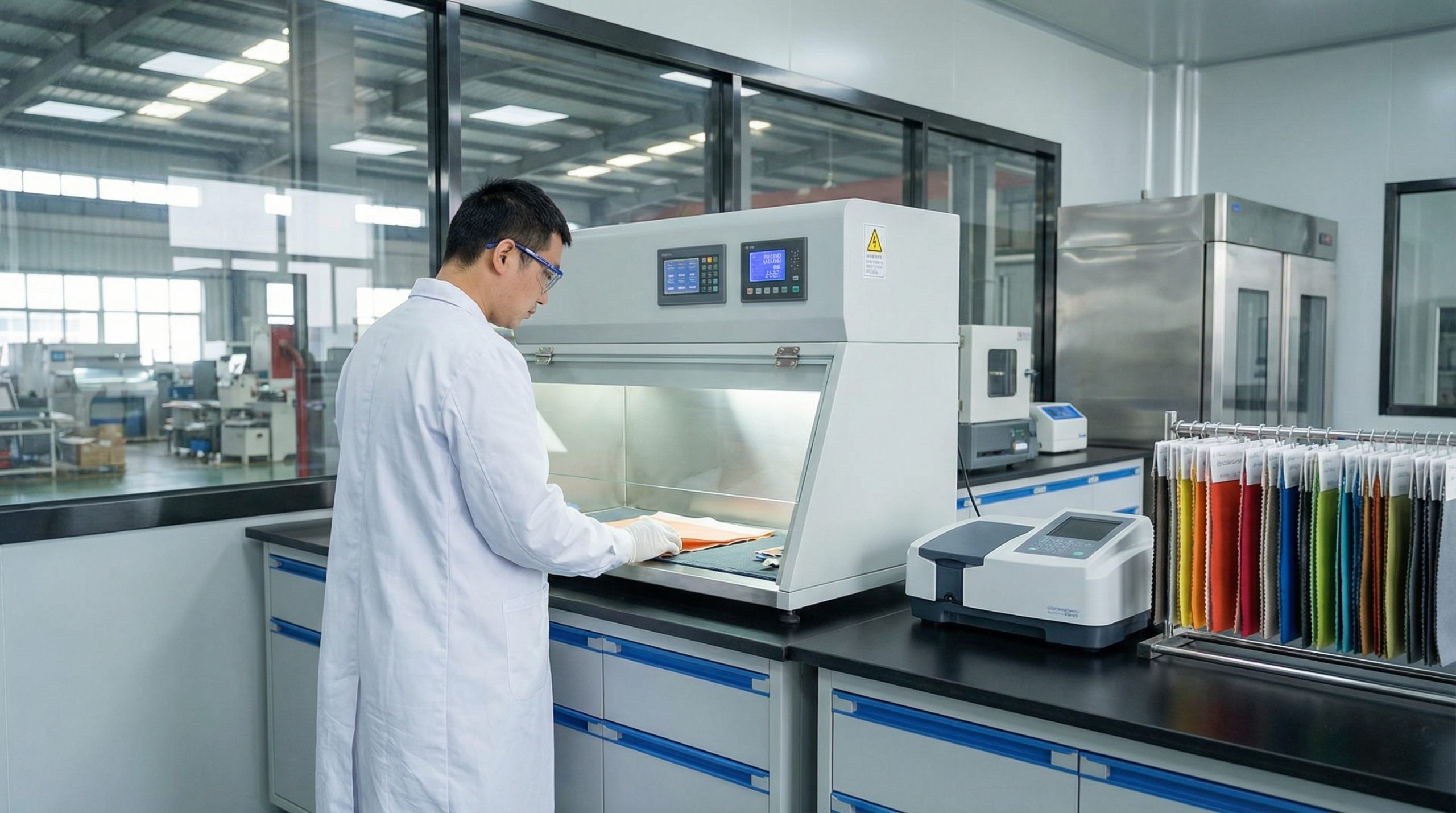
Every cushion batch should be accompanied by a technical data sheet detailing the fabric’s performance ratings. We prioritize quality control by inspecting every yard of fabric for weave consistency and coating thickness. This ensures that the water-repellent barrier is uniform across the entire product line.
Fiber Performance Differences
The inherent properties of the fiber dictate how much water the cushion will absorb during the cleaning process. Acrylic fibers are hydrophobic and dry much faster than standard polyester blends found in budget-tier furniture.
- Acrylic: High UV resistance and low water absorption rates.
- Polyester: Requires specialized coatings to prevent deep saturation and staining.
- Olefin: Highly resistant to chemical cleaners and mold spores.
Selecting Agitation Tools
The choice of brush stiffness must align with the fabric’s abrasion resistance rating to prevent pilling. Soft-bristle brushes are generally preferred as they provide enough agitation to lift soil without fraying the high-performance fibers.
The following table assists in selecting the correct tools based on fabric durability.
| Fabric Grade | Recommended Brush | Pressure Level | Risk of Pilling |
|---|---|---|---|
| Grade A (Acrylic) | Soft-Bristle Synthetic | Medium | Low |
| Grade B (Olefin) | Medium-Bristle Synthetic | High | Moderate |
| Grade C (Polyester) | Microfiber Cloth | Light | High |
But wait, there’s more.
Key Takeaway: Always match the brush stiffness to the fabric grade to maintain the surface finish of outdoor furniture cushions while ensuring effective deep cleaning.
III. Formulating Solutions for Outdoor Furniture Cushions
Creating the correct chemical balance is essential for sanitizing outdoor furniture cushions without stripping the factory-applied protective finishes. A mixture of mild dish soap and white vinegar provides a natural yet powerful disinfectant that targets bacteria and mold spores. This solution is safe for both the environment and the longevity of the textile.
The Vinegar-Soap Synergy
White vinegar acts as a mild acid that breaks down organic matter and neutralizes odors without damaging the fibers. When combined with dish soap, it creates a surfactant that lifts deeply embedded dirt to the surface.
- Mix 1 cup of white vinegar with 1/2 cup of mild dish soap.
- Add this mixture to 1 gallon of warm (not boiling) water.
- Stir gently to avoid excessive sudsing which can be difficult to rinse out.
Avoiding Chemical Degradation
Harsh industrial cleaners often contain bleach or ammonia which can weaken the structural integrity of the thread and cause discoloration. For wholesale distributors, maintaining the original color vibrancy is vital for secondary market value. Always avoid high-pH cleaners that might interact negatively with the outdoor furniture frame materials.
Testing for Colorfastness
Before proceeding with a full wash, apply a small amount of the solution to an inconspicuous area like the underside zipper flap. This step ensures that the cleaning agents do not cause dye migration or ghosting on the fabric surface.
Review this comparison of common cleaning agents and their impacts.
| Solution Type | Antimicrobial Power | Fabric Safety | Environmental Impact |
|---|---|---|---|
| Soap & Vinegar | High | Excellent | Low |
| Oxygen Bleach | Moderate | Good | Moderate |
| Chlorine Bleach | Very High | Poor | High |
This is just the start.
Key Takeaway: A pH-neutral soap and vinegar solution is the safest and most effective standard for bulk cleaning outdoor furniture cushions without risking fabric damage.
IV. Removal Techniques for Outdoor Furniture Cushions
The mechanical removal of soil from outdoor furniture cushions requires a delicate balance of pressure and coverage. You should always work from the top of the cushion downward to prevent dirty water from re-contaminating previously cleaned sections. This technique ensures that all soap residue and lifted debris are successfully moved off the fabric.
Vertical Scrubbing Dynamics
Starting at the top allows gravity to assist in moving the cleaning solution through the fibers effectively. Gently scrub in circular motions to ensure the bristles reach the valleys of the weave where dust often settles.
- Apply the solution with a spray bottle for even distribution.
- Use overlapping circular strokes to ensure no spots are missed.
- Focus extra attention on seams and welt cords where mold typically starts.
Rinsing and Saturation Control
Thorough rinsing is mandatory to prevent soap film, which can attract more dirt and foster fungal growth. Use a garden hose with a steady stream rather than a high-pressure nozzle to avoid forcing water into the core.
- Rinse until the water running off the cushion is completely clear.
- Avoid soaking the cushion for extended periods to protect the internal foam.
- Use a clean towel to blot excess surface moisture before moving to the drying stage.
Maximizing Drainage Efficiency
Positioning the cushion correctly during the final rinse stage speeds up the initial water shedding. Keeping the cushion on its edge allows the internal moisture to migrate toward the bottom seams for faster evacuation.
This analysis highlights the effectiveness of different rinsing tools.
| Rinsing Tool | Pressure (PSI) | Fiber Damage Risk | Foam Saturation Level |
|---|---|---|---|
| Standard Hose | 40-60 | Negligible | Controllable |
| Pressure Washer | 1500+ | Extreme | High (Internal) |
| Bucket Pour | N/A | None | High (Surface) |
It gets even better.
Key Takeaway: Rinsing from the top down with a standard hose prevents soap buildup and controls the saturation levels of outdoor furniture cushions.
V. Protecting Outdoor Furniture Cushions
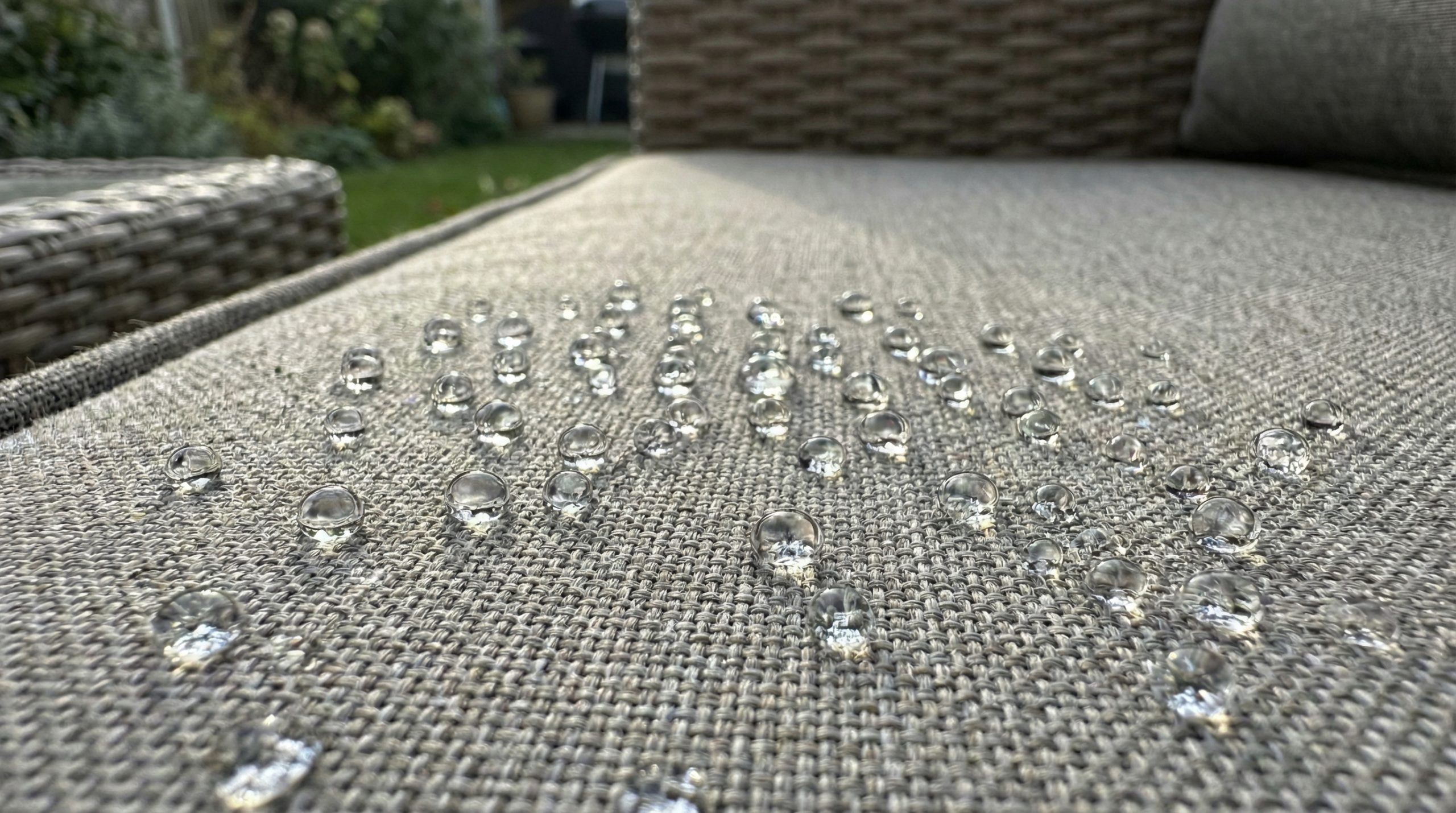
Applying a high-quality fabric protectant is the final step in securing the longevity of your outdoor furniture cushions. These coatings create a hydrophobic barrier that causes water to bead up and roll off the surface rather than soaking into the foam. For B2B suppliers, this added layer of protection is a key selling point for high-end furniture collections.
Restoration of Factory Coatings
Repeated cleaning can eventually wear down the original water-repellent finish that was applied during manufacturing. Re-applying a specialized fluoropolymer spray after a deep clean restores the cushion’s ability to resist stains and moisture.
- Ensure the cushion is 100% dry before applying any protectant.
- Apply in a well-ventilated area using light, even coats.
- Allow 24 hours for the coating to fully cure before exposing the furniture to the elements.
UV Resistance Enhancement
Many modern protectants include UV inhibitors that help prevent the sun from bleaching the vibrant colors of the fabric. This is especially important for dark or bright patterns that are prone to fading in high-sunlight regions.
- Choose a protectant specifically rated for outdoor textiles.
- Focus application on the top surfaces that receive the most direct sun.
- Re-apply every six months or after any major cleaning cycle.
Evaluating Coating Performance
A simple “bead test” can determine if your cushions require a new application of protectant. If water droplets soak into the fabric instead of forming distinct spheres, the protective barrier has been compromised and needs restoration.
The following table compares different protective technologies.
| Protectant Base | Durability | Breathability | Application Frequency |
|---|---|---|---|
| Silicone-Based | Moderate | Low | Every 3 months |
| Fluoropolymer | High | High | Every 6-12 months |
| Wax-Based | Low | Very Low | Monthly |
Think about this.
Key Takeaway: Re-applying a fluoropolymer protectant restores the hydrophobic barrier and UV resistance of outdoor furniture cushions after every deep clean.
VI. Eradicating Mold from Outdoor Furniture Cushions
When mold colonies become visible, a standard cleaning solution may not be enough to kill the spores. You must use a targeted approach that penetrates the fungal structure while remaining gentle enough to preserve the outdoor furniture cushions. Immediate action is required to prevent the mold from spreading to the internal foam or neighboring pieces of furniture.
Targeted Mold Remediation
A concentrated solution of white vinegar and water is highly effective at killing 82% of mold species. For stubborn spots on light-colored fabrics, an oxygen-based bleach can provide additional cleaning power without the risks associated with chlorine.
- Spray a 50/50 water and vinegar solution directly on the mold.
- Let the solution sit for at least 15 minutes to allow penetration.
- Scrub the area with a soft brush and rinse with cool water.
Sanitization Through UV Exposure
Sunlight is a natural disinfectant that utilizes ultraviolet rays to kill remaining bacteria and fungal spores. After cleaning, the cushions must be placed in direct sunlight to ensure that the sterilization process is completed throughout the fabric.
- Stand cushions on their end to maximize surface area exposure to the sun.
- Rotate the cushions every two hours to ensure even UV treatment.
- Avoid drying in damp or shaded areas which can re-trigger mold growth.
Assessing Internal Damage
If mold has penetrated deep into the foam, the cushion may need a professional steam treatment or complete core replacement.We design our cushions with breathable foam to minimize these risks, but severe neglect can still lead to internal rot.
Consult this decision matrix for managing mold infestations.
| Infestation Level | Visibility | Treatment Method | Recovery Rate |
|---|---|---|---|
| Surface Mold | Small specks | Vinegar spray + Sun | 95% |
| Deep Stain | Dark patches | Oxygen bleach soak | 70% |
| Internal Odor | Not visible | Core replacement | 0% (Repair) |
You should know this.
Key Takeaway: Combining a vinegar soak with direct UV exposure is the most effective way to kill surface mold on outdoor furniture cushions.
VII. Stain Management for Outdoor Furniture Cushions
Different types of organic and inorganic stains require specific chemical reactions for effective removal from outdoor furniture cushions. Whether dealing with tree sap, bird droppings, or suntan oil, a professional approach involves identifying the stain’s base before choosing a solvent. This precision prevents the setting of the stain into the fabric fibers.
Handling Organic Debris
Tree sap and bird droppings contain proteins and resins that can become permanent if exposed to heat. You should always use cool water and a gentle scraping tool to remove the bulk of the material before applying cleaning agents.
- Scrape away excess sap with a blunt knife or spoon.
- Apply a mixture of dish soap and warm water to the remaining residue.
- For stubborn sap, use a small amount of rubbing alcohol on a cotton ball.
Managing Oil-Based Stains
Suntan lotions and food oils are common culprits for staining that attracts dirt and mold. These stains require a surfactant-heavy approach to break down the lipid bonds and lift the oil out of the weave.
- Blot excess oil immediately with a clean, dry cloth.
- Apply a thick paste of baking soda and water to absorb the oil.
- Let the paste sit for 30 minutes before scrubbing with dish soap.
Professional Stain Removal Guide
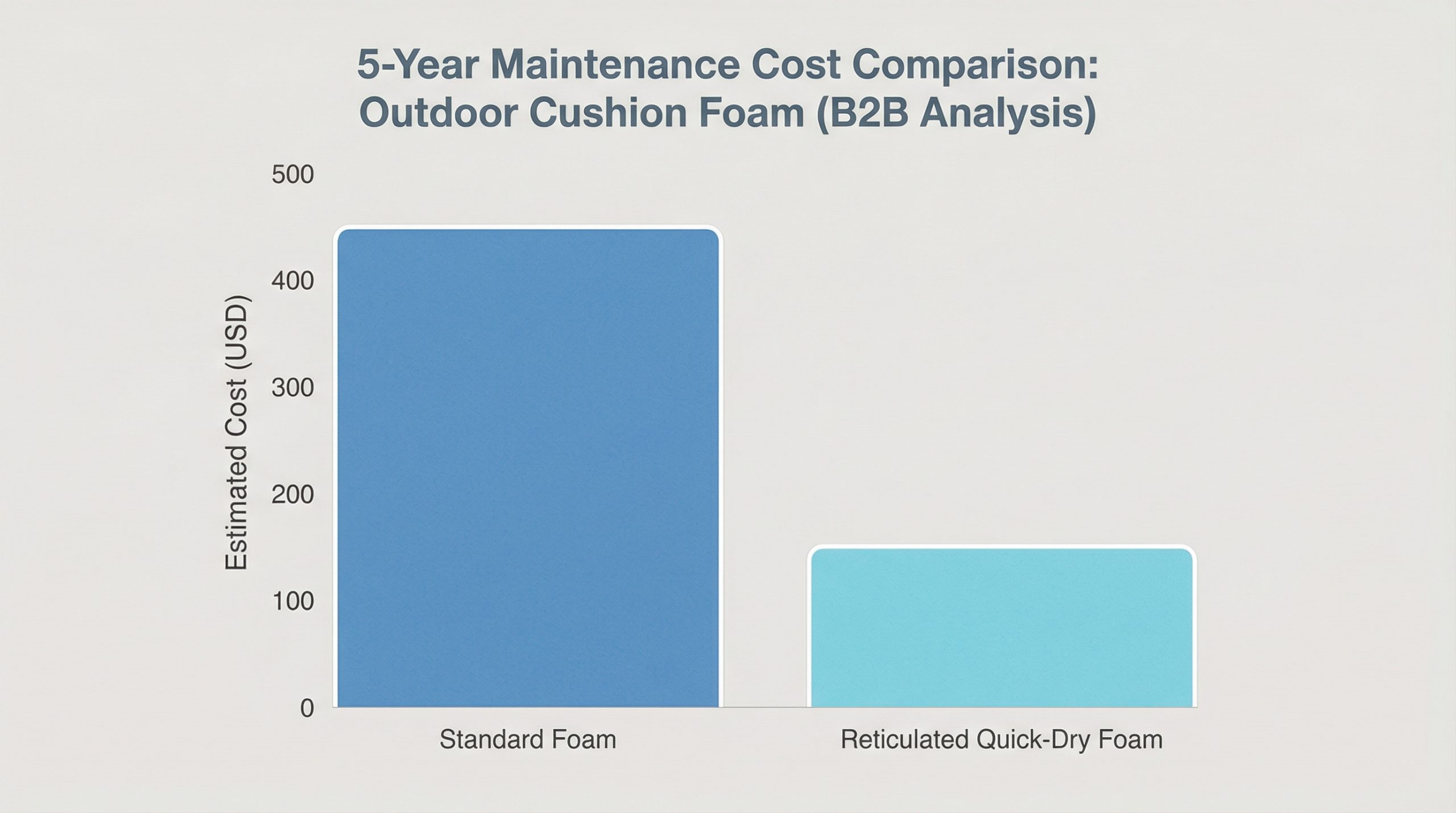
The cost of maintaining cushions increases significantly when stains are left untreated for long periods. Implementing a rapid-response cleaning protocol in your warehouse or showroom reduces the need for expensive professional restoration.
The following table summarizes the best treatments for common stains.
| Stain Type | Primary Solvent | Agitation Method | Success Rate |
|---|---|---|---|
| Tree Sap | Rubbing Alcohol | Blotting | High |
| Bird Droppings | Warm Soap Water | Soft Brush | Moderate |
| Oil/Lotion | Baking Soda Paste | Circular Scrub | High |
Take note of this.
Key Takeaway: Identifying the stain base allows for targeted removal that preserves the fabric and prevents dirt attraction on outdoor furniture cushions.
VIII. Caring for Frames and Outdoor Furniture Cushions
Cleaning the outdoor furniture frames is as important as cleaning the cushions to prevent cross-contamination. Dirt and mold from wood or metal frames can easily migrate to the fabric during rain or high humidity. A comprehensive cleaning routine must address both components to ensure the entire set remains in premium condition.
Frame Material Specifics
Metal and wood frames have different cleaning requirements that must be respected to prevent oxidation or rot. While cleaning the frames, take care not to splash harsh chemicals onto the sensitive fabric of the cushions.
- Use a mild soap and water solution for aluminum and stainless steel.
- For wooden frames, use specialized wood cleaners that preserve natural oils.
- Inspect frames for rust or mold growth before placing cushions back on the furniture.
Preventing Cross-Contamination
If a frame has developed mold, it can release spores that settle into the fibers of the outdoor furniture cushions. Ensuring the frame is completely sanitized and dry is a prerequisite for cushion replacement.
- Scrub frame joints where moisture often accumulates.
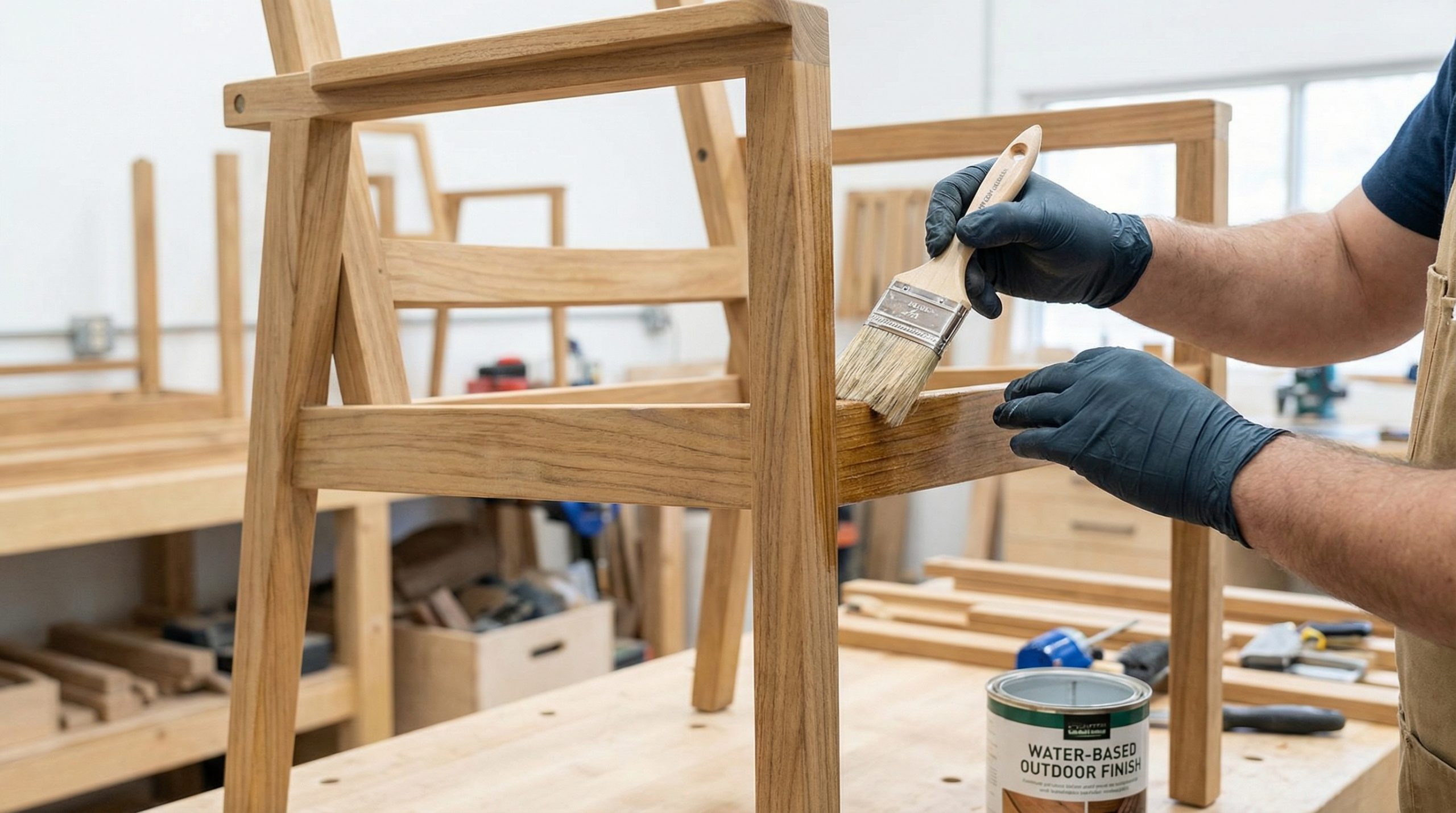
- Apply a protective wax or oil to wooden frames to seal out moisture.
- Ensure the frame is 100% dry to prevent trapping dampness under the cushion.
Analyzing Material Interactions
The interaction between the frame material and the cushion fabric can affect the drying time of the entire unit. For example, solid wood surfaces trap more moisture against the cushion than open-weave mesh or slatted aluminum.
Review this comparison of frame materials and their impact on cushion health.
| Frame Material | Moisture Retention | Mold Risk to Cushion | Maintenance Level |
|---|---|---|---|
| Aluminum | Very Low | Low | Low |
| Teak/Wood | High | Moderate | High |
| Wicker (Synthetic) | Moderate | Moderate | Moderate |
Consider this fact.
Key Takeaway: Sanitizing frames alongside outdoor furniture cushions prevents the migration of mold spores and extends the life of the entire furniture set.
IX. Maintenance of Outdoor Furniture Cushions
Long-term maintenance strategies for outdoor furniture cushions focus on prevention and proper storage. By reducing the exposure to harsh elements, you can significantly decrease the frequency of deep cleaning required. For B2B stakeholders, teaching clients these simple habits reduces warranty claims and increases overall customer satisfaction.
Off-Season Storage Guidelines
Storing cushions in a dry, climate-controlled environment during the winter months is the best way to prevent mold growth. Always ensure that the cushions are professionally cleaned and completely bone-dry before placing them in storage.
- Use breathable storage bags to allow for minimal air circulation.
- Avoid plastic wrap, which can trap moisture and cause “greenhouse” mold growth.
- Store cushions on shelves or pallets to keep them off damp floors.
Routine Protection Measures
Using furniture covers during periods of non-use protects the cushions from bird droppings, UV rays, and excessive rain. This simple step can double the lifespan of the fabric and the internal foam structure.
- Choose breathable, high-quality covers that allow moisture to escape.
- Ensure covers are properly fitted to prevent pooling water on the cushion surface.
- Remove covers periodically on sunny days to allow the furniture to “breathe.”
Comparing Storage Environments
The conditions of your storage facility directly impact the health of your inventory. Warehouse managers should monitor humidity levels to ensure they stay below the threshold for mold spore activation.
The following table compares different storage scenarios.
| Storage Type | Humidity Control | Mold Risk | Inventory Lifespan |
|---|---|---|---|
| Climate-Controlled | Excellent | Negligible | Maximum |
| Unheated Warehouse | Poor | High | Moderate |
| Covered Outdoor | None | Very High | Short |
Don’t miss this.
Key Takeaway: Storing outdoor furniture cushions in a bone-dry state within breathable bags is the ultimate defense against off-season mold growth.
X. Quality Standards for Outdoor Furniture Cushions
Finalizing your cleaning and maintenance protocols requires a commitment to rigorous quality standards. At EverWoody, we provide our partners with technical drawings and specifications to ensure their outdoor furniture cushions meet the highest global standards for safety and durability. Adhering to these standards ensures that every piece of furniture remains a high-value asset for your business.
Manufacturing Consistency
Stable quality control from the factory to the final shipment is the hallmark of a reliable supplier. We verify that all water-based finishes and fabric coatings are applied with precision to maximize moisture resistance.
- All materials are pre-checked for moisture content before production.
- Final QC includes a fit and finish verification for all upholstered items.
- Shipment photos are recorded to document the pristine condition of the goods.
Global Compliance and Safety
Ensuring that your furniture meets EU and US safety standards, such as EN71 or ASTM, reduces compliance risks and builds consumer trust. These certifications often cover the chemical safety of the dyes and coatings used on the cushions.
- FSC-certified wood options are available for sustainable sourcing.
- Coatings are tested for heavy metals and hazardous substances.
- Fire retardancy standards are met according to specific regional requirements.
Performance Metric Summary
Monitoring the performance of your cushions over time allows for the continuous improvement of maintenance protocols. High-performance fabrics should maintain their structural integrity and color for several years under professional care.
The following table summarizes the key performance indicators for premium cushions.
| Metric | Target Standard | Verification Method |
|---|---|---|
| Colorfastness | Grade 4+ | ISO 105-B02 Testing |
| Water Repellency | 90+ Rating | AATCC 22 Spray Test |
| Mold Resistance | Zero Growth | 4-Week Humidity Chamber |
It’s worth noting.
Key Takeaway: Adhering to factory-level quality standards ensures that outdoor furniture cushions remain durable, safe, and mold-resistant throughout their lifespan.
Frequently Asked Questions
Can I use a pressure washer to clean my outdoor furniture cushions?
No, you should avoid pressure washers as the high-velocity water can tear fabric fibers and force moisture deep into the foam core. This internal dampness is nearly impossible to dry and is a primary cause of mold and rot.
What is the best way to dry thick cushions after a deep clean?
The most effective method is to stand the cushions vertically on their edge in direct sunlight. This orientation allows gravity to pull water down through the foam while the sun’s UV rays sterilize the fabric surface.
How often should a B2B retailer deep clean floor models?
Floor models should be deep cleaned at least twice a year. In high-traffic areas, monthly spot-cleaning is recommended to manage the accumulation of dust and body oils that can lead to staining and mold issues.
Final Check
Maintaining the pristine condition of outdoor furniture cushions requires a balance of professional cleaning chemistry and strategic drying techniques. By implementing these factory-grade protocols, you can eliminate the risk of mold and ensure your inventory remains a high-value asset. At EverWoody, we are dedicated to providing the technical support and high-quality manufacturing needed to help your business thrive.
Ready to upgrade your outdoor furniture line with stable quality and professional support? Contact us today to receive a factory quote or schedule a tour of our Shandong manufacturing facility. We help importers and retailers secure worry-free shipments and superior product longevity.