
You maximize productivity by aligning your physical workspace with specific cognitive tasks and facilitating seamless team interaction. Many modern professionals struggle with cluttered, uninspiring layouts that increase stress and lead to constant daily interruptions. This lack of spatial flow creates a frustrating environment where you can’t focus, deadlines slip, and your creative energy is drained before noon.
By learning how to Arrange Office Furniture with a strategic mindset, you can transform a static room into a high-performance ecosystem that nurtures both deep concentration and collective innovation.
I. Why Arrange Office Furniture for Growth?
Arranging your workspace for growth ensures that your physical environment can adapt to increasing personnel and evolving business workflows without requiring a total renovation. When you Arrange Office Furniture with scalability in mind, you are essentially investing in the long-term agility of your organization. This strategic foresight allows your team to maintain peak performance levels even as the company’s needs shift and expand.
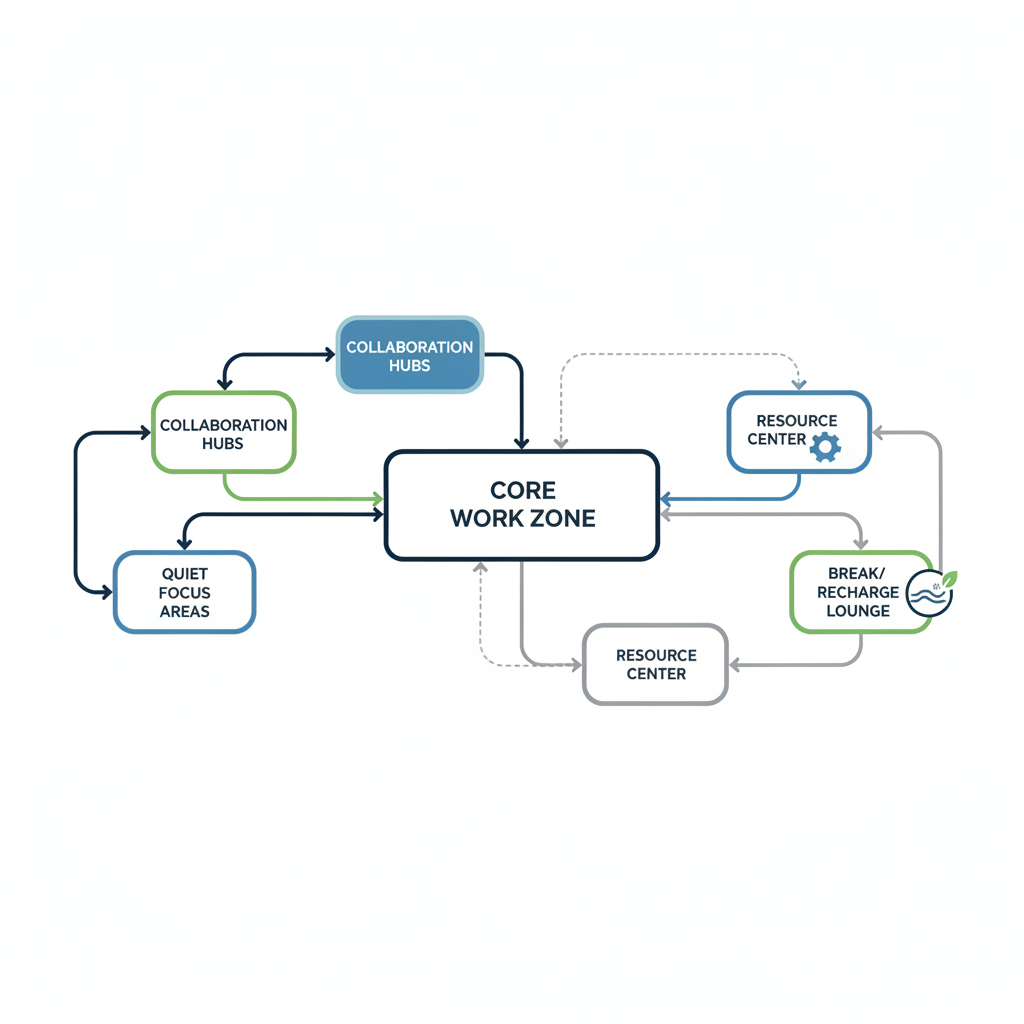
What defines a productive floor plan?
Does your current floor plan actually help you get things done, or is it just a collection of desks and chairs? You need to consider how people move through the space and where the most important work happens. Wait until you see how a few minor shifts in desk orientation can completely change the energy of your room.
- Clear walking paths to reduce traffic noise.
- Defined zones for different types of cognitive work.
- Easy access to shared resources like printers and files.
Why does movement influence innovation?
Have you ever noticed how your best ideas come to you when you are walking to get coffee or chatting in a hallway? Movement encourages “collision points” where employees from different departments can exchange ideas spontaneously. But that is not all—physical activity throughout the day is scientifically linked to higher levels of creative problem-solving.
- Intentional placement of social hubs away from focus zones.
- Creating “neighborhoods” that encourage cross-functional talk.
- Ensuring break areas are inviting enough to actually be used.
How does layout impact brand culture?
Can a simple desk arrangement really tell a visitor everything they need to know about your company’s values? Your choice to Arrange Office Furniture in an inclusive, transparent way signals a culture of trust and open communication. You will be amazed at how a well-designed space can become your best recruiting tool.
| Growth Element | Strategic Action | Expected Outcome |
|---|---|---|
| Scalability | Use modular furniture systems | Lower costs during expansion |
| Brand Identity | Align materials with company values | Higher employee retention |
| Movement | Place high-traffic zones centrally | Increased cross-team innovation |
The physical arrangement of your assets acts as a silent manifesto for how work should be performed and valued within your company.
Key Takeaway: Growth-oriented layouts focus on flexibility and the intentional creation of spaces that foster spontaneous interaction and long-term scalability.
II. Arrange Office Furniture for Open Plans
Arranging an open plan office requires a delicate balance between the benefits of transparency and the absolute necessity of acoustic control. When you Arrange Office Furniture in a large, open space, you must use physical objects like bookshelves or acoustic panels to define boundaries without building permanent walls. This approach maintains the feeling of a collaborative community while protecting the individual’s need for a private mental workspace.
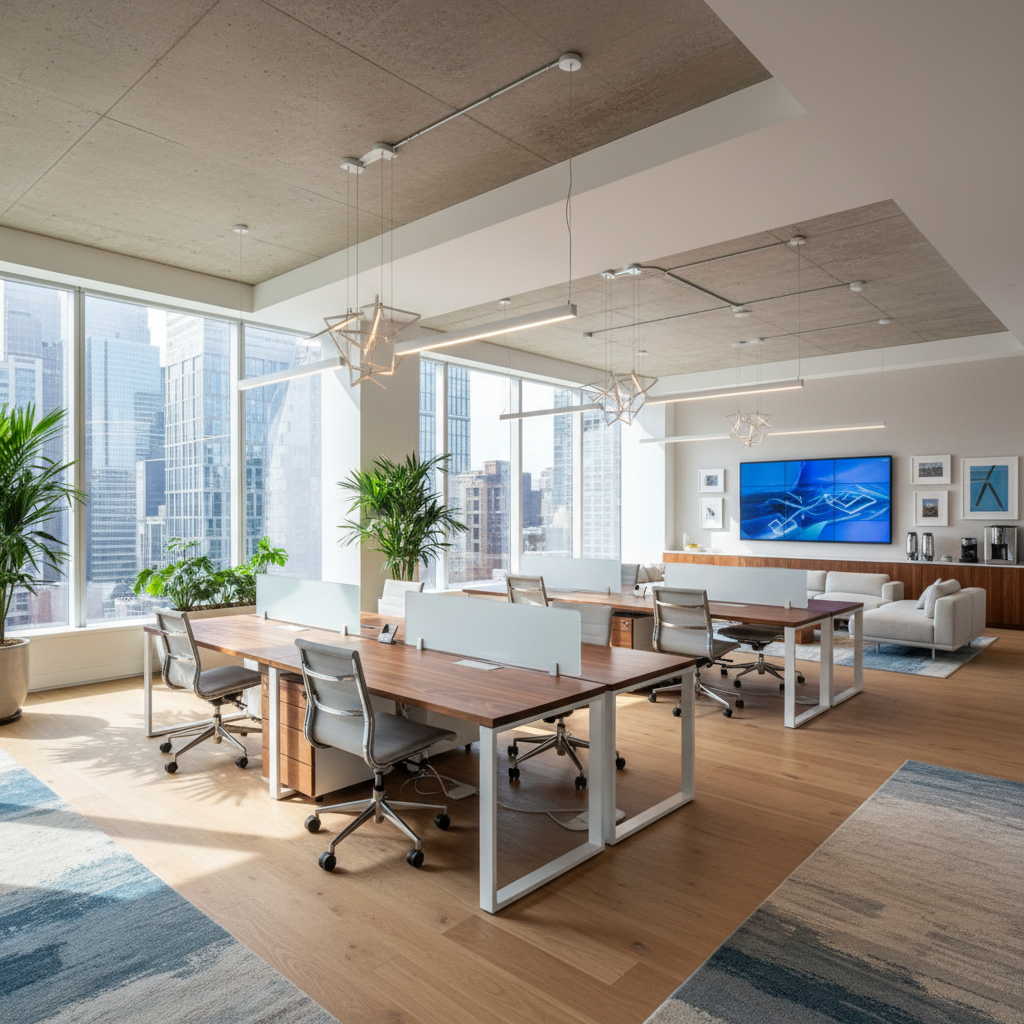
How to manage acoustic distractions?
Are you tired of hearing every single phone call and keyboard click from across the room? You can use high-backed sofas and acoustic felt partitions to absorb sound and create “quiet pockets” within the larger floor plan. Wait until you see this—placing storage units perpendicular to the main traffic flow can act as a natural sound barrier for focused teams.
- Strategic use of sound-absorbing furniture materials.
- Grouping loud departments, like sales, away from quiet ones.
- Implementing dedicated “phone booths” for private conversations.
Where should storage units go?
Do you find yourself constantly walking across the entire office just to find a simple file or office supply? You should place storage units like dressers and cabinets near the teams that use them most frequently to minimize unnecessary movement. But that is not all; using low-profile storage can double as a subtle room divider that doesn’t block natural light.
- Integrated storage at the ends of desk rows.
- Centralized supply stations to prevent desk clutter.
- Multi-functional storage that serves as a standing meeting spot.
Can partitions improve desk privacy?
Does the “fishbowl” feeling of an open office make you feel like you are always being watched while you work? By choosing to Arrange Office Furniture with frosted glass or wooden slat partitions, you can provide a sense of enclosure without sacrificing the airy feel of the room. You will find that even a small visual barrier can significantly reduce the “startle response” that breaks concentration.
| Open Plan Challenge | Furniture Solution | Efficiency Gain |
|---|---|---|
| Noise Pollution | Acoustic panels and felt dividers | 30% reduction in distractions |
| Lack of Privacy | Low-height modular partitions | Increased employee focus |
| Visual Clutter | Integrated desk storage solutions | Faster retrieval of work materials |
Managing an open plan is an exercise in zoning, where furniture acts as the primary tool for creating functional silos within a unified space.
Key Takeaway: Successful open plans use furniture and partitions to create a “broken-plan” layout that balances communal transparency with acoustic and visual privacy.
III. Arrange Office Furniture for Teamwork
Arranging furniture to enhance teamwork involves creating dedicated environments where collaboration can happen naturally and without friction. When you Arrange Office Furniture for teams, you should prioritize modularity, allowing groups to reconfigure their desks for a sprint or a long-term project. This adaptability ensures that the physical space supports the specific rhythm of the team’s current objective rather than hindering it.
What are collision zones in offices?
Have you ever considered that the area around the coffee machine might be the most productive part of your entire building? These “collision zones” are where unplanned meetings happen, so you should place comfortable stools and high tables nearby to encourage these interactions to last. Wait until you see this: adding a whiteboard near these areas can turn a casual chat into a formal brainstorming session in seconds.
- High-top tables for quick, standing “sync” meetings.
- Comfortable lounge chairs to encourage relaxed dialogue.
- Visual aids like whiteboards or screens in transition areas.
Why choose modular conference tables?
Are you stuck with a giant, heavy conference table that only gets used once a week for the board meeting? You should look into modular tables that can be broken apart into smaller units for training sessions or separate project teams. But that is not all—having furniture on wheels allows you to customize your residential office or commercial space in minutes.
- Tables with locking casters for rapid reconfiguration.
- Integrated power strips for easy laptop connectivity.
- Shapes that allow for both U-shaped and pod-style layouts.
How to set up huddle room seating?
Do you often find that your large conference rooms are being occupied by just two people who need a quick chat? You can solve this by creating small “huddle rooms” equipped with a circular table and four comfortable chairs to facilitate intimate, high-impact meetings. You will see that a round table removes the “head of the table” hierarchy and makes every team member feel like an equal contributor.
| Teamwork Strategy | Furniture Choice | Collaboration Benefit |
|---|---|---|
| Spontaneous Syncs | Standing-height bistro tables | Quicker decision-making cycles |
| Large Workshops | Modular, flip-top nesting tables | Efficient use of multipurpose rooms |
| Creative Sprints | Mobile whiteboards and pods | Higher volume of shared ideas |
Team-centric design moves away from fixed islands toward a “dynamic theater” model where the setting changes based on the performance required.
Key Takeaway: Modular, mobile furniture is the backbone of high-functioning teams, allowing for the rapid transition between solo work and group collaboration.
IV. Arrange Office Furniture for Deep Focus
Arranging your office for deep focus requires the creation of “quiet zones” that are physically and visually isolated from the main hustle of the office. To effectively Arrange Office Furniture for concentration, you must position workstations so that the occupant is not facing high-traffic corridors or distracting windows. This intentional isolation allows the brain to enter a state of flow, which is essential for complex problem-solving and creative tasks.

Is the “cave” concept still relevant?
Do you ever find that you need to completely disappear from the world to finish a difficult report or design? The “cave” concept involves using furniture to create a semi-enclosed space where you are protected from peripheral movement. Wait until you see this—simply turning your desk to face a solid wall or a tall wooden shelving unit can boost your output by 40%.
- Desks pare laced in corner alcoves for maximum privacy.
- High-backed “privacy pods” for individual-focused work.
- Minimalist desk surfaces to reduce visual cognitive load.
How to orient desks for focus?
Why does facing the door make you feel like you are constantly waiting for an interruption? You should arrange your focus-intensive desks with their backs to the wall so you can see the room without being the center of attention. But that is not all; avoiding a direct view of a busy hallway will keep your “stimulus-driven attention” from constantly breaking your concentration.
- Avoid placing desks directly opposite high-traffic doors.
- Use side-facing orientations to manage glare and views.
- Place a physical barrier like a plant between you and the room.
Should focus zones have specific lighting?
Have you noticed that harsh overhead fluorescent lights often make it harder to concentrate on a screen for long periods? You can improve your focus by using task lighting, such as a dedicated desk lamp, which creates a “pool of light” that draws your eyes toward your work. You will find that a warmer, localized light source signals to your brain that it is time to settle in for serious labor.
| Focus Element | Arrangement Tactic | Productivity Impact |
|---|---|---|
| Visual Boundaries | Use tall bookcases as room dividers | Prevents peripheral distractions |
| Orientation | Face the desk away from the door | Reduces the “startle” reflex |
| Lighting | Implement localized task lamps | Increases sustained mental energy |
Deep work is a fragile state that must be protected by the physical environment through the removal of both visual and auditory triggers.
Key Takeaway: Protecting deep work requires “monastic” zones within the office that use orientation and barriers to shield the worker from all external stimuli.
V. Arrange Office Furniture for Ergonomics
Arranging furniture with ergonomics as the primary driver is the most direct way to ensure the long-term health and efficiency of your workforce. When you Arrange Office Furniture to fit the human body, you reduce the physical strain that leads to fatigue, chronic pain, and eventually, absenteeism. A workspace that prioritizes comfort is not a luxury; it is a fundamental requirement for maintaining high-quality output over an eight-hour workday.
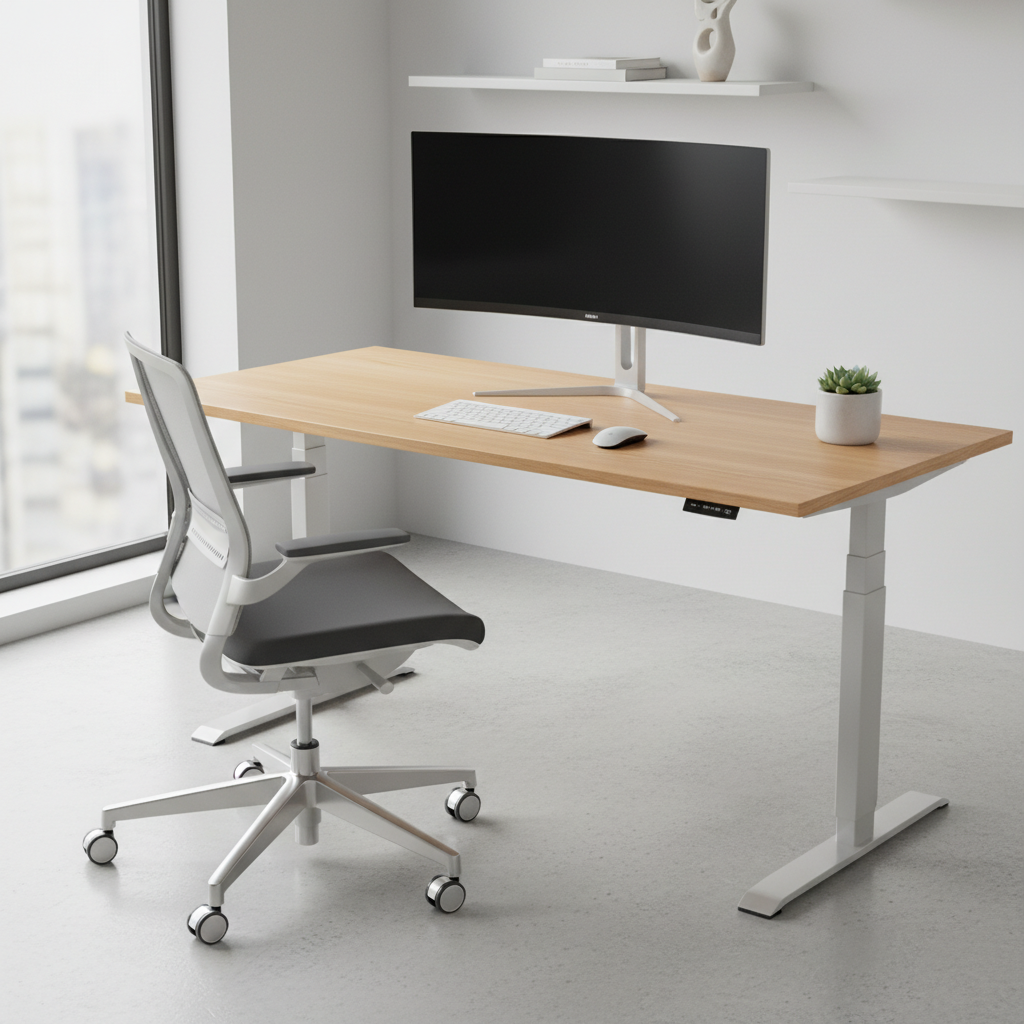
Why is desk height so critical?
Are you aware that a desk that is just two inches too high can cause significant neck and shoulder tension by the end of the week? You should invest in adjustable-height desks that allow you to switch between sitting and standing throughout the day. Wait until you see this: the simple act of standing for 15 minutes every hour can improve your metabolic rate and keep your brain more alert.
- Desks that accommodate both seated and standing heights.
- Keyboard trays that keep your elbows at a 90-degree angle.
- Ample legroom to allow for frequent posture changes.
Can ergonomic chairs boost output?
Do you find yourself fidgeting and shifting in your seat because your lower back feels unsupported? You need a chair with adjustable lumbar support and armrests to keep your body in a neutral position while you work. But that is not all—even a high-quality rocker or glider used in a lounge area can provide much-needed relief during short breaks.
- Breathable mesh materials to maintain a cool body temperature.
- Seat pans that adjust for different leg lengths.
- Synchronous tilt mechanisms that move with your body.
How to place monitors for eye health?
Why does your head always feel heavy and your eyes strained by the time you leave the office in the evening? You should arrange your monitor so the top third of the screen is at eye level and about an arm’s length away from your face. You will find that this setup prevents you from hunching forward, which is the leading cause of “tech neck” among office workers.
| Ergonomic Factor | Furniture Adjustment | Physical Benefit |
|---|---|---|
| Posture | Adjustable lumbar support chairs | Reduces chronic lower back pain |
| Movement | Sit-stand desks with easy controls | Improves circulation and energy |
| Vision | Monitor arms for precise height | Minimizes eye and neck strain |
Ergonomics is the science of making the work fit the worker, rather than forcing the worker to contort their body to fit the furniture.
Key Takeaway: Ergonomic furniture is a preventative health measure that directly correlates to higher energy levels and fewer work-related injuries.
VI. Arrange Office Furniture in Small Rooms
Arranging furniture in a small office requires a “less is more” philosophy and a clever use of vertical space to prevent the room from feeling cramped. To effectively Arrange Office Furniture in a compact environment, you must choose multi-functional pieces that can serve multiple roles throughout the day. By keeping the floor clear and utilizing the walls, you can create a professional atmosphere that feels spacious and organized despite its limited square footage.
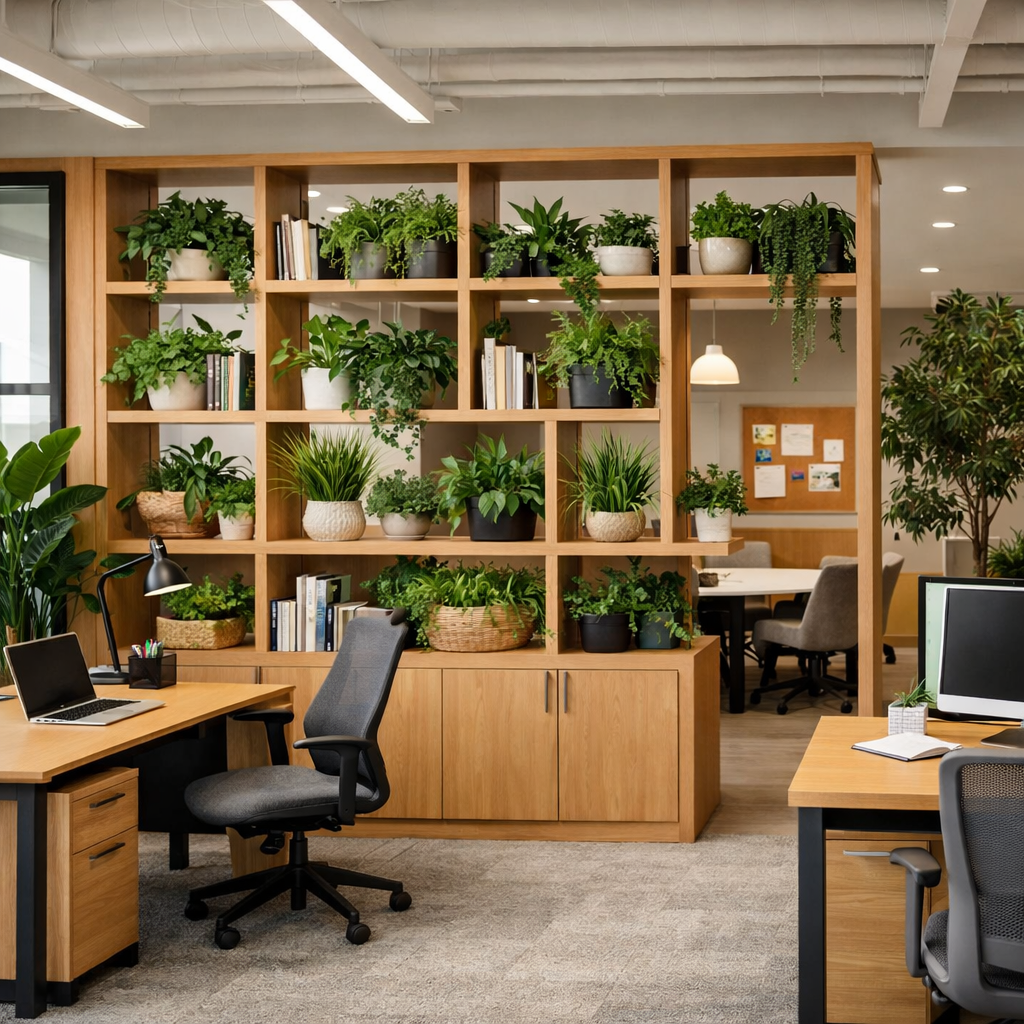
How to utilize vertical wall space?
Are you letting valuable real estate go to waste by leaving your walls empty while your desk is buried in paperwork? You should install floating shelves and wall-mounted organizers to lift your supplies and decorations off the horizontal surfaces. Wait until you see this—using a floor-to-ceiling bookshelf can actually make a short ceiling look taller while providing massive storage capacity.
- Wall-mounted monitors to free up desk space.
- Floating desks for a “zero-footprint” workspace.
- Magnetic or pegboard systems for organizing small tools.
Why use multi-purpose furniture pieces?
Do you really need a separate desk, a meeting table, and a storage cabinet in a room that is only 100 square feet? You should look for “hybrid” furniture, like a storage cabinet with a pull-out desktop or a sturdy wooden crib that can later be converted into a desk. But that is not all; an ottoman with internal storage can serve as a footrest, a guest chair, and a filing cabinet all at once.
- Nesting tables that can be tucked away when not in use.
- Storage benches that provide seating for visitors.
- Fold-down wall desks for temporary workstations.
Can light colors expand small rooms?
Have you ever noticed how dark, heavy wooden furniture can make a small room feel like a claustrophobic box? You should opt for light-colored wood, white finishes, and glass tops to allow light to bounce around the space. You will find that choosing furniture with thin, tapered legs rather than solid bases creates “visual breathing room” by keeping the floor visible.
| Space Saving Goal | Furniture Strategy | Visual Result |
|---|---|---|
| Floor Clearance | Use wall-mounted or leggy furniture | Makes the room feel larger |
| Clutter Control | Hidden storage in multi-use pieces | Cleaner, more professional look |
| Light Maxing | Choose glass or light-finished wood | Brightens dark, cramped corners |
In small spaces, every piece of furniture must “earn its keep” by providing either high utility or a significant aesthetic contribution to the room’s openness.
Key Takeaway: Small-room efficiency is achieved through vertical thinking, multi-functional furniture, and a light color palette that prevents visual crowding.
VII. Arrange Office Furniture for Well-being
Arranging your office to prioritize well-being involves moving beyond basic functionality to create a space that nourishes the psychological health of your team. When you Arrange Office Furniture around natural elements like light and greenery, you are practicing “biophilic design,” which has been proven to lower heart rates and reduce stress. A workspace that feels more like a living environment than a clinical cubicle will naturally lead to higher levels of employee happiness and engagement.
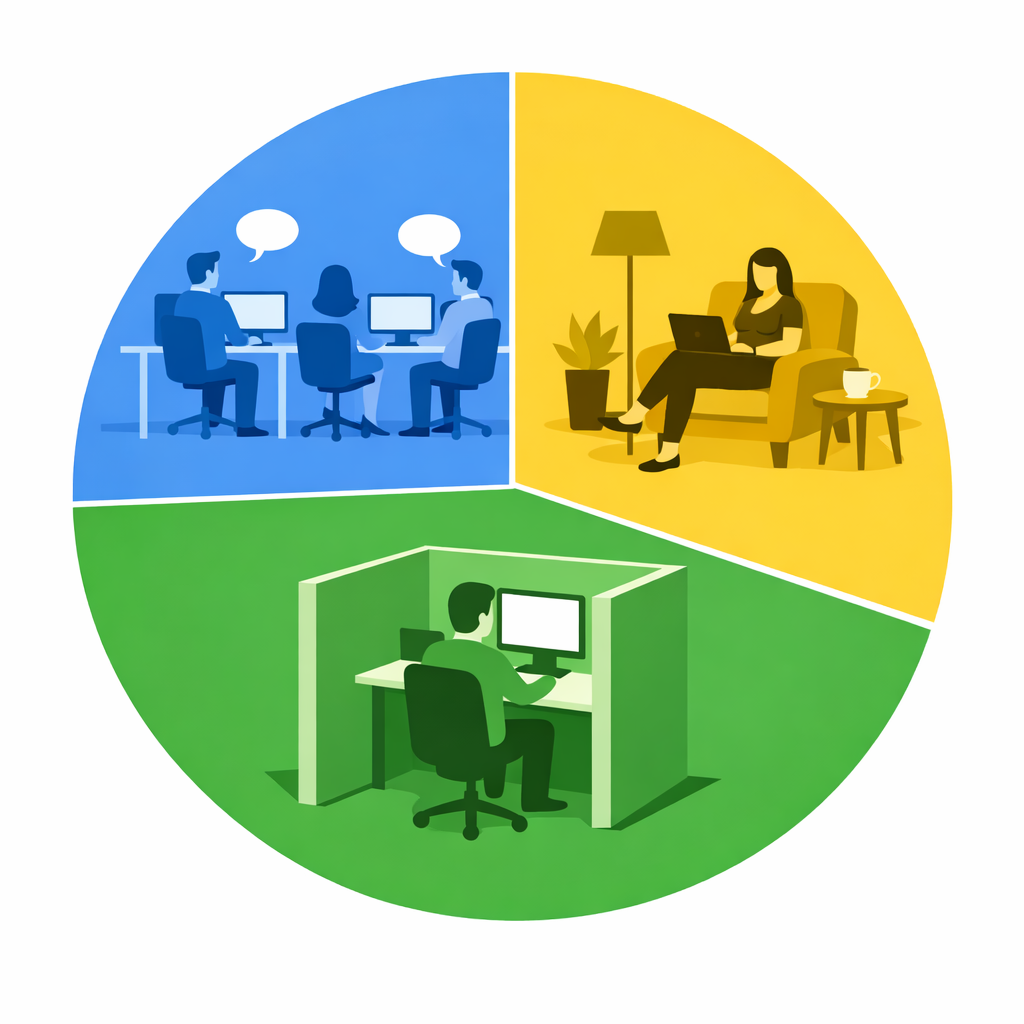
Does biophilic design reduce stress?
Why do you feel instantly more relaxed the moment you step into a park or a garden? You can bring that feeling into the office by arranging your desks around large planters or even installing a “living wall” of moss and ferns. Wait until you see this—even the presence of natural wood grain furniture can lower cortisol levels in office workers by mimicking the patterns found in nature.
- Large floor plants to serve as natural air purifiers.
- Wooden furniture with visible grains and textures.
- Desk placement that allows for views of the outdoors.
Why is natural light a priority?
Are you spending your entire day under the flickering glow of old fluorescent tubes while the windows are blocked by heavy cabinets? You should arrange your primary workstations as close to the windows as possible to maximize exposure to daylight. But that is not all; natural light regulates your circadian rhythm, which means a well-lit office actually helps you sleep better at night.
- Orient desks perpendicular to windows to avoid screen glare.
- Use glass partitions to allow light to penetrate deep into the office.
- Place lounge and break areas in the brightest spots of the room.
How to incorporate lounge seating?
Do you expect your brain to operate at 100% capacity for eight hours straight without any form of mental reset? You should create a “rejuvenation zone” with soft sofas, coffee tables, and even a few comfortable gliders where employees can take a 10-minute mental break. You will see that providing a space for rest actually increases overall daily output by preventing the “afternoon slump.”
| Well-being Feature | Furniture Tactic | Psychological Benefit |
|---|---|---|
| Nature Access | Surround desks with indoor greenery | 15% increase in creative thinking |
| Daylight | Remove obstacles from window areas | Improved mood and sleep quality |
| Rest Zones | Add soft, non-office-style seating | Reduced burnout and mental fatigue |
A well-being-focused layout acknowledges that employees are humans first and workers second, requiring a space that supports their biological needs.
Key Takeaway: Integrating natural light, plants, and dedicated rest areas into your layout is a high-return investment in employee mental health and long-term stamina.
VIII. Arrange Office Furniture Using Data
Arranging your office based on actual usage data allows you to move beyond “gut feelings” and create a layout that truly serves your team’s habits. When you Arrange Office Furniture using insights from workplace analytics, you can identify which areas are constantly overcrowded and which desks are perpetually empty. This data-driven approach ensures that every square foot of your expensive office lease is working as hard as possible to support your business goals.
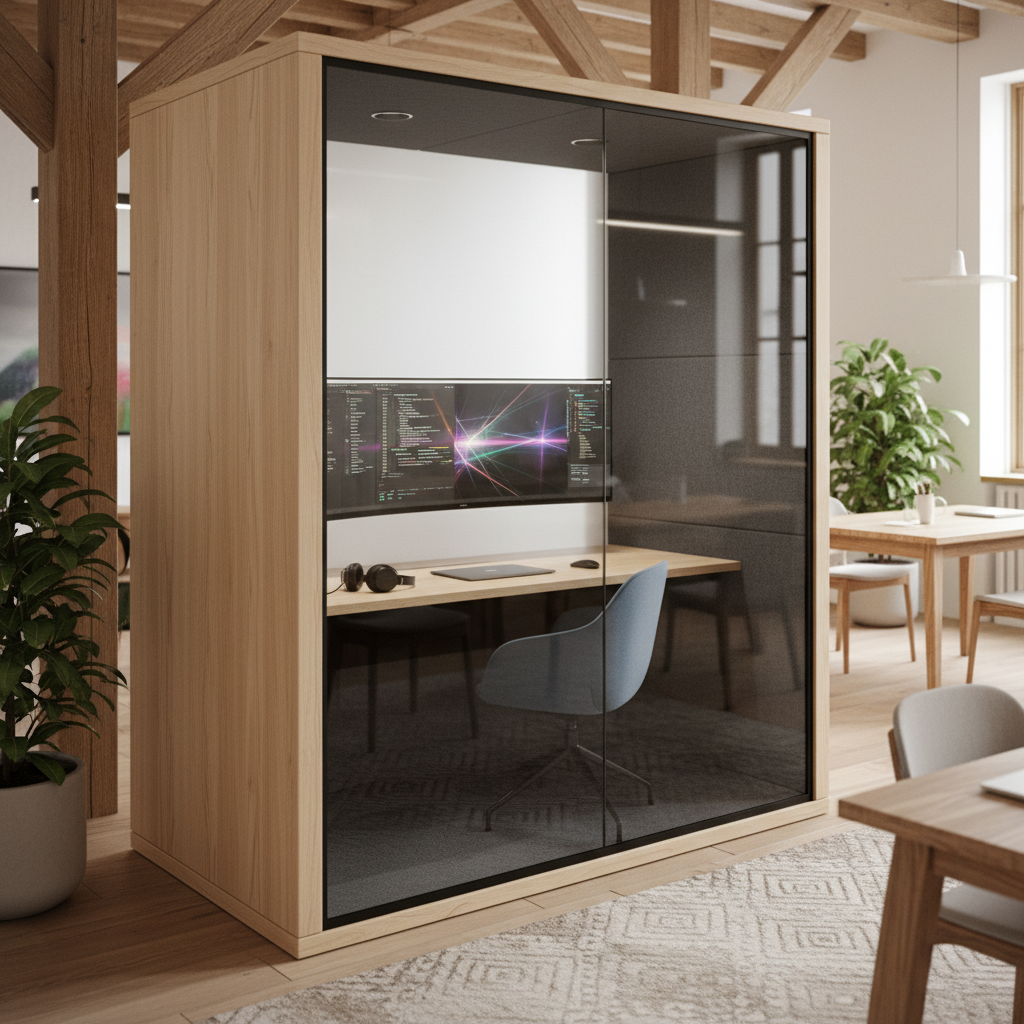
What does occupancy tracking reveal?
Are you paying for 50 desks when only 20 people are actually in the building at any given time? You can use sensor data or simple manual tracking to see how your space is actually being used throughout the week. Wait until you see this—data often shows that meeting rooms for 10 people are mostly used by just two or three individuals, suggesting you need more small huddle rooms.
- Heat maps showing the most popular office “hot spots.”
- Underutilized areas that can be repurposed for storage.
- Peak usage times for shared resources like break rooms.
How to analyze traffic flow patterns?
Why does it always feel like a traffic jam near the entrance or the restrooms every afternoon? You should map out the “desire paths” that people take through the office and Arrange Office Furniture to keep these routes clear and wide. But that is not all; understanding these patterns helps you place high-value collaboration tools exactly where people naturally congregate.
- Widening aisles in high-traffic “trunk” corridors.
- Placing communal bins and printers in low-traffic “eddies.”
- Ensuring no desks are placed in high-friction “bottleneck” zones.
Can surveys improve desk placement?
Do you really know what your employees need to be more productive, or are you just guessing based on the latest furniture industry trends ? You should conduct regular spatial surveys to ask your team which parts of the office they find most distracting or most inspiring. You will find that direct feedback often reveals simple fixes, like moving a noisy coffee machine or adding a few more privacy screens.
| Data Source | Insight Gained | Furniture Action |
|---|---|---|
| Heat Maps | Most used collaboration zones | Add more seating and whiteboards |
| Sensor Data | Empty desk clusters | Repurpose into quiet focus areas |
| Staff Surveys | Acoustic dissatisfaction | Install sound-absorbing partitions |
Data-driven design removes the ego from office planning, replacing it with a pragmatic focus on what actually works for the specific people in the space.
Key Takeaway: Using workplace analytics to guide your furniture arrangement ensures that your space is optimized for actual human behavior rather than theoretical ideals.
IX. Arrange Office Furniture for Hybridity
Arranging furniture for a hybrid workforce requires a shift in thinking from “assigned seats” to “activity-based neighborhoods.” When you Arrange Office Furniture for employees who are only in the office two or three days a week, you must prioritize shared resources and flexible lockers over permanent personalized desks. This model allows the office to serve as a high-impact hub for the specific collaborative tasks that are difficult to perform from a home office.
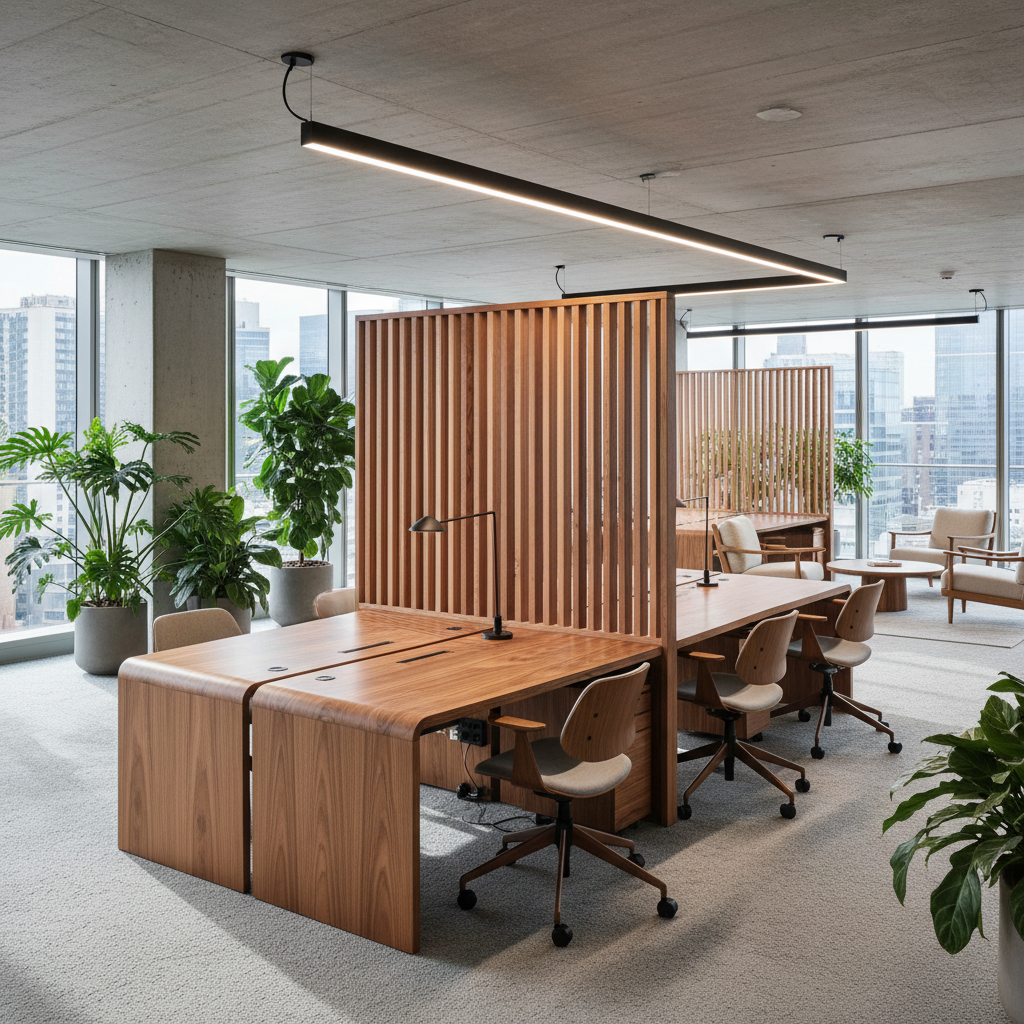
What is the best hot-desking setup?
Is it frustrating for your team to spend 15 minutes every morning just finding a place to sit and getting their equipment ready? You should arrange “hot desks” in uniform rows with standardized monitors and docking stations so that any employee can be productive within seconds of arriving. Wait until you see this—implementing a desk-booking app can help people sit near their specific team members for the day, even without assigned seating.
- Identical tech setups at every shared workstation.
- Clear signage for booked versus available desks.
- Daily “clean desk” policies are enforced by integrated storage.
Why are team neighborhoods effective?
Do your employees feel lost and disconnected when they come into a giant, impersonal “hot-desking” floor? You can fix this by choosing to Arrange Office Furniture into “neighborhoods” where specific departments have a designated area to congregate. But that is not all; these zones provide a sense of belonging and a reliable place to find colleagues, which is the primary reason people come into the office in a hybrid world.
- Departmental branding or colors to define zone boundaries.
- Dedicated “team lockers” for storing shared project files.
- Small communal tables within each neighborhood for quick chats.
How to manage shared storage lockers?
Where do your hybrid employees put their gym bags, coats, and personal items if they don’t have a dedicated desk drawer anymore? You should install a bank of sleek, secure lockers near the entrance or the main hub to give every employee a “home base” for their belongings. You will see that providing high-quality storage solutions, like custom wooden cabinetry, makes the transition from home to office feel much more professional and less transient.
| Hybrid Need | Furniture Solution | Workforce Benefit |
|---|---|---|
| Belonging | Team-specific “neighborhood” zones | Higher cultural cohesion |
| Daily Flex | Standardized hot-desking pods | Reduced setup time and friction |
| Personal Space | Secure day-use locker banks | Less desk clutter and higher security |
Hybrid layouts transform the office from a storage facility for people into a purposeful destination for high-value collaboration and social connection.
Key Takeaway: Hybrid-ready offices replace permanent personal desks with flexible neighborhoods and standardized technology to support a transient, high-performing workforce.
X. Arrange Office Furniture for the Future
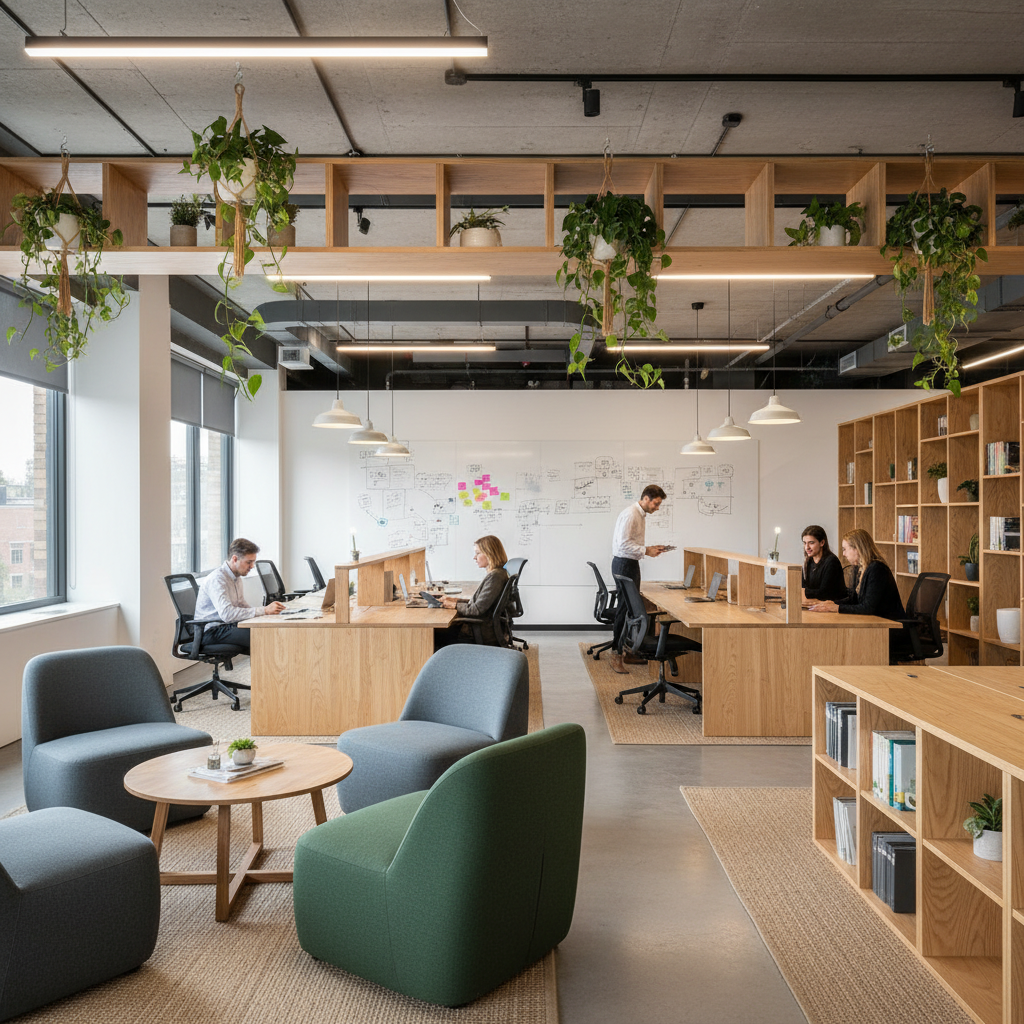
Arranging your office furniture for the future means building a “resilient layout” that can pivot as quickly as your business strategy. When you Arrange Office Furniture using a modular, non-fixed approach, you are protecting your company against the high costs of future renovations. A future-proofed office is one that can be completely reconfigured over a weekend to accommodate a new product team, a change in workflow, or a sudden increase in headcount.
Is scalability built into your plan?
Are you buying furniture that only fits your current office, or are you thinking about how those pieces will work in a larger building next year? You should choose furniture families that offer a wide range of compatible components, from nursery-inspired adaptive pieces to executive suites. Wait until you see this—standardizing your desk sizes and power connections now will save you thousands of dollars in electrical work during your next expansion.
- Use a “grid-based” floor plan for easy furniture additions.
- Choose timeless wood finishes that won’t go out of style.
- Select modular units that can be combined or separated.
Why prioritize mobile furniture units?
Why would you bolt a desk to the floor when your team’s needs might change entirely in six months? You should ensure that as many pieces as possible—from whiteboards to storage units—are on high-quality casters for easy mobility. But that is not all; mobile furniture allows your employees to “hack” their own space, moving a few desks together for an afternoon sprint without needing a facilities manager.
- Locking wheels on all collaborative and auxiliary tables.
- Lightweight partitions that can be moved by a single person.
- Modular power “spines” that allow desks to be moved easily.
How to plan for organizational growth?
Do you have a “shadow plan” for where the next 10 employees will sit, or will you be forced into a chaotic shuffle when you hire them? You should Arrange Office Furniture in your current space with “growth gaps” that can be filled with new desks without disrupting the existing flow. You will find that keeping 10-15% of your floor space flexible and unassigned is the best way to handle the unpredictable nature of business growth.
| Future Strategy | Furniture Feature | Long-term Value |
|---|---|---|
| Mobility | Heavy-duty locking casters | Zero-cost layout reconfigurations |
| Scalability | Standardized modular components | Easier sourcing for new hires |
| Adaptability | Non-fixed power and data lines | Rapid expansion into new zones |
The office of the future is not a finished product; it is a flexible platform that evolves in real-time alongside the people who use it.
Key Takeaway: Future-proofing is achieved through modularity, mobility, and the intentional use of a flexible floor plan that anticipates and accommodates rapid organizational change.
Conclusion
Maximizing productivity through furniture arrangement is a strategic mission that addresses the core human needs for focus, collaboration, and health. By implementing these data-backed strategies—from creating deep-work “caves” to establishing hybrid “neighborhoods”—you solve the pervasive problems of office noise, physical strain, and spatial inefficiency. Our vision is to provide every business with precision-crafted wooden solutions that grow alongside their success. To transform your workspace into a high-performance environment that inspires your team, contact us today .
FAQ
Q1: Can I arrange an office without buying all new furniture?
Yes, because most productivity gains come from the strategic placement and orientation of your existing pieces rather than the furniture itself.
Q2: What is the best desk orientation for a small home office?
Corner placement facing the room, as it maximizes your available floor space while giving you a commanding view of the entrance to reduce stress.
Q3: Should I prioritize open spaces or private offices?
A hybrid of both, because employees require the transparency of open areas for teamwork but must have access to private zones for deep, focused labor.
Q4: Is wooden furniture better for productivity than metal or plastic?
Often yes, due to the biophilic properties of natural wood, which are scientifically proven to lower stress and improve cognitive clarity.
Q5: How often should I re-evaluate my office furniture layout?
Every six to twelve months, because as your team’s project goals and headcount change, your physical environment must be adjusted to remain efficient.