
Furniture sourcing from China often leads to missed deadlines and quality disputes that erode your profit margins. These unclarified grey areas drain your resources and damage your brand’s reputation among discerning customers worldwide. Understanding the factory’s perspective is your ultimate solution.
Success in furniture sourcing from China requires moving beyond price hunting to master technical specifications and logistical nuances. By bridging information gaps and defining responsibilities clearly, you transform a transactional relationship into a high-performance supply chain that guarantees consistent quality and predictable delivery timelines for your growing business.
I. WHY IS CHINA THE TOP FURNITURE CHOICE?
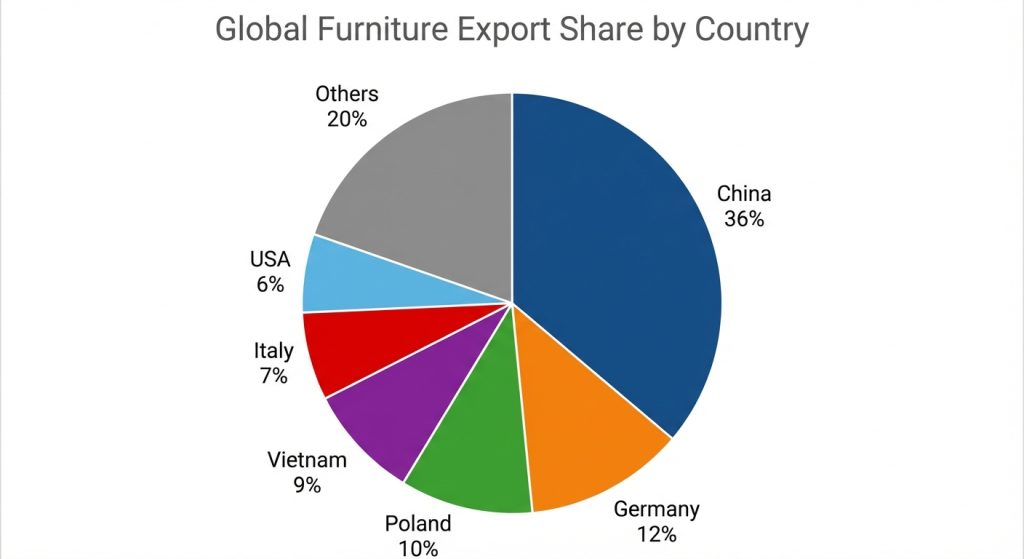
China offers an unparalleled manufacturing ecosystem that combines massive production scale with highly integrated supply chains for every necessary component. This environment makes furniture sourcing from China the most efficient way to access diverse materials and advanced woodworking technology under one roof. Think about it: where else can you find specialized clusters that handle everything from raw timber processing to final hardware finishing with such precision?
The Benefit of Massive Scale
Huge production volumes allow factories to negotiate better rates with raw material suppliers, which directly lowers your unit costs. Here is the deal: when you engage in furniture sourcing from China, you are tapping into a system designed for high-efficiency output and rapid scaling. Consider these specific advantages of the Chinese manufacturing scale:
- Access to a vast pool of skilled labor specialized in diverse furniture categories.
- Immediate availability of specialized hardware, fabrics, and finishing chemicals.
- Highly developed logistics infrastructure designed for high-volume exports.
- Ability to handle massive seasonal surges without compromising production flow.
- Lower overhead costs per unit due to advanced automation in large-scale plants.
Key Takeaway: Leveraging China’s industrial scale allows your brand to achieve price points and production speeds that are simply impossible in smaller, less integrated manufacturing markets.
Accessing Global Design Replicas
Factories in China have spent decades perfecting the art of manufacturing furniture based on global design trends and specific client blueprints. Think about it: how much faster can you go to market when your supplier already understands the structural requirements of a mid-century modern aesthetic? This deep familiarity reduces the “grey area” during the prototyping phase, ensuring your vision is translated into a physical product with minimal revisions.
Key Takeaway: The historical experience of Chinese factories in global exports means they can interpret your design requirements with a high degree of technical accuracy and aesthetic sensitivity.
The following data illustrates the structural advantages that keep China at the forefront of the global furniture manufacturing industry.
| Competitive Factor | Chinese Industrial Advantage | Impact on Buyer Success |
|---|---|---|
| Raw Material Access | Massive stockpiles of domestic and imported timber/fabrics | Reduced lead times for material procurement |
| Component Ecosystem | Thousands of specialized hardware and foam sub-suppliers | Easy customization of functional furniture parts |
| Labor Specialization | Generations of craftsmen trained in specific furniture hubs | Consistent quality in joinery and upholstery finish |
| R&D Capabilities | In-house technical teams for structural engineering | Faster transition from design concept to final product |
| Quality Tech | Advanced CNC machinery and automated finishing lines | High precision and repeatability across large batches |
| Logistics Network | Proximity to the world’s busiest container ports | Lower domestic transit costs and faster shipping |
But wait: while the infrastructure is perfect, you must still navigate the geographic landscape to find the right partner.
II. WHERE ARE THE MAJOR FURNITURE CLUSTERS?
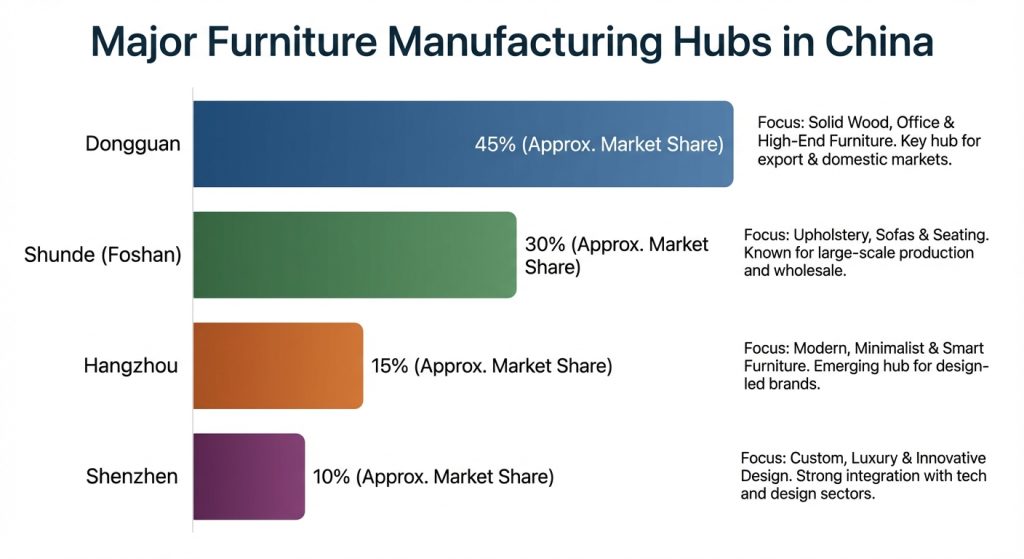
Most production is concentrated in specific industrial zones like Foshan and Dongguan to leverage localized expertise and component availability. When starting furniture sourcing from China, selecting the right region is critical because geographic specialization determines the factory’s core competency and material costs. Here’s the deal: a factory in a northern solid wood hub will always outperform a southern upholstery specialist on oak dining sets.
Foshan: The World’s Furniture Hub
Foshan, specifically the Shunde district, is globally recognized as the largest furniture production and wholesale center. Look at it this way: when you pursue furniture sourcing from China in Foshan, you are entering an area where every street is dedicated to a different part of the furniture supply chain. This concentration eliminates unclarified grey areas regarding material sourcing because every possible component is available within a few miles.
- Thousands of showrooms allow for rapid physical inspection of styles.
- World-class expertise in upholstered sofas, beds, and office seating.
- Strong network of logistics agents specialized in furniture handling.
- Competitive pricing due to the extreme density of similar manufacturers.
Key Takeaway: Foshan is the ideal destination for buyers seeking high variety, upholstery specialization, and the ability to consolidate multiple styles into a single shipment.
Specialization by Material Regions
Different provinces in China have evolved to specialize in specific materials based on local resources and historical trade routes. You see, furniture sourcing from China becomes much more predictable when you align your product material with the region’s natural strength. For instance, the northern regions excel in solid wood, while the southern coastal areas dominate in panel furniture and mixed-material designs.
- Shandong and Cao County: Experts in solid wood and Paulownia products.
- Dongguan: Famous for high-end, export-quality solid wood and classic designs.
- Zhejiang: A major hub for office furniture and modern ergonomic seating.
Key Takeaway: Matching your material requirements to a region’s historical specialty reduces the risk of quality variance and ensures the factory has the right machinery for the job.
The following comparison helps you determine which manufacturing hub aligns with your specific product portfolio and quality expectations.
| Region | Primary Specialization | Ideal Buyer Profile |
|---|---|---|
| Foshan (Shunde) | Upholstery, Sofas, Wholesale | Retailers needing variety and competitive pricing |
| Dongguan | High-end Export, Solid Wood | Luxury brands requiring strict QC and fine finishes |
| Shandong | Solid Wood, Dining Sets, Baskets | Brands focused on natural materials and durability |
| Zhejiang | Office Furniture, Smart Furniture | Corporate suppliers and modern tech-integrated brands |
| Fujian | Outdoor Furniture, Metal & Wood | Patio retailers and garden furniture specialists |
Here’s the deal: once you know where to go, you must decide how you will interact with the local market.
III. WHICH SOURCING STRATEGY FITS YOUR NEEDS?
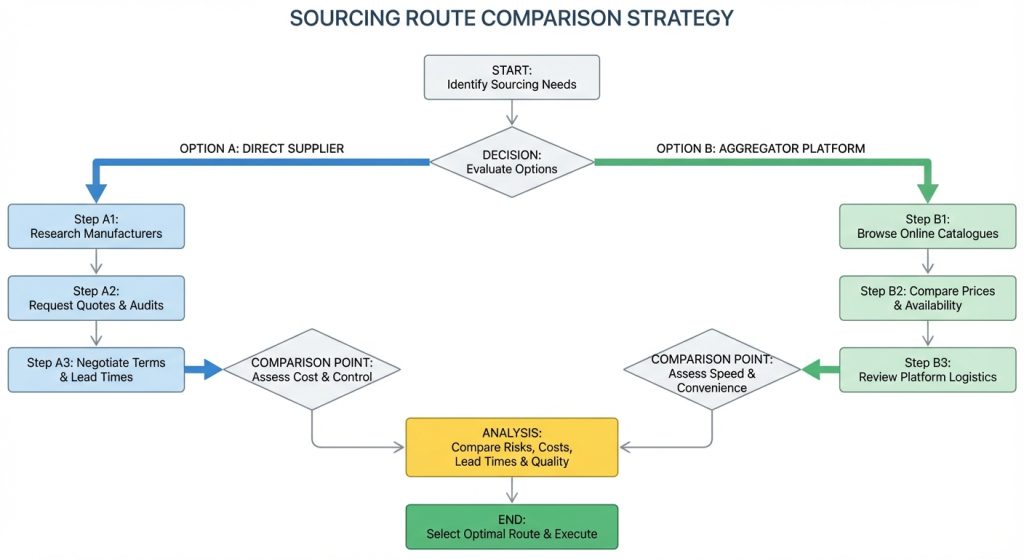
Your choice between direct factory partnerships and digital aggregators depends entirely on your order volume and customization requirements. Effective furniture sourcing from China involves matching your business model with the supplier’s operational structure to avoid friction in communication or production. But wait: choosing the wrong path often results in unclarified grey areas regarding who actually controls the final quality check.
The 1688 Hack for Small Brands
For boutique brands or those just starting, using platforms like 1688 or Alibaba allows for lower minimum orders and access to ready-made designs. Think about it: why invest in expensive molds and custom designs when you can leverage existing factory stock for your first furniture sourcing from China venture? This strategy is excellent for testing market demand without committing to a full container of a single SKU.
- Access to “ready-to-ship” inventory from hundreds of small factories.
- Lower financial risk with smaller upfront capital requirements.
- Ability to mix different styles in one small trial order.
- Faster lead times for products that are already in production.
- Lower barrier to entry for e-commerce sellers and interior designers.
Key Takeaway: Digital platforms are the best entry point for small-scale buyers who prioritize variety and low MOQ over deep product customization.
Direct Factory Partnerships for Volume
Large-scale retailers and established brands benefit most from working directly with manufacturers to secure better pricing and exclusive designs. In the world of furniture sourcing form China, direct contact eliminates middleman markups and allows for much tighter control over the technical production process. But wait: this route requires more effort in terms of factory auditing and relationship management to ensure consistency.
Key Takeaway: Direct factory relationships are essential for buyers who require custom branding, strict quality control, and the lowest possible unit cost at high volumes.
The table below compares the two primary routes to help you choose the most sustainable path for your current business stage.
| Feature | Aggregator Platforms (e.g., 1688) | Direct Factory Partnership |
|---|---|---|
| MOQ Requirement | Low (often 1-5 pieces) | High (usually 1 container or 50+ per SKU) |
| Customization | Very Limited (stock designs) | High (OEM/ODM capabilities) |
| Price Point | Retail/Wholesale Mix | Factory Direct (lowest) |
| Lead Time | Short (for stock items) | Long (45-60 days for production) |
| Risk Level | High (quality variance) | Controlled (via audits and contracts) |
Look at it this way: your strategy is only as good as the factory you choose to implement it.
IV. HOW DO YOU IDENTIFY A REAL FACTORY?

You identify a genuine manufacturer by verifying their business license scope and physical production assets through on-site or video audits. In the realm of furniture sourcing from China, distinguishing between a trading company and a factory is essential for maintaining control over the manufacturing process. Believe it or not, many “factories” are actually sophisticated sales offices that outsource production, creating risks if responsibilities aren’t strictly defined.
Spotting Traders vs. Manufacturers
A factory will always have a production-focused business license and specific machinery visible on its shop floor during a live tour. When you are performing furniture sourcing from China, look for signs of “Value Added” services; traders focus on sales, while factories focus on material logs and assembly lines. Here’s the deal: a real manufacturer can explain the furniture factory audit checklist in technical detail because they live it every day.
Key Takeaway: Always request a live video walk-through of the production line to confirm the supplier actually owns the machines they claim to use.
The Importance of Video Audits
In an era where travel can be restricted, a comprehensive video audit serves as a powerful tool to bridge the information gap. Think about it: can a trading company show you the raw timber drying kiln or the CNC router in action on a Tuesday afternoon? For successful furniture sourcing from China, you need to see the “messy” parts of production—the dust, the workers, and the quality stations.
- View raw material storage to check for proper moisture control.
- Inspect the assembly area to see how joints are actually fitted.
- Observe the packing station to evaluate the thickness of the cartons.
- Verify the presence of in-house quality control personnel.
- Check for safety certifications and worker environment standards.
Key Takeaway: Video audits are a cost-effective way to verify supplier claims and identify potential production bottlenecks before you send a deposit.
This judgment table helps you differentiate between a true partner and a middleman during your vetting process.
| Evidence Type | Likely a Real Factory | Likely a Trading Company |
|---|---|---|
| Business License | Includes “Manufacturing” or “Production” | Focuses on “Trade,” “Consulting,” or “Sales” |
| Product Range | Narrow and specialized (e.g., only chairs) | Broad and unrelated (e.g., tables and lamps) |
| On-site Video | Shows active machines and workers | Shows a clean office or a quiet “showroom” |
| Technical Knowledge | Can explain wood moisture and joint types | Uses generic marketing terms like “best quality” |
| Sample Speed | Usually takes 7-14 days to make from scratch | Can send “ready samples” immediately |
But wait: even with a real factory, you must understand the clock they work by.
V. WHAT INFLUENCES PRODUCTION LEAD TIMES?
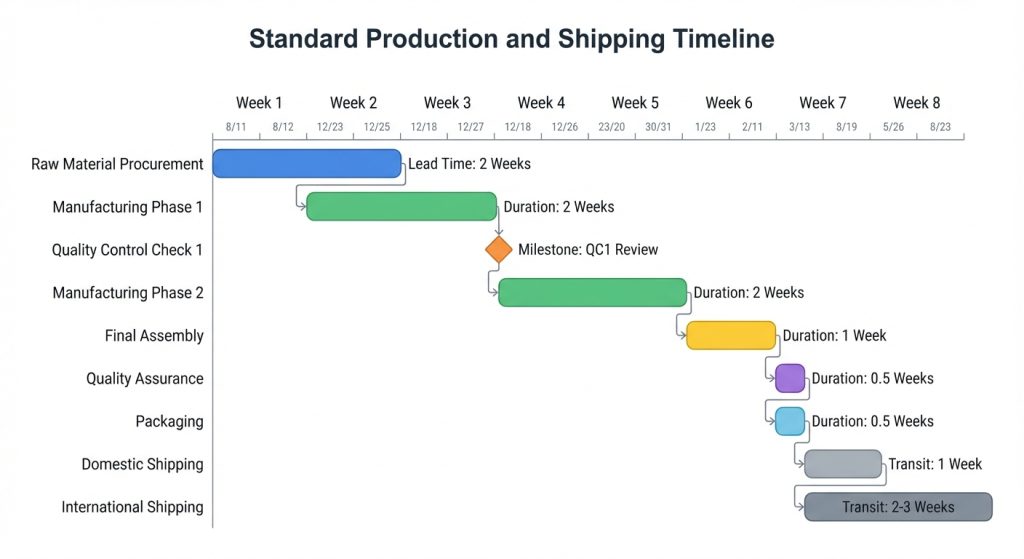
Lead times are primarily driven by raw material procurement cycles and the seasonal workload of the factory’s production lines. When planning furniture sourcing from China, you must account for the “grey area” of sub-supplier delays, which are often outside the main factory’s immediate control. Look at it this way: a delay in fabric delivery from a third-party mill can halt an entire sofa production run for weeks.
Seasonal Impact on Manufacturing
The Chinese manufacturing calendar is punctuated by major holidays, most notably the Lunar New Year, which can shut down production for up to a month. For anyone involved in furniture sourcing from China, failing to plan around these dates is the most common cause of inventory stockouts. Here’s the deal: factories become extremely congested in the two months leading up to the holiday, often leading to rushed production and quality slips.
Key Takeaway: Place your orders at least three months before major holidays to ensure your goods are shipped before the national shutdowns.
Speed and Craftsmanship Balance
Rushing a furniture order often leads to structural failures because processes like wood drying and glue curing cannot be artificially accelerated. In the furniture manufacturing process , every step has a “natural” time requirement that must be respected to avoid future returns. Consider these critical timeline factors:
- Wood kiln drying: Essential to prevent warping and cracking.
- Finishing and lacquering: Requires dust-free drying time between coats.
- Glue curing: Critical for the long-term integrity of the joints.
- Upholstery foam expansion: Must sit after cutting for proper fit.
- Final assembly and QC: Rushing this leads to missing hardware or scratches.
Key Takeaway: Realistic lead times are your best insurance against quality issues; never trade structural integrity for a faster shipping date.
The following table outlines the standard production milestones you should expect during a typical order cycle.
| Production Phase | Duration (Standard) | Key Quality Checkpoint |
|---|---|---|
| Material Sourcing | 10 – 20 Days | Check moisture content of the wood |
| Wood Cutting / CNC | 7 – 10 Days | Verify dimensions against the blue prints |
| Assembly / Joinery | 10 – 15 Days | “White body” inspection before finishing |
| Finishing / Painting | 5 – 10 Days | Color matching and surface smoothness |
| Upholstery / Final | 5 – 7 Days | Foam density and fabric alignment |
| Packaging / QC | 3 – 5 Days | Drop test and hardware count |
Look at it this way: time is money, but quality is your brand’s future.
VI. IS HIGH QUALITY POSSIBLE AT A LOW PRICE?
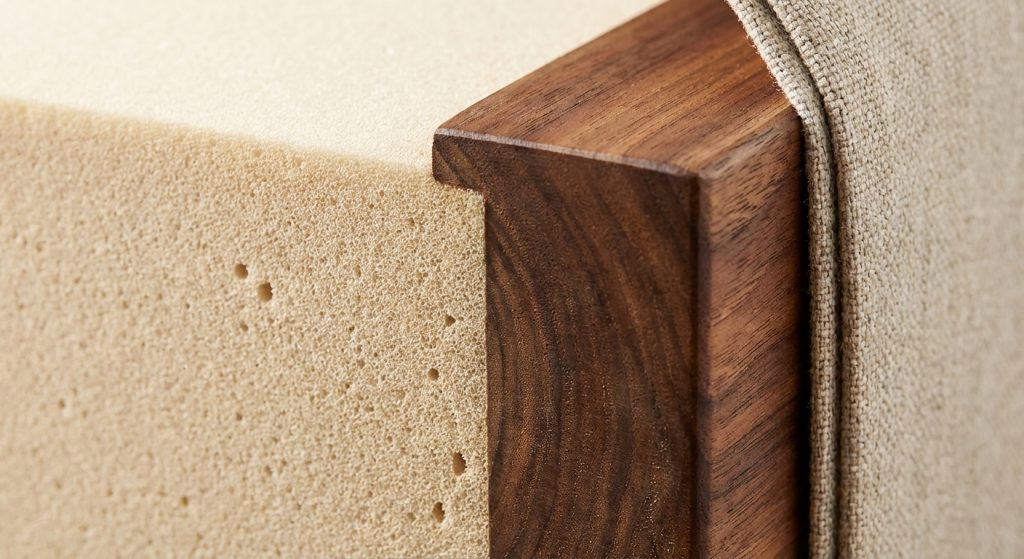
High quality is achievable only when you provide exact technical specifications that eliminate any room for “value engineering” by the supplier. Successful furniture sourcing from China relies on the buyer defining every detail, from foam density to moisture content, to ensure the factory produces exactly what is expected. To put it simply: if a spec is left undefined, the factory will naturally choose the most cost-effective option to remain competitive.
Defining Premium Material Specs
The difference between a “cheap” chair and a “premium” one often lies in the invisible components, like the internal frame wood and foam resilience. When you are deep into furniture sourcing from China, you must specify common quality issues in wooden furniture manufacturing and how to avoid them. Here’s the deal: high-density foam (35kg/m³+) and solid kiln-dried frames are the non-negotiable foundations of a quality piece.
- Specify the exact moisture content (usually 8-12%) for solid wood.
- Define the Martindale rub count for upholstery fabrics.
- Choose high-grade hardware (e.g., Blum or DTC) for drawers and hinges.
- Demand E1 or E0 grade boards for formaldehyde safety.
- Request double-stitched seams and reinforced corners for sofas.
Key Takeaway: Quality is a set of measurable technical data points; provide the data, and the factory can deliver the quality.
The “Golden Sample” Quality Trap
A “Golden Sample” is a perfect prototype that the factory produces to win your business, but it doesn’t always represent the bulk production. But wait: during furniture sourcing from China, the gap between the sample and the container is where most buyers lose money. You see: without a signed-off control sample and a detailed spec sheet, the factory may substitute materials in the mass production run to save on costs.
Key Takeaway: Always keep a duplicate of the approved sample at the factory and one in your office to serve as the legal quality benchmark.
This summary table highlights how small specification changes dramatically affect both the price and the longevity of your furniture.
| Component | Standard (Lower Cost) | Premium (Higher Quality) |
|---|---|---|
| Internal Frame | Plywood or Pine (air-dried) | Solid Oak or Ash (kiln-dried) |
| Upholstery Foam | 20-25 kg/m³ density | 35-45 kg/m³ High Resilience (HR) |
| Drawer Slides | Standard side-mount | Soft-close undermount (DTC/Blum) |
| Wood Finish | NC (Nitrocellulose) Lacquer | PU (Polyurethane) or Water-based |
| Fabric | 15,000 Rubs (light use) | 50,000+ Rubs (commercial grade) |
But wait: location still matters—let’s look at why the north is gaining favor.
VII. WHY SOURCING FROM SHANDONG IS DIFFERENT?
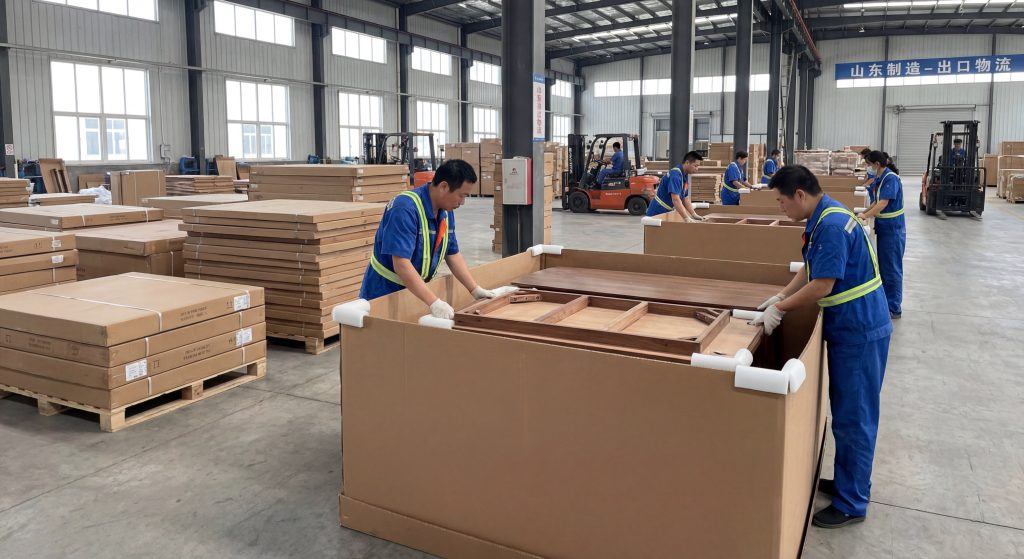
Shandong factories specialize in solid wood furniture, utilizing centuries of northern woodworking tradition combined with modern industrial efficiency. This region offers a distinct advantage for furniture sourcing from China when your focus is on oak, walnut, or pine pieces that require high structural integrity. You might be wondering: why does the north excel at this?
Northern Solid Wood Excellence
The climate in Northern China is better suited for processing solid wood, as the lower humidity levels during manufacturing help stabilize the timber. Here’s the deal: when you choose furniture sourced from China from Shandong, you are getting products built by craftsmen who understand how wood breathes and moves. Believe it or not, the joinery techniques used in these northern hubs are often superior for heavy-duty dining and bedroom furniture.
- High concentration of oak and ash processing specialists.
- Traditional mortise and tenon joinery is integrated into modern production.
- Lower labor turnover compared to southern coastal megacities.
- Direct access to northern timber ports for imported American hardwoods.
- Strong focus on natural oil and wax finishes.
Key Takeaway: Shandong is the premier choice for buyers whose brand identity is built on the durability and natural beauty of solid wood.
Operational Hub Efficiency
Factories in Shandong have evolved into highly efficient ecosystems where specialized sub-factories handle only one part of the process, such as chair legs or table tops. In the landscape of furniture sourcing from China, this “micro-specialization” leads to lower defect rates and higher overall precision. Look at it this way: when a factory only makes tabletops all day, they become incredibly fast and consistent at that one specific task.
Key Takeaway: The modular nature of Shandong’s manufacturing hub allows for high-quality production at a very competitive price point due to extreme specialization.
The table below compares the woodworking strengths of Shandong versus the more commercial hubs in the south.
| Feature | Shandong (Northern Hub) | Foshan/Dongguan (Southern Hub) |
|---|---|---|
| Main Material | Solid Oak, Walnut, Pine | MDF, Plywood, Metal, Upholstery |
| Primary Joint Type | Mortise & Tenon (Traditional) | Cam-lock and Screws (Modern) |
| Finish Style | Natural Oil, Thin Lacquer | High Gloss, Fabric Wrapped, Veneer |
| Production Focus | Heavy Dining, Bedroom Sets | Sofas, Office, Modern Minimalist |
| Climate Advantage | Low humidity (Better for wood) | High humidity (Requires careful drying) |
Here’s the deal: once the product is built, you need to know what it actually costs to get it to your door.
VIII. HOW TO CALCULATE REAL LANDED COSTS?

Real landed costs are calculated by adding international freight, customs duties, and local delivery fees to the factory’s Ex-Works price. Many buyers fail at furniture sourcing from China because they ignore the impact of anti-dumping duties or port congestion surcharges on their final margins. Think about it: a “cheap” chair becomes an expensive liability if it triggers a 200% tariff upon arrival at your destination port.
Decoding Tariffs and Duties
Different countries impose varying taxes on furniture categories, with some regions like the USA having specific Section 301 tariffs on Chinese goods. When you are managing furniture sourcing from China, you must consult a customs broker to identify the exact HS Code for your products. But wait: a small design change, like adding a metal frame to a wooden chair, can sometimes shift the product into a different, lower-tariff category.
- Research anti-dumping duties on specific items like wooden bedroom furniture.
- Check for “Most Favored Nation” (MFN) duty rates.
- Account for VAT or GST payments required upon arrival.
- Understand the impact of “De Minimis” thresholds for smaller orders.
- Factor in the cost of customs bonds and entry filing fees.
Key Takeaway: Your “factory price” is only about 60-70% of your total cost; always calculate your landed margin before placing a deposit.
Landed Cost Formula Breakdown
To find your true cost per unit, you must divide the total shipment expenses by the number of units in the container. In the math of furniture sourcing from China, shipping air is the biggest waste of money; therefore, maximizing container utilization is a key profit driver. Here’s the deal: if your factory doesn’t know how to “nest” chairs or flat-pack efficiently, your landed cost will skyrocket.
Key Takeaway: Work with your factory to optimize packaging dimensions so you can fit more units into every 40ft High Cube container.
The following table provides a sample breakdown of how a $10,000 factory order scales up to its final landed cost.
| Cost Component | Estimated Percentage | Estimated Amount (USD) |
|---|---|---|
| Factory Price (FOB) | 65% | $10,000 |
| Ocean Freight (40ft HQ) | 15% | $2,300 |
| Customs Duties (e.g., 25%) | 16% | $2,500 |
| Port Handling & Entry | 2% | $300 |
| Local Trucking (Last Mile) | 2% | $300 |
| Total Landed Cost | 100% | $15,400 |
Look at it this way: your shipping terms are the bridge between these costs.
IX. WHAT SHIPPING METHOD SHOULD YOU CHOOSE?
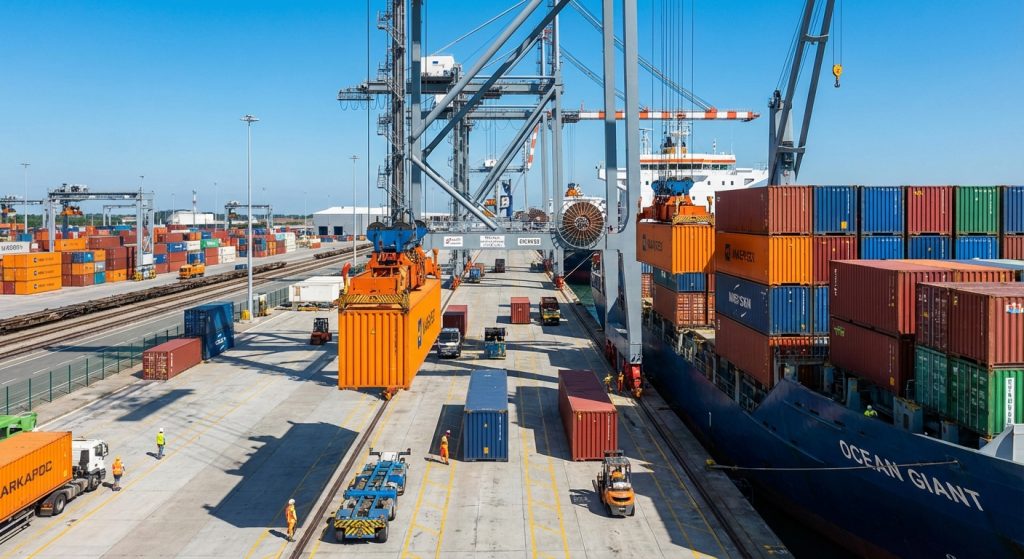
The best shipping method depends on your experience level and your ability to manage the logistics chain from the factory gate to your warehouse. During furniture sourcing from China, choosing between FOB and DDP terms determines where your risk ends and the supplier’s responsibility begins. Here’s the deal: unclarified grey areas in shipping terms are the leading cause of unexpected storage fees and insurance disputes.
FOB vs. DDP Terms Comparison
FOB (Free On Board) is the industry standard where the factory is responsible for the goods until they are loaded onto the ship. For more advanced furniture sourcing from China, FOB gives you control over the freight rates and the choice of shipping line. But wait: if you are a beginner, DDP (Delivered Duty Paid) might seem easier because the supplier handles everything, but you will often pay a significant premium for this convenience.
- FOB: You control the timeline and the costs once the ship leaves China.
- DDP: “Hands-off” approach, but higher risk of hidden markups in the freight.
- EXW: You are responsible from the factory door; only for experienced buyers.
- CIF: Supplier pays insurance/freight to your port, but you handle the rest.
- Check which party is responsible for “Demurrage” and “Detention” fees.
Key Takeaway: Choose FOB if you want to scale your business and control costs; choose DDP only for small, infrequent trial shipments.
LCL vs. FCL Container Strategies
FCL (Full Container Load) is always safer for furniture because it reduces the number of times your delicate goods are handled. In the logistics of furniture sourcing from China, LCL (Less than Container Load) shipments are often combined with heavy machinery or chemicals, increasing the risk of damage or odor transfer. Look at it this way: it is often cheaper to buy a few extra sofas to fill a 20ft container than to pay the high per-cubic-meter rates and “co-loading” risks of LCL.
Key Takeaway: Always aim for FCL (Full Container Load) to minimize damage risks and significantly lower your shipping cost per unit.
This judgment table helps you decide which Incoterm matches your company’s risk tolerance and logistics capability.
| Term | Buyer Responsibility | Risk Level | Best For |
|---|---|---|---|
| EXW | Full (from factory door) | Maximum | Buyers with a local China office |
| FOB | Freight, Customs, Local | Balanced | Professional retailers/brands |
| CIF | Local Customs & Delivery | Moderate | Buyers new to international trade |
| DDP | None (door-to-door) | Minimum | Small boutiques/First-time buyers |
But wait: shipping is just a transaction; a supply chain is a relationship.
X. HOW TO BUILD A SUSTAINABLE SUPPLY CHAIN?

Building sustainability requires moving from a transactional mindset to a long-term partnership based on mutual transparency and shared quality goals. In the context of furniture sourcing from China, stability is achieved when you invest time in factory relationships rather than constantly switching suppliers for minor price gains. You see: a loyal factory is far more likely to prioritize your orders during peak seasons or help resolve unforeseen quality issues.
Nurturing Long-Term Factory Ties
Treating your factory as a partner involves sharing your long-term sales forecasts so they can plan their material procurement and labor schedules. In the world of furniture sourcing from China, “Face” (Mianzi) and mutual respect go a long way in securing the best production slots and the most attentive service. Here’s the deal: when you pay on time and communicate clearly, the factory views you as a “Key Account” worth protecting.
Key Takeaway: Stable relationships lead to “Automatic Quality” where the factory knows your expectations so well that they catch errors before you do.
Scaling from Samples to Containers
Success in furniture sourcing from China is a marathon, not a sprint; you must prove your reliability to the factory just as they must prove theirs to you. Think about it: why would a top-tier factory give you their best price if you only order 10 chairs once a year? Consider this scaling path:
- Start with a paid sample to test the factory’s technical capability.
- Place a trial LCL or 20ft container order to test their consistency.
- Standardize your QC checklist and feedback loop after every shipment.
- Increase volume to a 40ft HQ to unlock the best pricing and priority.
- Collaborate on exclusive designs to build a unique market position.
Key Takeaway: Scaling gradually allows you to refine your quality standards and build trust without exposing your business to massive financial risk.
The following table outlines the stages of a maturing supply chain relationship and the benefits associated with each level.
| Partnership Stage | Buyer Commitment | Factory Benefit | Your Result |
|---|---|---|---|
| Discovery | Sample Order | Opportunity to show skill | Verified technical capability |
| Trial | First 20ft Container | Baseline revenue | Proven bulk production quality |
| Growth | Regular 40ft HQ | Predictable workload | Volume discounts and priority |
| Partnership | Annual Forecasting | Optimized procurement | Lowest pricing & custom R&D |
| Strategic | Exclusive Design | Shared intellectual growth | Market-leading unique products |
Look at it this way: the best supply chain is one where both parties win.
Many sourcing problems do not begin at the factory floor. They start much earlier, during supplier selection, sampling, quotation review, and expectation setting. For a clearer breakdown, see Why Furniture Orders Fail: Real Causes Buyers Often Miss.
FAQ
Can I order small quantities for my brand?
Yes, you can order small quantities by utilizing specialized sourcing agents or platforms like 1688 that cater to boutique buyers. The reason this works is that these intermediaries consolidate multiple small orders into a single container, allowing you to access factory-style pricing without the massive MOQ requirements of a direct partnership.
What’s the best way to handle quality inspections?
The best way is to hire a third-party inspection agency to perform a “During Production” (DUPRO) and “Pre-Shipment Inspection” (PSI) on-site. This works because it provides an unbiased, technical report on your goods before they leave the factory floor, ensuring you don’t pay the final balance for products that do not meet your agreed-upon specifications.
How do I know if the factory is offering a fair price?
You can determine fairness by requesting a “Breakdown Quote” that separates the costs of materials, labor, and profit, then comparing this against 3-4 other suppliers. This reason-based approach reveals if a price is suspiciously low (indicating potential material substitution) or unnecessarily high (indicating a heavy middleman markup), allowing you to negotiate from a position of data-driven strength.
Closing note
This article clarified how to bridge information gaps in furniture sourcing from China. We can assist you in implementing these confirmation methods to secure your supply chain. Our goal is to empower your brand with technical transparency and reliable partnerships. For expert guidance on your next order, feel free to contact us today to build your competitive edge.