
You face product recalls, structural failures, and reputation damage when sourcing furniture without verifying production realities first. Unseen information gaps often transform high-margin opportunities into logistical disasters that threaten your long-term retail viability.
Buyers avoid costly mistakes by conducting a rigorous supplier audit to identify gray areas in material sourcing, production capacity, and technical compliance before committing to orders. This systematic verification ensures that factory capabilities align with structural safety standards and sustainable timber requirements to protect brand equity.
I. Why is a supplier audit vital for furniture?
A supplier audit is vital because it identifies hidden structural safety risks and ensures timber sustainability before products reach your final customers. While many manufacturers maintain outward appearances of efficiency, this systematic verification uncovers the specific information gaps regarding kiln-drying durations and chemical compliance that often lead to latent structural defects. You must recognize that these evaluations are not about lack of trust, but about aligning professional standards across complex global supply chains.
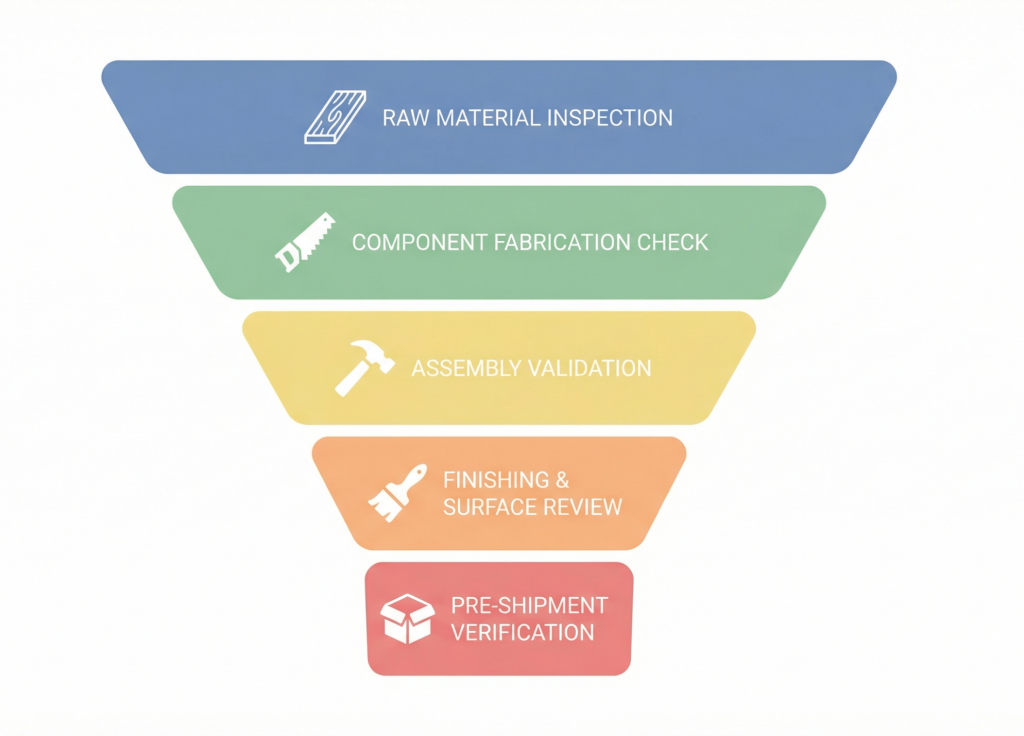
Identifying structural safety risks
Furniture integrity depends on precise engineering and load-bearing calculations that are frequently overlooked in the absence of a professional on-site review. When you evaluate furniture manufacturers , you are looking for evidence that joint reinforcements and adhesive applications meet international safety thresholds for long-term domestic or commercial use. These inspections prevent the distribution of unstable items that could result in consumer injury and substantial legal liabilities for your retail organization.
Ensuring sustainable timber sourcing
The modern consumer demands transparency regarding the origin of wood materials to ensure that no illegal logging or environmentally damaging practices are supported. A thorough examination of procurement logs and forestry certificates allows you to verify that the factory is adhering to sustainable practices without relying solely on unconfirmed verbal assurances.
- Verification of FSC or PEFC chain-of-custody documentation.
- Review of timber species identification through botanical records.
- Cross-referencing purchase invoices with physical inventory on the factory floor.
- Inspection of storage conditions to prevent cross-contamination of material grades.
Mitigating brand reputation damage
Building a brand takes years of consistent quality, yet a single batch of furniture with poor finishing or structural instability can erode customer trust overnight.
Consider this: Establishing a baseline of technical compliance through an audit allows you to filter out facilities that lack the rigorous process controls necessary to protect your brand’s market reputation.
The following table summarizes the primary risk categories addressed during the initial phase of a factory evaluation.
| Risk Category | Primary Audit Focus | Expected Outcome |
|---|---|---|
| Structural | Joint integrity and load testing | Reduced breakage rates |
| Environmental | Timber origin and chemical VOCs | Regulatory compliance |
| Legal | Safety certifications (BIFMA/EN) | Liability protection |
The reality is simple: The first step toward a stable supply chain is acknowledging that what isn’t measured cannot be effectively managed.
II. What defines a furniture technical audit?
A furniture technical audit involves a granular assessment of machinery maintenance protocols and the precision of automated finishing lines within the facility. By executing a supplier audit with a technical focus, you move beyond administrative paperwork to understand how the factory maintains its equipment to produce consistent tolerances across thousands of units. This deep dive into the engineering side of production helps bridge the gap between a design prototype and the actual output capabilities of the factory floor.
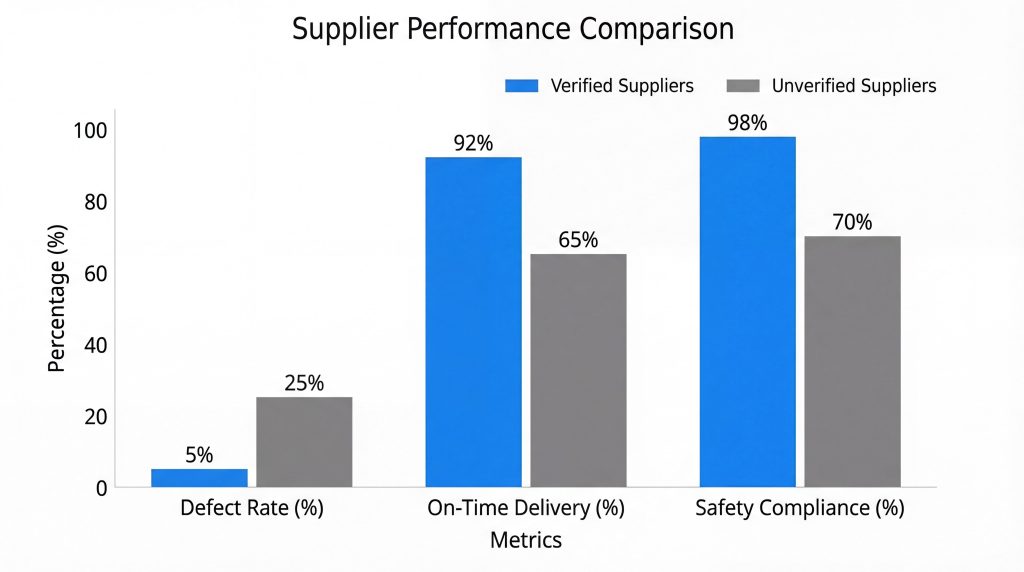
Assessing machinery maintenance levels
Consistent production quality is impossible if the factory relies on poorly calibrated CNC machines or aging sanding equipment that creates uneven surfaces. You should investigate whether the facility follows a proactive maintenance schedule rather than waiting for critical failures that cause expensive production downtime and lead to rushed, lower-quality work. High-performance furniture requires sharp tooling and precise calibration to ensure that every mortise and tenon joint fits perfectly according to your technical specifications.
Evaluating assembly line efficiency
The way a factory organizes its workflow directly influences the defect rate and the overall speed at which your order can be fulfilled without compromising structural details.
- Assessment of work-in-progress (WIP) storage to prevent material warping.
- Review of worker ergonomic setups to ensure consistent manual task execution.
- Inspection of the final assembly area for cleanliness and dust control.
- Evaluation of internal quality checkpoints between different production stages.
Checking finishing and coating precision
Surface treatments are often where the most significant information gaps occur, as the difference between a high-grade lacquer and a cheap alternative is often invisible to the naked eye.
Here is the truth: Technical audits provide the data needed to confirm that a factory possesses the specialized machinery and maintenance discipline required to execute complex furniture designs repeatedly.
This comparison highlights the difference between standard manual production and high-precision technical manufacturing environments.
| Feature | Manual/Low-Tech Facility | Automated/Technical Facility |
|---|---|---|
| Precision | Variable based on operator skill | Consistent micron-level tolerance |
| Maintenance | Reactive (fix when broken) | Preventive (scheduled calibration) |
| Scalability | Difficult without quality loss | High throughput with stable quality |
Think about it: Technical mastery is the foundation upon which all reliable furniture manufacturing is built.
Most sourcing failures actually begin at this stage.
Buyers often focus on price first and overlook structural risks in supplier selection, sampling, and quotation review.
For a deeper breakdown, see Why Furniture Orders Fail: Hidden Risks Buyers Often Miss.
III. How do you verify furniture material quality?
You verify furniture material quality by inspecting raw material stocks, testing moisture content in timber, and reviewing the laboratory certifications for all hardware components. A comprehensive supplier audit ensures that the materials entering the production line match the grade specified in your purchase agreement to avoid premature product failure. These steps are essential because material substitution is often a byproduct of undefined boundaries in the procurement process rather than a deliberate attempt to deceive.

Timber moisture content verification
Controlling wood moisture is perhaps the most critical factor in furniture longevity, as improper kiln-drying leads to cracking, warping, and joint failure once the product enters a climate-controlled home. You should observe the factory’s use of moisture meters and their documentation of the drying process to ensure timber is stabilized between 8% and 12% depending on the destination market. If you neglect furniture quality control at this early stage, you risk receiving entire containers of stock that will inevitably degrade within months of arrival.
Hardware durability and stress testing
The lifespan of a cabinet or sofa is often determined by the quality of its hinges, drawer slides, and structural fasteners.
- Review of salt spray test reports for metal hardware corrosion resistance.
- Physical testing of drawer cycle limits to ensure smooth operation over time.
- Inspection of hardware brands to verify they match the approved samples.
- Assessment of how hardware is stored to prevent oxidation before assembly.
Fabric and upholstery wear checks
For soft seating and upholstered items, you must confirm that the fabrics used possess the necessary Martindale rub counts and fire retardancy ratings required by your local regulations.
Consider the following: Material verification acts as a gatekeeper that prevents substandard inputs from undermining the integrity of your finished furniture pieces.
The summary below outlines the essential material tests that should be verified during an on-site audit of a furniture facility.
| Material Type | Primary Test Method | Critical Threshold |
|---|---|---|
| Solid Wood | Pin or pinless moisture meter | 8% – 12% Content |
| Metal Hardware | Cycle testing and salt spray | 50,000+ Operations |
| Upholstery | Martindale / Wyzenbeek | 15,000+ Rubs (Domestic) |
Always remember: The quality of the final piece is strictly limited by the quality of the raw materials used in its construction.
IV. Is the factory capacity sufficient for orders?
The factory capacity is sufficient if the manufacturer can demonstrate a clear balance between their available workforce, machinery uptime, and the volume of their current order book. During a supplier audit, you must scrutinize production logs to see if the factory is operating near its ceiling, which often leads to “gray area” shortcuts during peak seasons. By understanding the true throughput of the facility, you can place orders with confidence that your delivery deadlines will be met without compromising the craftsmanship of your furniture.

Analyzing peak production throughput
Capacity is not just a static number but a dynamic capability that fluctuates based on the complexity of the furniture designs and the efficiency of the assembly lines. When furniture sourcing from China , it is vital to check how the factory manages large-scale runs alongside smaller, bespoke orders that might compete for the same specialized machinery. You should ask for historical output data to verify that the factory’s claims of monthly capacity are supported by actual production records from previous years.
Reviewing seasonal labor availability
The furniture industry often relies on skilled manual labor for sanding, carving, and upholstery, making it sensitive to labor shortages during major holidays or peak agricultural seasons.
- Analysis of worker retention rates to gauge the stability of the skilled workforce.
- Review of the factory’s strategy for scaling labor during high-demand periods.
- Inspection of worker dormitories and facilities to ensure ethical treatment and legal compliance.
- Evaluation of cross-training programs that allow workers to move between different production stages.
Evaluating lead time reliability
Reliability is the most valuable currency in sourcing, and it requires the factory to have a robust material planning system that prevents delays caused by missing components.
Look at this: Capacity verification prevents you from overcommitting to a supplier that may be forced to outsource your production to unverified “shadow factories” when their own lines are full.
This table provides a summary of the metrics used to evaluate whether a furniture factory is prepared for your order volume.
| Capacity Metric | Target Indicators | Risk of Failure |
|---|---|---|
| Machine Utilization | 70% – 85% range | Bottlenecks or lack of buffer |
| Labor Stability | < 15% Annual turnover | Quality variance and delays |
| Material Stock | 2-week buffer of raw goods | Immediate production halts |
The bottom line: A factory’s “maximum” capacity is rarely its “sustainable” capacity, and knowing the difference is vital for your planning.
V. Which documents must a furniture auditor review?
An auditor must review ISO quality management certificates, environmental compliance permits, and valid business licenses that authorize the export of furniture products. A formal supplier audit relies on these documents as evidence that the manufacturer operates within the legal and quality frameworks of their local jurisdiction and your destination market. Reviewing these papers helps you identify information gaps regarding the factory’s legal standing and its commitment to international standards of professional operation.

ISO quality management certificates
While an ISO 9001 certificate is common, its presence indicates that the factory has at least established a standardized system for documenting processes and managing non-conformities. You should verify that the certificate is current and specifically covers the manufacturing of the furniture categories you intend to purchase. This documentation serves as the blueprint for how the factory handles quality issues, ensuring that there is a recorded trail for every production decision made.
Environmental compliance permits
As environmental regulations tighten globally, a factory without proper dust extraction or chemical disposal permits faces the risk of sudden government-mandated closures.
- Review of air emission permits for painting and finishing booths.
- Inspection of hazardous waste disposal contracts for adhesives and solvents.
- Verification of wastewater treatment protocols in facilities that utilize staining processes.
- Audit of timber legality documents (EUTR/Lacey Act compliance) to prevent import seizures.
Business licenses and export rights
You must confirm that the entity you are paying is the same entity that holds the manufacturing license and the legal right to export goods from its home country.
Key Takeaway: Document review creates a legal and operational safety net that ensures your supplier is a legitimate business entity capable of fulfilling international trade obligations.
The table below lists the high-priority documents that every furniture buyer should verify before signing a manufacturing contract.
| Document Type | Verification Purpose | Validity Check |
|---|---|---|
| Business License | Confirms legal entity and scope | Match with local gov records |
| ISO 9001 | Confirms quality systems exist | Check accreditation body |
| EUTR/FSC | Confirms timber legality | Cross-reference on portal |
Stay alert: Paperwork is the foundation of accountability, and missing documents are usually the first sign of larger operational gaps.
VI. How to conduct the onsite audit process?
You conduct the onsite audit process by performing a thorough walkthrough of the production floor, sampling items directly from the line, and holding a formal closing meeting with factory management. The supplier audit is most effective when it follows a logical path from raw material intake through to the final packaging and loading areas. This hands-on approach allows you to see the reality of daily operations, which may differ from the polished presentations provided in a corporate boardroom or a digital catalog.
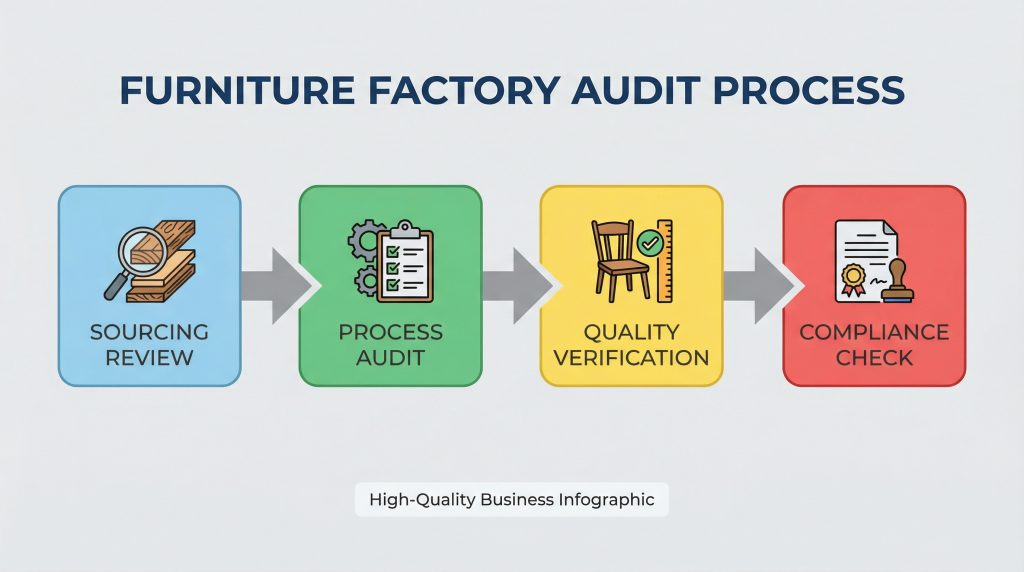
Initial factory floor walkthrough
The initial walkthrough provides an immediate impression of the factory’s organization, cleanliness, and safety standards, which are often indicative of their attention to product detail. You should look for clear signage, organized material storage, and the presence of safety equipment to gauge the level of discipline the management enforces on the floor. An organized factory is much less likely to lose track of quality specifications or misplace critical components during the complex furniture assembly process.
Live production line sampling
Instead of only looking at pre-prepared “golden samples,” you must pull items directly from the current production run to evaluate the factory’s standard output quality.
- Inspection of unfinished frames to check for hidden defects or poor-quality wood.
- Testing of structural joints on semi-finished products to ensure glue coverage.
- Observation of the finishing process to see if the required number of coats are applied.
- Review of the final inspection station to see how many items are being rejected by the factory’s own team.
Closing meeting with management
The audit concludes with a collaborative session where you present your findings and discuss any information gaps or necessary improvements with the factory owners.
Key Takeaway: The onsite process transforms abstract quality standards into a shared understanding of what is required to maintain a successful, long-term manufacturing partnership.
This table outlines the typical sequence of an on-site furniture audit and the goals for each stage of the inspection.
| Audit Stage | Key Activity | Primary Goal |
|---|---|---|
| Opening | Management interview | Set expectations and scope |
| Floor Tour | Process observation | Identify operational gaps |
| Sampling | Physical product check | Verify real-world quality |
Observation is key: What you see on the factory floor is the only reliable predictor of what you will eventually find in your shipping containers.
VII. Are digital tools improving audit accuracy?
Digital tools are improving audit accuracy by enabling real-time data entry, cloud-based photo evidence storage, and the automated generation of detailed performance reports. By integrating technology into your supplier audit, you eliminate the risk of transcription errors and ensure that every defect is documented with high-resolution imagery and GPS timestamps. This transparency helps both you and the factory management address specific production issues with a level of precision that traditional paper checklists simply cannot provide.

Real-time data entry on tablets
Auditors using digital interfaces can quickly cross-reference your specific furniture requirements against the factory’s current output without relying on memory or bulky paper manuals. This immediate feedback loop allows you to receive audit results within hours of the inspection, which is critical when you need to make fast sourcing decisions in a competitive market. Furthermore, digital tools can enforce mandatory fields, ensuring that no part of the critical furniture inspection is accidentally skipped by the auditor.
Cloud-based defect photo storage
Visual evidence is the most effective way to communicate complex aesthetic or structural issues to factory technicians who may not speak the same language as your design team.
- Instant synchronization of photos with specific line items in the audit report.
- Comparison of current defects with historical data to track improvement trends.
- Secure storage of proprietary furniture designs to prevent intellectual property leaks.
- Ability for your home office to virtually “walk the floor” by reviewing 360-degree factory images.
Automated reporting and analytics
Digital platforms can aggregate data from multiple audits to help you identify which suppliers are improving and which ones are consistently falling behind.
Key Takeaway: Embracing digital auditing tools reduces the friction of communication and provides a clear, data-driven path for elevating your furniture supply chain standards.
The judgment table below compares the effectiveness of traditional paper-based auditing versus modern digital auditing systems.
| Feature | Paper-Based Auditing | Digital Sourcing Tools |
|---|---|---|
| Speed | Delayed (days for report) | Instant (hours for report) |
| Accuracy | High risk of human error | Built-in validation checks |
| Evidence | Static (difficult to share) | Dynamic (searchable cloud photos) |
Don’t stay in the past: The faster you receive accurate data, the faster you can resolve production issues that would otherwise delay your launch.
VIII. How do audit scores impact sourcing decisions?
Audit scores impact sourcing decisions by providing a quantitative framework to categorize suppliers by risk level and select long-term strategic partners based on verified performance. A high-scoring supplier audit suggests that a factory has minimal information gaps and a robust system for maintaining the structural and aesthetic quality of your furniture orders. These scores act as a filter, allowing your procurement team to focus resources on developing high-potential manufacturers while avoiding those whose operational risks are too high.
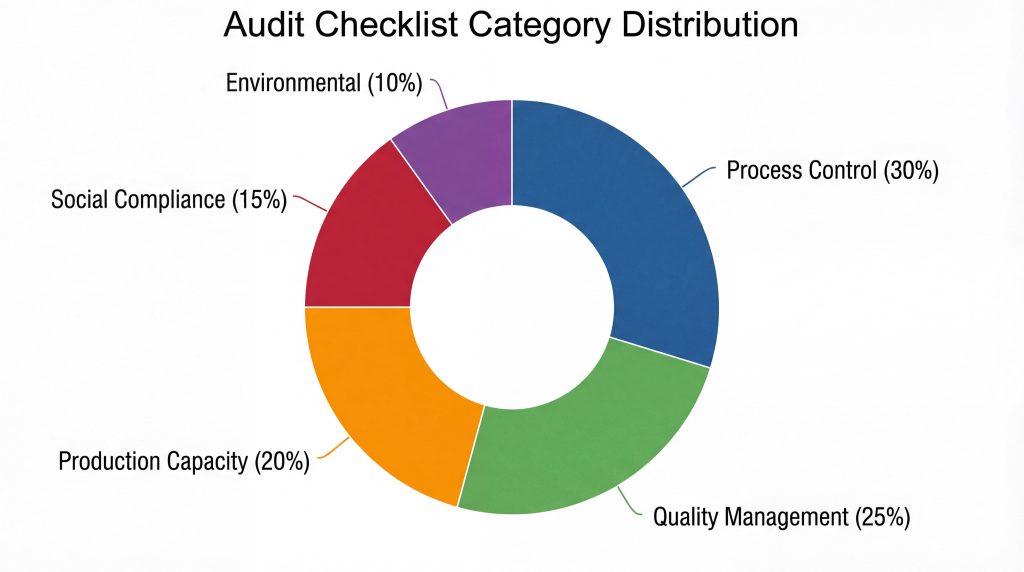
Comparing verified vs unverified data
A common mistake is basing a sourcing decision on a factory’s self-reported capabilities rather than the independently verified data gathered during a professional on-site audit. You must give higher weight to manufacturers who allow full transparency into their production lines and provide evidence of their internal quality control metrics. By comparing these verified scores across your supplier pool, you can identify which factories truly understand the technical demands of your furniture niche.
Categorizing suppliers by risk level
Not every furniture factory needs to be perfect from day one, but you must know their specific weaknesses to implement the correct level of oversight for your orders.
- “Grade A” suppliers require less frequent inspection and are suitable for complex, high-value designs.
- “Grade B” suppliers are reliable for standard items but need targeted support in specific technical areas.
- “Grade C” suppliers present significant risks and should only be used if a strict improvement plan is followed.
- “Fail” suppliers have critical gaps that cannot be bridged without a complete overhaul of their production systems.
Selecting long-term strategic partners
The ultimate goal of scoring is to move away from transactional relationships and toward partnerships with factories that share your commitment to furniture excellence and reliability.
Key Takeaway: Audit scores provide an objective baseline that takes the emotion out of sourcing, ensuring that your business grows alongside the most capable manufacturers in the industry.
The comparison table below illustrates how audit scores translate into different levels of procurement risk and management requirements.
| Audit Score | Supplier Status | Management Approach |
|---|---|---|
| 90% – 100% | Strategic Partner | Self-inspection / Quarterly review |
| 70% – 89% | Approved Supplier | Regular QC / Bi-annual audit |
| < 70% | High Risk | 100% Inspection / Rectification plan |
Think long-term: A low initial score is not a dead end, but a roadmap for the specific improvements needed to reach your quality standards.
IX. Can audits prevent costly production delays?
Audits prevent costly production delays by identifying workflow bottlenecks early, verifying raw material stock levels, and predicting potential machinery failures before they halt the production line. By conducting a supplier audit during the early stages of a partnership, you can ensure that the factory’s planning systems are capable of handling your specific lead time requirements. This proactive approach helps eliminate the “unconfirmed gray areas” that often lead to last-minute excuses regarding late material deliveries or unexpected equipment downtime.

Identifying workflow bottlenecks early
A bottleneck in a furniture factory might be an understaffed sanding department or a painting booth that cannot keep up with the output of the assembly team. You should analyze the flow of materials to see where products are piling up, as these areas are the most likely to cause delays when you increase your order volume. Addressing these imbalances before production starts allows the factory to reallocate resources or adjust schedules to maintain a smooth and predictable delivery timeline for your goods.
Verifying raw material stock levels
Delays are frequently caused by the factory’s failure to secure specialized timber, fabrics, or hardware in time for the scheduled production start date.
- Inspection of the factory’s warehouse to confirm that materials for your order have arrived.
- Review of purchase orders issued to sub-suppliers for critical components like specialized glues or finishes.
- Assessment of the factory’s inventory management software to ensure accurate tracking of stock levels.
- Verification of the lead times provided by the factory’s own material suppliers.
Predicting potential machinery failure
An auditor who understands woodworking machinery can often spot signs of neglect, such as excessive vibration or poor lubrication, that suggest an imminent equipment breakdown.
Key Takeaway: Preventing delays is about verifying that the factory has a realistic, evidence-based plan for execution rather than just a target shipping date on a piece of paper.
This summary table highlights the specific delay risks that can be mitigated through a proactive factory evaluation.
| Delay Risk | Audit Mitigation Strategy | Benefit to Buyer |
|---|---|---|
| Component Shortage | Sub-supplier contract review | On-time start dates |
| Equipment Failure | Maintenance log inspection | Uninterrupted production |
| Process Overload | Line balancing analysis | Stable lead times |
Knowledge is power: A factory that manages its internal timelines well is a factory that will respect your external delivery deadlines.
X. What follows a failed furniture supplier audit?
A failed furniture supplier audit leads to the assignment of urgent corrective actions, the scheduling of mandatory follow-up visits, and the collaborative development of a supplier improvement plan. You should view a failed audit not as an end to the relationship, but as a clear identification of the information gaps that must be filled to meet your professional standards. By providing the factory with a structured path for improvement, you help them execute your standards more effectively while protecting your own investment from future quality failures.

Assigning urgent corrective actions
The first step after an audit reveals critical non-conformities is to issue a formal Corrective Action Plan (CAP) that details exactly what needs to change and by what date. You must be specific about the technical requirements, such as upgrading dust extraction systems or implementing a new timber moisture testing protocol. This process ensures that the factory management understands your expectations and is held accountable for making the necessary investments in their production environment.
Scheduling mandatory follow-up visits
A promise to improve is only valuable if it is verified through a subsequent visit to confirm that the agreed-upon corrective actions have been successfully implemented on the factory floor.
- Verification that new machinery has been installed and is being operated correctly by trained staff.
- Review of updated quality control logs to ensure that new checkpoints are being utilized.
- Inspection of recent production batches to see if previous defects have been eliminated.
- Re-interviewing management to gauge their ongoing commitment to the new quality standards.
Developing supplier improvement plans
Long-term success often requires a deeper commitment to helping the factory refine its processes through training, better technical documentation, and clear communication of your quality goals. Here is the truth: Key Takeaway: Turning a failed audit into a successful improvement project builds a stronger, more resilient partnership based on shared growth and technical transparency.
The judgment table below helps you decide when to work on improvement and when it is time to seek a new furniture supplier.
| Situation | Rectification Strategy | Decision Trigger |
|---|---|---|
| Fixable Process Gap | Joint Improvement Plan | Management shows high commitment |
| Chronic Quality Failure | Mandatory Probation | Repeated issues after three CAPs |
| Integrity/Safety Gap | Immediate Rejection | Fake certificates or structural danger |
Progress takes time: The best suppliers are often those who are willing to learn and adapt their processes to meet the evolving needs of your furniture brand.
FAQ
Can I conduct a supplier audit remotely using video calls and digital document sharing?
Direct answer: While remote reviews provide a basic overview, they are not a substitute for on-site inspections because a camera can easily miss the subtle indicators of machinery neglect or poor material storage that a physical presence would reveal.
What’s the best time to schedule an audit during the furniture production cycle?
Direct answer: The best time is during the “pre-production” or “early-production” phase because this allows you to identify and fix structural or material issues before the majority of the order has been processed and potentially ruined.
How do I know if a factory is being honest during the audit walkthrough?
Direct answer: You look for consistency between their verbal claims, their physical production logs, and the reality of what you see on the production line, as significant discrepancies between these three data points usually indicate an attempt to hide operational weaknesses.
Final check
This guide has addressed the critical risks of structural failure, material quality, and production delays through the implementation of a rigorous supplier audit. By identifying information gaps before they become costly defects, you protect your brand’s reputation and ensure logistical success. For personalized assistance in securing your furniture supply chain, please contact us at Everwoody today.